
A loose car emblem isn’t just an eyesore—it invites moisture behind the badge, where rust and paint failure quietly begin. Replacing the factory adhesive with the right bonding solution restores the clean look and prevents long-term body damage, but the wrong choice leaves you with a badge that falls off at highway speed or during the first car wash.
I’m Mohammad Maruf — the founder and writer behind Drink4Good. This guide is the result of analyzing manufacturer technical specs, peel adhesion ratings, temperature resistance thresholds, and real-world customer reports across dozens of automotive bonding products to separate the adhesives that genuinely hold from those that barely cling.
Whether you’re reattaching a chrome badge to a trunk lid or installing new trim along a door panel, the right glue for car emblems must resist vibration, heat, moisture, and road grime without failing.
How To Choose The Best Glue For Car Emblems
Car emblems face a hostile environment: direct sun, freezing rain, pressure washers, and constant vibration every time you drive. A generic craft adhesive or household super glue will crack, turn brittle, or simply lose grip within weeks. You need an automotive-grade bonding solution engineered to handle thermal expansion, UV exposure, and the mechanical stress of road travel.
Peel Adhesion and Shear Strength
The two numbers that separate a reliable emblem bond from a failing one are peel adhesion and shear strength. Peel adhesion, measured in pounds per inch of width, tells you how well the adhesive resists being pulled away from the surface—critical when a car wash brush catches the edge of your emblem. Shear strength, often stated as pounds per square inch, determines how much weight the bond can support vertically without sliding. For emblems, look for a peel adhesion of at least 15 lbs/inch and a tensile shear rating over 150 lbs/in². Acrylic foam tapes like VHB-grade materials deliver these numbers consistently; thin consumer tapes rarely exceed 8 lbs/inch and fail under vibration.
Temperature Resistance and Weatherproofing
Your emblem adhesive needs to survive both the heat of a parked car in summer—dashboard temperatures can reach 180°F—and freezing winter conditions. Cyanoacrylate gels that resist up to 230°F are suitable for engine bay repairs and exterior badges alike. Acrylic foam tapes with continuous temperature ratings between -40°F and 200°F handle thermal cycling without losing elasticity. Water resistance is non-negotiable: the adhesive must cure to a waterproof seal that prevents moisture from creeping behind the emblem and attacking the clear coat. Look for adhesives explicitly rated for outdoor or automotive use, not indoor-only labels.
Application Surface and Cure Time
An emblem bond is only as good as the surface preparation. Both tape and liquid adhesives require a clean, dry, grease-free surface—rubbing alcohol or a dedicated wax remover is essential. Acrylic foam tapes achieve about 50% of their ultimate strength after 20 minutes and reach full bond strength after 72 hours, making them ideal if you can leave the car stationary for a day. Cyanoacrylate gels set faster, often within two to three minutes of clamping, but they can become brittle if the mating surfaces flex. For emblems mounted on plastic bumpers that flex with impact, the elasticity of a foam tape is superior to a rigid gel bond.
Quick Comparison
On smaller screens, swipe sideways to see the full table.
| Model | Category | Best For | Key Spec | Amazon |
|---|---|---|---|---|
| 3M Molding Tape 2-Roll | Double-Sided Tape | OEM-grade badge and trim reattachment | 2 rolls, 30 total feet, 1/2″ wide | Amazon |
| Couzeely VHB-Style Tape | Acrylic Foam Tape | Long-run projects needing extensive coverage | 36.5ft length, holds 3 lbs per 2 inches | Amazon |
| KRAFTPROTZ Automotive Super Glue Gel | Cyanoacrylate Gel | Small parts, vertical gaps, plastic-to-metal | 1.76 oz, heat-resistant to 230°F, oil-resistant | Amazon |
| 3M Clear 4905 Foam Tape | Clear Acrylic Tape | Invisible bond on emblems over glass or clear parts | 0.5mm thickness, 15 lbs/inch peel adhesion | Amazon |
| Gorilla Max Strength Mounting Tape | Reinforced Foam Tape | Light emblems on painted metal surfaces | 45 lb capacity, 1″ x 60″ strip with mesh layer | Amazon |
In‑Depth Reviews
1. 3M Scotch-Mount Molding Tape 2-Roll
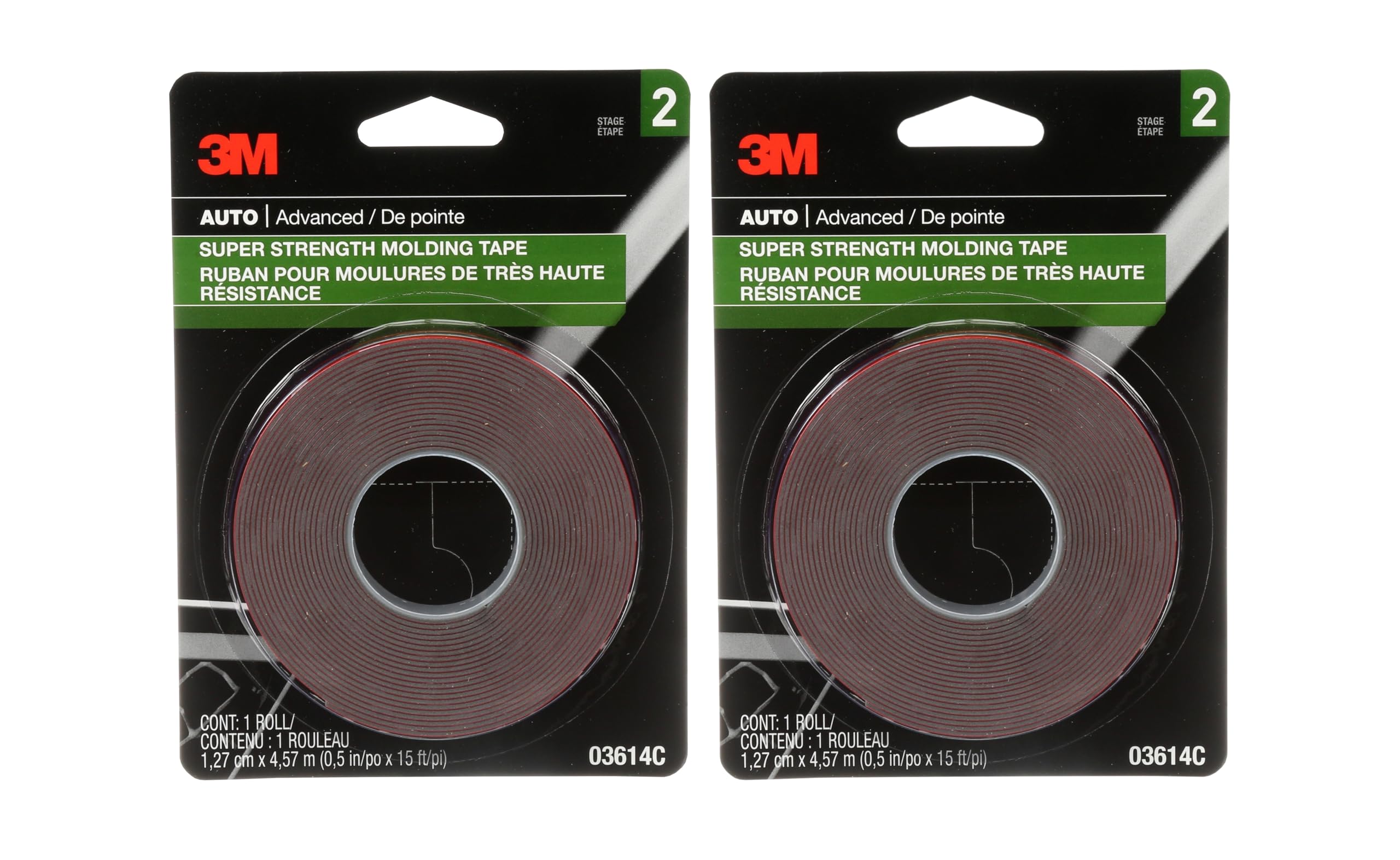
3M’s Molding Tape is the benchmark automotive double-sided tape, and this two-roll pack delivers 30 total feet of 1/2-inch wide foam tape that exactly matches the bonding strips used by OEM manufacturers.
What sets this tape apart from cheaper alternatives is its resistance to vibration-induced failure. Multiple users reported successfully reattaching GMC Sierra door molding and Chevrolet Silverado headlamp trim where other adhesives had failed, with one owner citing an dealership repair cost avoided. The foam core absorbs road shock rather than transmitting it to the bond line, which is critical for emblems mounted on bumpers and door panels that flex during driving.
The 1/2-inch width is ideal for most emblem and trim applications, though you may need to lay multiple strips side by side for wider badges. Application requires thorough surface cleaning with alcohol, and the tape achieves full bond strength over 72 hours. This is the most reliable option for anyone wanting a factory-equivalent hold without mixing or curing liquid adhesives.
Why it’s great
- Proven OEM-grade hold that survives automatic car washes and road vibration
- Two-roll value pack provides ample length for multiple emblems and trim projects
- Foam core conforms to curved body panels without edge lifting
Good to know
- Full cure takes 72 hours for maximum strength
- 1/2-inch width may require multiple strips for larger emblems
2. Couzeely VHB-Style Double Sided Tape

This Couzeely tape uses 5952 VHB-grade raw material, giving you the same acrylic foam chemistry as 3M’s industrial VHB tape at a fraction of the per-foot cost. The 36.5-foot length at 0.4 inches wide delivers massive coverage for installing trim pieces, door seals, and multiple emblems from a single purchase.
Customers have used this tape for demanding applications including reattaching Tesla Model Y door seals and bonding PC components where vibration dampening was required. The 1.1mm thickness provides enough gap-filling ability to bridge slight surface irregularities on aftermarket body panels, while remaining thin enough to avoid creating a visible gap behind the emblem. The acrylic foam remains elastic under temperature extremes, preventing the brittle cracking that affects polyurethane tapes in freezing conditions.
One practical trade-off is the protective red liner, which some users found difficult to peel due to the aggressive adhesive. Using tweezers or a fingernail to lift an edge helps, and the tape’s strong initial tack means you must position it precisely on the first attempt. The included resealable storage case keeps the remaining length clean for future projects, making this an economical choice for mechanics and DIYers with multiple vehicles.
Why it’s great
- VHB-grade raw material at a per-foot cost significantly below brand-name alternatives
- 36.5-foot spool covers multiple vehicles and trim installations from one purchase
- Acrylic foam remains flexible and vibration-dampening in extreme temperatures
Good to know
- Red protective liner can be tricky to remove requires careful peeling
- Limited to 0.4-inch width; wider emblems require multiple parallel strips
3. KRAFTPROTZ Automotive Super Glue Gel
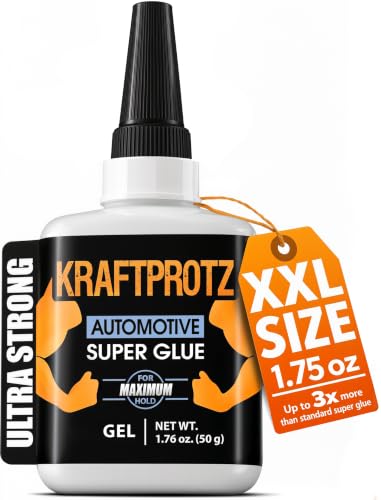
When you need to bond a broken emblem post or fill a gap between a plastic trim piece and a metal surface, a double-sided tape won’t work—you need a liquid adhesive that flows into the void. This KRAFTPROTZ gel is formulated specifically for automotive use with a no-drip consistency that stays put on vertical surfaces, making it ideal for mirror housings, fender clips, dashboard panels, and emblem posts that broke off flush with the surface.
The cyanoacrylate chemistry is engineered to withstand engine vibration, road shocks, and temperature cycles up to 230°F, which puts it in the range required for exterior badges and underhood components. Real-world reports include fixing a front bumper separation on a Volkswagen Golf R and reattaching a side mirror housing that had been knocked loose—both applications held for many months through rain and heat. The gel sets in two to three minutes, giving you enough working time to align parts precisely before clamping.
The anti-clog tip is a practical design choice that keeps the nozzle clear between uses, which matters because the 1.76-ounce bottle is three times larger than typical automotive super glue tubes and will last through multiple repair sessions. Note that gel bonds are rigid, so this product works best on parts that don’t flex significantly after installation. For emblems mounted on plastic bumpers that flex with impacts, a foam tape remains the better option.
Why it’s great
- No-drip gel formula stays precisely where applied on vertical and overhead surfaces
- Heat-resistant to 230°F suitable for engine bay and exterior summer conditions
- Large 1.76-ounce bottle outlasts standard tubes three times over
Good to know
- Rigid bond is not ideal for flexible bumper-mounted emblems
- Requires two to three minutes of clamping pressure during setup
4. Bulina 3M 4905 Clear Double Sided Tape
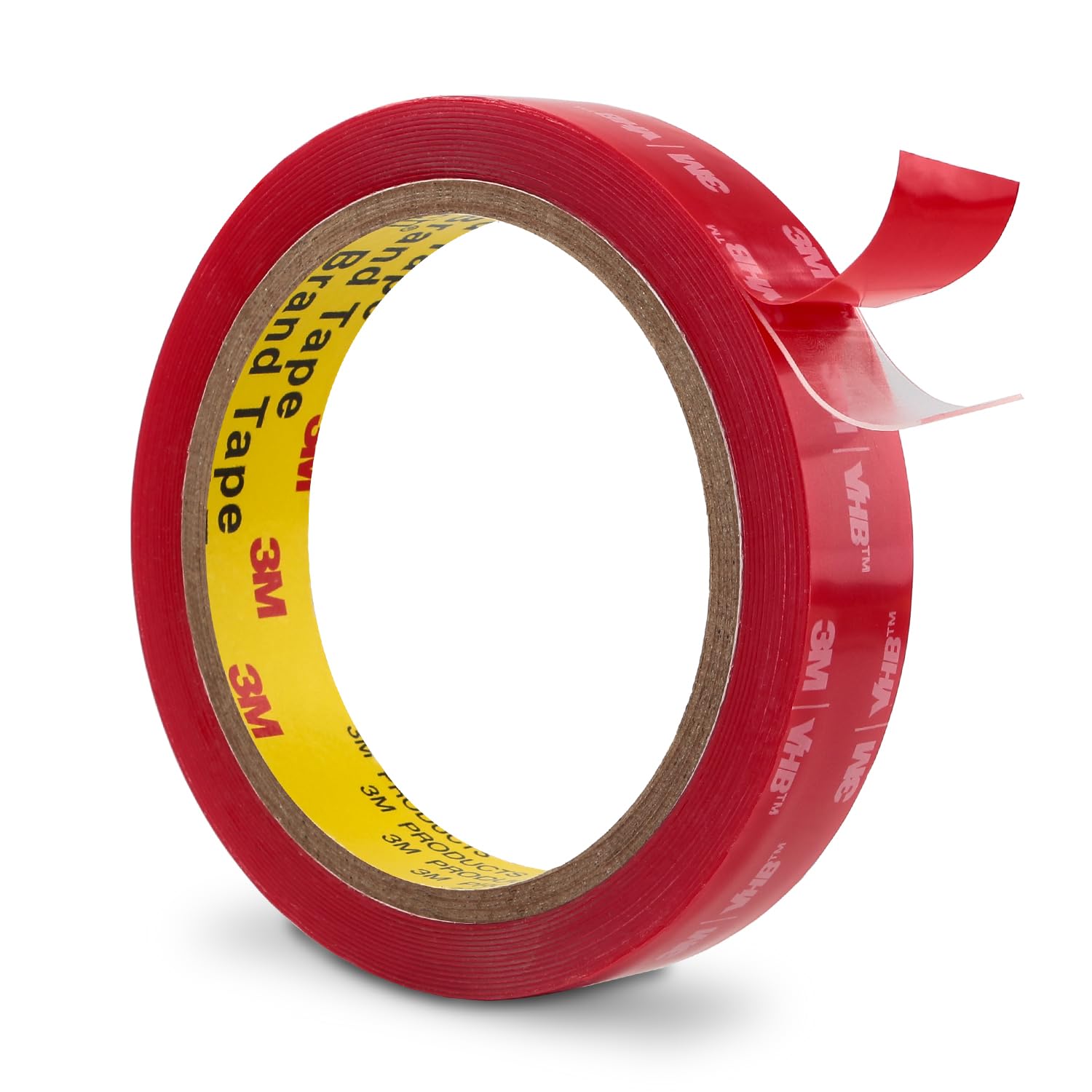
This 4905 tape from Bulina uses 3M’s acrylic foam chemistry in a clear format that is virtually invisible behind transparent emblems or logos mounted on glass. The 0.5mm thickness is thinner than most automotive foam tapes, which is a deliberate feature when you need an invisible bond line and minimal gap between the emblem and the mounting surface. The peel adhesion of 15 lbs/inch and normal tensile adhesion of 160 lbs/in² match the specifications of industrial bonding tapes used in sign and display mounting.
Customers have successfully used this tape for both automotive applications—emblems, nameplates, and trim—and non-automotive projects such as bonding power packs to IEM gear and reattaching shower door strips. The clear formulation eliminates the dark edge line that black foam tapes leave behind, which matters when mounting clear acrylic or light-colored emblems. The 15.4-foot roll at 0.75 inches wide provides a good balance of coverage for three to four average-sized emblems.
The tape’s pressure-sensitive adhesive bonds on contact, but only reaches 50% strength after 20 minutes and full strength after 72 hours. This means you must keep the vehicle stationary and dry for the full cure window. Some users noted that peeling the protective backing can be fussy, which is a common trait of thin acrylic foam tapes with aggressive adhesive. Overall, this is the best choice when optical clarity and a thin bond line are your priorities.
Why it’s great
- Clear acrylic foam becomes virtually invisible behind transparent emblems
- 0.5mm thickness creates a minimal bond line without obstructing light
- Industrial-grade 15 lbs/inch peel adhesion matches professional mounting standards
Good to know
- Full cure requires 72 hours without vehicle movement or moisture
- Protective backing can be fiddly to remove due to thin material
5. Gorilla Max Strength Mounting Tape

Gorilla’s Max Strength tape adds an embedded mesh reinforcement layer that sets it apart from standard foam tapes, providing extra resistance against tearing when you need to remove and reposition an emblem during installation. The tape holds up to 45 pounds when using four inches of tape per three pounds of weight, though for car emblems the actual load is far lighter—the mesh reinforcement matters more for maintaining structural integrity during temperature cycling than for raw weight capacity.
Customers have used this tape in demanding automotive scenarios including mounting carpet liners in truck beds that stay stuck outdoors year-round, and attaching hardware under desks where gravity pulls directly on the bond. The polypropylene carrier with acrylic adhesive sticks well to painted metal surfaces, which is exactly what you need for emblems mounted on clear-coated body panels. Surface preparation with rubbing alcohol is recommended, and multiple reviewers confirmed that proper cleaning made the difference between a bond that lasts and one that fails.
The 1-inch width is wider than most emblem-specific tapes, which can be an advantage for larger badges but creates waste when trimming to fit narrow posts. The 60-inch length is relatively short compared to the longer spools in this guide, making this a better choice for a single emblem replacement or small trim repair rather than a full-vehicle project. For a one-off fix on a painted surface, this tape delivers instant adhesion and proven longevity at an entry-level cost.
Why it’s great
- Embedded mesh layer prevents tearing during installation and thermal cycling
- Strong initial tack allows instant hold without extended clamping time
- Works effectively on painted metal surfaces common to car body panels
Good to know
- 60-inch length covers only one or two emblems before exhausting the roll
- 1-inch width is wider than needed for most standard emblem posts
FAQ
Can I reuse an old car emblem with new adhesive tape instead of buying a new one?
How long should I wait before driving my car after applying emblem adhesive?
Will double-sided emblem tape damage my car’s clear coat when removed?
Final Thoughts: The Verdict
For most users, the glue for car emblems winner is the 3M Scotch-Mount Molding Tape 2-Roll because it delivers OEM-grade strength, proven weather resistance, and enough length for multiple repairs. If you need maximum coverage for a long-term project, grab the Couzeely VHB-Style Tape with its 36.5-foot spool. And for repairing broken emblem posts or bonding small parts where tape won’t reach, nothing beats the KRAFTPROTZ Automotive Super Glue Gel.