
A cracked mug handle or a chipped heirloom vase doesn’t have to mean the end of the road. The challenge is finding an adhesive that bonds to the slick, non-porous surface of ceramic without dripping, yellowing, or failing under heat and moisture. The wrong glue leaves a mess or breaks again days later.
I’m Mohammad Maruf — the founder and writer behind Drink4Good. I analyze dozens of adhesive formulations to identify which ones actually deliver on their claims for ceramic repair by evaluating bond strength, cure time, clarity, and real-world user feedback.
To simplify the search, I tested five leading options and created this definitive guide to choosing the best glue for ceramic so you can repair your favorite pieces with confidence.
How To Choose The Best Glue For Ceramic
Picking the wrong adhesive for ceramic repair often results in a brittle bond, a visible mess, or a repair that fails under hot water. Focus on these three specifications to get it right the first time.
Bond Strength and Flexibility
Ceramic is hard and brittle, so the ideal glue needs to absorb minor vibrations without cracking. Two-part epoxy generally offers the highest shear strength (some up to 2,600 psi) and a touch of flexibility, making it best for load-bearing repairs like mug handles. Cyanoacrylate gel provides a very strong instant bond but can be more rigid.
Cure Time and Workability
Instant glues set in 30–60 seconds, which is excellent for small, easy-to-align breaks. Epoxies give you 5 to 30 minutes of working time before they harden, allowing you to clamp, sculpt, or align larger pieces. After initial set, both types typically need 24 hours to reach full cure strength.
Heat and Water Resistance
If the repaired ceramic will be washed in hot water or used for hot beverages, the adhesive must be rated for those conditions. Look for epoxy or glue that specifies resistance up to at least 100°C (212°F). A waterproof bond is also critical for kitchen and bathroom repairs to prevent delamination after repeated exposure to moisture.
Quick Comparison
On smaller screens, swipe sideways to see the full table.
| Model | Category | Best For | Key Spec | Amazon |
|---|---|---|---|---|
| Starbond 5-Minute Epoxy Pro Kit | Epoxy | High-strength, flexible repairs | 2,600 lb shear strength | Amazon |
| Tile Repair Kit by Ankita | Color-Match Kit | Chips and cracks in colored tiles | 7 pigments for color matching | Amazon |
| LEENEXUS Super Glue for Ceramic | Gel Cyanoacrylate | Precision, mess-free vertical fixes | Anti-clog, 30-60 sec set time | Amazon |
| Endhokn Epoxy Putty | Epoxy Putty | Filling holes and sculpting repairs | 300g, 30 min molding time | Amazon |
| Whirlpool Y055980 Adhesive | High-Temp Gel | High-heat appliance repairs | High-temp polymer formula | Amazon |
In‑Depth Reviews
1. Starbond 5-Minute Epoxy Pro Kit

The Starbond 5-Minute Epoxy Pro Kit sets a high bar for ceramic repair with a flexible toughened formula that boasts an impressive 2,600 lb shear strength. This two-part epoxy cures in five minutes to handling strength, giving you enough time to align broken mug handles or reassemble a fractured vase without rushing. The 8 oz. size is generous compared to typical syringe kits, and the 1:1 volumetric mix ratio with included tools eliminates guesswork.
What sets this epoxy apart is its flexibility. Unlike brittle super glues, Starbond’s formulation absorbs vibration and stress, which is crucial for ceramics that experience thermal expansion from hot drinks or regular washing. Reviewers consistently note that it holds well on crown molding and basement cracks, and it adheres reliably to wood, plastic, and metal in addition to ceramic. The clear finish leaves repairs nearly invisible, and the included mixing palette and spatula make application clean and controlled.
The only real tradeoff is that the 5-minute work window demands preparation. You need to have your parts clamped and ready before mixing. For small, one-handed repairs, an instant gel might be more convenient. But for strength, durability, and versatility across multiple materials, this epoxy is the clear winner for serious ceramic bonding.
Why it’s great
- Extremely high shear strength with a flexible bond that resists cracking over time.
- Comes with all necessary tools: mixing tray, spatula, and screw-cap bottles for clean storage.
- Cures clear, making it suitable for visible ceramic repairs without a messy look.
Good to know
- Requires careful 1:1 mixing and pre-clamping before the 5-minute set time expires.
- Not ideal for quick, one-drop touch-ups where a gel super glue would be faster.
2. Ankita Tile Repair Kit
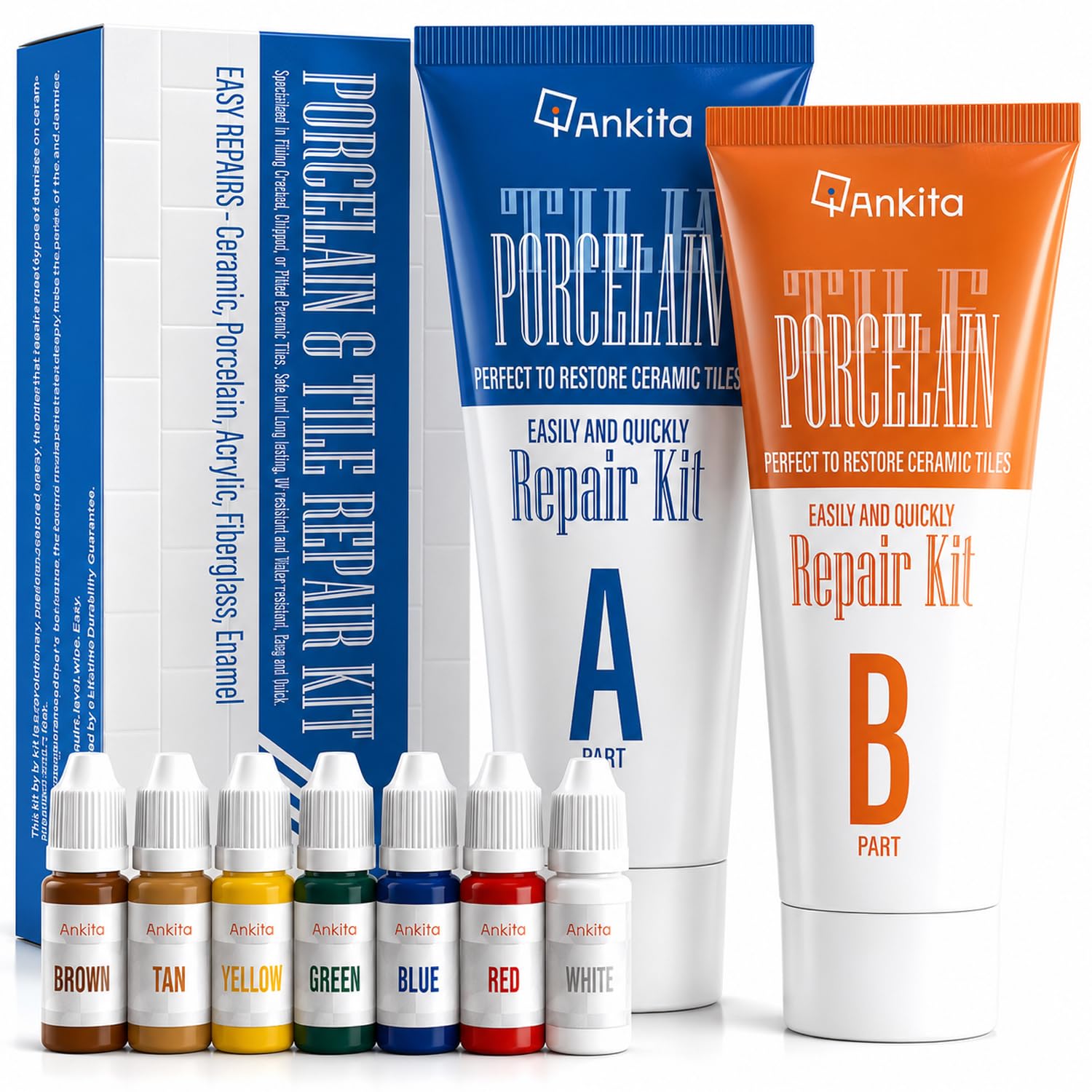
The Ankita Tile Repair Kit solves a problem most adhesives ignore: color matching. It includes seven pigments that let you blend a custom shade to match white, beige, gray, almond, blue, black, and common tile tones. This makes it the go-to choice when a chip or crack needs to disappear against a colored ceramic or porcelain surface rather than sit as a clear or white blob.
The kit is built as a paste epoxy that you mix and apply directly into the damaged area. It cures into a waterproof, heat-resistant layer that can handle bathroom humidity, kitchen splashes, and daily foot traffic on floor tiles. Users report successful repairs on chipped 24×12 kitchen tiles and cracked floor tiles, with the final result being nearly invisible after careful color blending and sanding. The step-by-step instructions are tailored for DIY beginners, keeping the process simple even if you’ve never repaired a tile before.
Color matching is the hardest part and can take a few attempts to get right. Some users found the texture didn’t blend perfectly with their specific tile finish, and for hairline cracks, a lower-viscosity filler might be easier to apply. This kit is best for chips and small holes where you can control the final surface appearance.
Why it’s great
- Includes seven color pigments for custom blending to match different tile shades.
- Waterproof and heat-resistant after curing, suitable for wet and high-use areas.
- Paste consistency is easy to apply into chips and cracks without running.
Good to know
- Color matching requires patience and multiple attempts for an invisible finish.
- Best for small to medium-sized defects; not ideal for complete reattachment of broken handles.
3. LEENEXUS Super Glue for Ceramic
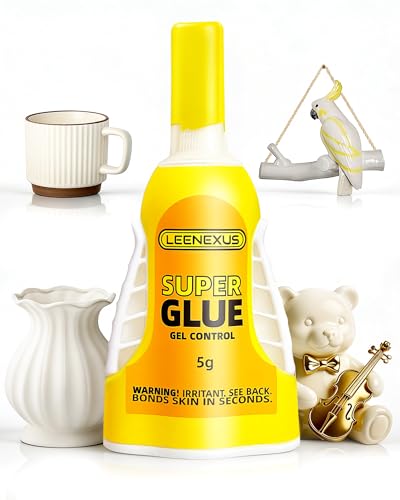
The LEENEXUS Super Glue for Ceramic is a gel cyanoacrylate formulated specifically to solve the drip and mess problem of thin super glue on vertical surfaces. It stays put on mug handles, vase rims, and figurine limbs, providing precision placement without running down the side of your repair. The set time of 30 to 60 seconds gives you just enough moment to align the pieces before the bond locks in.
Its dual-molecular cross-linking technology creates a dense bond that penetrates microscopic pores in ceramic for a grip stronger than a standard surface bond. The crystal-clear finish and low-odor formula make it comfortable to use indoors. This glue handles up to 212°F (100°C) and is waterproof, so repaired mugs can survive hot tea and the dishwasher. The anti-clog system with a built-in needle and dual-threaded cap keeps the nozzle open for repeated use.
A small number of users reported receiving an empty bottle, and because this is a precision instant glue, it is not suitable for filling gaps or sculpting missing material. For a straight reattachment of two smooth ceramic edges, however, this gel formula is fast, precise, and invisible.
Why it’s great
- Thick gel consistency allows for precise application on vertical ceramic surfaces without dripping.
- High heat resistance (up to 212°F) and waterproof bond for hot beverage and dishwasher use.
- Anti-clog system extends the life of the bottle significantly compared to standard super glues.
Good to know
- Not for filling chips or gaps; works best when two clean, tight-fitting edges are bonded.
- Occasional reports of empty or clogged bottles, though the brand offers a 6-month guarantee.
4. Endhokn Epoxy Putty

The Endhokn Epoxy Putty takes a different approach to ceramic repair by offering a moldable two-part stick that you knead together and shape by hand. This is the best option when you need to fill a missing chunk of ceramic, rebuild a broken leg on a figurine, or seal a hole around a pipe. The 300g (10.5 oz) stick is a generous amount that goes a long way for multiple repairs.
Once activated, you have about 30 minutes of working time to sculpt the putty into the desired shape, after which it hardens into a durable, paintable, and drillable surface. It bonds to ceramic, metal, plastic, wood, and concrete, making it a true multi-purpose repair solution. After 24 hours of full cure, the putty is waterproof and handles temperatures from -50°C to 130°C (-58°F to 266°F). Users have successfully fixed ceramic salt and pepper shakers, and filled large holes for A/C pipes with good results.
The putty can be tacky to work with, and using petroleum jelly for smoothing leaves a greasy residue. It is not a clear adhesive, so it will show on visible repairs unless painted over. For filling and sculpting rather than smooth edge bonding, this putty offers excellent value and versatility.
Why it’s great
- Moldable putty consistency perfect for filling holes, gaps, and rebuilding missing ceramic sections.
- Large 300g stick provides plenty of material for multiple projects at a budget-friendly cost.
- Can be drilled, sanded, and painted after curing for a custom finish.
Good to know
- Tacky during application; requires tools or lubrication for a smooth finish.
- Not clear — needs painting to match the original ceramic color on visible repairs.
5. Whirlpool Y055980 High Temperature Adhesive

The Whirlpool Y055980 is a specialized high-temperature adhesive designed primarily for appliance repair, but its gel formula and heat-resistant polymer base make it a niche option for ceramic repairs that face extreme temperatures. It comes in an aerosol can, which allows you to spray the gel directly onto the surface or into a small container for brush application, offering unique application versatility not found in other adhesives in this guide.
This adhesive is rated for the high-heat environment inside dryers and washing machines, where standard glues would degrade rapidly. For ceramic repairs on oven knobs, stovetop trim, or high-heat appliance components, this product is a better fit than consumer-grade epoxies. The gel stays in place on vertical surfaces and cures within 24 hours to a firm, temperature-stable bond.
That said, this adhesive is not designed for general ceramic repairs like mending a broken mug or filling a tile chip. Its primary application is for bonding and sealing in high-heat appliance environments, and for those specific needs, it performs reliably. It is the most expensive option per ounce and is best purchased only when you specifically need high-temperature performance for a ceramic or metal appliance repair.
Why it’s great
- Engineered for high-temperature environments where standard adhesives fail, up to 400°F+.
- Aerosol delivery allows precise spray application or transfer to a brush for controlled placement.
- Genuine Whirlpool OEM part, ensuring compatibility with their appliance components.
Good to know
- Narrow use case — not suitable for most standard ceramic household repairs.
- Small can size and high cost per ounce compared to multipurpose epoxies and super glues.
FAQ
Can I use super glue on ceramic mugs that go in the dishwasher?
Why does my ceramic glue keep failing after a few days?
What is the best glue for repairing a ceramic tile with a chip?
Final Thoughts: The Verdict
For most users, the best glue for ceramic winner is the Starbond 5-Minute Epoxy Pro Kit because it combines extreme shear strength with the flexibility needed to survive daily use on mugs, vases, and household items. If you need to hide the repair on a colored ceramic tile, grab the Ankita Tile Repair Kit. And for a fast, mess-free bond on vertical ceramic surfaces, nothing beats the LEENEXUS Super Glue for Ceramic.