
A cracked bridge or a snapped temple doesn’t mean your favorite pair of glasses is destined for the trash. The adhesives designed for this job must bond to slick acetate, flexible plastic, or delicate metal hinges without fogging the lens or leaving a brittle, visible scar. The wrong glue either fails under the daily stress of opening and closing the arms or reacts with the frame material and causes it to discolor or crack. Finding a formula that sets clear, resists moisture from sweat and rain, and maintains a strong, flexible bond is the make-or-break choice for a repair that actually lasts.
I’m Mohammad Maruf — the founder and writer behind Drink4Good. My research for this guide involved analyzing dozens of epoxy and cyanoacrylate formulations, cross-referencing technical data sheets, and sifting through hundreds of real user reports to identify which adhesives deliver the invisible, durable hold that eyeglass repair demands.
The specific criteria matter here: cure time must be short enough to hold the piece steady by hand, the dried bond must be transparent to avoid a messy look, and the final strength must withstand the daily flex of a frame. Understanding these factors is essential to making a confident choice with the right glue for glasses frames.
How To Choose The Best Glue For Glasses Frames
Eyeglass frames are subjected to constant movement, temperature changes, and exposure to skin oils and moisture. Not all adhesives are formulated to handle these conditions. The wrong choice can result in a bond that snaps under the first flex or a messy application that ruins the look of your frames. Focus on these three areas to make the right call.
Cure Time vs. Working Time
Epoxies with a 5-minute set time give you enough window to align the broken pieces precisely without rushing, while still holding firmly after a short wait. Faster-setting formulas (under 3 minutes) risk locking the pieces in the wrong position before you can adjust them. Slower epoxies require clamping or holding for an extended period, which is difficult on small, curved frame parts.
Clarity and Appearance
A glue that dries clear is critical for an invisible repair, but “clear” is not a universal standard. Some epoxies cure with a slight amber tint that is invisible on metal but noticeable on transparent acetate. Look for formulations explicitly described as water-clear or crystal-clear to ensure the bond line disappears after curing.
Flexibility and Impact Resistance
Glasses frames bend slightly when you put them on and take them off. A rigid, brittle adhesive will crack under that repeated stress. A quality two-part epoxy that retains a degree of flexibility after full cure absorbs the micro-movements without failing. This property is especially important for thin, springy temples and bridge connections.
Quick Comparison
On smaller screens, swipe sideways to see the full table.
| Model | Category | Best For | Key Spec | Amazon |
|---|---|---|---|---|
| Araldite Clear Epoxy | Premium Epoxy | Invisible glass & frame repair | Sets in 5 min, clear cure | Amazon |
| Hardman Double Bubble Red | Premium Single-Use | Small, precise frame fixes | 3.5g per pack, 15 min full cure | Amazon |
| Devcon 5 Minute Epoxy | Mid-Range Bottle | Multi-material frame bonding | 1,500 PSI strength, dries clear | Amazon |
| Cerca de Metal Epoxy | Mid-Range Tube | Metal hinge & temples repair | 10 min set, waterproof | Amazon |
| SUTE Rimless Kit | Tool Kit | Rimless frame assembly & adjustment | Includes positioning plate | Amazon |
In‑Depth Reviews
1. Araldite Clear Epoxy Adhesive

Araldite is one of the rare epoxies that delivers on the promise of a truly invisible bond. The two-part formulation mixes to a water-clear consistency that dries without the amber tint common in many other products. For glasses frame repair, this means the glue line on a transparent acetate bridge or a clear plastic hinge disappears entirely, leaving no trace of the break. The 5-minute working time gives you enough control to align the broken edges perfectly before the epoxy begins to set, and the full cure after three hours provides a bond that withstands daily flexing and moisture exposure.
The solvent-free composition is a significant advantage for eyewear. Some adhesives contain chemicals that can cloud polycarbonate lenses or soften certain frame materials, but Araldite’s formula avoids that risk. It bonds well to most plastics, metals, ceramics, and glass — covering the common frame materials like acetate, nylon, and titanium. The dual-tube packaging keeps the resin and hardener separate until you mix them, ensuring the epoxy stays fresh between uses. Users consistently report that repairs on delicate items like porcelain and jewelry hold up over time, which is a strong signal for the precision demands of eyeglass repair.
The water-resistant property is especially relevant for glasses worn daily. Sweat, rain, and humidity can degrade weaker adhesives, causing the bond to fail after a few weeks. Araldite maintains its integrity in those conditions, and its impact resistance means a drop onto a hard surface is less likely to re-crack the joint. The tube sizes are small enough that you don’t waste material on a single repair, yet the quantity is enough for multiple fixes across several pairs of frames. Overall, this is the most reliable all-around choice for anyone looking to fix broken glasses at home with professional-level results.
Why it’s great
- Dries completely transparent with zero amber tint
- 5-minute working time allows precise alignment
- Solvent-free formula protects lenses and frame materials
Good to know
- Bottle format requires careful mixing on a disposable surface
- Not recommended for flexible silicone frames
2. Hardman Double Bubble Red #04001 Extra Fast Setting Epoxy
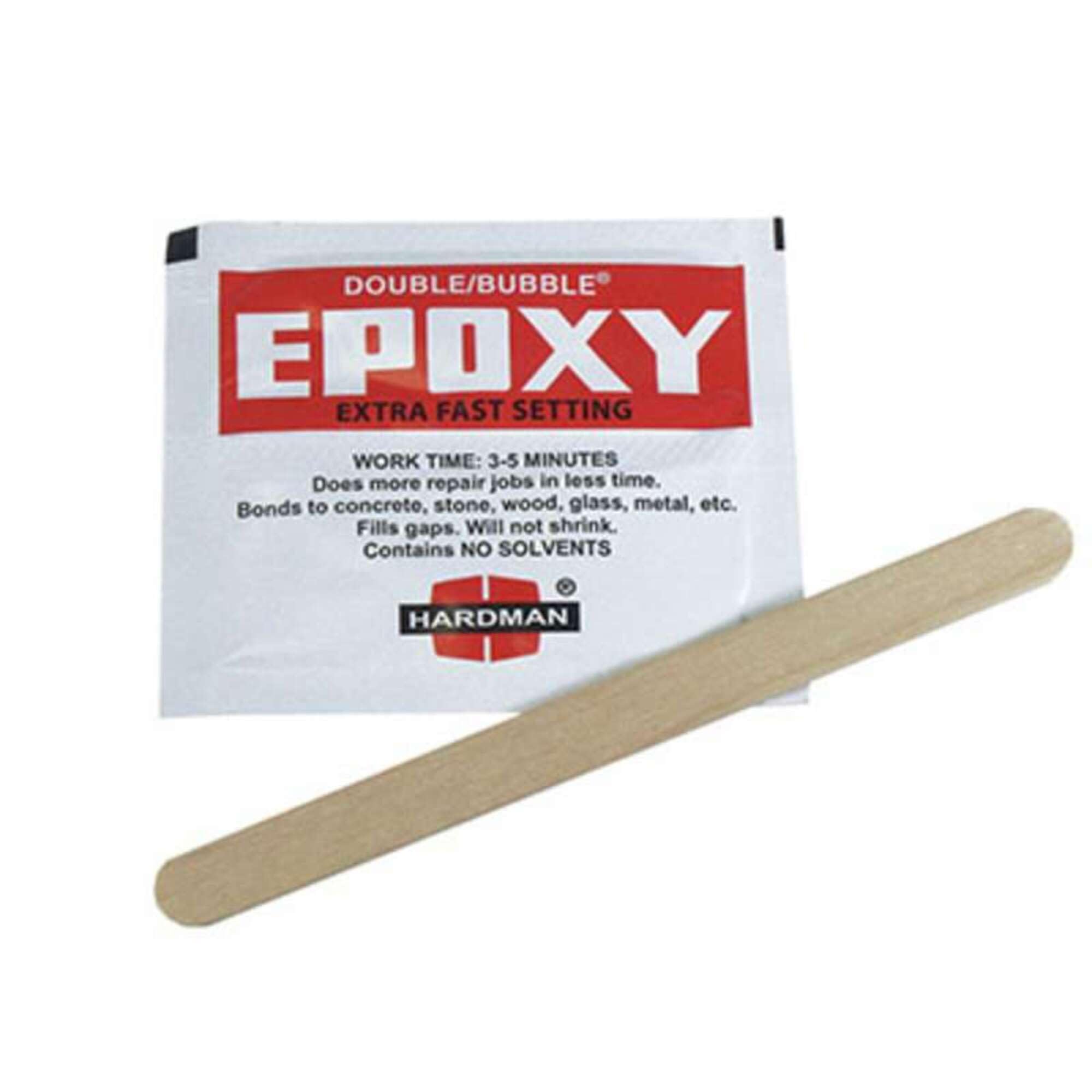
The Double Bubble format solves a specific problem for glasses repair: waste and mess. Each pack contains exactly 3.5 grams of two-part epoxy separated in a single pouch, so you mix only what you need for one small repair. No measuring, no leftover epoxy hardening in a mixing tray, and no guessing the ratio. For a tiny bridge crack or a loose hinge, the amount is perfectly calibrated — enough to coat the break without so much excess that it drips into the hinge mechanism or smears onto the lens edge.
Hardman’s formula sets in three to five minutes, which is fast enough that you can hold the piece in place without a clamp, but not so instant that you lose the ability to adjust. Users with experience in industrial fabrication consistently praise this product for its reliability and consistency, noting that it holds immediately after the short set window and reaches full strength in about 15 minutes. That quick turnaround means you can repair a pair of glasses during a lunch break and have them ready to wear the same afternoon. The clear drying finish keeps the repair invisible on both metal and plastic frames.
The 10-pack format gives you spare cartridges for future repairs or for fixing multiple pairs in one session. Each pack is resealable, so the unopened units store well in a cool, dry place for months. The included popsicle stick for mixing is a thoughtful addition for small applications. Some users store the packs in the fridge to extend shelf life, but room-temperature storage works fine for standard use. This is the best option for someone who wants zero mess and predictable results every time, especially for delicate eyeglass repairs where over-application is a real risk.
Why it’s great
- Pre-measured single-use packs eliminate waste and mixing errors
- Fast 15-minute full cure is ideal for quick repairs
- Clear finish blends with metal and plastic frames
Good to know
- Working time is short — less than 5 minutes to position
- Single packs cost more per use than bulk bottles
3. Devcon 5 Minute Epoxy

Devcon delivers a massive 4.5-ounce bottle of each component, providing enough epoxy for dozens of eyeglass repairs and other household fixes. The two-part system mixes to a clear finish that works well on glass, ceramic, and most plastics — covering the materials commonly used in eyewear. The 1,500 PSI bond strength is more than adequate for holding frame joints that experience moderate stress, and the water-resistant nature ensures the repair survives humid environments and occasional contact with lens-cleaning wipes.
The 5-minute set time is a familiar standard, but Devcon’s formulation has a slightly longer open time than some competitors, giving you extra flexibility when aligning small pieces. Users report that the mixture remains workable for a full five minutes and begins to harden predictably after that, reaching enough strength to handle light pressure within 20 minutes. The full cure in one hour is faster than many other two-part epoxies, which require 12 to 24 hours. For someone repairing a pair of glasses in the evening, this means they are ready for morning use without overnight waiting.
One consideration for glasses-specific use is that the bottles are quite large. Dispensing a tiny amount for a single frame repair requires a steady hand and a separate mixing surface. The viscosity is relatively thin, which can be an advantage for capillary action into tight cracks but also means the glue may run if applied too liberally near hinges or lens edges. Despite that, the overall value for the volume is excellent, and the dependable bond quality makes it a favorite among woodworkers and DIYers who also wear glasses. For multi-repair use, this is the most economical choice per ounce.
Why it’s great
- Exceptional value — large bottles for many repair jobs
- High PSI strength suitable for frame stress points
- One-hour full cure is faster than most epoxies
Good to know
- Bulk dispensing is tricky for tiny eyeglass repairs
- Thin viscosity may run on vertical frame surfaces
4. Cerca de Metal Epoxy

This epoxy stands out for its metal-powder-infused formula, which creates a bond that blends with metal components like steel, aluminum, and titanium hinges. The grey color after curing is a perfect match for bare metal frames and provides a mechanical grip that standard clear epoxies cannot achieve on very smooth metal surfaces. For glasses where the break involves a metal spring hinge or a metal bridge, this formulation delivers a repair that feels as solid as the original weld.
The 10-minute initial set and 12-hour use-strength cure are slower than the 5-minute options, but the trade-off is a more controlled application. The thicker consistency stays in place on vertical frame sections without running into the lens area or gumming up moving parts. Users report that the bond survives repeated flexing and temperature changes, which is critical for glasses that go from a cold car to a warm face throughout the day. The waterproof and oil-resistant properties also protect the repair from skin oils that can degrade lesser adhesives over time.
The dual-tube design with a 1:1 ratio pusher makes mixing straightforward, though the two components are not as clearly separated as the Double Bubble packs, so you must ensure the plunger is fully seated before dispensing. Once mixed, the epoxy can be sanded and painted after full cure, which is useful if you want to smooth the repair surface and apply a touch-up coating to match the frame color. The 1.6-ounce tube provides enough material for several glasses repairs plus other household jobs. This is the best option specifically for repairing metal-frame eyeglasses where a cosmetic match and high adhesion on steel are the priorities.
Why it’s great
- Metal powder additive provides superior bond on steel and titanium hinges
- Thick paste stays in place without running onto lenses
- Waterproof and oil-resistant for daily eyewear wear
Good to know
- Grey color is visible on clear or bright acetate frames
- 12-hour cure time requires overnight patience before use
5. SUTE Rimless Eyeglass Repair Kit
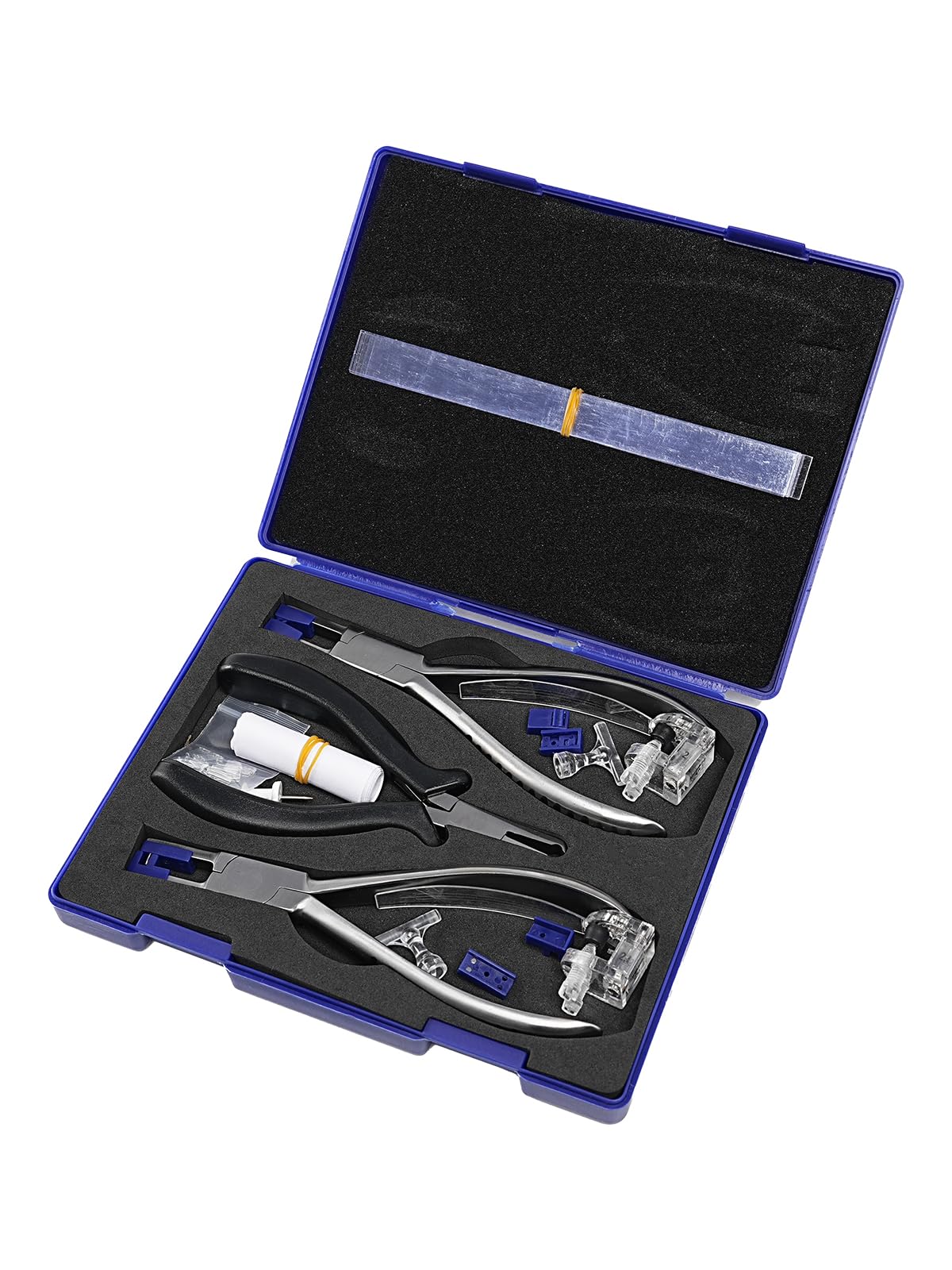
This kit is not an adhesive but a tool set specifically designed for rimless and Silhouette-style glasses where screws, nylon threads, and tiny alignment plates hold the lens to the frame. If your glasses repair involves a loose temple arm that has pulled out of a rimless mounting, or a snapped nylon cord that requires rethreading, glue alone will not fix the problem. This kit provides three different pliers, a positioning plate for rimless lenses, and other tools to precisely handle the disassembly and reassembly of these delicate frame systems.
The stainless steel pliers are small enough to reach into tight hinge areas without scratching the lenses. The positioning plate holds the lens steady while you insert a new nylon cord or tighten a screw, which is essential for avoiding lens cracking. Owners of expensive Silhouette frames often find that an optician charges a premium for this type of repair, and the kit pays for itself after the first fix. Multiple user reports confirm that the tools work correctly for adjusting and rebuilding rimless frames with no damage to the lenses.
The kit does not include any glue, so it is intended for mechanical repairs rather than bonding broken plastic or metal. If your frame has a clean break in the acetate bridge, you would still need an epoxy from the picks above. But for rimless frames where the screw has stripped or the nylon tension cord has snapped, this tool set is the correct solution. The compact blue case keeps everything organized for travel or storage. This is a specialized tool, not a general adhesive, but it fills a specific need for rimless eyeglass owners who want to handle their own maintenance.
Why it’s great
- Complete tool set for rimless and Silhouette frame repair
- Positioning plate prevents lens damage during work
- Pays for itself compared to optician repair fees
Good to know
- Requires watching YouTube tutorials for first-time use
- Not a glue — does not repair broken plastic or metal bridges
FAQ
Can I use super glue on my glasses frames?
How do I prevent the glue from fogging the lenses?
What is the best way to remove old epoxy residue from a frame?
How long should I wait before wearing glasses after an epoxy repair?
Will epoxy bond to nylon or TR-90 frame materials?
Final Thoughts: The Verdict
For most users, the glue for glasses frames winner is the Araldite Clear Epoxy Adhesive because it combines a perfect 5-minute working time, a truly invisible crystal-clear cure, and a solvent-free formula that protects both the frame and the lenses. If you want the convenience of pre-measured single-use packs that eliminate mess and waste, grab the Hardman Double Bubble Red. And for repairing metal hinges and titanium bridges where a color-matched, metal-powder-infused bond is essential, nothing beats the Cerca de Metal Epoxy.