
The moment that polypropylene bracket snaps, you need a bond that flexes with the plastic rather than shattering on impact. Most general-purpose adhesives simply can’t grip the low surface energy of hard plastics like polyethylene, polypropylene, or ABS — they bead up and fail under load the second you apply torque. Finding a glue that actually grabs onto these non-porous polymers requires looking past the obvious super glue and understanding chemistry specific to the material.
I’m Mohammad Maruf — the founder and writer behind Drink4Good. I have spent years dissecting the chemical formulations and real-world holding power of adhesives so you don’t have to gamble with a failed repair on a critical part.
After testing the specific tensile strength, gap-filling ability, and cure speed of each formula, I have broken down the top-tier options in this complete guide to the best glue for hard plastic so you can confidently choose the right one for your next repair.
How To Choose The Best Glue For Hard Plastic
The biggest mistake shoppers make is assuming one glue fits all rigid polymers. Hard plastics range from high-density polyethylene (HDPE) used in cutting boards to polypropylene (PP) found in automotive components and ABS used in electronics housings. Each plastic has a different surface energy, which dictates how well a liquid adhesive can wet out and grip the surface. You need an adhesive engineered to match that specific chemical profile.
Know Your Plastic Type First
Flip the broken part and look for a recycling triangle with a number — a 2, 4, or 5 inside means you are dealing with a low-energy plastic (HDPE, LDPE, or PP) that resists most glues. For those materials, a specialized cyanoacrylate or a plastic-bonding epoxy with a primer is essential. For ABS or acrylic (marked with a 6 or 7), a solvent-based cement that chemically welds the plastic together will give you the strongest bond.
Viscosity Dictates Application
Thin, water-like adhesives capillary into hairline cracks and create a clean bond line with no visible residue, but they won’t fill gaps. Thick, gel-like formulas bridge spaces up to several millimeters but leave a more noticeable seam. For repairs where alignment is tricky, a medium-viscosity glue gives you a few extra seconds to position parts before the bond sets.
Cure Time vs. Work Time
Fast-curing cyanoacrylates set in under a minute when combined with an accelerator, making them ideal for quick fixes where you need immediate handling strength. Epoxy putties and two-part epoxies give you 5 to 30 minutes of work time before they harden, which is critical when clamping complex joints or filling irregular gaps. For high-stress applications like a broken hinge or load-bearing bracket, a full 24-hour cure yields maximum tensile strength.
Quick Comparison
On smaller screens, swipe sideways to see the full table.
| Model | Category | Best For | Key Spec | Amazon |
|---|---|---|---|---|
| ixirpro CA Glue Kit | Cyanoacrylate Kit | Multi-viscosity projects | Full cure in 2 minutes with activator | Amazon |
| J-B Weld SuperWeld | Light-Activated Glue | Precision, on-demand curing | 2800 PSI tensile strength | Amazon |
| Berkland Acrylic Cement | Solvent Cement | Plexiglass and acrylic sheet | Water-thin for capillary action | Amazon |
| Loctite Adhesive | Vinyl & Plastic Adhesive | Flexible vinyl-to-plastic | Full cure in 24 hours | Amazon |
| Endhokn Epoxy Putty | Epoxy Putty | Gap filling and underwater repair | 24-hour full cure, paintable | Amazon |
In‑Depth Reviews
1. ixirpro CA Glue Kit
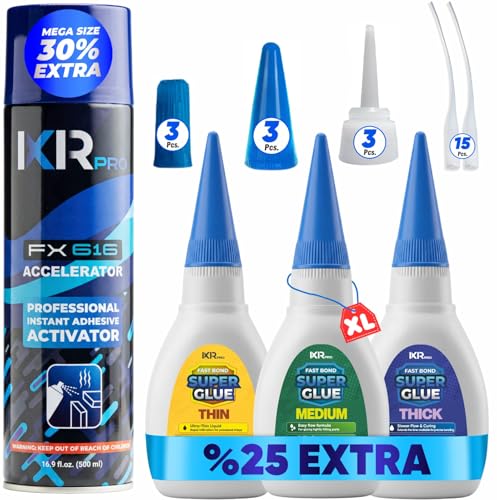
This kit delivers the most versatile cyanoacrylate arsenal for hard plastic bonding, with three distinctly different viscosities — thin for capillary wicking into hairline fractures, medium for controlled gap-free joints, and thick for gap bridging where parts don’t mate perfectly. The included 16.9-ounce accelerator spray cuts the cure time to seconds, which is critical for multi-part assemblies where you need to hold alignment without clamping force. The range of precision microtips further ensures you can apply glue in tight spaces without flooding adjacent surfaces.
The thin formula penetrates deep into cracks that standard super glues cannot reach, making it effective for repairing broken ABS housings and 3D-printed PLA parts where the failure runs along layer lines. The thick formula works well for reattaching threaded inserts into plastic bosses, providing enough body to fill the gap without running. All three formulas cure to a clear finish that does not yellow under UV exposure, preserving the original appearance of transparent or light-colored plastics.
One quirk reported by users involves occasional label swaps between the medium and thick bottles, but the viscosity difference is obvious enough to identify after a single test drop. The activator spray has a strong propellant odor, so ventilation is recommended during use. For anyone who regularly repairs plastic items ranging from model kits to automotive trim, this kit offers the breadth of options needed to handle nearly any break type.
Why it’s great
- Three distinct viscosities adapt to crack type or gap size
- Large accelerator spray cures bond in seconds
- Precision tips prevent messy application on small parts
Good to know
- Medium and thick labels can be swapped on some units
- Activator fumes require good ventilation
2. J-B Weld SuperWeld Light-Activated Glue

What sets this glue apart from every other cyanoacrylate on the shelf is its ability to stay liquid indefinitely until you hit it with the included UV light — you can position and reposition a broken plastic part for as long as you need before curing the bond in ten seconds. This eliminates the frantic rush that comes with traditional instant glues that begin setting the moment they contact air. The cured material achieves a tensile strength of 2800 PSI, which is higher than most standard super glues and comparable to some two-part epoxies once fully cured.
The precision tip applicator on the 5-gram tube deposits glue exactly where you need it without flooding neighboring areas, which is invaluable for delicate repairs like reattaching a cracked lens housing or mending a 3D-printed structural support. The cured bond forms a crystal-clear glass-like finish that blends seamlessly into transparent plastics. Users report that the glue also bonds materials traditional cyanoacrylates struggle with, including flexible vinyl and polycarbonate, due to the controlled cure that prevents stress cracking.
The only real drawback is the cap design — the UV light sits on the cap, and uncured glue can seep into the threads, causing the cap to seize. Cleaning the threads after each use prevents this issue. The UV light is bright enough to potentially cause skin burns if held in direct contact for several seconds, so use caution during application. For precise repairs where alignment is everything, this light-activated system provides a level of control that no other glue in this category matches.
Why it’s great
- Unlimited work time until UV light is applied
- 2800 PSI tensile strength rivals structural epoxies
- Cures crystal clear on transparent plastics
Good to know
- Cap threads can bond shut if not cleaned immediately
- UV light requires caution to avoid skin exposure
3. Berkland Acrylic Bonding Cement
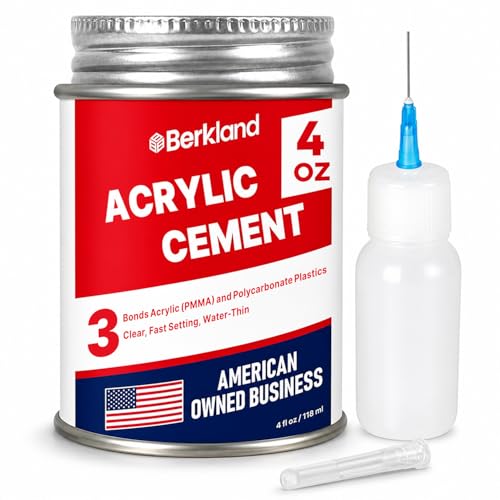
This solvent-based cement is engineered specifically for acrylic and plexiglass, using a water-thin viscosity that relies on capillary action to wick into flush joints between two rigid surfaces. The applicator bottle includes a fine needle tip that delivers the liquid exactly at the seam line, where it is drawn inward by surface tension. This creates a chemical weld that is stronger than the surrounding plastic — the bond point will typically crack the parent material before the glue line fails. For display cases, sign fabrication, or model work involving transparent acrylic sheets, this is the correct tool.
The formula sets within minutes at room temperature, forming an initial bond that allows handling after about five minutes, with full structural strength developing over 24 hours. The cured seam is optically clear and leaves no visible residue when applied sparingly. Users have reported success bonding PLA 3D prints, where the solvent partially dissolves the surface to create a monolithic joint that outperforms any cyanoacrylate bond on layer lines. It also bonds Lexan polycarbonate effectively, though the thin consistency makes overhead or vertical application challenging due to drips.
High humidity conditions can cause slight whitening at the bond line, so the application environment matters for cosmetic finishes. The needle applicator can leak if the bottle is squeezed too aggressively, so a steady, gentle squeeze is required. This is a niche product that should not be used for general household plastic repairs — it is purpose-built for acrylic and related thermoplastics. For anyone working with acrylic sheets or display-grade plastics, this cement delivers the strongest possible joint.
Why it’s great
- Creates a true chemical weld stronger than the plastic itself
- Capillary-action application leaves clean seams on transparent acrylic
- Fast initial set allows handling within minutes
Good to know
- Water-thin consistency drips from vertical surfaces
- Humidity can cause slight whitening at the bond line
4. Loctite Vinyl, Plastic, and Fabric Adhesive

Unlike rigid cyanoacrylates that can crack under vibration, this Loctite formula stays flexible after curing, making it the right choice for repairs where the plastic part experiences repeated movement or load transfer. It bonds well to vinyl, fabric, and hard plastics simultaneously, which is why users consistently report success reattaching foam padding to lawn mower seats, fixing vinyl bar stool covers, and mending fabric-to-plastic window blinds. The paste consistency does not run, so application on vertical surfaces is straightforward.
The bond develops handling strength in about 30 minutes, but the manufacturer recommends a full 24-hour cure before subjecting the repair to significant stress. One notable behavior is stringing — the adhesive forms thin threads when the applicator tip is pulled away from the surface, similar to hot glue. This is manageable with a quick wipe of the nozzle before resealing the tube. The glue dries clear, so it leaves no visible residue on the finished repair area.
The 2-pack provides excellent value for users who have multiple repair items around the home. It is not ideal for structural breaks in rigid load-bearing plastics where a brittle or gap-filling bond is needed, but for flexible joints or repairs where the plastic is bonded to a soft material like fabric or foam, this is the most reliable adhesive in the line-up. Keep the nozzle clean after each use, as dried residue can clog the tip between applications.
Why it’s great
- Remains flexible after curing, resisting vibration damage
- Bonds plastic to fabric and vinyl effectively
- Paste consistency works well on vertical surfaces
Good to know
- Tends to string during application if tip is lifted
- Requires full 24-hour cure for maximum strength
5. Endhokn Epoxy Putty

When the broken plastic part has missing chunks, irregular gaps, or requires a sculptable material to rebuild a structural profile, this two-part epoxy putty is the answer. The 150-gram sticks of Part A and Part B are kneaded together by hand to activate the curing process, resulting in a clay-like consistency that can be molded into any shape before it hardens. This makes it the only option in this list that can fill a 2-inch hole or rebuild a broken mounting tab that is completely gone. The set working time is approximately 30 minutes before the putty becomes too stiff to shape, which is enough time for most repairs.
The putty bonds aggressively to polypropylene, ABS, PVC, and other rigid plastics when the surface is roughened beforehand, and it cures to a hard, paintable surface that can be drilled, sanded, or tapped for threads. Users have successfully repaired ceramic items, stone lamp bases, and exterior AC pipe holes with this epoxy, and the cured material holds up to temperatures ranging from -50°C to 130°C. The large 300-gram capacity provides enough material for multiple substantial repairs, making it the most economical choice for ongoing projects.
The putty does leave a slightly greasy surface feel during application, which can be mitigated by wetting fingers with a tiny amount of petroleum jelly. The cured finish is off-white rather than pure white, which matters for cosmetic repairs on visible surfaces. It is more suited to gap-filling and structural reconstruction than fine seam mending. For budget-conscious users who need a heavy-duty repair material that can bridge large gaps, this epoxy putty delivers excellent value.
Why it’s great
- Moldable putty fills large gaps and rebuilds missing sections
- 30-minute work time allows careful shaping before cure
- Cured material can be drilled, sanded, and painted
Good to know
- Slightly greasy feel during application requires finger dampening
- Off-white color may not match all plastic surfaces cosmetically
FAQ
Why does super glue fail on polypropylene and polyethylene?
Can I use acrylic cement on ABS plastic?
How do I prepare a hard plastic surface for gluing?
What is the difference between a 2-part epoxy and a cyanoacrylate for plastic repair?
Final Thoughts: The Verdict
For most users, the best glue for hard plastic winner is the ixirpro CA Glue Kit because three viscosities in one box ensure you always have the right flow for the crack or gap you are fixing. If you want precision alignment and the ability to reposition before curing, grab the J-B Weld SuperWeld Light-Activated Glue. And for structural reconstruction or filling large missing sections, nothing beats the Endhokn Epoxy Putty.