
A glue that melts, smokes, or turns brittle at 350°F isn’t just a failed fix — it’s a fire hazard waiting to happen. From sealing a leaking pellet stove pipe to bonding a cracked firebrick in a forge, the difference between a lasting repair and a dangerous failure comes down to picking a compound designed to hold its structure when the thermometer climbs past the boiling point of water. Standard epoxies and white glues fail catastrophically in these environments, leaving you with a mess and a project that needs redoing.
I’m Mohammad Maruf — the founder and writer behind Drink4Good. This guide is the result of combing through independent customer test data, manufacturer spec sheets, and hundreds of verified reviews to separate the few adhesives that genuinely survive sustained high heat from the many that just claim to.
After analyzing cure chemistry, continuous-use temperature ceilings, and real-world application results across metal, ceramic, glass, and plastic substrates, only five products stood out as a reliable glue for heat resistance that you can trust for your next repair.
How To Choose The Best Glue For Heat Resistance
Not every tube labeled “high heat” can reliably hold a joint at 400°F. Before you buy, match the chemistry to the substrate and the environment. A silicone sealant designed for a BBQ gasket has a different cure profile than a sodium-silicate adhesive meant for a ceramic furnace liner. Understanding these distinctions saves you from a redo and, in some cases, from a safety risk.
Continuous vs. Intermittent Temperature Rating
Manufacturers often advertise a peak temperature, like 500°F or 2000°F, but the number that matters for a daily-use grill or wood stove is the continuous operating temperature. An RTV silicone that maintains flexibility at 450°F continuously will outlast a product that only hits 500°F for short bursts before degrading. Always check the spec sheet for the sustained-use rating, not just the maximum advertised single-event value.
Substrate Compatibility and Cure Chemistry
RTV silicone adheres well to metal, glass, and painted surfaces, making it ideal for smoker gaskets and fireplace surrounds. Sodium silicate cures to a glass-like solid that bonds ceramic and refractory materials at extreme temperatures up to and beyond 2000°F. Spray contact adhesives offer broad adhesion on wood, laminate, and plastic but typically top out around 200°F continuous. Know what you are bonding before picking the chemistry.
Food Safety and Off-Gassing
If the adhesive touches a surface that contacts food, such as a grill grate or a smoker box, the product must meet FDA or USDA food-contact standards. Some silicones cure with an acetic acid (vinegar) smell that burns off after the first heat cycle, while sodium silicate is odorless once dry. For enclosed spaces like a pellet stove pipe, factor in the initial odor during the first burn and ensure ventilation.
Quick Comparison
On smaller screens, swipe sideways to see the full table.
| Model | Category | Best For | Key Spec | Amazon |
|---|---|---|---|---|
| Lynn Manufacturing Sodium Silicate | Sodium Silicate | Ceramic and refractory bonding | 2000°F maximum temp | Amazon |
| Rutland High Heat Silicone | RTV Silicone | BBQ grills, fireplace inserts | 500°F peak / 450°F continuous | Amazon |
| LavaLock BBQ Grade RTV Silicone | RTV Silicone | Food-contact smoker gaskets | 450°F high temp, clear | Amazon |
| 3M Max Strength 90 Spray | Spray Contact | Laminates, wood, plastic bonding | Heat resistant, max bond in 10 min | Amazon |
| Whirlpool Y055980 | Polymer Gel | Appliance repair (dryers) | 24-hour full cure | Amazon |
In‑Depth Reviews
1. Lynn Manufacturing Sodium Silicate High Temperature Adhesive

This sodium silicate solution, also known as waterglass, cures into a solid clear glass that holds its integrity at an extraordinary 2000°F. The 40% solution has a viscosity similar to maple syrup, allowing it to penetrate into porous ceramic fiber boards and firebrick surfaces before hardening. It does not burn, smoke, or soften once cured, making it the go-to choice for forges, kilns, and metal stove repairs.
Users report successful repairs on ceramic flame guards and heater parts where standard RTV would fail within a single burn cycle. Application is straightforward: paint onto clean surfaces, press together, and let cure for 24 hours. The dried adhesive can be filed and sanded smooth, providing structural strength often exceeding the original ceramic material. Because the formula is alkaline and water-soluble before curing, it requires a sealed container for storage and does not conduct electricity once set.
The bottle contains 4 ounces, which goes a long way for small repair jobs. It is best suited for ceramic, concrete, and glass substrates, not for flexible gasket applications. If your project involves extreme heat and rigid materials, this is the most capable adhesive in the roundup.
Why it’s great
- 2000°F temperature ceiling exceeds every other glue here
- Cures to a hard, sandable glass-like solid
- Undetectable odor once dry
Good to know
- Not flexible — unsuitable for vibrating or expanding joints
- Requires 24-hour cure before exposure to heat
- Water-soluble before curing; keep container sealed
2. Rutland High Heat Silicone Sealant
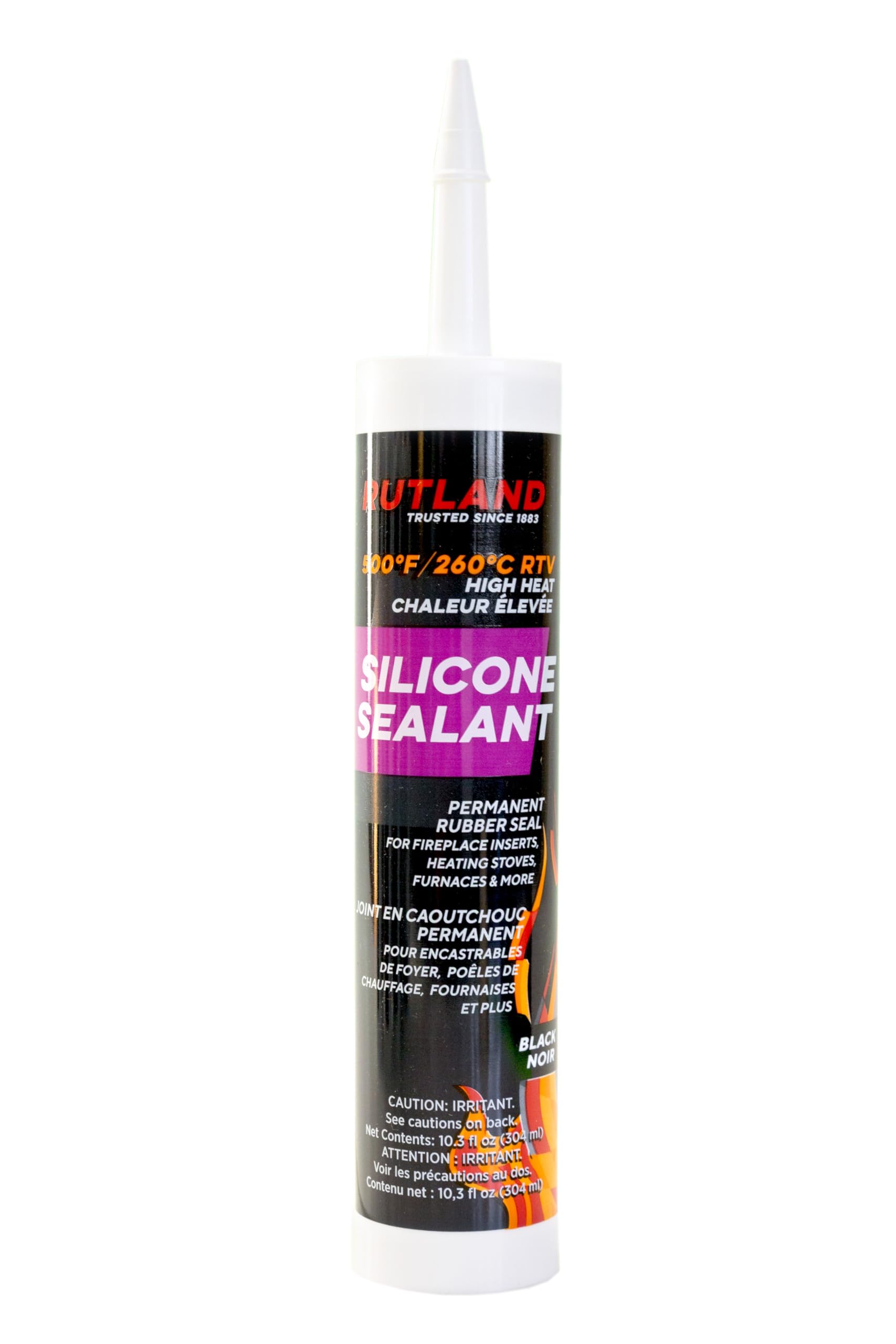
Rutland’s 500°F-rated black RTV silicone is engineered for sealing fireplace inserts, chimney joints, and wood stove pipe connections. Its acetoxy cure system creates a tough but flexible seal that withstands continuous exposure at 450°F and intermittent spikes up to 500°F. The black color blends naturally with stove pipes and fireplace surrounds, so repairs do not look patched.
Users specifically cite its superior performance compared to automotive-grade alternatives like Ford Grey or Permatex when used on metal inserts and transmission gaskets that cycle between freezing winters and high heat. The formula adheres to glass, metal, wood, masonry, and most plastics without priming. It is waterproof, UV stable, and non-corrosive, which makes it a strong candidate for outdoor solar panel repairs and heat shielding behind stoves.
The 10.3-ounce cartridge requires a standard caulk gun for application. The initial vinegar-like odor during the first burn is noticeable, reviewers confirm it burns off quickly. For sealing air gaps in a flue or attaching ceramic tiles to a hearth, this silicone delivers a permanent, heat-proof seal that outlasts cheaper options.
Why it’s great
- Maintains flexibility at 450°F continuous
- Black color blends with stove and fireplace hardware
- Adheres to glass, metal, wood, brick, and plastic
Good to know
- Strong acetic acid odor during first heat cycle
- Requires a caulk gun for application
- Messy to apply without gloves
3. LavaLock Food Safe BBQ Grade RTV Silicone

This clear RTV silicone is formulated specifically for food-contact applications, meeting MIL-A-46106A and 21 CFR 177.2600 specifications. That certification makes it a safe choice for sealing smoker gaskets, repairing cracked waffle iron plates, or bonding surfaces inside a grill where food may be present. The 450°F heat rating covers the operating range of most home smokers and grills.
Customers have used it to seal cracked plastic on infrared ovens, bond ceramic grill surfaces, and reseat smoker gaskets — with one user reporting a year of trouble-free performance on a repair that kept a full-size oven out of a landfill. The paste consistency allows for precise application through the included nozzle tip, though some users noted the tip can pop off during use if not pressed on firmly. The tube is dated with a “born on” stamp for freshness tracking.
The 3-ounce tube is small but enough for multiple gasket applications. Cure time is 24 hours before exposing the bond to heat. At this price point, you get food-grade certification that larger commodity tubes cannot match, making it the smart choice for anyone repairing cookware or grill components that touch food directly.
Why it’s great
- Certified food-contact safe for grill and smoker repairs
- Clear color blends with most hardware finishes
- Contains application nozzle for precise dispensing
Good to know
- Applicator tip may dislodge during use
- 24-hour cure before heat exposure
- Wear gloves; silicone sticks aggressively to skin
4. 3M Max Strength 90 Multi-Surface Contact Adhesive
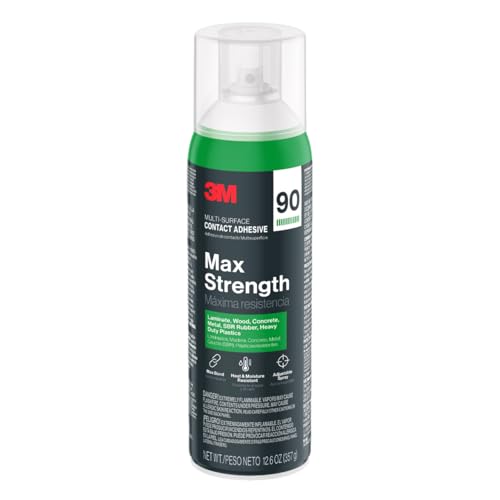
3M’s 90-NAT is not a high-temperature sealant in the same sense as a 500°F RTV, but its spray format is unmatched for bonding large surface areas where moderate heat and moisture resistance are needed. It creates a max-strength bond in just 10 minutes and works on laminate, wood, metal, concrete, rubber, and heavy-duty plastics. The adjustable nozzle allows for precision or wide-coverage patterns, reducing overspray waste.
Users report successful applications in marine environments, RV paneling, and acoustic soundproofing projects where heat from sun exposure or engines can reach uncomfortable levels. The low-VOC formula meets California Air Resources Board requirements, making it more pleasant to use indoors than older spray adhesives. It is not designed for direct firebox contact, but it handles the ambient heat behind a stove surround or the engine bay of a car quite well.
The 12.6-ounce can provides excellent coverage for countertops, craft assemblies, and construction laminates. The bond remains slightly flexible, which helps when materials expand and contract with temperature changes. If your project involves sprayable coverage over a broad area rather than a bead-sealed joint, this is the strongest option in the category.
Why it’s great
- Bonds in 10 minutes with adjustable spray pattern
- Low-VOC and CARB-compliant for indoor use
- Heat and moisture resistant for multi-surface use
Good to know
- Not rated for direct heat-source contact above ~200°F
- Aerosol format cannot be used for sealing joints or gaps
- Longer wait time before mating in high humidity
5. Whirlpool Y055980 High Temperature Adhesive

This genuine Whirlpool replacement adhesive uses a high-temperature polymer gel formula specifically designed for securing rear ball bearings in clothes dryers. It fills a narrow but essential niche: if your dryer is making a thumping noise during spin, the rear bearing often needs to be reseated with a heat-stable adhesive that can handle the sustained temperatures inside the back panel.
Customers report it works perfectly on Kenmore and Whirlpool dryers, with some even using it to re-bond teflon snubber pads in older washing machines. The gel consistency stays in place during assembly without running, and it reaches a full cure in 24 hours. It is not designed for open-fire repairs like a stove pipe sealant, but for an appliance repair context, it is the correct engineered solution.
The 1.6-ounce tube is small, and the price per ounce is higher than general-purpose adhesives. However, the peace of mind of using an OEM-formulated part for a rotating assembly that sees both heat and vibration is worth the premium for anyone wanting a lasting fix on their washer or dryer. If your repair is not an appliance bearing, choose a broader-use glue from the list above.
Why it’s great
- OEM-specified for high-heat dryer bearing repairs
- Gel consistency stays put during assembly
- Proven fix for 20+ year old washing machine snubber rings
Good to know
- Small tube at a premium cost per ounce
- 24-hour cure before appliance use
- Only recommended for bearing and drum seal jobs — not for fireproofing or grills
FAQ
Can I use high-temp silicone on a pizza stone crack repair?
How long should I wait before firing up a stove after applying high-heat silicone?
Is sodium silicate adhesive safe for drinking water containers if cured?
Will 3M 90-NAT spray adhesive hold up behind a wood stove surround?
Final Thoughts: The Verdict
For most users, the glue for heat resistance winner is the Lynn Manufacturing Sodium Silicate because its 2000°F rating covers virtually any residential repair scenario, from firebrick to ceramic stoves. If you need a flexible seal that handles expansion and contraction, grab the Rutland High Heat Silicone. And for food-contact smoker gasket repairs where certification matters, nothing beats the LavaLock Food Safe RTV.