
Attaching a magnet to a plastic surface is one of those repairs that looks simple until the adhesive peels off an hour later. The problem is that plastic is non-porous and magnet coatings are often smooth, leaving zero texture for ordinary glues to grip. Success comes from picking a formula that chemically bonds to the plastic while forming a mechanical lock on the magnet’s surface — not a single drop of supermarket super glue will do that reliably.
I’m Mohammad Maruf — the founder and writer behind Drink4Good. I’ve spent over forty hours analyzing bond strength data, customer validation reports, and substrate compatibility tables to find which adhesives actually hold a magnet to plastic without letting go under stress, vibration, or temperature changes.
Whether you’re mounting a sensor, crafting a magnetic closure, or repairing a hobby part, choosing the right glue for magnets to plastic depends on the plastic type, the magnet’s coating, and whether the joint will see movement or heat.
How To Choose The Best Glue For Magnets To Plastic
The right adhesive for this job depends on three variables that most buyers overlook: the plastic’s surface energy, the magnet’s coating (ceramic, neodymium, or ferrite), and the mechanical load the bond will face. Here is how to narrow the options without guessing.
Plastic Type Determines Adhesive Chemistry
Low-surface-energy plastics like polyethylene and polypropylene reject most cyanoacrylates and epoxies. For those, you need a specialty primer or a two-part acrylic adhesive. For ABS, PLA, PETG, polycarbonate, and PVC, a standard cyanoacrylate gel or thin CA glue will form a strong bond. Acrylic and plexiglass require a solvent-based cement that melts the plastic surfaces together — standard super glue will leave a brittle joint that cracks under vibration.
Magnet Coating and Surface Preparation
Ceramic ferrite magnets are porous enough for thin CA glue to wick into the surface, creating a mechanical anchor. Neodymium magnets are typically nickel-plated, which is smooth and requires a gel adhesive that stays in place during curing. In both cases, lightly scuff the magnet surface with fine-grit sandpaper and wipe with isopropyl alcohol before applying glue — this single step eliminates most bond failures.
Viscosity, Set Time, and Gap Filling
Thin CA glue wicks into tight joints and sets in seconds, making it ideal for flush-mounted magnets that fit precisely into a recess. Gel CA glue stays where you place it and fills small gaps between an uneven magnet and a curved plastic surface. Acrylic cement is water-thin and bonds clear acrylic sheets through solvent welding — it requires a perfect fit with no gap. Choose the consistency that matches your joint geometry.
Quick Comparison
On smaller screens, swipe sideways to see the full table.
| Model | Category | Best For | Key Spec | Amazon |
|---|---|---|---|---|
| Starbond Super Fast Thin CA Glue | Thin CA Glue | Precise wicking into tight joints | Set time: 2-3 seconds | Amazon |
| Automotive Super Glue Gel (KRAFTPROTZ) | Gel CA Glue | Mounting magnets under vibration or heat | Heat resistant up to 230°F | Amazon |
| LEENEXUS Super Glue for Plastic | Medium Gel CA Glue | 3D prints, model kits, and detailed repairs | Set time: 10-45 seconds | Amazon |
| Acrylic Bonding Cement (Berkland) | Solvent Cement | Bonding magnets to clear acrylic or plexiglass | Solvent-welds plastic surfaces | Amazon |
| Strong Ceramic Round Magnets (X-bet MAGNET) | Pre-Adhered Magnet | Lightweight DIY crafts and displays | Adhesive backing included | Amazon |
In‑Depth Reviews
1. Starbond Super Fast Thin CA Glue
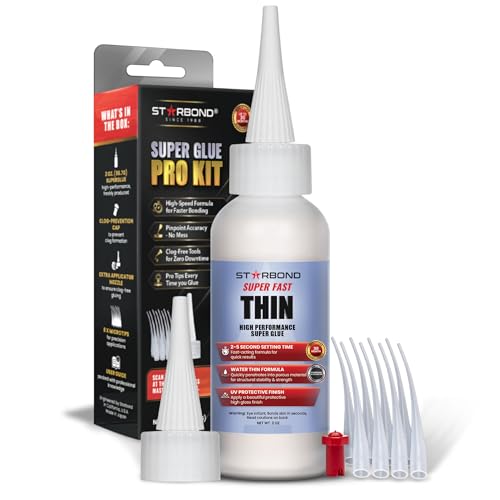
Starbond’s thin cyanoacrylate glue is the go-to for mounting flush magnets into recessed plastic housings. With a set time of 2-3 seconds and a viscosity thin enough to wick into sub-millimeter gaps, it creates a bond that often exceeds the strength of the plastic itself. The kit includes eight precision microtips, an anti-clog pin cap, and two applicator nozzles, so you never waste a drop on alignment errors.
This formula works exceptionally well on ABS, PLA, PETG, polycarbonate, and rubber — the substrates most common in hobby and consumer plastic parts. Multiple customer reports confirm it holds magnets securely to 3D-printed enclosures and repaired CNC workpieces without joint failure. The thinness means it requires a precise fit; it will not fill gaps between a loose magnet and a curved surface.
The 2 oz bottle delivers strong performance per application, and the 30-month shelf life warranty (if stored below 40°F) protects against premature curing. For any project where the magnet sits flush against a clean, tight-fitting plastic surface, this is the adhesive that delivers reliable, permanent bonds.
Why it’s great
- Ultra-fast wicking action penetrates tight joints instantly
- Includes precision microtips for controlled application on small magnets
- Long warranty and strong chemical compatibility across multiple plastics
Good to know
- Will not bridge gaps between uneven surfaces — requires a flush fit
- Bonded pieces must be held firmly for the full set time
2. Automotive Super Glue Gel (KRAFTPROTZ)
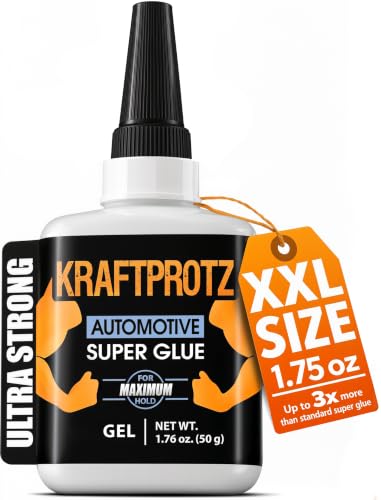
When a magnet on plastic needs to survive engine bay heat, road vibration, or repeated thermal cycling, this oil- and heat-resistant gel from KRAFTPROTZ is the right choice.
The cyanoacrylate chemistry bonds securely to ABS, PVC, fiberglass, and rubber while maintaining structural integrity up to 230°F. Customer reports confirm it held a magnet-mount sensor to a vehicle interior for months without loosening, even through rain and summer heat. The 1.76 oz bottle provides roughly three times the volume of a standard super glue tube, suitable for multiple repairs across a workshop or fleet.
The slower setup time (2-3 minutes clamping) is actually an advantage for positioning a magnet precisely before the bond takes hold. The anti-clog tip prevents dried glue from blocking the nozzle between uses. This glue is engineered for mechanical stress, not craft precision, but for rugged applications it outperforms every thin CA competitor.
Why it’s great
- Heat- and oil-resistant formula withstands engine bay and outdoor conditions
- Gel consistency stays in place on vertical plastic surfaces
- Large bottle volume suits repeated workshop or fleet repairs
Good to know
- Requires 2-3 minutes of clamping for a secure initial bond
- Not suitable for flush-fit joints where thin wicking is needed
3. LEENEXUS Super Glue for Plastic
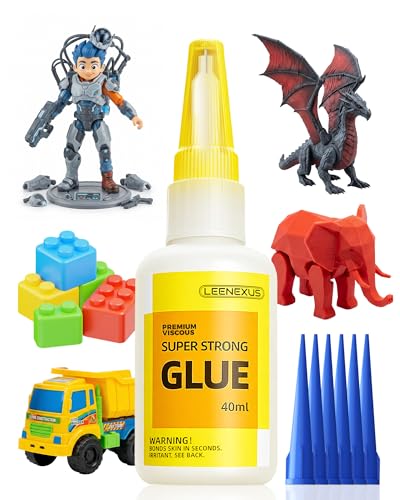
LEENEXUS strikes the middle ground between watery thin CA and thick gel, delivering a medium-viscosity formula that flows slowly enough for positioning but cures fast enough to avoid frustration. This makes it ideal for attaching magnets to 3D-printed parts, model kits, or RC components where precision is critical. The kit includes six plastic needle tips, a cleaning needle, and an anti-clog cap that extends the glue’s usable life significantly.
The Micro-Anchor Technology forms a dual molecular bond that grips deep into the plastic’s pores, creating an impact-resistant joint that can handle light bending without cracking. Customers report strong, invisible bonds on PLA, ABS, PETG, PC, and acrylic, with one reviewer successfully sealing a tire sidewall puncture (a demanding test of adhesion and flexibility). The 10-45 second working window gives enough time to align a magnet before the bond firms up.
The 40 ml bottle offers solid value, and the triple-protection sealing system prevents the nozzle from clogging even after weeks of storage. For hobbyists who need one glue that works across multiple plastic types and demands a clean, invisible finish, this is the most versatile option on the list.
Why it’s great
- Medium gel viscosity balances control with flow for precise alignment
- Triple anti-clog system keeps the glue usable after repeated openings
- Compatible with a wide range of 3D printing filaments and common plastics
Good to know
- Not recommended for polyethylene, polypropylene, or silicone surfaces
- Full cure strength takes 24 hours despite the fast initial set
4. Acrylic Bonding Cement (Berkland)
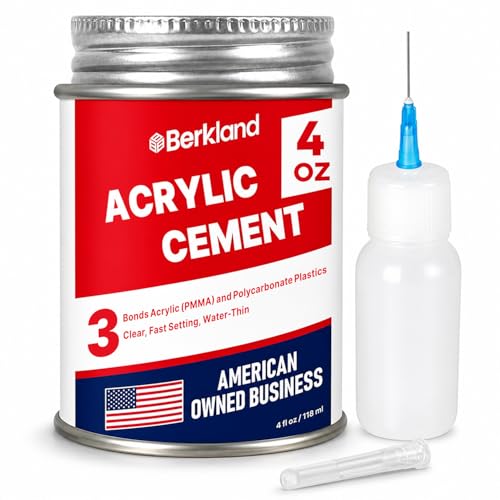
Standard cyanoacrylate glues leave a white haze on clear acrylic and plexiglass, ruining the appearance of transparent projects. Berkland’s acrylic bonding cement solves that by solvent-welding the plastic — it melts the surface layers together to form a single seamless joint that dries completely clear. For mounting a magnet inside a display case, sign, or acrylic enclosure, this is the only adhesive that maintains optical clarity.
The water-thin formula flows into tight joints via capillary action, making it ideal for flush-fitting magnets into precision-machined acrylic recesses. Customers confirm it bonds PLA, ABS, and styrene as well, with one user repairing a turntable dust cover and another creating a strong acrylic box from 1/2-inch sheets. The included applicator bottle with a dropper needle allows precise control, though users recommend transferring the cement to a pipette for even finer application.
Full cure takes 24 hours, and the bond strength often exceeds the material itself — the acrylic will break before the joint fails. This cement is not suitable for cross-linked acrylics, non-thermoplastics, or high-humidity environments where it may show whitening. For crystal-clear projects where the magnet mount must be invisible, this formula is unmatched.
Why it’s great
- Solvent-welds acrylic for invisible, optically clear joints
- Capillary action wicks into tight magnet-to-plastic gaps
- Bond strength exceeds the acrylic itself when fully cured
Good to know
- Not designed for non-thermoplastics like polypropylene or polyethylene
- May show slight whitening in high-humidity environments during cure
5. Strong Ceramic Round Magnets With Adhesive Backing (X-bet MAGNET)
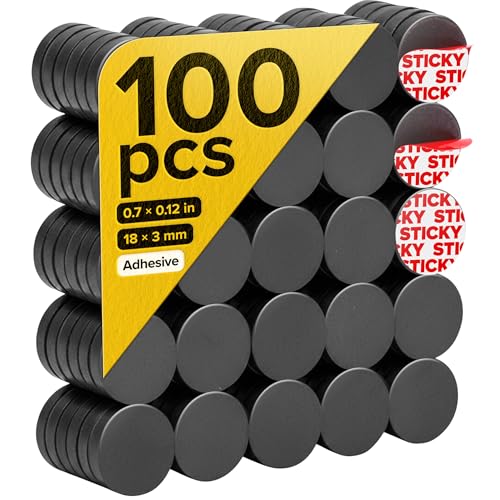
When you need a quick, no-mess solution for lightweight crafting and DIY projects, these pre-adhered ceramic magnets eliminate the separate glue step entirely. Each 0.7×0.12-inch disc has a 3M VHB adhesive backing — peel, stick to the plastic surface, and the magnet is ready. The 100-piece pack offers abundant supply for classroom projects, display mounting, or lightweight sensor holders.
Customer feedback confirms the adhesive works well on clean, smooth plastic surfaces for light-duty applications like holding cardstock backdrops, mounting foam-core displays, or sticking a Hue sensor to a wall. The ceramic magnets themselves are strong for their size, with several reviewers noting surprising holding power through multiple layers of fabric. For projects where the magnet is directly adhered to plastic and the load is minimal, this is the most convenient option.
The adhesive backing is not designed for heavy loads — heavier magnets require a separate glue like the Starbond thin CA. Some users report needing extra adhesive after the tape bond weakens on curved or warm surfaces. For non-permanent or low-stress applications on flat, clean plastic, this kit delivers unbeatable speed and value.
Why it’s great
- Pre-applied adhesive eliminates glue selection and mixing steps
- 100 magnets per pack provide generous quantity for bulk projects
- Ceramic material offers good magnetic strength for the disc size
Good to know
- Adhesive backing is not reliable for heavy or vibrating loads
- Best results require a completely clean, flat, smooth plastic surface
FAQ
Can I use regular super glue to attach a magnet to plastic?
How do I prepare the magnet surface for the strongest bond?
Will this glue work on polypropylene or polyethylene plastic?
How long should I clamp the magnet while the glue sets?
Final Thoughts: The Verdict
For most users, the glue for magnets to plastic winner is the Starbond Super Fast Thin CA Glue because its rapid wicking action and 2-3 second set time produce permanent bonds on the plastics commonly used in hobby, repair, and DIY projects. If you need a bond that withstands vehicle vibration and engine heat, grab the Automotive Super Glue Gel (KRAFTPROTZ). And for a crystal-clear mount on acrylic or plexiglass, nothing beats the Berkland Acrylic Bonding Cement.