
Marine carpet lives in a world of constant moisture, UV exposure, and foot traffic. A standard household adhesive will fail within weeks, leaving you with curling edges, bubbling seams, and a slippery hazard underfoot. The right glue resists water absorption, flexes with temperature shifts, and bonds aggressively to the rubber, vinyl, or polypropylene backing that marine carpets use.
I’m Mohammad Maruf — the founder and writer behind Drink4Good. I’ve spent countless hours analyzing solvent-based formulations, cure times, and real-world failure modes so you can choose an adhesive that actually holds up to the marine environment.
Whether you’re laying new carpet on a pontoon deck, patching a torn vinyl seat bottom, or bonding artificial turf to a trailer step, the right choice starts with a focused look at the glue for marine carpet that matches your specific substrate and exposure conditions.
How To Choose The Best Glue For Marine Carpet
Grabbing the first can of spray adhesive off the shelf is a gamble that rarely pays off on a boat. Marine carpet adhesives fall into a few distinct chemical families, and each one behaves differently on rubber-backed carpet, woven polypropylene, or closed-cell foam. Understanding the substrate, the cure profile, and the flexibility requirement is the difference between a five-year bond and a season-long frustration.
Solvent-Based vs. Water-Based Chemistry
Solvent-based contact cements (toluene, acetone, or MEK formulations) penetrate soft vinyl and rubber backings aggressively, creating a mechanical weld that is both waterproof and heat resistant. Water-based acrylics are safer to breathe and easier to clean, but they tend to release their grip under sustained moisture cycles and high temperatures found on a dark-colored deck in direct sun. For marine environments, solvent-based adhesives dominate because their cure remains flexible and waterproof even when fully submerged.
Open Time and Tack Window
Large sheets of marine carpet demand an adhesive that stays wet long enough to spread across the entire surface and tweak alignment before bonding occurs. Products with open times of 30 to 60 minutes (like the 3M 94 ET spray) give you a generous positioning window. Fast-tack options like HH-66 vinyl cement grab in seconds, which is excellent for patches and small repairs but unforgiving for full-deck installations. Choose your open time based on the scale of your project.
Flexibility After Full Cure
Marine carpet doesn’t sit on a rigid surface once the boat hits chop. The deck flexes, the carpet stretches, and a brittle glue line will crack under tension. Look for adhesives that remain pliable after a 24-hour full cure — typically contact cements and vinyl cements that retain elastomeric properties. Products that dry rock-hard (like epoxy or construction adhesives) are unsuitable for marine carpet because they will separate from the backing the first time the deck twists.
Quick Comparison
On smaller screens, swipe sideways to see the full table.
| Model | Category | Best For | Key Spec | Amazon |
|---|---|---|---|---|
| HH-66 Vinyl Cement 32 oz | Vinyl Contact Cement | Large deck carpet & vinyl repairs | Submersible flexible bond to -30°F | Amazon |
| 3M Hi-Strength 94 ET Spray | Spray Contact Adhesive | Large surface lamination & carpet | 60-minute repositioning window | Amazon |
| Amazing Goop Marine (3-Pack) | Tube Adhesive/Sealant | Small patches, seams, and wire seals | UV-resistant, stays flexible under vibration | Amazon |
| HH-66 Toluene Free Vinyl Cement | Low-VOC Vinyl Cement | Indoor or enclosed marine spaces | Applies underwater, serviceable to -30°F | Amazon |
| Dap Weldwood All-Weather | Outdoor Carpet Adhesive | Plywood deck carpet & artificial turf | Solvent-based, thick trowel-grade consistency | Amazon |
In‑Depth Reviews
1. HH-66 Vinyl Cement 32 oz
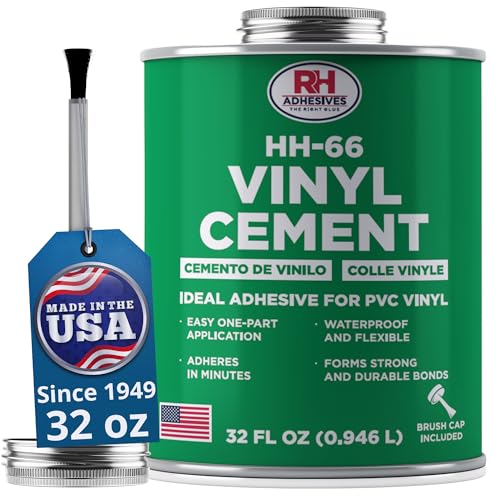
The HH-66 32 oz can is the professional standard for marine vinyl and carpet installations. Its solvent-based formula penetrates deep into the carpet backing and creates a waterproof, flexible weld that remains serviceable from -30°F up to 150°F. The built-in brush cap delivers controlled application across large surfaces without the overspray of aerosol cans. Multiple customer reports confirm it holds vinyl patches on kayaks, inflatables, and pool liners even when applied underwater, making it equally capable for deck carpet and seat repairs.
Full cure requires 24 hours, but the initial tack is fast enough that you can mate large panels within minutes. The solvent odor is strong, so a well-ventilated workspace is non-negotiable. One 32 oz can covers roughly 12 to 16 square feet of carpet-to-deck bond if applied generously, which is sufficient for a small boat deck or multiple patch jobs. Buyers consistently report that tarp-to-tarp bonds survive months of rolling and flexing, while the manufacturer’s IAPMO listing adds a layer of certified confidence.
For a full deck re-carpeting or any large marine vinyl project, this is the adhesive that delivers a permanent bond without the guesswork. The 32 oz format hits the sweet spot between sufficient volume and manageable container size for most DIY boat owners.
Why it’s great
- Submersible bond remains flexible even in freezing temperatures
- Built-in brush cap allows even application on large panels
- Proven on vinyl, PVC, canvas, and neoprene substrates
Good to know
- Strong solvent odor requires excellent ventilation
- Fast tack leaves little room for repositioning after 5-10 seconds
2. 3M Hi-Strength 94 ET Spray Adhesive
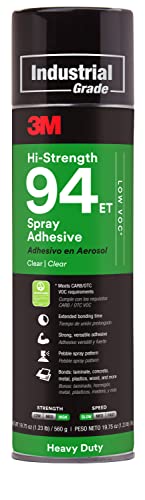
3M’s 94 ET spray adhesive is the go-to choice when you need to bond marine carpet to plywood or metal decks and require a long repositioning window. Its aggressive tack combined with up to 60 minutes of open time means you can spray an entire 4×8 sheet and still shift the carpet into perfect alignment before the bond locks. The low-VOC formulation is GREENGUARD Certified and compliant with CARB and SCAQMD standards, making it less harsh than traditional solvent-based contact cements in enclosed spaces.
The aerosol format ensures an even, thin coating that eliminates puddles and thick ridges common with trowel-grade adhesives. It bonds metals, wood, rubber, carpet, foam, and fabric equally well, which makes it a versatile addition to any boat workshop. One 19.75 oz can covers roughly 25 to 30 square feet per coat, but large installations typically require two coats per surface for maximum strength. Several verified buyers report successful use in freezing temperatures for attaching foam soundproofing, indicating excellent cold-weather performance.
If your project involves large carpet sheets that need careful alignment, the 94 ET’s extended open time is a practical advantage that fast-tack cements cannot match. Just be aware that the 60-minute window means you should fully prep the surface before spraying — once that adhesive is on, the clock is ticking.
Why it’s great
- 60-minute open time provides stress-free repositioning on large panels
- Low-VOC and GREENGUARD Certified for safer indoor use
- Bonds diverse substrates including metal, wood, rubber, and foam
Good to know
- Needs good ventilation despite low-VOC formulation
- Full 24-hour cure required before exposing bond to heavy load
3. Amazing Goop Marine Contact Adhesive and Sealant (3-Pack)

Amazing Goop Marine is not a full-deck adhesive — it is a thick, paste-grade contact adhesive and sealant engineered for small-area repairs, edge sealing, and underwater patching. The 3-pack of tubes gives you three separate nozzles, each one ideal for applying precise beads along ripped seams, around wire penetrations, or under a lifting carpet corner. Its UV resistance and flexible cure prevent the cracking that typically destroys brittle epoxies on exposed deck edges.
Multiple long-term users report using this same product for camper roof repairs, kayak wire seals, wader patching, and even clothing fixes, indicating genuine multi-material adhesion. The consistency is thick enough to stay where you put it without running, but thin enough to spread into a thin film under pressure. Full cure at 24 hours reveals a clear, paintable bond that remains flexible under the vibration common to outboard-powered boats.
Because the tube format makes large-area coverage impractical, this is best kept as a repair and detail adhesive rather than a primary carpet-laying product. For reattaching a carpet edge that curled at the hatch opening, sealing a staple penetration, or gluing down a corner patch after an incidental rip, the Amazing Goop delivers a clean, waterproof fix that stays put.
Why it’s great
- Tube format allows pinpoint application on repairs and seams
- UV resistant and paintable for a finished look on visible patches
- Clear cure maintains flexibility without becoming brittle
Good to know
- Not designed for bonding large sheets of marine carpet
- Requires 24-hour undisturbed cure for maximum strength
4. HH-66 Toluene Free Vinyl Cement 8 oz
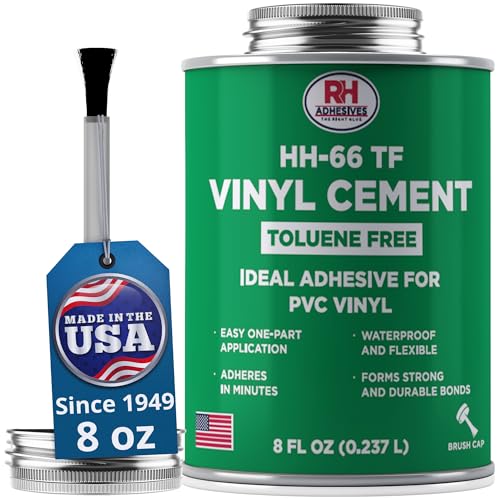
The toluene-free version of HH-66 maintains the same industrial-grade vinyl bonding capability as the original but with a noticeably lighter odor and lower toxicity. This makes it the preferred choice when you need to apply a marine carpet or vinyl adhesive inside a cabin, an enclosed deck area, or any space where adequate cross-ventilation is hard to achieve. The formula penetrates PVC and flexible vinyl surfaces aggressively and cures to a waterproof, flexible bond that remains serviceable between -30°F and 150°F.
In real-world use, the 8 oz can is best suited for smaller repair jobs such as patching a pontoon canvas cover, reattaching vinyl trim, or fixing a small rip in a boat seat. A verified buyer successfully repaired a ripped pontoon canvas cover and noted the bond held well after repeated folding and weather exposure. Cleanup is manageable with 91% isopropyl alcohol, which is a practical advantage over traditional toluene-based cements that require stronger chemical solvents.
The trade-off is that the bond strength on extremely thin vinyl wraps may be slightly less aggressive than the full-toluene version, but for typical marine carpet backings and moderate-thickness vinyl, the difference is negligible. If you prioritize breathing comfort and indoor application safety without sacrificing waterproof flexibility, this is the right pick.
Why it’s great
- Lower odor makes enclosed-space application more tolerable
- Cleans up with 91% alcohol instead of harsh solvents
- Bonds underwater and remains flexible in extreme temperatures
Good to know
- Not compatible with polyethylene (blue tarp) materials
- 8 oz size goes quickly; budget 32 oz for full deck jobs
5. Dap Weldwood All-Weather Outdoor Carpet Adhesive (Quart)

Dap Weldwood is a solvent-based adhesive formulated specifically for outdoor carpet and artificial turf bonded to plywood, concrete, or metal substrates. Unlike the brush-on or spray formats above, this is a thick trowel-grade compound that you spread with a notched trowel, creating a continuous glue bed that prevents bleed-through on porous carpet backing. Its viscous consistency fills minor surface irregularities and ensures full contact even on rough pressure-treated plywood.
Verified buyers repeatedly call it the only adhesive to use for marine carpet on boat decks, noting that the bond survives water exposure better than any acrylic alternative. The tan color dries to a neutral tone that disappears under most carpet colors. Working time is generous at typical 80°F conditions, but the glue becomes stringy gum if left too long before mating the carpet, so pre-fitting the carpet before spreading adhesive is a wise step. The odor is strong and requires full outdoor ventilation — this is not a product for enclosed hatches without respiration protection.
One quart covers a limited area — multiple users recommend buying the gallon size for any complete deck job. This adhesive is ideal for those who prefer the traditional trowel method over spray application and need the gap-filling thickness that only a paste-grade compound provides. If you are laying carpet over an uneven plywood deck, the Weldwood’s body will bridge low spots that spray adhesives cannot fill.
Why it’s great
- Thick trowel consistency fills gaps in rough plywood decks
- Proven waterproof bond on marine carpet and artificial turf
- Generous working time accommodates large deck installations
Good to know
- Strong solvent fumes require outdoor or ventilated workspace
- Quart covers little area; gallon size recommended for full deck
FAQ
Can I apply the glue for marine carpet to wet plywood?
What is the best method to remove old marine carpet glue before reinstallation?
Will a spray adhesive hold up on polypropylene-backed marine carpet?
Final Thoughts: The Verdict
For most users, the glue for marine carpet winner is the HH-66 Vinyl Cement 32 oz because it delivers a flexible, waterproof, submersible bond that handles both full-deck carpet installations and vinyl patch repairs without compromise. If you need generous open time to align large panels, grab the 3M Hi-Strength 94 ET Spray. And for a low-odor option in an enclosed workspace, nothing beats the HH-66 Toluene-Free Vinyl Cement.