
Nothing kills a well-planned room refresh quite like the low, grinding sound of a mirror slowly slipping out of alignment days after you hung it. The wrong adhesive either lacks the grab to hold glass securely or, worse, chemically attacks the delicate silver backing, turning a crisp reflection into a cloudy mess. Getting this choice right means the difference between a one-and-done installation and a recurring headache of re-leveling and re-gluing.
I’m Mohammad Maruf — the founder and writer behind Drink4Good. I’ve spent years digging into the chemical formulations and mechanical properties of specialty adhesives, breaking down how things like cure time, solvent content, and flexibility determine real-world performance on glass surfaces.
After sorting through dozens of formulations and hundreds of user experiences, this guide cuts straight to the adhesives that deliver a lasting bond without damaging your mirror’s reflective coating. Here are my top picks for glue for mirrors that you can actually trust to stay put.
How To Choose The Best Glue For Mirrors
Picking the right adhesive for a mirror isn’t like grabbing any multipurpose glue off the shelf. The chemistry has to balance strong initial grab with long-term flexibility, and it absolutely must be non-corrosive to the reflective backing. Here are the key factors to weigh before you apply a single bead.
Solvent Content and Mirror Safety
The biggest risk with generic adhesives is solvent migration into the mirror’s silver or aluminum backing. Acidic silicones and solvent-based construction adhesives can etch or discolor the reflective layer over weeks or months. Look for neutral-cure silicones or hybrid polymer formulas explicitly labeled for mirror use — these cure without releasing corrosive byproducts.
Cure Time and Initial Tack
Some adhesives set fast enough to hold a mirror without tape or bracing within minutes, while others require 24 to 48 hours of supported curing. Fast-set options are convenient for simple wall mounts, but slower-curing formulas often allow more repositioning time — a trade-off worth considering if your wall surface is uneven or your layout is complex.
Color and Clarity
A translucent or white adhesive can be visible behind clear or beveled mirrors, especially if applied too thickly. Clear-drying formulas keep the finished look clean, while off-white or natural-tone adhesives may hide better behind standard silvered mirrors. Match the adhesive’s final appearance to your mirror’s edge treatment and substrate color.
Water and Humidity Resistance
Bathroom mirrors face a uniquely harsh environment of steam, condensation, and temperature swings. A waterproof or water-resistant formula prevents bond degradation over time. If the mirror is in a shower enclosure or above a sink, prioritize a waterproof sealant that also resists mold and mildew growth.
Quick Comparison
On smaller screens, swipe sideways to see the full table.
| Model | Category | Best For | Key Spec | Amazon |
|---|---|---|---|---|
| Loctite PL 530 | Construction Adhesive | Bathroom mirrors in wet areas | 15-minute set time | Amazon |
| CS-4300 Mirror Adhesive | Low-VOC Adhesive | Indoor installations with odor sensitivity | Solvent & isocyanate free | Amazon |
| Akfix 900N Clear Silicone | 100% Silicone | Large commercial or gym mirrors | Non-corrosive neutral cure | Amazon |
| Gorilla Max Strength Construction Adhesive | Clear Hybrid | Small repairs and DIY projects | Dries clear & hard rubber | Amazon |
| SELSIL Ultra Crystal Clear | Hybrid Sealant | Glass-to-concrete or metal bonding | 200 kg/m² load capacity | Amazon |
In-Depth Reviews
1. Loctite PL 530 Mirror, Marble and Granite Adhesive

Loctite PL 530 is formulated specifically for kitchen and bath substrates — mirrors, marble, and granite — making it the most targeted option for bathroom mirror installations. The 15-minute set time gives you just enough working time to align the mirror, then locks it in place without requiring tape or temporary bracing for hours. Users report that larger full-length mirrors hold securely after a single 24-to-48-hour cure cycle, even in rooms with high humidity.
The solvent-based chemistry delivers strong initial tack on non-porous glass surfaces, but the low-VOC formulation keeps indoor air quality concerns manageable during application. It works equally well on concrete, drywall, and painted walls, which makes it versatile for mounting mirrors over tile backsplashes or directly onto studs. The cartridge format requires a standard caulk gun, and the 10-ounce tube provides enough adhesive for one large mirror or several smaller ones.
Real-world reviews confirm that PL 530 stands up to outdoor cold and direct sunlight without degrading, as one user demonstrated by mounting mirror plates on plywood for passive solar heating. The only trade-off is the full 48-hour cure time for maximum strength — you’ll want to keep supports in place for two days before trusting the bond with heavy frames.
Why it’s great
- Engineered specifically for mirror, marble, and granite surfaces
- Fast 15-minute set time reduces waiting during installation
- Low-VOC formula suitable for indoor bathroom use
Good to know
- Requires a caulk gun for clean application
- Full structural cure takes 48 hours
- Solvent-based, so ventilation is still advised
2. CS-4300 Mirror Adhesive, Low Odor, VOC Compliant
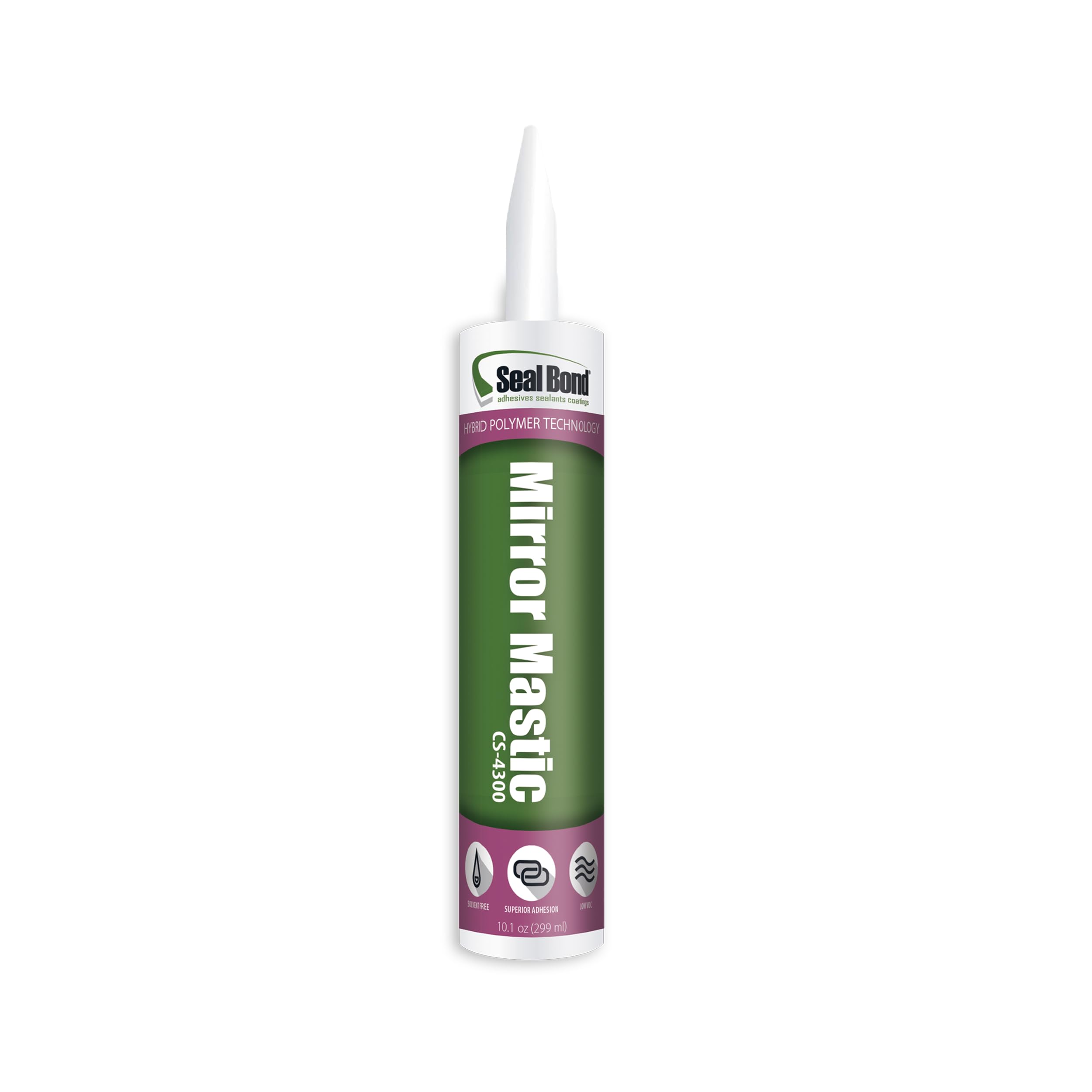
The CS-4300 from Seal Bond eliminates two of the biggest headaches in mirror installation: harsh chemical odor and long wait times. This solvent-free, isocyanate-free adhesive grabs almost instantly, allowing installers to skip tape or mechanical supports for most residential mirrors. Users report that a single tube applied in zig-zag and edge patterns on a 30-by-50-inch mirror held firmly without any additional bracing during the drying period.
With ultra-low VOC content, it meets both SCAQMD and CDPH standards, making it a strong choice for occupied homes, schools, or healthcare settings where air quality is a priority. The natural off-white color blends well behind standard silvered mirrors and won’t show through beveled edges. It’s also compatible with acrylic mirrors, which require a gentler chemistry than standard glass.
Experienced users note that the adhesive builds out well, filling small gaps between the mirror and uneven wall surfaces. The main downside is that a single 10.1-ounce cartridge feels excessive for a small vanity mirror — you may want to share a tube between multiple projects or have a second job ready. Still, for anyone who values a fast, low-odor installation, this is a premium performer.
Why it’s great
- Solvent and isocyanate-free for safe indoor use
- Instant grab eliminates need for tape or supports
- Compatible with both conventional and acrylic mirrors
Good to know
- Large cartridge size may be more than needed for small mirrors
- Off-white color may show behind clear glass edges
- Less gap-filling than paste-type adhesives
3. Akfix 900N Clear 100% Silicone Adhesive for Mirror
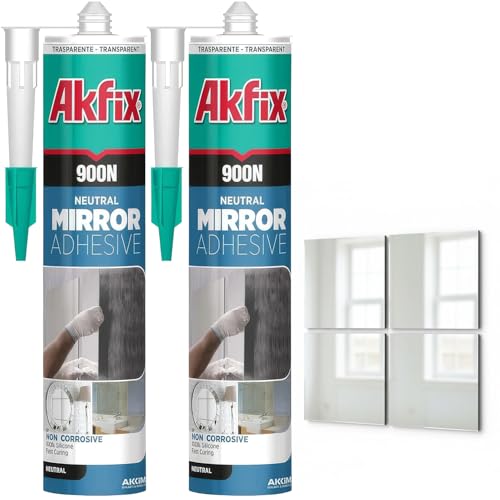
Akfix 900N is a 100 percent silicone adhesive formulated specifically for mirror walls in high-traffic commercial settings like shops, restaurants, and gymnasiums. Its neutral-cure chemistry means it won’t release acetic acid or other corrosive byproducts that can attack mirror backing over time. The clear finish keeps the bond invisible, which is a must for frameless mirror panels where aesthetics matter.
The two-pack format provides excellent value for larger installations, with each 10.5-fluid-ounce cartridge covering multiple mirrors or one expansive wall. The non-sag formula stays exactly where you apply it, even on vertical surfaces, and remains flexible after curing to accommodate building movement and temperature shifts. Users who followed the manufacturer’s application video reported that the adhesive grabbed well and held mirrors securely against painted walls and ceramic tiles alike.
One important caveat: this adhesive should not be used if the mirror has a plastic safety film backing, as the silicone may not bond properly to that surface. The caulk gun application requires a steady hand to avoid messy bead lines, but the reward is a clean, professional-grade installation that outlasts most standard silicone sealants.
Why it’s great
- Neutral-cure silicone is safe for mirror backing
- Two-pack offers exceptional value for large jobs
- Clear and flexible finish suits frameless installations
Good to know
- Not compatible with plastic-backed mirrors
- Requires a caulk gun for precise application
- Full cure takes 24 hours before heavy load
4. Gorilla Max Strength Construction Adhesive, Clear
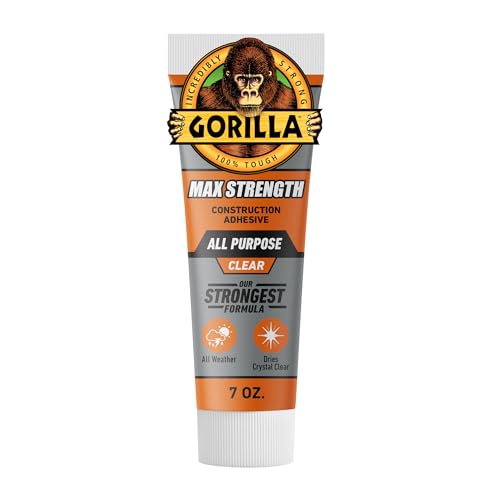
Gorilla’s Max Strength Construction Adhesive delivers a 2x stronger bond than their own Heavy Duty formula, all while drying completely clear. For small mirror repairs, craft mirrors, or attaching decorative mirrored tiles, this squeeze tube offers precise control without needing a caulk gun. The clear finish ensures no unsightly glue residue shows through the glass, keeping the focus on the reflection.
The waterproof bond holds up in both indoor and outdoor environments, as confirmed by a user who mounted magnets in a car interior that withstood summer heat without failure. It also fills gaps effectively, bridging small voids between the mirror and an uneven substrate. The 7-ounce tube is easy to handle, and the paste-like consistency stays where you place it without running down vertical surfaces.
On the downside, this adhesive is very sticky and difficult to remove from skin, so wearing gloves during application is strongly recommended. It also requires full 24-hour clamping for maximum strength, which can be inconvenient for quick repairs. For small-format mirror projects where clarity and waterproofing matter most, this is a reliable budget-friendly option.
Why it’s great
- Dries completely clear for invisible bonds on glass
- Waterproof and gap-filling for durable repairs
- Easy squeeze tube application without a caulk gun
Good to know
- Requires 24-hour clamping for full strength
- Very sticky and hard to clean off skin
- Not formulated specifically for mirror backing safety
5. SELSIL Ultra Crystal Clear Mounting Adhesive & Sealant

SELSIL Ultra Crystal Clear combines the mechanical strength of polyurethane with the flexibility of silicone in a single hybrid formula. Its 200 kg/m² load capacity means it can handle heavy mirrors, glass panels, and even stone veneers with confidence. The material cures to a true transparent finish that avoids the foggy look of standard silicone, making it ideal for glass shower enclosures and frameless mirror installations where clarity matters.
This adhesive works on damp or wet surfaces, which is a rare capability among mirror glues. It also remains odorless after curing, leaving no oily residue or chemical smell behind. Users have successfully bonded bird spikes to concrete ledges and sealed seams between butcher block and wall, noting that the hold becomes rock-solid within 24 hours.
The main complaint centers on application difficulty: the adhesive is extremely thick, requiring a large nozzle cut and significant force on a caulk gun to dispense smoothly. Beginners may find the effort surprising. Additionally, the hybrid chemistry may not be compatible with all mirror backings, so a small test patch is wise before committing to a full installation.
Why it’s great
- Hybrid formula combines polyurethane strength with silicone flexibility
- Genuinely transparent finish for frameless glass installations
- Bonds effectively on damp or wet surfaces
Good to know
- Very thick consistency makes application difficult
- Requires a sturdy caulk gun for dispensing
- Not specifically marketed as mirror-safe for all backings
FAQ
Can I use regular silicone caulk for mirrors?
How long does mirror glue take to cure before hanging the mirror?
Do I need to roughen the wall before applying mirror adhesive?
Will mirror adhesive damage my wall when removed?
Final Thoughts: The Verdict
For most users, the glue for mirrors winner is the Loctite PL 530 because it’s purpose-engineered for bathroom mirror installations, sets fast, and holds securely in humid conditions. If you want a low-odor, solvent-free option, grab the CS-4300 Mirror Adhesive. And for large commercial mirror walls or frameless glass panels, nothing beats the Akfix 900N Clear Silicone for its neutral-cure safety and high load capacity.