
Bonding plastic to concrete is a notoriously tricky join. The slick, non-porous surface of most plastics resists adhesion, while the porous, mineral-rich concrete soaks up liquid glues before they can form a grip.
I’m Mohammad Maruf — the founder and writer behind Drink4Good. I’ve analyzed hundreds of adhesive formulations, from consumer caulks to industrial epoxies, focusing on the tensile strength, cure chemistry, and surface compatibility that actually matter when gluing dissimilar materials like plastic and concrete.
This guide cuts through the marketing to deliver the most reliable, thoroughly-vetted options for any project. Whether you’re repairing a cracked planter, mounting an electrical box, or securing a bracket to a basement wall, the right glue for plastic to concrete makes the difference between a fix that lasts decades and one that fails overnight.
How To Choose The Best Glue For Plastic To Concrete
Selecting the right adhesive for plastic-to-concrete work is about matching the glue’s physical properties to the demands of the environment. You need to consider the plastic type (ABS, PVC, acrylic, or polypropylene), the load the bond will bear, the temperature range it will face, and whether the joint will be exposed to water. The following factors break down the most important specification points.
Tensile Strength and Load Requirements
Measured in PSI (pounds per square inch), tensile strength tells you how much pull the cured bond can withstand before breaking. For light-duty tasks like attaching a decorative plastic panel to a garage wall, an adhesive with 500–1000 PSI is sufficient. For structural repairs, such as mending a broken plastic water tank sitting on a concrete pad, you’ll want an epoxy or construction adhesive that delivers 3000–5000 PSI or higher.
Cure Time and Work Life
Single-part construction adhesives can take up to 24 hours to fully cure, but they offer a longer open time for repositioning parts. Two-part epoxies set much faster, often within 4–6 hours, but require careful mixing and immediate application. Polyester resin anchors set in under an hour, demanding you work quickly. Choose based on whether you value working time or speed of curing.
Waterproofing and Temperature Resistance
Outdoor projects, basement fixes, or bathroom repairs demand an adhesive that is both waterproof and resistant to temperature extremes. Look for a formulation that can withstand at least 0°F to 140°F, though epoxy can handle much higher spikes. If the bond will be submerged, an acrylic concrete fortifier mixed into a patch mortar provides the best durability against freeze-thaw cycling.
Quick Comparison
On smaller screens, swipe sideways to see the full table.
| Model | Category | Best For | Key Spec | Amazon |
|---|---|---|---|---|
| Loctite Power Grab Ultimate Crystal Clear | Construction Adhesive | Clear, discreet indoor repairs | Weatherproof to +140°F | Amazon |
| Gorilla Max Strength Construction Adhesive | Construction Adhesive | Gap-filling on irregular surfaces | 2x stronger than Heavy Duty | Amazon |
| J-B Weld Steel Reinforced Epoxy | Two-Part Epoxy | Heavy structural repairs | 5,020 PSI tensile strength | Amazon |
| Somafix Fast Curing Anchoring Adhesive | Polyester Resin | Anchoring fasteners into concrete | Fast-curing polyester resin | Amazon |
| SIKA SikaLatex R | Acrylic Fortifier | Bonding new concrete to old | 500 PSI bond strength | Amazon |
In‑Depth Reviews
1. Loctite Power Grab Ultimate Crystal Clear Construction Adhesive
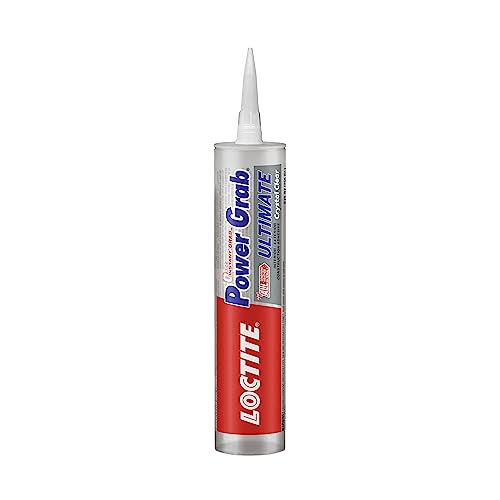
Loctite’s Power Grab formulation is a standout for jobs where aesthetics matter. It dries completely transparent with a consistency similar to silicone caulk, making it ideal for adhering clear plastic decorative panels or acrylic fixtures to concrete walls without visible glue lines. The bond remains flexible yet strong, resisting shrinkage over time.
The weatherproof rating from 0°F to 140°F covers most outdoor scenarios, and it bonds even when the concrete surface is slightly damp. The initial tack is high enough to reduce the need for bracing or nailing, which saves time on vertical installations. Users report successful repairs on metal brackets, stainless steel backsplashes, and ceiling tiles, all with minimal odor during application.
Cure time sits at 24 hours, which is standard for a single-part construction adhesive. The cartridge requires a standard caulk gun, and the tip must be sealed well to prevent hardening inside the tube. In freezing conditions below the rated range, the cure slows significantly, so plan your application for temperatures above the minimum.
Why it’s great
- Dries crystal clear for invisible repairs
- Waterproof and weatherproof for exterior use
- High initial tack reduces bracing time
Good to know
- Requires a caulk gun for application
- Cure time slows below 0°F
2. Gorilla Max Strength Construction Adhesive, Clear Glue, 2.5 Ounce Squeeze Tube (Pack of 2)
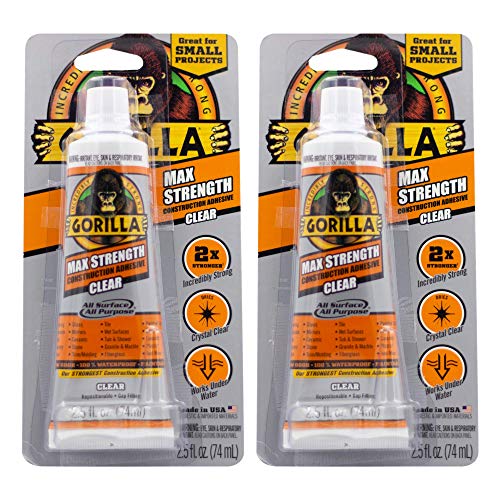
Gorilla claims this clear formula is twice as strong as its own Heavy Duty Construction Adhesive, and real-world tests back that up. The viscous, rubbery consistency fills gaps up to a quarter-inch, making it a top choice for bonding uneven or textured plastic to rough concrete. Users have successfully glued metal to wood and plastic to cement, with reports of the bond withstanding car interior heat without softening.
The squeeze tube design offers precise control, though the nozzle hole is larger than some prefer, so expect some overflow on application. It sets in about 30 seconds, with about 5 minutes of repositioning time, then requires 24 hours for full cure. The clarity after drying is excellent, leaving no white residue or discoloration on transparent plastics.
One user specifically noted it bonded well to cement and maintained a clear finish, though wished for a smaller dispensing hole to avoid gobs of glue. It is waterproof and paintable, which adds versatility. The pack of two tubes provides good volume for medium-sized projects.
Why it’s great
- Excellent gap-filling for uneven surfaces
- Dries crystal clear with no residue
- Waterproof and very strong bond
Good to know
- Nozzle hole is large, can cause glue gobs
- Very sticky and difficult to remove from skin
3. J-B Weld 8281 Professional Size Steel Reinforced Epoxy

J-B Weld Original is the gold standard for high-stress repairs, delivering a 5,020 PSI tensile strength that surpasses most consumer epoxies. The two-part system mixes at a 1:1 ratio into a dark grey paste that can be drilled, sanded, and tapped after a 15-hour cure. It bonds to virtually every common material including plastic, concrete, PVC, metal, and ceramic, making it a versatile fix for structural plastic-to-concrete joints.
Users have repaired leaking plastic rain barrels with concrete pads, mended concrete frog statues with attached plastic fittings, and fixed galvanized pipe connections, all with no leaks after full cure. The steel reinforcement is microscopic but gives the cured epoxy a brittle, razor-sharp edge if left peaked — careful shaping during application is needed. It also withstands temperatures up to 550°F, far exceeding standard construction adhesives.
The trade-off is the messy mixing process and the 24-hour recommendation for full strength. Some users noted the tubes contained significant air pockets, reducing the usable volume slightly. This is not a quick-fix adhesive; it is a permanent, industrial-grade repair material for when failure is not an option.
Why it’s great
- Extremely high tensile strength (5,020 PSI)
- Bonds to nearly all plastics and concrete
- Drillable, sandable, and heat-resistant to 550°F
Good to know
- Requires mixing and 24-hour cure for full strength
- Tubes may contain air pockets, reducing volume
4. Somafix Fast Curing Anchoring Adhesive for Concrete (10.1 fl oz / 300ml)
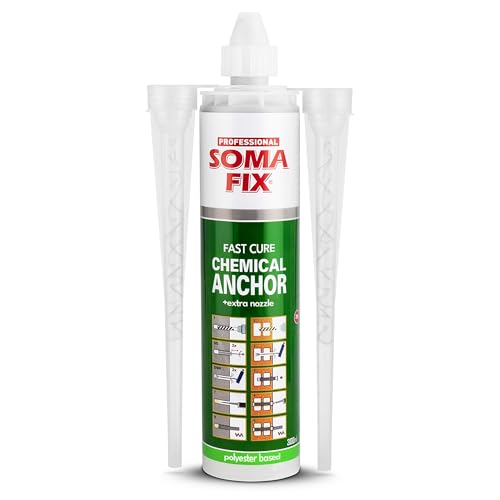
When your project requires securing plastic fixtures or threaded fasteners directly into concrete, this polyester resin anchor is purpose-built. It sets quickly — reports indicate it hardens within minutes, so you must have your fastener or plastic component ready before injection. The formula expands slightly without pressure, locking into the pores of concrete, brick, or stone.
The kit includes an extra mixing nozzle, which is a practical touch for multiple applications. Users have successfully fixed loose outdoor railings and anchored metal-to-concrete connections. The resin is compatible with hollow materials when used with a mesh sleeve, adding versatility for cavity walls where standard adhesives lack grip.
The paste consistency is easy to inject via the included nozzle, and the bond is reported to be as strong as more expensive alternatives from Sika. The fast cure time is the standout feature, but it means you cannot reposition once the part is seated. This is strictly for anchoring, not for broad surface bonding.
Why it’s great
- Very fast curing, saves project time
- Excellent for anchoring fasteners in solid concrete
- Comes with an extra nozzle for convenience
Good to know
- Sets very fast, requires immediate part insertion
- Not designed for broad surface bonding
5. SIKA SikaLatex R – Concrete Adhesive Glue, 1-Gallon

SikaLatex R occupies a unique niche: it is not a standalone adhesive but an acrylic fortifier that you mix into Portland-cement mortar or concrete to create a high-bond patch. When a plastic component such as a ceramic soap dish or a drainage pipe flange needs to be embedded into a concrete repair, this liquid additive transforms standard mortar into a bonding grout with 500 PSI tensile strength.
Users have used it to reattach ceramic fixtures to concrete walls, as well as to bond new concrete overlays over old surfaces. The acrylic latex resists freeze-thaw damage, making it ideal for outdoor patios and basement walls exposed to moisture. It does not create a vapor barrier, which is important for breathable masonry systems.
The full cure takes up to 30 days for maximum strength, though it is workable much sooner. This is a large, one-gallon container designed for multiple projects or professional use. It must be stored properly and has a one-year shelf life, so check the expiration date before starting.
Why it’s great
- Creates a powerful mortar bond for concrete repairs
- Resists freeze-thaw damage for outdoor use
- Large gallon container for multiple projects
Good to know
- Requires mixing with cement mortar, not ready-to-use
- Full strength takes 30 days to develop
FAQ
Can I use regular super glue to bond plastic to concrete?
How do I prepare a concrete surface for adhesion?
Is it safe to use these adhesives on drinking water containers?
Final Thoughts: The Verdict
For most users, the glue for plastic to concrete winner is the Loctite Power Grab Ultimate Crystal Clear because it combines a discreet clear finish with reliable weatherproof strength for everyday repairs. If you need a bond that can handle structural weight and survive drilling, grab the J-B Weld Steel Reinforced Epoxy. And for anchoring fasteners into concrete where speed is critical, nothing beats the Somafix Fast Curing Anchoring Adhesive.