
Nothing tests your patience like a plastic part that snaps the moment you try to glue it back together. Most adhesives grab hard, but they turn brittle—one twist, one temperature swing, and the repair pops apart. The right formulation for plastic-to-plastic bonding needs to handle flex, resist impact, and actually dissolve the surface for a molecular weld rather than just a surface skid.
I’m Mohammad Maruf — the founder and writer behind Drink4Good. I’ve spent years sifting through polymer chemistries and real-world user reports to separate the adhesives that genuinely bond polypropylene, ABS, and acrylic from those that simply claim to.
This guide breaks down the best options available right now, giving you a clear, no-nonsense path to a lasting repair. Whether you’re fixing a cracked bumper, reattaching a kayak handle, or joining acrylic sheets, finding the right glue for plastic to plastic comes down to matching the chemistry to the specific polymer you’re working with.
How To Choose The Best Glue For Plastic To Plastic
Choosing the right adhesive starts with identifying the plastic type. Not all plastics share the same surface energy, and an adhesive that works beautifully on ABS may simply bead up on polypropylene. You also need to consider the stress the bond will face—constant vibration, water exposure, or sheer weight demand different formulations.
Identify Your Plastic Substrate
Check the recycling symbol on the part: ABS (7-Other), Acrylic (7-Other), HDPE (2), LDPE (4), PP (5), PVC (3). Cyanoacrylate and epoxy work well on high-energy plastics like ABS and acrylic. Polyethylene and polypropylene require a specialized adhesive like a urethane-based system or a two-part epoxy with a primer, or you’ll get a bond that peels off with light pressure.
Match Viscosity to the Job
Water-thin adhesives (like acrylic cement) wick into tight seams via capillary action—ideal for hairline cracks and transparent repairs. Thick, gel-like formulas fill gaps and stay put on vertical surfaces, making them the right choice for reassembling broken brackets or filling chips before clamping.
Consider Cure Time and Working Life
Fast-setting glues (seconds to a few minutes) speed up small repairs but leave no room for adjustment. Two-part epoxies and slower-setting urethanes give you five to thirty minutes to align parts before the chemical reaction peaks. For large surface areas or intricate assemblies, a slower cure prevents panic and misalignment.
Quick Comparison
On smaller screens, swipe sideways to see the full table.
| Model | Category | Best For | Key Spec | Amazon |
|---|---|---|---|---|
| Starbond Thick CA Glue with Activator | Cyanoacrylate | Gap filling on ABS & acrylic | Honey-like viscosity + activator spray | Amazon |
| J-B Weld Plastic Bonder | Urethane | High-stress repairs on PP & PE | 2,600 psi shear strength (syringe) | Amazon |
| Starbond 5 Minute Epoxy Pro Kit | Epoxy | Flexible bonds on mixed plastics | 2,600 lb shear strength | Amazon |
| Berkland Acrylic Bonding Cement | Solvent Cement | Acrylic sheet welding | Water-thin, capillary flow | Amazon |
| Loctite Vinyl, Plastic & Fabric Adhesive | Flexible Adhesive | Vinyl and fabric-to-plastic repairs | Flexible bond, 24 hr full cure | Amazon |
In‑Depth Reviews
1. Starbond Thick CA Glue with Activator Bundle
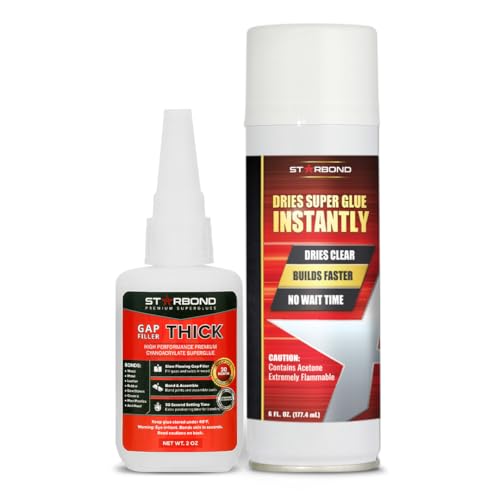
The Starbond Thick CA glue hits a sweet spot between strength and usability. Its honey-like viscosity fills gaps in cracked ABS housings and plastic brackets without running off the joint, and the included aerosol accelerator cures the bond in about two minutes. For woodworkers and hobbyists who work with acrylic and rigid plastics, this kit delivers a controlled, bloom-resistant bond that sands cleanly.
Over 35 years of small-batch production gives Starbond an edge in freshness—cyanoacrylate degrades over time, and a fresh bottle polymerizes more reliably. The accelerator also minimizes the white residue (blooming) that mars cosmetic repairs. Users report excellent results on miter joints, model assembly, and even woodturning crack filling, where the thick formula bridges uneven surfaces.
The activator does introduce some odor, so ventilation matters. And while the thick viscosity is perfect for vertical repairs, it won’t wick into hairline cracks the way a water-thin cement would. For most general-purpose plastic repairs, this bundle offers the fastest path from break to use.
Why it’s great
- Gap-filling thick formula stays put on vertical surfaces
- Activator spray cures bond in under 2 minutes with minimal blooming
- Small-batch production ensures fresh, consistent adhesive
Good to know
- Not suitable for polyethylene or polypropylene
- Activator has a noticeable chemical odor
- Thick viscosity won’t penetrate hairline cracks
2. J-B Weld 50133 Plastic Bonder Structural Adhesive Syringe

The J-B Weld Plastic Bonder is a urethane-based system that tackles the hard-to-bond plastics—polypropylene, polyethylene, and fiberglass—where cyanoacrylate simply lifts off. Its two-part syringe dispenses a 1:1 mix that cures to a tan color, blending well with many common plastic housings and marine components. With a full cure in about thirty minutes, it offers a faster turnaround than traditional epoxies while maintaining high impact resistance.
Real-world users have used it to patch kayak keels worn through by asphalt abrasion, seal pinholes in fiberglass bathtubs, and repair plastic ice pack seals. The bond remains flexible under vibration, which is critical for outdoor gear and automotive plastic parts that experience constant movement and temperature shifts. The three-pack of syringes provides enough material for several medium-scale repairs.
The urethane chemistry has a shorter shelf life once opened compared to epoxy, and the bond strength can vary on extremely smooth, glossy plastics without some surface scuffing. For high-stress repairs on low-energy plastics, however, this kit consistently outperforms general-purpose adhesives.
Why it’s great
- Bonds polypropylene and polyethylene where CA glue fails
- Fast cure time with flexible, vibration-resistant bond
- Water-resistant, suitable for marine and outdoor repairs
Good to know
- Shelf life decreases after opening
- Requires surface roughening on glossy plastics
- Tan color may not match clear or black parts
3. Starbond 5 Minute Epoxy Pro Kit

This two-part epoxy from Starbond is engineered with a toughened formulation that absorbs stress without brittle fracture. The 5-minute working time is generous enough for aligning multiple parts but short enough to keep the project moving. It delivers a 2,600 psi shear strength rating, and when fully cured after 24 hours, the bond can handle moderate impacts that would shatter standard CA glue joints.
The kit includes screw-cap bottles, reusable mixing trays, and application tools—a thoughtful package that reduces the guesswork of measuring ratios. Users have used it to seal basement cracks, repair furniture joints, and bond 3D-printed parts that require both strength and a slight amount of flex. The clear finish is unobtrusive, and the formula holds well on ABS, PVC, and acrylic surfaces.
Because it is an epoxy, mixing accuracy is critical—an off-ratio mix will cure soft or remain tacky. The 5-minute window is tight for large surface area projects, and full strength isn’t reached for a full day. For repairs where you need the bond to flex rather than snap, this kit bridges the gap between rigid CA and slow-setting structural epoxies.
Why it’s great
- Flexible, toughened formula resists cracking under impact
- High shear strength (2,600 psi) for load-bearing repairs
- Complete kit with tools for accurate mixing and application
Good to know
- Precise 1:1 mixing ratio required for optimal cure
- Full strength takes 24 hours to develop
- 5-minute window is short for large assemblies
4. Berkland Acrylic Bonding Cement
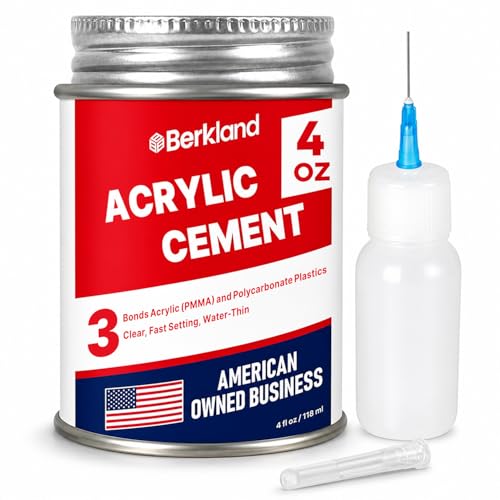
This is not a glue that sits on top of plastic—it chemically welds acrylic by dissolving the surface layers and fusing them into a single monolithic piece. The water-thin formula flows into tight joints via capillary action, making it the go-to choice for repairing laser-cut acrylic enclosures, display cases, and model parts. The included applicator bottle with a needle tip allows precise, controlled placement even in tight corners.
Users report that it works effectively on PLA 3D prints, with bonds stronger than the parent material itself. The cement sets in seconds, though full strength takes about 24 hours. It also works on ABS, HIPS, and styrene, making it a versatile tool for fabricators and model makers who work across multiple thermoplastics. A little goes a long way—one 4 oz bottle can handle dozens of repairs.
The thin consistency is its main limitation on vertical or overhead surfaces—it drips easily if applied too liberally. Humidity can cause slight whitening in the bond line, and the solvent vapor smells strong, requiring good ventilation. For seamless repairs on clear acrylic where optical clarity matters, this cement delivers invisible joins that no glue can match.
Why it’s great
- Solvent-welds acrylic for invisible, monolithic joints
- Water-thin viscosity wicks into tight hairline cracks
- Works on PLA, ABS, and HIPS for multi-material fabrication
Good to know
- Too thin for vertical or overhead applications
- Strong solvent fumes require ventilation
- Humidity can cause slight whitening in bond line
5. Loctite Vinyl, Plastic, and Fabric Adhesive

The Loctite Vinyl, Plastic, and Fabric Adhesive is formulated for jobs where the bonded area will need to bend—retying a torn vinyl car seat, reattaching fabric to a lawn mower seat, or fixing a plastic blind that flexes with every pull. Unlike rigid cyanoacrylate, this paste dries to a clear, rubbery film that remains flexible over time, resisting delamination under repeated stress.
Users specifically praise its performance on vinyl bar stool covers and padded lawn mower seats, where the joint experiences constant pressure and body heat. The full cure takes 24 hours, and surface preparation—cleaning and roughing the plastic—makes a significant difference in bond longevity. The included two-pack provides backup for larger projects or multi-point repairs.
The adhesive tends to string during application when you pull the tube away, so a clean release requires twisting or quickly snipping the bead. It also takes longer to reach handling strength compared to fast-setting options. For flexible repairs where the parent material is a soft plastic or fabric-backed substrate, this Loctite formula is specifically designed for that exact scenario.
Why it’s great
- Flexible, rubbery bond ideal for vinyl and fabric-backed repairs
- Dries clear for invisible repairs on transparent materials
- Good adhesion to soft plastics and fabric laminates
Good to know
- Takes 24 hours for full cure
- Strings when withdrawing the applicator tip
- Not suitable for bare rigid plastic structural repairs
FAQ
Can I use super glue on polypropylene?
What is the strongest glue for plastic to plastic?
Final Thoughts: The Verdict
For most users, the glue for plastic to plastic winner is the Starbond Thick CA Glue with Activator Bundle because it balances instant bonding, gap-filling capability, and cosmetic control for the widest range of common plastics. If you need to bond polyethylene or polypropylene, grab the J-B Weld Plastic Bonder. And for invisible, optically clear welds on acrylic sheet, nothing beats the Berkland Acrylic Bonding Cement.