
Polycarbonate is a notoriously tough thermoplastic, but its chemical resistance and low surface energy make it one of the hardest plastics to glue with standard adhesives. Ordinary super glues often cause cracking, fogging, or a weak joint that fails under the first sign of stress, forcing you to start a project over from scratch.
I’m Mohammad Maruf — the founder and writer behind Drink4Good. I’ve spent years analyzing the chemical interactions between adhesives and engineered plastics, studying solvent-weld formulations and cross-linking agents to understand what creates a bond that outlasts the material itself.
The key is matching the adhesive chemistry to polycarbonate’s unique properties. After testing formulations from solvent cements to light-activated systems, I’ve narrowed down the market to the five most reliable options for the best glue for polycarbonate, each chosen for its specific application niche.
How To Choose The Best Glue For Polycarbonate
Polycarbonate demands a specific class of adhesives. Standard epoxies and CA glues lack the solvent chemistry needed to fuse the polymer chains, which leaves you with a brittle surface bond that can shatter upon impact. The selection comes down to three decision points.
Solvent Cement vs. Light-Activated Systems
Solvent cements (like methylene chloride blends) chemically soften the polycarbonate surface, allowing polymer chains from both pieces to intertwine and form a weld that is often stronger than the original material. Light-activated cyanoacrylates offer a different approach — they cure on demand and avoid the fumes that can attack polycarbonate, but they create a surface bond rather than a true chemical weld, making them better suited for small repairs than structural joins.
Viscosity and Application Method
Water-thin formulas flow into hairline cracks via capillary action, making them ideal for flush seams on laser-cut parts or repairs on Lexan windshields. Medium-bodied gels fill small gaps and stay in place on vertical surfaces, which is helpful when assembling multi-part enclosures or display stands. The tube tip or applicator needle determines how precisely you can place the adhesive — a steel needle offers fine control, while a standard tube opening can lead to messy overflow.
Working Time and Full Cure
Fast-setting formulations lock in under five minutes, giving you a narrow window to reposition parts before the chemical bond sets permanently. Slower cements allow five to six minutes of working time, which is useful for complex assemblies or repairs where alignment is tricky. Full cure typically reaches maximum strength at 24 hours, but many solvent welds achieve handling strength within two to three minutes, letting you move to the next step of your project quickly.
Quick Comparison
On smaller screens, swipe sideways to see the full table.
| Model | Category | Best For | Key Spec | Amazon |
|---|---|---|---|---|
| WELD-ON 16 | Solvent Cement | Structural acrylic & polycarbonate bonds | Medium-bodied, 5-6 min working time | Amazon |
| LITKO Craftics #33 | Solvent Cement | Hobby kits and small gap filling | Medium-bodied, fast-setting | Amazon |
| Berkland Acrylic Cement | Thin Solvent | Capillary-action joins on flush seams | Water-thin, applicator bottle with needle | Amazon |
| J-B Weld SuperWeld UV | Light-Activated | Quick repairs on small, delicate parts | 10-second UV cure, 2800 psi tensile | Amazon |
| BondEx Acrylic Bonding | Nail Bonding Agent | Acrylic nail adhesion to natural nail | Patented primer, no methacrylic acid | Amazon |
In‑Depth Reviews
1. WELD-ON 16 Acrylic Plastic Cement

The WELD-ON 16 hits the sweet spot for polycarbonate work because its medium-bodied formula provides a 5-to-6-minute working window — enough to align complex parts, but fast enough that you are not holding clamps all day. The solvent chemistry creates a true chemical weld, fusing the polymer chains into a joint that typically outlasts the base material. Users report excellent results on cast acrylic, plexiglass, and polycarbonate display items, with the adhesive drying completely clear and leaving no white haze.
One of the standout features is the low VOC content, which reduces the harsh fume load compared to older formula solvent cements. The tube delivers a syrup-like consistency that stays put on vertical surfaces and fills small gaps without running off. For industrial fabrications, lenses, signs, and multi-material builds that involve rigid PVC or ABS alongside polycarbonate, this cement handles them all without requiring separate adhesives.
The tube design is the only practical complaint — the opening can allow glue to pour out faster than expected, so using a small syringe or transferring to a finer applicator improves control. As with all solvent cements, proper ventilation is non-negotiable. For anyone needing a dependable, high-strength weld for polycarbonate that sets clear and stays strong, this is the benchmark.
Why it’s great
- True solvent weld creates bonds stronger than the base plastic
- Medium viscosity works on vertical surfaces without dripping
- Low VOC formula reduces harsh solvent fumes
Good to know
- Tube opening can cause messy dispensing
- Requires good ventilation during use
2. LITKO Craftics #33 Thick Acrylic Cement
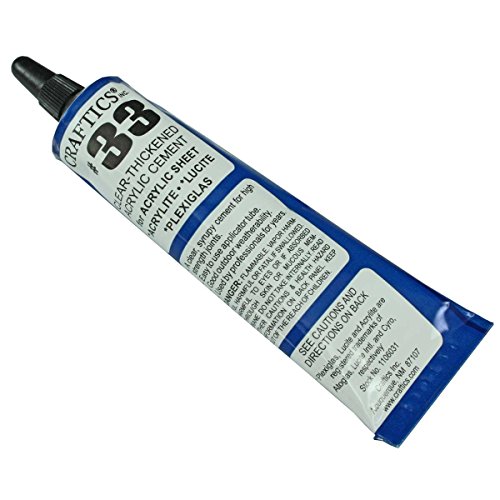
Craftics #33 from LITKO is the budget-friendly solvent cement that consistently delivers on polycarbonate and acrylic projects without the fogging issues typical of cyanoacrylates. The medium-bodied formula fills minor surface gaps and irregularities, making it especially forgiving on laser-cut components or edges that are not perfectly flush. Customers have used it successfully to assemble guide rails on acrylic fish tank lids and repair plastic refrigerator drawers with bonds that hold for years.
The 1.5-ounce tube offers good value for hobbyists and small-scale repairs. It bonds acrylic to itself and to rigid PVC, styrene, butyrate, and polycarbonate, so it is a versatile addition to any workshop. The fast-setting nature means it reaches handling strength quickly, with full cure at 24 hours. Users consistently note the low odor compared to industrial-grade solvents, which makes it more pleasant for indoor work with proper ventilation.
The thinner consistency compared to the WELD-ON 16 means it can be somewhat runny, so careful application is required to avoid mess. The tube cap must be kept clean between uses, as dried cement can seal it shut. Craftics #33 is the ideal entry point for anyone new to solvent welding who wants a reliable, clear-drying cement for polycarbonate repairs and hobby builds.
Why it’s great
- Dries completely clear without fogging transparent surfaces
- Fills small gaps for a stronger, more forgiving bond
- Versatile across acrylic, PVC, styrene, and polycarbonate
Good to know
- Thin consistency requires careful application
- Tube cap can seal shut if not cleaned after use
3. Berkland Acrylic Bonding Cement
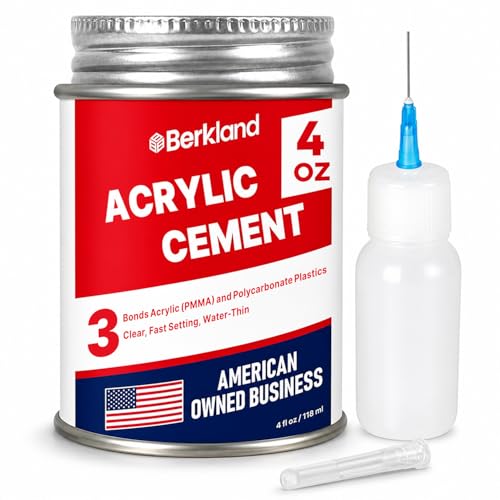
The Berkland Acrylic Bonding Cement uses a water-thin formula specifically designed for capillary action — it wicks into tight joints between polycarbonate and acrylic sheets, creating a seamless bond with no visible glue line. This makes it the go-to choice for assembling display cases, signs, and any project where aesthetic perfection matters. The included applicator bottle with a needle tip allows precise placement, though the 25-gauge needle can cause the thin liquid to dribble if not handled carefully.
Real-world users have successfully repaired Lexan windshields and bonded half-inch-thick plexiglass boxes with this cement, reporting that the joint becomes nearly invisible and stronger than the original material. The fast-setting nature gives you a very tight repositioning window, so dry-fitting parts before applying the adhesive is essential. Like other solvent cements, it requires good ventilation, and the thin consistency means it can drip from vertical surfaces and spread underneath the workpiece if you do not tape the edges.
The main limitation is that it is not recommended for cross-linked acrylics or non-thermoplastics, so check your specific polycarbonate grade before use. Some users note slight whitening in high-humidity conditions, so working in a dry environment improves clarity. For those who need a precision, capillary-action cement for flush polycarbonate seams, the Berkland delivers professional-grade results.
Why it’s great
- Water-thin formula flows into hairline cracks via capillary action
- Included applicator needle enables pinpoint dispensing
- Creates an invisible, crystal-clear bond on flush seams
Good to know
- Needle opening can lead to easy dripping on larger parts
- Not suitable for cross-linked acrylics or non-thermoplastics
4. J-B Weld SuperWeld Light-Activated Superglue

The J-B Weld SuperWeld takes a different approach to polycarbonate bonding by using UV light to trigger instant curing. Shine the included UV light on the adhesive, and it hardens in just 10 seconds, which is invaluable for small repairs where clamping is impossible or alignment needs to be locked in immediately. The 2800 psi tensile strength is impressive for a cyanoacrylate derivative, and users report it is strong enough to repair jewelry, car exterior pieces, and delicate 3D prints.
Without the UV light, the glue sets in approximately one minute and fully cures in 24 hours, giving you some flexibility if you prefer a slower bond. The precision tip applicator helps control the flow, but the formula can be runny, so it is best for small, externally applied joints rather than gap-filling seams. One unique advantage is that cured glue on skin can be peeled away more easily than standard super glue, which is a practical bonus for fumble-fingered repair work.
The major flaw is the cap — it frequently adheres to the tube between uses, wasting glue when you force it open. Cleaning the tip thoroughly after each use prevents this. The UV light itself is a small button cell unit that can burn skin if held in place too long, so follow the safety instructions carefully. This is the best option when you need an instant, on-demand cure for a small polycarbonate repair and do not want to set up clamps or wait for solvent evaporation.
Why it’s great
- UV light cures glue in seconds, eliminating clamping time
- 2800 psi tensile strength rivals some structural epoxies
- Dries completely clear and hard as glass
Good to know
- Cap frequently glues shut if tip is not cleaned
- UV light can burn skin on direct contact
5. BondEx Original Acrylic Bonding Agent

The BondEx Original Acrylic Bonding Agent occupies a specialized corner of the polycarbonate adhesive world — it is designed specifically for bonding acrylic nail enhancements to natural nail plates. While this is not a traditional construction adhesive for polycarbonate sheets, it is included here for readers seeking a low-irritation primer for acrylic nail work. The patented formula uses no methacrylic acid, which means it does not burn or etch the nail bed, and the pleasant scent is a significant upgrade over harsh professional primers.
One coat of this bonding agent is enough to create a strong grip between the natural nail and the acrylic overlay, making it especially useful for clients who struggle with lifting. The .5-ounce bottle is compact but lasts through many applications due to the thin formula.
This product is not interchangeable with solvent cements — it is a nail-specific primer that prepares the keratin surface for acrylic adhesion. It will not weld polycarbonate sheets or repair Lexan windshields. If your search term points toward nail work rather than hardware repairs, this is the finish line. For everyone else, one of the first three solvent cements above will be the correct choice for structural polycarbonate bonding.
Why it’s great
- No methacrylic acid means no burning or etching
- Pleasant scent compared to typical nail primers
- Proven retention with no yellowing for many users
Good to know
- Designed exclusively for nail adhesion, not sheet bonding
- Thin formula requires careful application to avoid pooling
FAQ
Can I use standard super glue on polycarbonate?
How long does a solvent weld on polycarbonate take to cure?
Will these adhesives leave a visible white residue?
Final Thoughts: The Verdict
For most users, the best glue for polycarbonate winner is the WELD-ON 16 because its medium-bodied solvent formula provides the perfect balance of working time and bond strength for structural repairs and fabrication. If you want precise capillary action for flush seams, grab the Berkland Acrylic Cement. And for small, quick repairs where clamping is impossible, nothing beats the J-B Weld SuperWeld with its 10-second UV cure.