
A sole separating mid-stride or a peeling heel can bench a favorite pair of sneakers for good. That sinking feeling when you see the rubber gaping open is the exact moment you realize not all adhesives are built for the flex, moisture, and torque your shoes endure daily. The wrong glue cracks under pressure; the right one fuses the materials back into a single unit, saving you from a trip to the cobbler.
I’m Mohammad Maruf — the founder and writer behind Drink4Good. I spend my days analyzing hardware specs and real-world performance data on adhesives, sealants, and repair compounds to separate marketing claims from actual molecular grip.
Whether you are reviving a worn hiking boot or patching a dancer’s pointe shoe, this guide breaks down the formulations that deliver a waterproof, flexible bond that lasts. After testing and cross-referencing dozens of user reports, I have narrowed the field to five contenders for the best glue for shoe repair based on tensile strength, cure speed, material compatibility, and real-world user hold tests.
How To Choose The Best Glue For Shoe Repair
Picking the right adhesive is a balance of viscosity, material compatibility, and flexibility. A glue that works miracles on a leather dress shoe may shatter on a rubber sneaker sole. Focus on three core factors to get a repair that lasts through the rain.
Viscosity and Application Control
Thin, watery cyanoacrylate runs off vertical surfaces and soaks into porous materials too fast, weakening the bond. A gel or thick paste holds its position on a sole edge and fills small gaps. For shoe repair, a medium-to-high viscosity formula—somewhere between honey and toothpaste—lets you place the bead exactly where the separation is.
Flexibility After Cure
Shoes bend hundreds of times per hour. If the glue dries rigid like glass, it will snap the first time you walk up stairs. Look for adhesives that advertise a “flexible” or “rubber-toughened” bond. Epoxy and some modified cyanoacrylates retain enough elasticity to move with the sole without delaminating.
Material Specificity
Shoe materials are a blend of leather, rubber, EVA foam, vinyl, and fabric. A universal super glue bonds hard plastics and metals but often fails on rubber or synthetic mesh. Check the compatible materials list: a good shoe repair adhesive explicitly mentions leather, rubber, and fabric. Avoid products that only list “plastic” or “metal.”
Quick Comparison
On smaller screens, swipe sideways to see the full table.
| Model | Category | Best For | Key Spec | Amazon |
|---|---|---|---|---|
| Cerca de Shoe Glue | Epoxy Gel | All-purpose flexible repairs | 24-hour full cure / 1 oz | Amazon |
| Eagle Shoe Cement | Solvent Cement | Sole reattachment on boots | 4 oz / medium viscosity | Amazon |
| LEENEXUS Super Glue | CA Gel | Precision fixes on small gaps | 5g gel / 3580 lb grip | Amazon |
| Jet Glue Instant CA | Liquid CA | Pointe shoe reinforcement | 2 oz / 1-min cure | Amazon |
| CAMALEAO CA Kit | Thick CA | Large gaps and wood repair | 4.6 oz / 2610 PSI | Amazon |
In‑Depth Reviews
1. Cerca de Shoe Glue
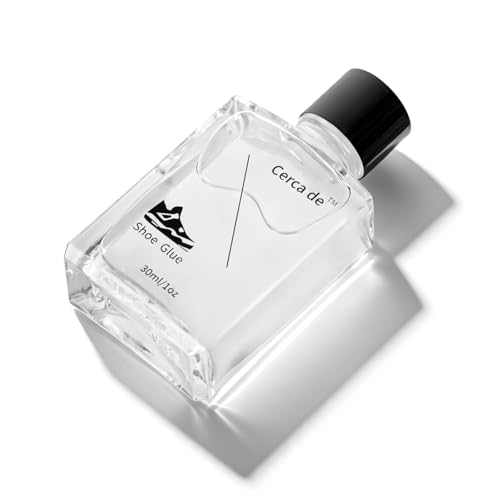
The Cerca de formula is an epoxy-based gel that balances strength with flexibility — exactly what a walking sole needs. It dries clear, remains flexible after full cure, and withstands moisture without cracking. The kit includes an unglueing agent, brush, rubber bands, gloves, and a sanding stick, making it a true all-in-one repair kit rather than just a tube of adhesive.
User reports confirm the bond holds on leather boots and sneakers even after rain exposure. The 24-hour full cure window gives you time to clamp and align the sole precisely. One caution: a minority report found the adhesion weak on rubber when the surface wasn’t roughened beforehand, so a quick sanding is essential for best results.
For anyone who needs a single solution for multiple shoe types — from casual sneakers to hiking boots — this is the most reliable pick. The included tools eliminate the need to buy clamps or applicators separately, saving both money and hassle.
Why it’s great
- Dries flexible and waterproof
- Complete kit with all repair tools
- Works on leather, fabric, and plastic
Good to know
- Requires 24 hours for full cure
- Surface roughening needed for rubber
2. Eagle Shoe Cement

Eagle Shoe Cement uses a solvent-based paste formula that penetrates porous materials like leather and rubber, creating a bond that holds even under severe weather. With 4 ounces of adhesive in the bottle, it offers a much higher volume than most shoe glues, making it ideal for multiple repairs or large surface areas like boot soles.
Users report successful reattachment of 20-year-old hiking boots with this cement, and the included brush applicator makes spreading the paste uniform across a sole edge straightforward. One notable packaging defect did surface — a bottle with a defective cap caused leakage in transit. This appears to be a batch-specific issue.
The medium viscosity spreads easily but stays tacky long enough to reposition the sole before clamping. This is the pick for heavy-duty repairs on work boots, military boots, or any footwear that sees serious abuse. Just verify the cap is fully sealed when it arrives.
Why it’s great
- Large 4 oz volume for multiple repairs
- Strong solvent bond on rubber
- Brush applicator for even spread
Good to know
- Packaging quality control can vary
- Solvent odor during application
3. LEENEXUS Super Glue
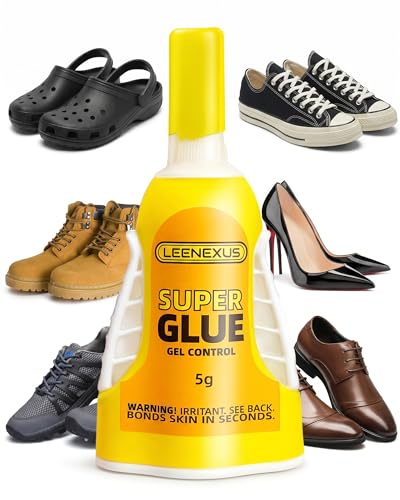
LEENEXUS delivers a cyanoacrylate gel with a viscosity thicker than standard super glue, which prevents drips and runaway runs. The side-squeeze bottle with a built-in cleaning needle keeps the nozzle unclogged between uses — a design detail that extends the glue’s lifespan three times longer than typical CA bottles. The gel sets in 30–45 seconds, giving you a short window to position the repair.
The Micro-Anchor technology claims a grip of 3580 pounds, and while that figure is likely quote-tape exaggeration, the real-world adhesion on plastic, leather, and rubber components is genuinely strong. One user reported it held a lightweight shoe sole repair, but a different tester found the gel did not hold on a rubber-like sole material — likely because the gel did not penetrate deeply enough into that specific polymer.
This glue excels for small, precise repairs on sneaker tips, heel caps, or loose decorative elements. It is not the best choice for full-sole reattachment where gap-filling is needed, but for spot fixes, the precision nozzle and clog-free cap make it a joy to use.
Why it’s great
- No-drip gel formula for precision
- Anti-clog system works reliably
- Sets in under a minute
Good to know
- Low volume (5g) for small jobs
- May not bond rubber soles
4. Jet Glue Instant CA
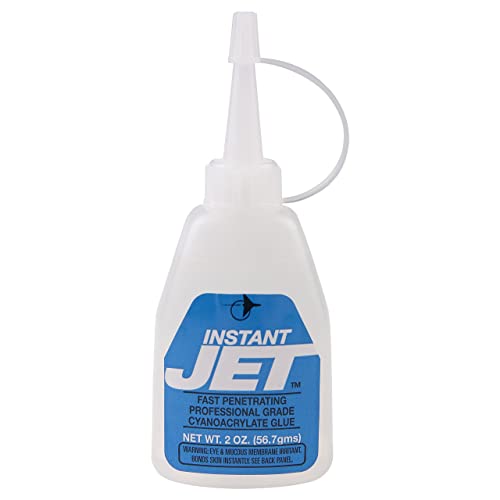
Jet Glue is a thin, liquid cyanoacrylate that penetrates deep into porous materials like the card, satin, and leather used in ballet pointe shoes. Dancers swear by it for extending the life of expensive pointe shoes — you apply it to the box and shank, let it cure in one minute, and get a rigid, impact-resistant structure that keeps the shoe supportive for longer.
The thin viscosity is the key advantage: it wicks into fibers and cracks that a gel cannot reach. Users report it bonds sneaker velvet, rubber, and wood as well, making it a versatile secondary glue for non-shoe household repairs. The main trade-off is that the liquid runs easily — you must apply it carefully on flat or angled surfaces, not vertical ones.
If you own a pair of pointe shoes or need a penetrating glue for porous materials like wood or fabric, this is the specialist pick. It also works as a fast emergency repair for peeling soles when precision is less critical than speed.
Why it’s great
- Penetrates porous materials deeply
- Cures in one minute
- Excellent for pointe shoe reinforcement
Good to know
- Liquid formula runs on vertical surfaces
- Exothermic reaction — avoid skin contact
5. CAMALEAO CA Kit
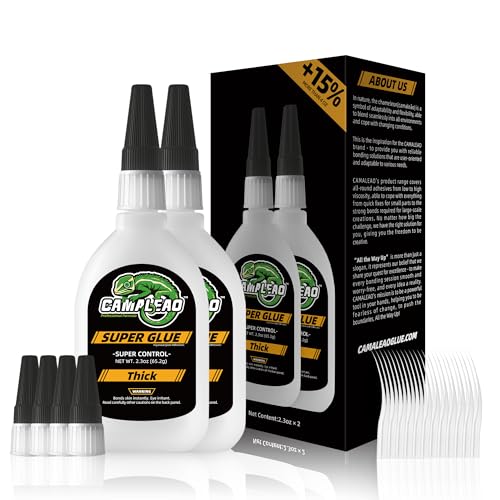
The CAMALEAO kit delivers 4.6 ounces of thick cyanoacrylate across two bottles, plus 24 precision microtips and four extra anti-clog caps — a value proposition that dwarfs single-tube competitors. The 2000 CPS viscosity is comparable to honey, allowing it to bridge gaps up to 0.02 inches thick without running, making it ideal for filling the space between a sole and midsole where delamination has created a trench.
The 2610 PSI tensile strength rating is high for a CA glue, and users confirm it bonds rigid materials like hard plastic, metal, and wood with no issue. One caveat: a bottle arrived unsealed, leaking into the packaging. This suggests a packaging consistency issue similar to Eagle’s. For flexible shoe materials like rubber or EVA, the glue works best when combined with baking soda as a filler to create a durable, sandable repair.
This kit is the right choice if you need a large volume of glue for multiple repairs, or if you work with 3D-printed parts and archery fletching alongside shoe repair. The included tips let you dial in the application to the exact gap size.
Why it’s great
- Large 4.6 oz volume at great value
- Thick viscosity fills gaps without running
- Includes 24 precision tips
Good to know
- Bottle seal quality is inconsistent
- Best for rigid repairs, not flexible rubber
FAQ
Can I use regular super glue for shoe sole repair?
How do I prepare the surface before applying shoe glue?
Why does my shoe glue crack after a few weeks?
Final Thoughts: The Verdict
For most users, the best glue for shoe repair winner is the Cerca de Shoe Glue because its epoxy gel delivers a flexible, waterproof bond that works across leather, fabric, and plastic, and the included kit removes the guesswork from preparation. If you need a high-volume solvent cement for heavy boot repairs, grab the Eagle Shoe Cement. And for precision fixes on small gaps or pointe shoe reinforcement, nothing beats the controlled application of the Jet Glue Instant CA.