
A loose joint on a favorite chair, a split in a cutting board, or a gap in a new project. When the wood fails, the question is simple: which glue can you trust to hold — not just for a day, but for years? The wrong adhesive leaves a brittle, visible mess or lets go under pressure. The right one becomes stronger than the wood itself.
I’m Mohammad Maruf — the founder and writer behind Drink4Good. I’ve spent years analyzing PVA formulations, cure times, and real-world bond strengths across hundreds of woodworking products, separating the chemistry that works from the marketing hype.
This guide cuts through the chemical confusion to focus on the five formulas that actually perform under clamp pressure, moisture, and daily use. Let’s find the right glue for wood for your next repair or build.
How To Choose The Best Glue For Wood
Choosing the right wood glue comes down to three factors: the moisture exposure of your project, the grain density of the wood, and the time you have to assemble. A white or yellow PVA glue handles most indoor work, but a waterproof, tan-curing formula is essential for anything that will see rain or frequent washing. Beginners often grab the cheapest bottle, but the cheapest bottle can fail on the first humid day. Match the glue’s cure characteristics to your project’s demands and your workspace temperature.
Water Resistance and Type Ratings
The ANSI/HPVA standard divides wood glues into two types. Type I is fully waterproof — it survives boiling, soaking, and outdoor exposure without losing its bond. Type II is water-resistant — it handles occasional spills and humidity but degrades under persistent moisture. For cutting boards, outdoor furniture, or bathroom fixtures, pick a Type I glue like Titebond III. For indoor shelves, picture frames, or dry cabinetry, a Type II formula like Gorilla Wood Glue offers more than enough protection at a lower cost per ounce.
Open Time vs. Clamp Time
Open time is the window you have to position pieces after spreading the glue. Clamp time is how long you must hold the joint under pressure before it can stand on its own. A longer open time (10–15 minutes) gives you breathing room for complex drawer assemblies or mitered picture frames. A shorter clamp time (20–30 minutes) speeds up projects like edge-gluing boards for a tabletop. The five glues in this review span both ends of that spectrum, so you can choose based on your assembly pace.
Drying Color and Sandability
Most PVA wood glues dry to a translucent or yellow line, but some dry to a natural tannish color that blends with lighter woods. If aesthetics matter — a visible glue line on a cherry shelf or a white-oak table — look for a formula labeled “natural wood color” or “clear drying.” Also confirm the glue is sandable. Sanding flush hides the seam completely and makes painting or staining seamless. Every glue on this list sands well after curing, but some yellow crumbly squeeze-out removes more easily than white plastic-like squeeze-out.
Quick Comparison
On smaller screens, swipe sideways to see the full table.
| Model | Category | Best For | Key Spec | Amazon |
|---|---|---|---|---|
| Titebond III | Premium PVA | Outdoor/waterproof projects | ANSI/HPVA Type I waterproof | Amazon |
| Gorilla Wood Glue | Mid-Range PVA | Indoor/outdoor repairs | ANSI/HPVA Type II water-resistant | Amazon |
| DAP Weldwood | Aliphatic Resin | High-impact joints | Shock & impact resistance | Amazon |
| Weldbond Extra Strength | Multi-Surface PVA | Versatile woodworking & crafts | 3,700+ psi tensile strength | Amazon |
| Weldbond Multi-Surface | All-Purpose PVA | Mosaic & fabric-to-wood bonding | Dries crystal clear | Amazon |
In‑Depth Reviews
1. Titebond III Ultimate Wood Glue

Titebond III is the benchmark that professional woodworkers reach for when a joint absolutely must not fail — especially outdoors. Its ANSI/HPVA Type I rating means this glue is fully waterproof. Submerge a cutting board glued with Titebond III in a sink full of water overnight, and the bond won’t soften. The gel-based formula resists running down vertical surfaces, making it ideal for edge-gluing tabletop panels or repairing outdoor furniture where squeeze-out would be messy.
The open time sits around 10 minutes, giving you a comfortable window for positioning complex assemblies. Full cure requires 24 hours, but the joint holds after just 30 minutes of clamp time. The cured glue dries to a tan color that blends gracefully with hardwoods like walnut, oak, and cherry. One reviewer noted the brown hue fades better than standard yellow glue, leaving a near-invisible joint after sanding.
Titebond III is also the top choice for cutting boards and other food-contact surfaces. The glue is FDA-approved for indirect food contact, and its waterproof formula withstands the hot water and detergent cycles of regular washing. The 32-ounce bottle in this two-pack delivers enough volume for a dozen large projects, making it the highest-value premium option for serious woodworkers.
Why it’s great
- ANSI/HPVA Type I waterproof – survives full submersion
- Gel consistency stays put on vertical applications
- FDA-approved for indirect food contact on cutting boards
Good to know
- Full 24-hour cure requires patience
- Tan color may show on very pale woods like maple
2. Gorilla Wood Glue
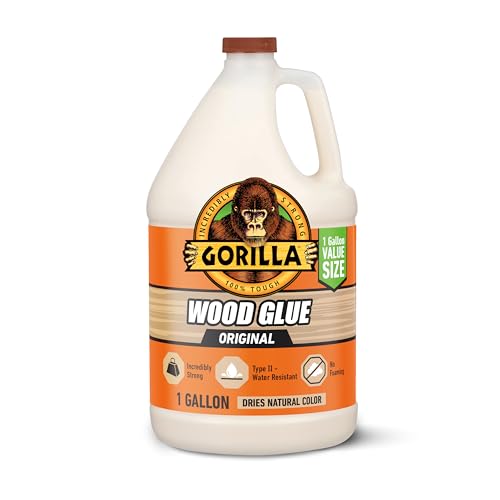
Gorilla Wood Glue strikes the balance between professional-grade performance and everyday accessibility. It carries an ANSI/HPVA Type II water-resistance rating, meaning it handles rain splashes, humid basements, and the occasional spill without weakening. While not fully waterproof like Titebond III, the Type II rating covers the vast majority of indoor and covered-outdoor projects — from garden planters to unsealed bookshelves near a window.
The standout spec here is the 20–30 minute clamp time, one of the fastest among premium PVA glues. That speed matters when you edge-glue multiple boards into a panel and don’t want to wait an hour before the assembly can stand alone. The glue cures to a natural tan color that blends well with hardwood tones, and the bond line remains nearly invisible after sanding. One reviewer repaired a dog’s stuffed toy by applying a thin glue layer into a seam — the joint held firm even under constant tugging.
This glue is also notably non-foaming. Some PVA glues expand as they dry, creating messy squeeze-out that hardens into plastic-like beads. Gorilla’s formulation stays put, so cleanup requires only warm soapy water if you catch it before it dries. The gallon size offers the best cost-per-ounce in the mid-range tier, making it a smart choice for high-volume shops or parents helping kids build school projects.
Why it’s great
- Fast 20-30 minute clamp time speeds up panel glue-ups
- Natural tan color blends into hardwood projects
- Non-foaming formula minimizes messy squeeze-out
Good to know
- Type II rating not suitable for continuous water submersion
- Thicker consistency requires spreading with a brush or finger
3. DAP Weldwood Original Wood Glue

DAP Weldwood is not a standard white PVA. It uses an aliphatic resin formula, a type of yellow wood glue engineered for superior resistance to shock, sharp impacts, and heat. When a joint takes a hit — a dropped chair leg or a slammed cabinet door — this glue absorbs the energy without cracking. The aliphatic resin also resists softening from heat, making it a practical choice for projects near radiators, ovens, or in uninsulated workshops.
The glue dries to a classic yellow color that sands smooth and flush. Because it’s solvent-resistant after full cure, it holds up against finishes and paints without reacting. The paste-like consistency is thicker than standard PVA, so it stays on vertical surfaces better without running. One reviewer used Weldwood to bond wooden cubes for a painting project and reported that the joints held perfectly through multiple coats of acrylic paint.
The one-gallon jug delivers exceptional volume for its price. For cabinet shops repairing hundreds of joints per year, the cost per ounce drops substantially compared to smaller bottles. Keep in mind that yellow glue requires 24 hours to reach full bond strength, and the open time is shorter than white glue — around 5 to 7 minutes — so work quickly once you spread it. The payoff is a bond that survives sharp impacts without delamination.
Why it’s great
- Aliphatic resin formula resists shock and sharp impacts
- Heat and solvent resistant for demanding environments
- Thick paste stays put on vertical applications
Good to know
- Short open time of 5–7 minutes requires quick assembly
- Yellow color may show through on light or porous woods
4. Weldbond Extra Strength Wood Glue
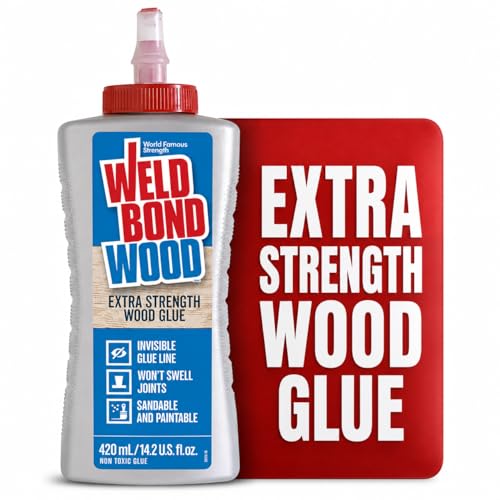
Weldbond Extra Strength brings an impressive tensile strength rating of 3,700+ PSI to the table — a number that rivals many epoxy systems but without the mixing or toxicity. This is a standard PVA glue, but its molecular formulation creates a bond that often exceeds the strength of the surrounding wood. Reviewers report that on white pine, the wood splits before the joint fails, which is exactly the outcome any woodworker wants.
The glue dries to a nearly invisible line, especially when applied in thin layers. One reviewer used it to reassemble a broken window trim overnight — the joints held perfectly for next-day installation without gaps or visible glue lines. The glue is also water-soluble before curing, meaning any squeeze-out wipes away with a damp cloth. Once dry, it sands flush without clogging sandpaper.
Weldbond’s non-toxic formula makes it a safe choice for home workshops where ventilation is limited. The 14.2-ounce bottle includes a precision tip that controls flow and minimizes dripping. The one caveat is that on dense hardwoods like yellow pine, the glue may remain semi-soft under the bond line after 24 hours, as noted by one reviewer who tested it on mitre joints. For hardest woods, a longer clamp time of 48 hours improves the final bond rigidity.
Why it’s great
- 3,700+ PSI tensile strength — wood fails before the joint
- Dries nearly invisible for seamless finishes
- Non-toxic and safe for indoor use without fumes
Good to know
- May remain semi-soft on dense hardwood after 24 hours
- Thinner viscosity can run on vertical surfaces
5. Weldbond Multi-Surface Adhesive
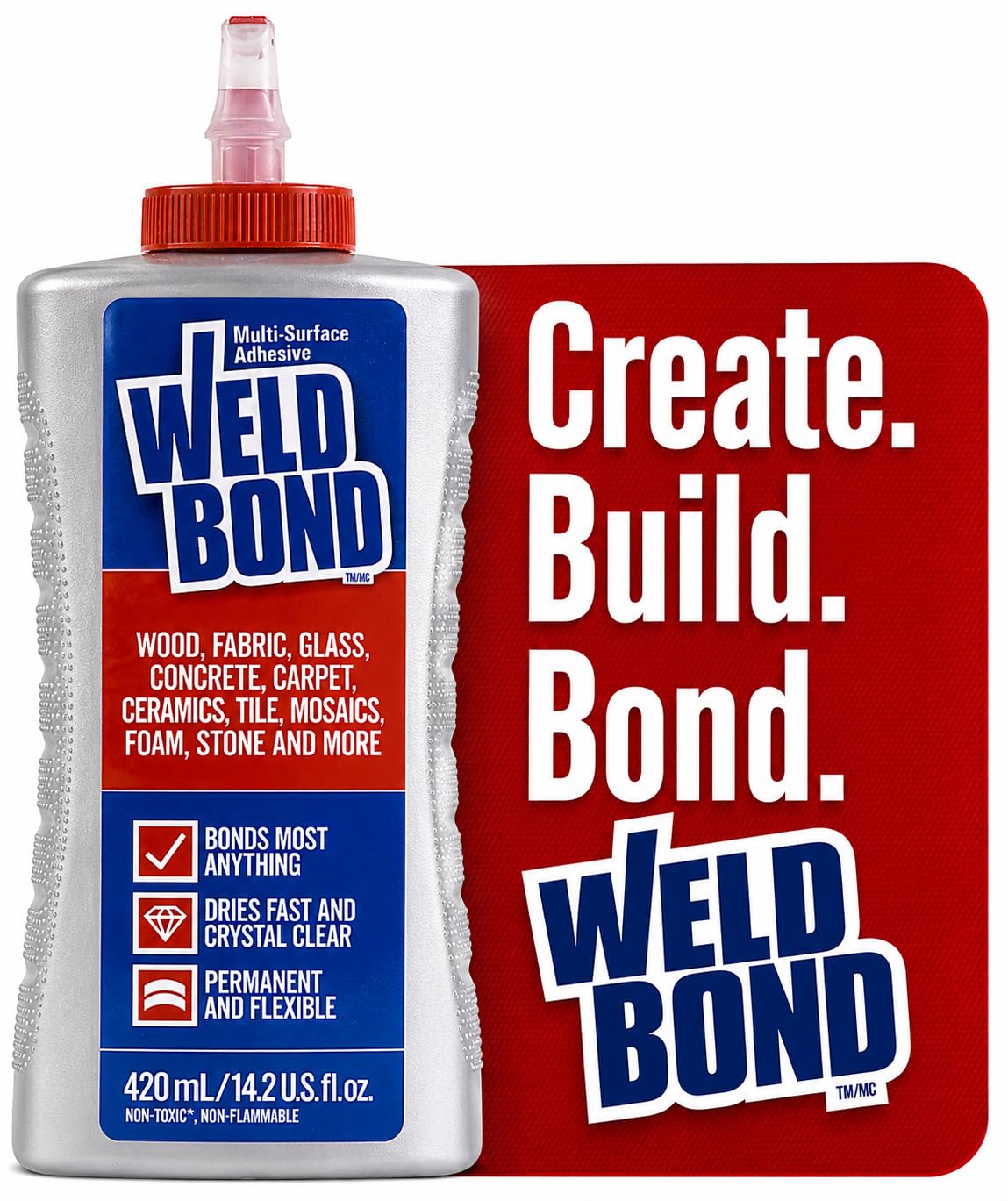
Weldbond Multi-Surface Adhesive is the wildcard of this list — a PVA glue formulated to bond not just wood, but also glass, ceramic tile, mosaic stones, and fabric. For crafters and mixed-media artists who move between materials in a single session, this eliminates the need for three different bottles of glue. The formula dries crystal clear, which is critical when glue is visible against transparent surfaces or light-colored fabrics.
The bond is both water-resistant and flexible, meaning it can handle the slight expansion and contraction of wood in changing humidity without cracking. One reviewer who works with mosaic projects reported that the glue holds heavy stones reliably on vertical frames, and that the bond remains clear even when applied thickly. Another reviewer replaced their entire E6000 collection because Weldbond is odorless and clogs less in the nozzle — a significant upgrade for indoor crafting.
The 14.2-ounce bottle dispenses cleanly without drips or runs, and cleanup is simple with warm water before cure. For dedicated woodworking projects, this glue works admirably but won’t fully replace a dedicated PVA like Titebond III for heavy structural loads. One reviewer noted that while it grabs quickly and holds well, it may not offer the same long-term rigidity as a purpose-built wood glue for load-bearing furniture. That said, for a single bottle that covers wood, glass, and mosaic work, it’s an excellent utility adhesive.
Why it’s great
- Bonds glass, ceramic, fabric, and wood equally well
- Dries completely clear — no yellowing or cloudiness
- Odorless formula ideal for indoor, poorly ventilated spaces
Good to know
- Not a full replacement for heavy-duty PVA in structural wood joints
- Long-term clamp time needed for maximum strength
FAQ
Can I use wood glue on outdoor furniture?
How long should I clamp wood glue before removing the clamp?
Final Thoughts: The Verdict
For most users, the glue for wood winner is the Titebond III Ultimate Wood Glue because it offers Type I waterproof strength, a forgiving gel formula, and proven performance on cutting boards and outdoor furniture. If you want a fast-clamping water-resistant glue for indoor projects, grab the Gorilla Wood Glue. And for crafters who need one bottle that bonds wood, glass, and mosaic materials, nothing beats the Weldbond Multi-Surface Adhesive.