
Most lifters skip the posterior chain because they lack the right tool. A standard Roman chair forces your hips into an awkward angle, shifting tension off the hamstrings and onto the lower back. A dedicated glute ham developer changes that by locking your body into the correct 45-degree arc, forcing the hamstrings and glutes to do the actual work.
I’m Mohammad Maruf — the founder and writer behind Drink4Good. I’ve spent hundreds of hours analyzing steel gauges, pad densities, and adjustment ranges so you can buy a GHD that actually fits your squat rack budget and your body mechanics.
After reviewing nine of the market’s most competitive models, one thing is clear: the best glute ham developer doesn’t just take up floor space—it transforms your weak points into the strongest part of your chain.
How To Choose The Best Glute Ham Developer
A GHD is a specialized tool for the posterior chain. Getting it wrong means wasted reps or, worse, lower back strain. Focus on these four variables and you will find the right machine for your space, build, and training intensity.
Frame Integrity and Weight Capacity
The frame takes the brunt of the force during a glute ham raise. Look for 12-gauge or 14-gauge steel construction. The best models use a tripod or wide base to resist rocking when you are deep in the negative. Weight capacity should at least match your bodyweight plus any added load from a weight plate or band.
Footplate and Pad Adjustability
A GHD is useless if the footplate forces your knees too far forward or too far back. Vertical and horizontal adjustability in the footplate lets you dial in the exact angle for your femur length. The knee bolster (thigh pad) should also move in multiple positions so your hips sit at the pivot point, not in front of it.
Knee Bolster Length and Cushion
Your knees press into this pad during the raise. Too short and your knees slip; too long and it digs into your quad. The ideal pad is around 6 to 8 inches of dense foam with a vinyl cover that won’t peel after a few months. Dual-layered padding adds longevity and comfort for heavier users.
Floor Footprint and Portability
A GHD can take up a lot of space. Measure your room before buying. Models with rear transport wheels make it manageable to roll out of the way between sets. Folding Roman chairs are an option if you need to store the unit vertically against a wall, but you sacrifice the stable platform of a dedicated GHD.
Quick Comparison
On smaller screens, swipe sideways to see the full table.
| Model | Category | Best For | Key Spec | Amazon |
|---|---|---|---|---|
| REP Fitness GHD | GHD | Full adjustability | 13 position footplate | Amazon |
| Valor Fitness GHD (AF1018F) | GHD | Raw stability | 12-gauge steel | Amazon |
| Teeter DEX II | Inversion/Hyper | Back rehab + stretch | 350 lb capacity | Amazon |
| Titan Fitness H-PND | Reverse Hyper | Lower back rehab | 550 lb loadable | Amazon |
| Body-Solid GHYP345 | Hyperextension | Adjustable thigh padding | 3″ DuraFirm pads | Amazon |
| Valor Fitness CB-13K | Roman Chair | Tall user comfort | 5-position hip pads | Amazon |
| Streamnova Roman Chair | Roman Chair | Budget stability | 500 lb capacity | Amazon |
| TDS Roman Chair | Roman Chair | Budget GHR hybrid | 44 lb frame | Amazon |
| COBA Board Plus | Slant Board | Knee‑friendly glute work | 7° incline | Amazon |
In‑Depth Reviews
1. REP Fitness Glute Ham Developer

REP packed 13 adjustment points into a compact 70-inch footprint, making it the most versatile GHD in this lineup. The footplate moves vertically and the leg pad slides horizontally so you can shift the pivot point to match your exact femur length. At 150 pounds, the 16-gauge frame feels planted during heavy glute ham raises, and the wide step-up platform makes mounting feel natural, not awkward.
The pad design uses a split front section with a gap that prevents the bolster from digging into your quads during that deep negative stretch. Rear transport wheels and welded band pegs add utility without raising the price into Rogue territory. Users report zero wobble at 260 pounds of bodyweight, which speaks to the base geometry and bracing.
If you want a true GHD that adjusts for both short and tall lifters, this is the one. The only trade-off is that the front arms could extend another three inches for taller users doing back extensions, but for standard GHR work the range is generous.
Why it’s great
- 13-position footplate dials in hamstring tension precisely
- Split front pad eliminates quad pressure during the negative
- Wheels and band pegs make it a complete training station
Good to know
- Front arms could be longer for tall users doing back extensions
- 16-gauge steel is adequate but not as heavy as the 12-gauge Valor unit
2. Valor Fitness Adjustable Glute Ham Developer (AF1018F)

Valor builds this GHD with 2×2 inch 12-gauge steel and the result is a frame that refuses to shift under load. The 400-pound weight capacity gives you room to grow, and the wide base with angled support bars keeps the machine planted when you are grinding through the final rep of a set of GHD sit-ups. The 8-inch thigh cushion provides substantial support for bigger lifters.
Six horizontal and four vertical adjustments let you tweak the fit across a broad range of body types. The plate storage peg is a nice touch, keeping weight plates off the floor and within reach for added resistance. Nylon impact wheels make it easy to roll this 122-pound unit out of the way when you are done.
Some users report that the plastic pull pins on the foot holder feel like the weakest link, though they hold up over time in practice. Shorter lifters under 5-foot-9 may find the closest setting still slightly long, but for most athletes this Valor GHD competes with units costing significantly more. Add a weight plate to the front peg for extra stability.
Why it’s great
- 12-gauge frame provides commercial-grade rigidity
- 400 lb capacity handles serious loaded work
- Plate peg and band pegs add resistance options without accessories
Good to know
- Plastic pull pins for foot holder feel less durable than metal
- May not fit very short lifters on the closest setting
3. Teeter DEX II Inversion & Core Training
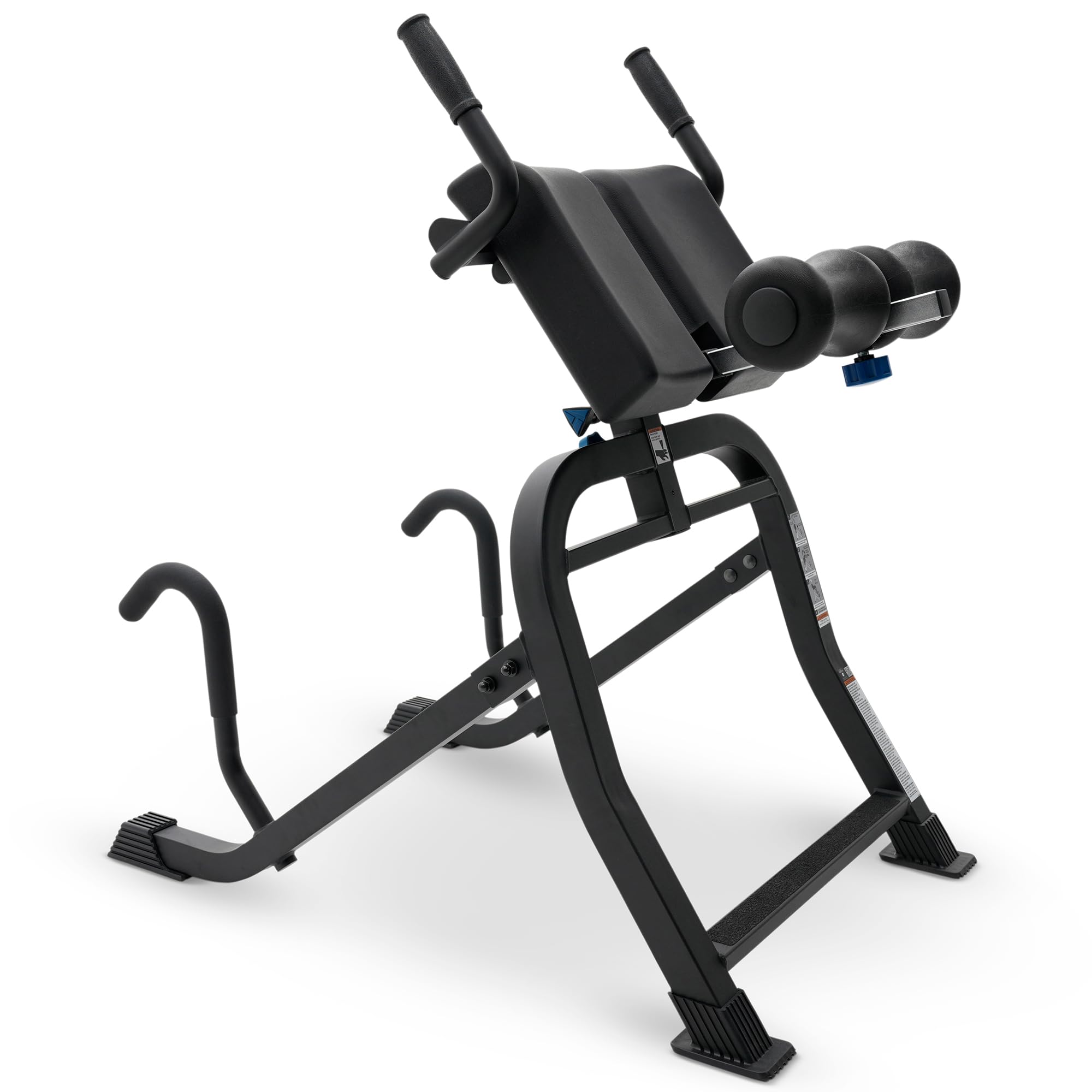
The DEX II is not a conventional GHD. It is a Roman chair that rotates forward into hip-supported inversion, unloading the spine without putting pressure on the ankles. For lifters dealing with chronic lower back tightness or herniated discs, this machine bridges the gap between rehab stretching and posterior chain activation.
High-density contoured foam lap cushions with spring-loaded adjustability fit users from 4-foot-8 to 6-foot-6. The platform includes traction grips and lower handles for rotation, plus you can anchor resistance bands for core work. Assembly takes about five minutes with the labeled bag system, and the 60-pound frame is easy to reposition.
Some taller users report that the belly pad can pinch when returning to an upright position. The DEX II is best used as a complement to a dedicated GHD rather than a replacement. If your primary goal is spinal decompression and gentle core strengthening, this is the pick. For pure hamstring development, look at a standard GHD.
Why it’s great
- Hip-supported inversion spares ankles and knees
- Wide height range accommodates most users
- Quick assembly and compact 60 lb footprint
Good to know
- Belly pad can be uncomfortable for heavier users returning upright
- Not a substitute for a full GHD for hamstring raises
4. Titan Fitness Economy H-PND
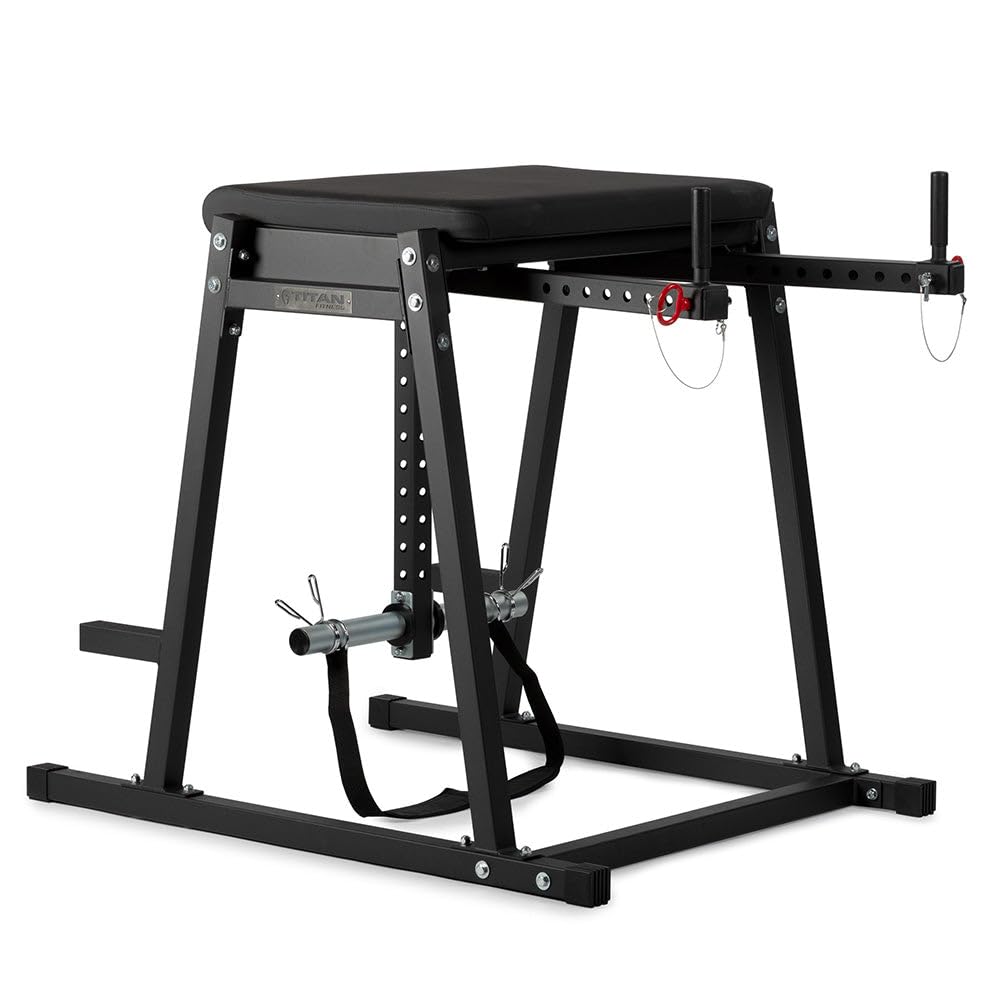
This is a reverse hyperextension machine, not a GHD, but it deserves a place here because it targets the same posterior chain muscles — glutes, hamstrings, lower back — through a different movement pattern. The 11-gauge steel frame and 550-pound loadable capacity make this an absolute tank for home gym use.
The machine weighs 147 pounds and its 55-inch length sits solidly on rubber feet that prevent scuffing. Assembly takes about three hours, but the build quality rivals units at double the price. Users report immediate relief from sciatica and chronic lower back pain after just a few sessions of reverse hyperextensions.
If you suffer from lower back issues and want a machine that unloads the spine while strengthening the glutes and hamstrings, this Titan unit is the best value in the category. The only drawback is that the instructions are online-only, and the machine is too large to move frequently without the included wheels.
Why it’s great
- 11-gauge steel frame is overbuilt for the price
- 550 lb loadable capacity for serious weighted work
- Immediate relief for lower back pain sufferers
Good to know
- Instructions are online-only, not printed
- Large footprint requires dedicated floor space
5. Body-Solid GHYP345 45 Degree Hyperextension Bench

Body-Solid’s 45-degree hyperextension bench features 3-inch thick DuraFirm pads that are noticeably softer than any other foam in this comparison. If you find standard GHD pads uncomfortable against your hips during hyperextensions, this is the model that solves that pain point. The pop-pin thigh pad adjusts through a range of 35 to 44 inches to fit different torso lengths.
The frame is built from alloy steel and weighs 72 pounds, which is light enough to slide around on the floor but sturdy enough for users up to around 250 pounds. Assembly takes about 45 minutes and the hardware is clearly numbered. The flat foot rest allows for side bends and oblique work, adding versatility beyond standard hyperextensions.
The 3-inch pads may cause quad pressure during hyperextensions for some users, and very short lifters under 5-foot-5 may find the ergonomics slightly off. Body-Solid backs this bench with a lifetime warranty on the frame, so long-term durability is assured.
Why it’s great
- 3-inch pads are the most comfortable for hip support
- Lifetime frame warranty from Body-Solid
- Flat foot rest allows side bends and oblique work
Good to know
- Thick pads can cause quad pressure during hyperextensions
- Not ideal for users under 5-foot-5
6. Valor Fitness Adjustable Roman Chair (CB-13K)
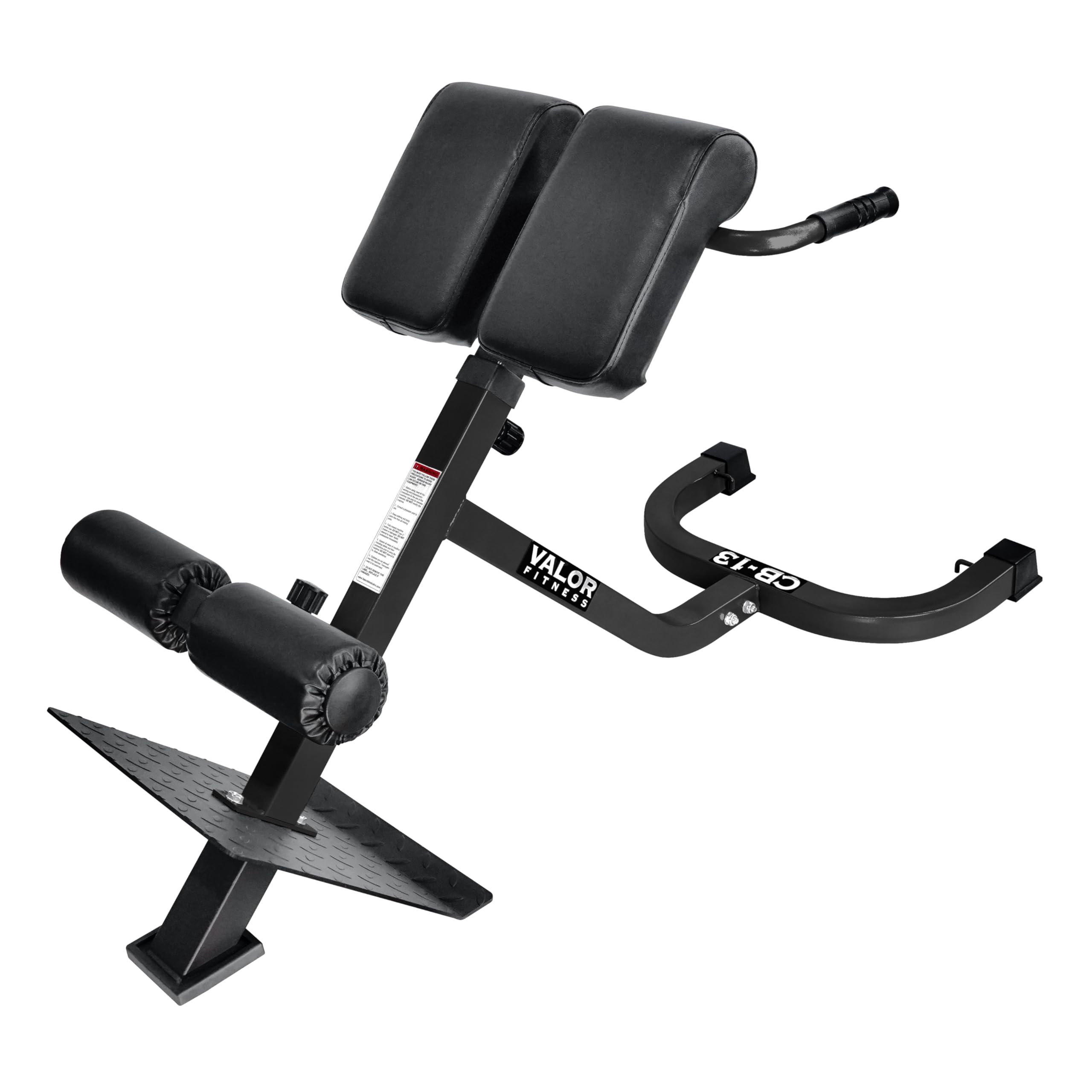
The CB-13K is a Roman chair, not a true GHD, but its 8-inch range of hip pad adjustment makes it an excellent option for tall lifters who outgrow smaller hyperextension benches. At 6-foot-2, you still have additional adjustability both up and down, which is rare in this category. The tripod-style 12-gauge steel base provides solid stability for bodyweight and weighted back extensions.
Resistance band pegs are welded directly to the frame, letting you add accommodating resistance for glute ham raises without needing a separate band box. The calf rollers adjust through three positions with a 2-inch range to lock your lower legs in place. Weighing 60 pounds, it is easy to move but heavy enough to stay put during intense sets.
The middle opening between the hip pads is relatively narrow, which can cause discomfort for male users. The weight capacity is listed at 250 pounds, so larger lifters carrying significant bodyweight may want to look at the Streamnova or REP models instead.
Why it’s great
- Excellent adjustability for tall users up to 6-foot-2
- Band pegs add resistance variety
- 12-gauge steel frame feels solid
Good to know
- Narrow middle opening can be uncomfortable for some men
- 250 lb weight capacity is lower than many alternatives
7. Streamnova Roman Chair
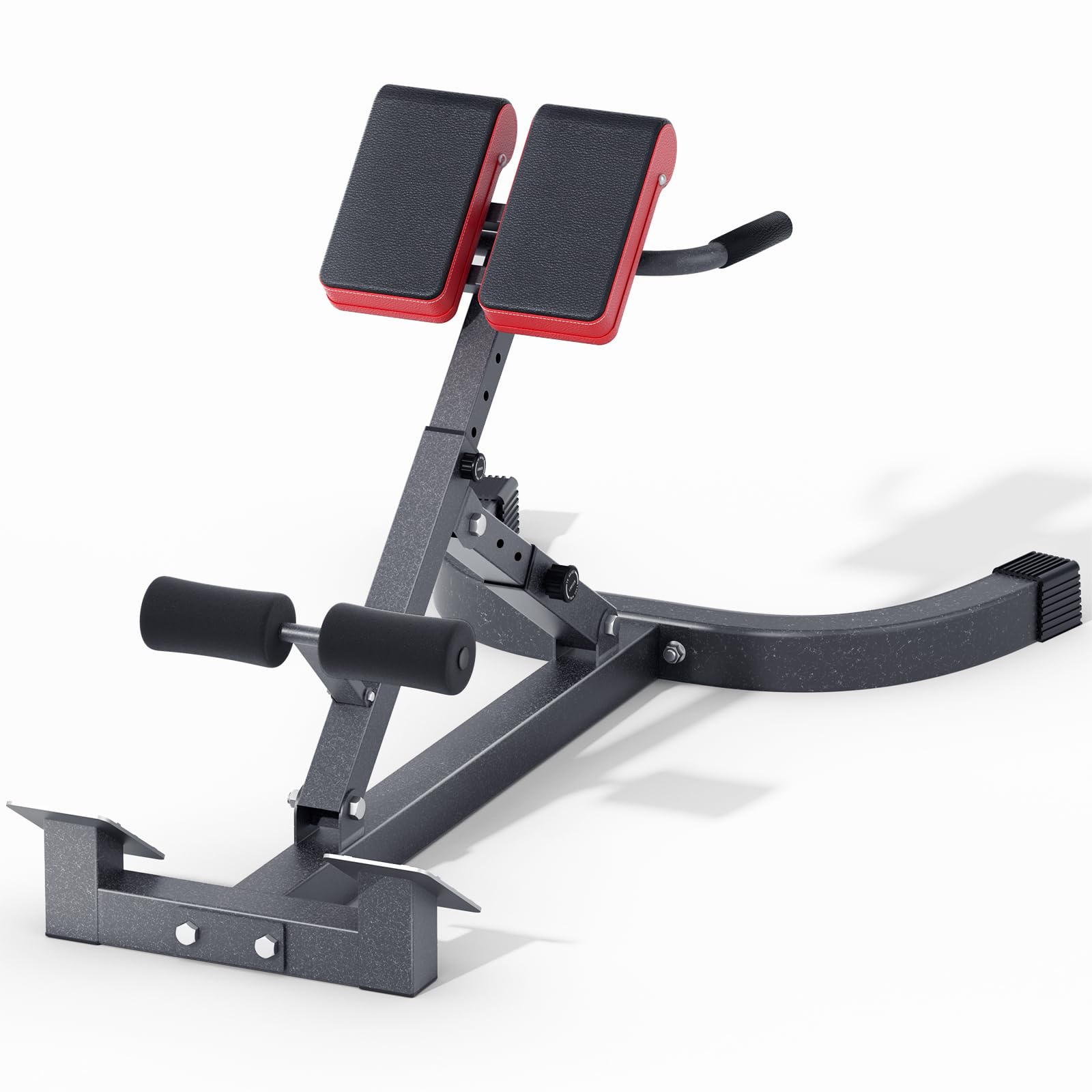
Streamnova uses 2mm thickened carbon steel with a triangular stabilizing structure to achieve a 500-pound weight capacity in a foldable Roman chair. The 8-plus-5 adjustment system — eight length settings and five height settings — covers the entire family from a single unit. Assembly takes under 30 minutes and the chair folds flat for storage.
The large curved base tubes with rubber foot covers protect floors while providing a wide stance that resists tipping. Anti-slip grooves on the footrest keep your feet planted during dynamic movements like back extensions and side bends. Users report that the adjustable angle and height make it suitable for everyone from a 5-foot-6 beginner to a 6-foot-2 advanced lifter.
This is a Roman chair, not a GHD, so you won’t get the same hamstring isolation as a dedicated glute ham developer. The padding is adequate but not as plush as the Body-Solid unit. If you want a budget-friendly Roman chair that handles heavy loads and folds away, this is a strong candidate.
Why it’s great
- 500 lb capacity is class-leading for a foldable Roman chair
- 13 total adjustments fit a wide range of body sizes
- Folds flat for compact storage
Good to know
- Not a true GHD — hamstring isolation is limited
- Padding is basic compared to premium models
8. TDS Adjustable Heavy Duty Roman Chair
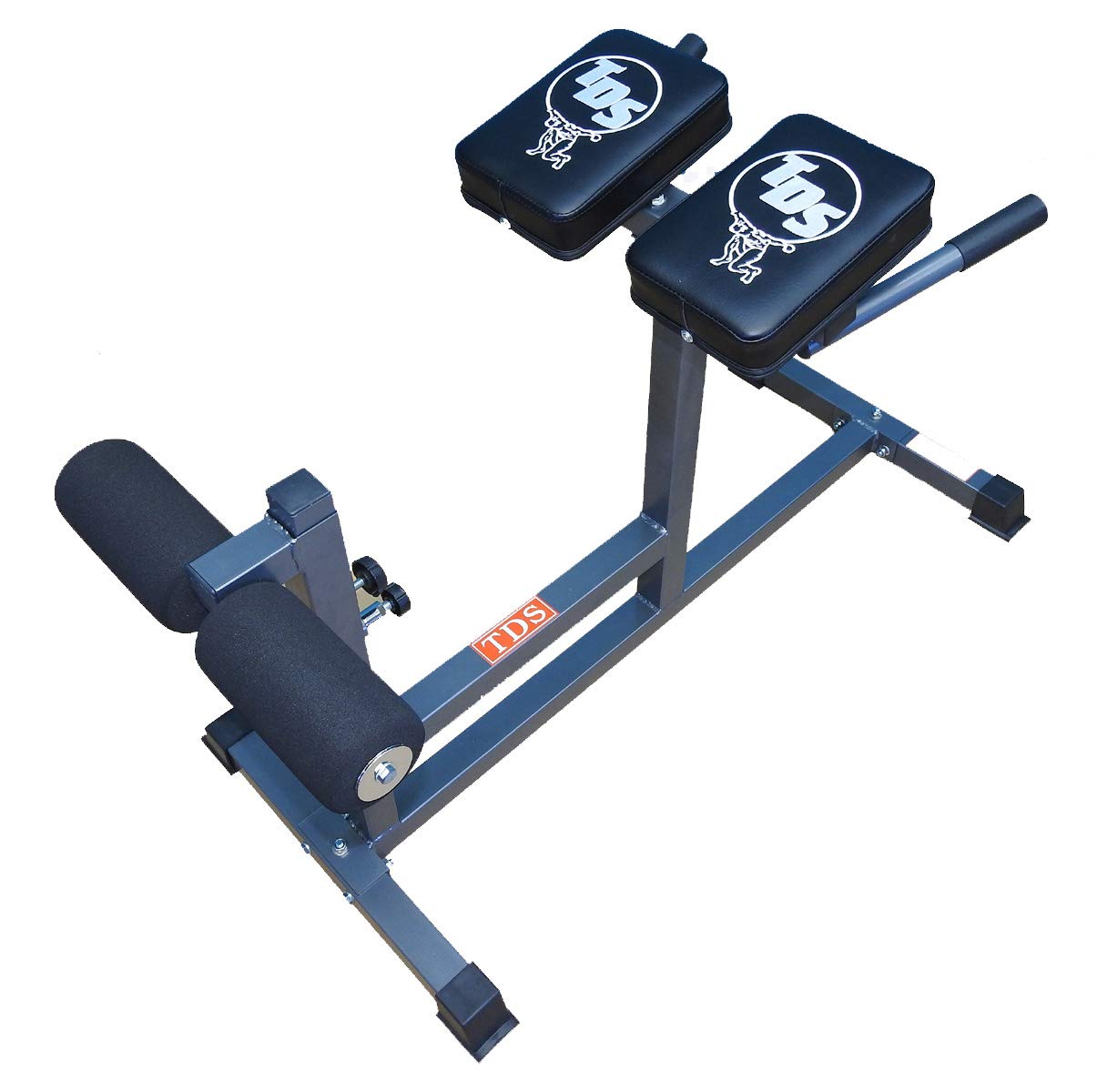
TDS builds this Roman chair with a heavy-duty steel frame and 4-inch diameter foam padding at an entry-level price point that undercuts most competitors. The adjustable foot holder positions your legs at angles ranging from 90 degrees to roughly 45 degrees, giving you some of the GHD-style range without the full cost. The 44-pound frame weighs enough to stay stable through bodyweight back extensions.
Users report that the unit holds up to 240 to 260 pounds without wobble when the bolts are fully tightened. Assembly takes about 30 minutes with clear hardware labeling. The split padding fits most male torsos well, and the unit can double as a back raise stand for reverse hypers and crunches when you add a mat over the pads.
The handle weld has been reported to snap on some units after about a year of use, which is a concern for heavier users or those who push the machine beyond bodyweight work. The lack of length adjustment means taller lifters may find the thigh pads positioned too close or too far. For the price, it is a capable starter machine that offers a taste of GHR mechanics.
Why it’s great
- Adjustable foot holder mimics GHD positioning
- Very affordable entry into posterior chain training
- Stable at bodyweights up to 260 lbs
Good to know
- Handle weld can snap under stress
- No length adjustment for different femur sizes
9. COBA Board Plus
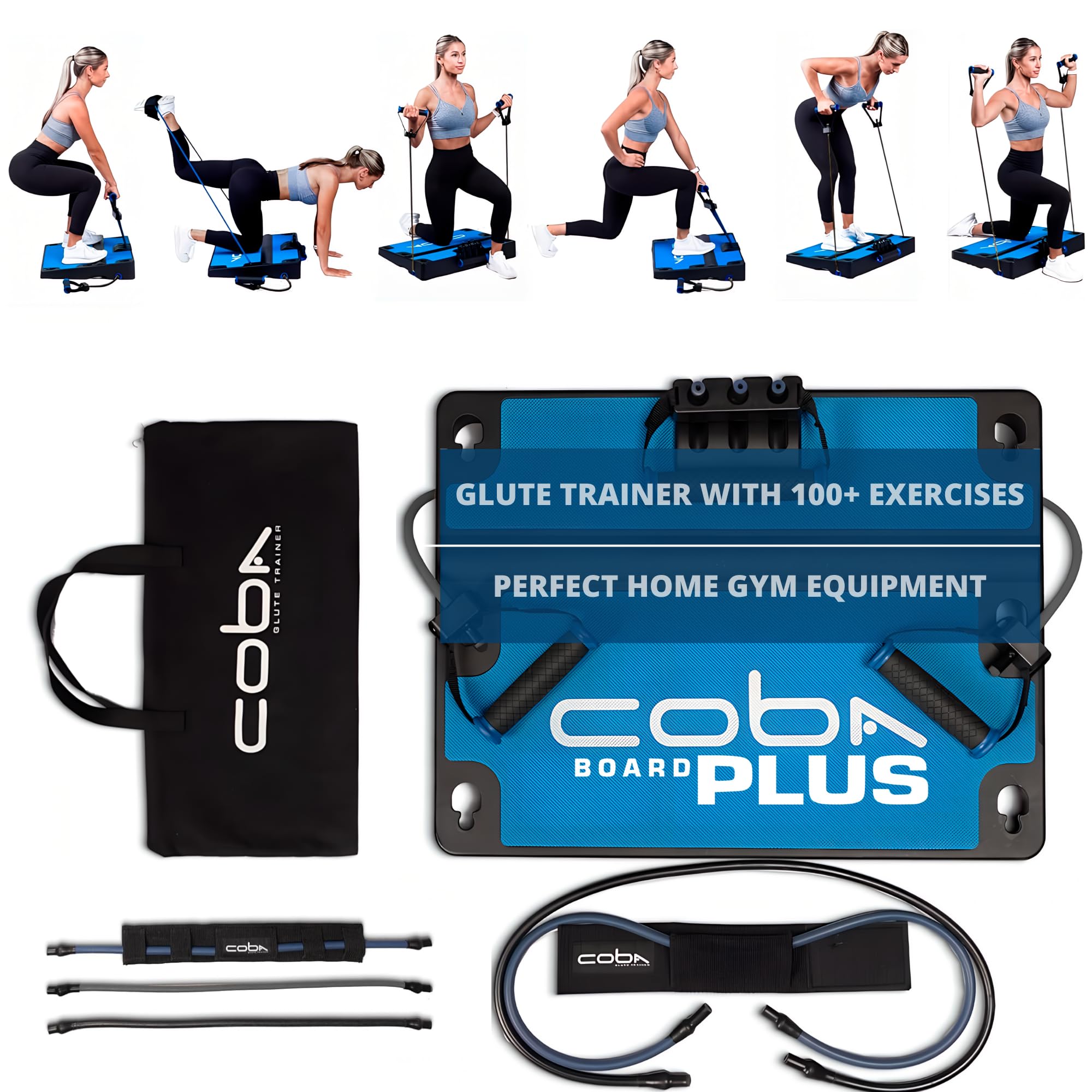
The COBA Board Plus is not a GHD or a Roman chair. It is a compact slant board with a patented 7-degree incline designed to shift tension toward the glutes and away from the quads during squats, lunges, and hip thrusts. At just 12 pounds and folding flat for storage, it targets a completely different use case from the other machines here.
The board comes with resistance bands that offer 12 levels of resistance progression, making it scalable from light activation work to challenging strength training. The anti-slip surface and reinforced anchors keep the board stable during dynamic movements. A free app with over 100 follow-along videos provides structure for beginners.
If you need hamstring specific work for a glute ham raise, this board will not replace a GHD. Its value lies in knee-friendly glute activation for those who want to reduce quad dominance without buying a large machine. It is a great warm-up tool or travel companion, not a primary posterior chain builder.
Why it’s great
- Patented 7° incline reduces knee strain
- Folds flat and weighs only 12 lbs
- Free workout app with expert-led videos
Good to know
- Cannot replace a GHD for hamstring raises
- Bands limit maximum resistance compared to free weights
FAQ
What is the difference between a Roman chair and a glute ham developer?
Can I do glute ham raises on a Roman chair?
How much floor space does a GHD really need?
Is a reverse hyperextension machine better for lower back rehab than a GHD?
Final Thoughts: The Verdict
For most users, the glute ham developer winner is the REP Fitness GHD because it combines 13 adjustment points with a compact footprint and rear transport wheels at a price that undercuts premium competitors. If you want raw stability and a 400-pound capacity for heavier weighted work, grab the Valor Fitness GHD. And for lower back rehab with posterior chain benefits, nothing beats the Titan Fitness H-PND for its value and spinal unloading effect.