
Finding a gluten-free pie dough that actually holds together, bakes flaky instead of sandy, and tastes like the real thing can feel like chasing a ghost. Most commercial options and scratch recipes end up brittle, crumbly, or dense—far from the tender, melt-in-your-mouth crust that made pie a classic in the first place. The good news is that a handful of mixes and pre-made crusts have cracked the code, delivering the buttery texture and structural integrity you need for single-crust, double-crust, and lattice-top pies.
I’m Mohammad Maruf — the founder and writer behind Drink4Good. I’ve spent years analyzing gluten-free baking formulations, allergen-friendly ingredient lists, and consumer feedback to identify which doughs actually perform in the oven and on the plate.
Whether you’re baking from scratch with a cup-for-cup flour blend or relying on a mix that only needs water, this guide breaks down the top contenders so you can confidently choose the best gluten free pie dough for your holiday table or weeknight dessert.
How To Choose The Best Gluten Free Pie Dough
Gluten-free dough behaves differently because it lacks the elastic protein network that gives wheat dough its stretch and structure. The best options compensate with a precise blend of starches, binders, and fats to mimic that familiar flaky, tender bite. Here’s what to look for when comparing mixes and pre-made crusts.
Fat Type and Content
Shortening, butter, or lard directly affect flakiness and flavor. Butter-based crusts deliver richer taste and better browning, while all-shortening versions tend to be more forgiving and easier to roll. In gluten-free dough, the fat particles must be distributed evenly to create pockets of steam that produce layers—without gluten, those pockets are harder to achieve. A mix with a higher fat-to-flour ratio (often around 1:2 by weight) typically yields a lighter, less crumbly final crust.
Starch Blend and Binder
Rice flour, tapioca starch, potato starch, and cornstarch are the common building blocks. A heavy reliance on brown rice flour can leave a gritty, dry mouthfeel, whereas a blend of white rice flour and tapioca or potato starch produces a smoother, more neutral base. Xanthan gum (usually ½ to 1 teaspoon per cup of flour) provides the binding that gluten normally supplies. Some pre-made doughs skip the gum altogether and rely on the starch blend alone—this can work for tender crusts but may fail for rolled or braided designs.
Convenience vs. Customization
A dry mix that only needs water offers the fastest path to a warm crust, but you sacrifice control over the fat type and can’t adjust salt or sugar levels. Pre-made frozen crusts are the ultimate shortcut—just thaw, fill, and bake—but they lock you into one texture and thickness. Cup-for-cup flour blends give you full flexibility to add your preferred fat and liquid, making them the best choice if you have a specific pie style or dietary restriction (vegan, low-sodium, etc.) in mind.
Quick Comparison
On smaller screens, swipe sideways to see the full table.
| Model | Category | Best For | Key Spec | Amazon |
|---|---|---|---|---|
| Krusteaz Traditional Mix (5 lb) | Premium Mix | Bulk baking & holiday pies | 5 lb box; light & flaky texture | Amazon |
| Krusteaz Traditional Mix (2-pack) | Mid-Range Mix | Quick single-crust pies | Two 20 oz boxes; 4-step prep | Amazon |
| gfJules All Purpose Flour | Premium Flour | Scratch baking & custom crusts | 1.5 lb pouch; cup-for-cup sub | Amazon |
| Raised Gluten Free Dutch Apple Pie | Pre-Made Pie | No-bake dessert (fully baked) | 30 oz; handmade; 190 cal/serving | Amazon |
| Katz Personal Pie Variety Pack | Pre-Made Pie | Individual desserts & variety | 3 pk (apple, blueberry, cherry) | Amazon |
In‑Depth Reviews
1. Krusteaz Pie Crust Mix, 5-Pounds

This is the same Krusteaz mix that earned a decades-long following, scaled up to a five-pound bulk bag that covers many pies or a season of baking. The formula relies on a well-balanced blend of enriched flour (in the traditional version, but GF bakers note the texture is excellent) and hydrogenated shortening that produces the signature light, flaky crumb. Users report that simply adding water and stirring yields a cohesive dough that rolls out without cracking—a feat many gluten-free mixes can’t match.
The large format is ideal for high-volume bakers, potlucks, or anyone who wants to keep a single product on hand for multiple crusts. The shelf life from production is generous, and the bag seals easily if transferred to a container. Hundreds of reviews spanning decades consistently highlight the crust’s ability to hold up to wet fillings without turning soggy, and the flavor-neutral base works equally well for sweet and savory pies.
Because the formula includes shortening rather than butter, you won’t get the rich dairy flavor of an all-butter crust, but the flakiness compensates. This mix is not certified gluten-free, so celiacs should verify the current label. For general gluten-sensitive households that prioritize performance and volume, this remains the most practical and trusted option.
Why it’s great
- Massive 5 lb size covers many pies without multiple boxes
- Rolls and transfers with minimal cracking, even for lattice tops
- Produces consistently light, flaky crust with just water
Good to know
- Not certified gluten-free; label verification needed for celiacs
- Uses shortening instead of butter, so flavor is neutral
2. Krusteaz Traditional Light and Flaky Pie Crust Mix (Pack of 2)

The two-pack format of Krusteaz’s classic pie crust mix offers the same reliable formula in a more manageable size for occasional bakers. Each 20-ounce box yields multiple single crusts—reviewers note that one cup of mix plus a few tablespoons of water makes one crust, so a full box can cover several pies. The directions are straightforward: heat the mix, stir in water, shape, and fold. This simplicity makes it especially appealing for bakers with arthritis or limited mobility, as mixing requires minimal kneading.
The light, flaky texture that Krusteaz built its reputation on carries through perfectly here. Users praise its melt-in-your-mouth quality and say it easily outperforms other box mixes like Betty Crocker. Because it’s a dry mix, you control the hydration and can adjust the fat slightly if desired, though the pre-included shortening already ensures tender layers. The versatility extends beyond pies—many reviewers use it for crust rolls, apple pie pockets, cookies, and pinwheels.
The biggest advantage over the 5-pound bag is portion control and freshness—you open one box at a time and keep the second sealed. The shelf life of 548 days from production means you can stash a backup without worry. As with the bulk version, celiac buyers should confirm the gluten-free status on the current packaging, as the formulation may vary.
Why it’s great
- Extremely easy prep with just water—no cutting in fat required
- Light, flaky texture that reviewers say tastes homemade
- Versatile for pies, pockets, cookies, and more
Good to know
- Not explicitly marketed as certified gluten-free; check label
- Shortening-based rather than butter-based flavor
3. gfJules Certified Gluten Free All Purpose Flour

For bakers who want total control over their pie dough—choosing butter, shortening, or lard, and adjusting salt or sugar—a cup-for-cup flour blend is the path forward. gfJules has been voted #1 by consumers in the Gluten Free Awards multiple times, and its formula is designed to replace wheat flour directly without changing your recipe. The blend uses white rice flour, cornstarch, potato starch, and tapioca starch, avoiding the gritty texture that brown rice flour often introduces. A small amount of xanthan gum is included for binding, so your dough holds together during rolling and shaping.
The 1.5-pound pouch yields about 5 cups of flour, enough for several double-crust pies. The certification is deep: GFCO-certified gluten-free, OU Kosher, vegan, non-GMO, and certified free of the top nine major allergens. This makes gfJules a safe choice for households managing celiac disease or multiple food allergies. Reviewers consistently note that it performs beautifully in pie crusts—producing a tender, non-crumbly dough that browns evenly. One user mentioned the dough was slightly stiff for drop biscuits but worked perfectly when patted into the pan; a kitchen scale helps with accuracy for delicate recipes.
The main trade-off is that you must supply your own fat and liquid, which adds a step but also gives you control over flavor and dietary preferences. If you’re vegan or dairy-free, you can substitute coconut oil or vegan butter. The flour’s neutral taste lets fruit or savory fillings shine, and the lack of gritty mouthfeel is a frequent point of praise. Keep the pouch sealed airtight between uses to maintain freshness.
Why it’s great
- Cup-for-cup substitution works with any standard pie recipe
- Smooth, non-gritty texture thanks to white rice flour base
- Certified GF, top-9 allergen-free, vegan, and kosher
Good to know
- Requires adding your own fat and liquid—not a standalone mix
- Can be a bit stiff for drop biscuits; weight measurement recommended
4. Raised Gluten Free Dutch Apple Pie 9 Inch
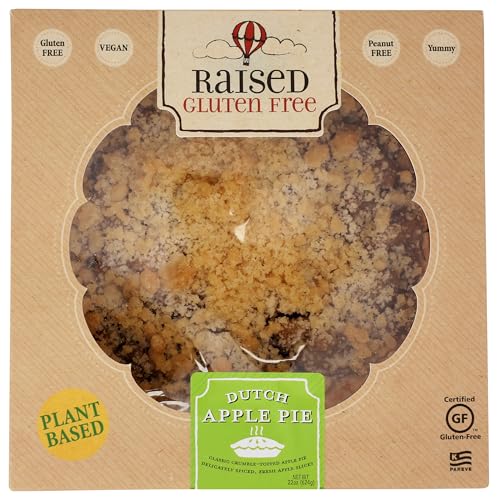
Sometimes you want the pie experience without making any dough at all. Raised Gluten Free’s Dutch Apple Pie is a fully baked, handmade pie that arrives ready to heat and serve. The 30-ounce pie features a generously spiced apple filling under a buttery, flaky crust that holds its shape even after reheating. At 190 calories per serving, it fits comfortably into a dessert menu without overdoing it.
What sets this pie apart is the quality of the crust itself—reviewers say it’s indistinguishable from a traditional wheat crust, with none of the graininess or crumble that plagues many gluten-free pies. The filling uses real apple chunks rather than mush, and the balance of sweetness leans toward the natural fruit flavor. While it’s on the premium side compared to standard pies, fans consider it a splurge-worthy treat for holidays, birthdays, or any occasion where texture matters. The pie is also vegan, which broadens its appeal in households with dairy restrictions.
The main drawbacks are the price and limited availability. Shipping can be an issue if the pie isn’t handled with care, and some reviewers note that the cost is significantly higher than a standard pie of the same size. Still, for celiacs and gluten-sensitive individuals who miss the experience of a perfect apple pie, the Raised brand delivers a crust that rivals any bakery item.
Why it’s great
- Fully baked and ready to serve—no dough work required
- Crust is flaky and indistinguishable from wheat crust
- Handmade and vegan-friendly
Good to know
- Premium pricing compared to conventional pies
- Shipping can sometimes arrive with cosmetic damage to crust
5. Katz Gluten Free Personal Pie Variety Pack (3pk)
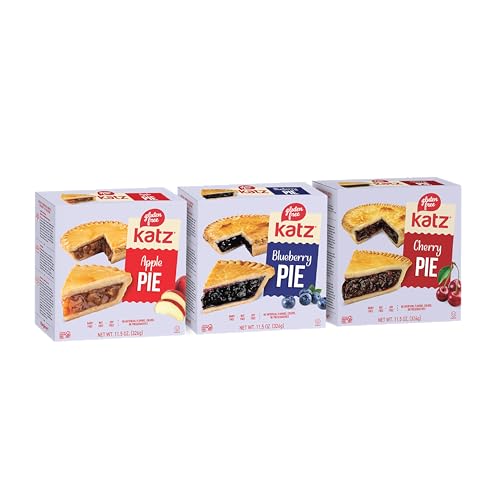
Katz’s variety pack contains three individual pies—apple, blueberry, and cherry—each in a 11.5-ounce size that’s perfect for single servings or portion control. The crust is sweet and flaky, with a texture that many reviewers describe as the best they’ve found in a gluten-free pie. The fillings are packed with fruit and avoid the overly gelatinous consistency common in commercial pies. Because the pies are free of gluten, dairy, tree nuts, peanuts, sesame, and soy, they cover a broad range of allergen concerns and are made in a GFCO- and OU-certified facility.
The individual size makes these great for households where family members have different flavor preferences or where you want to avoid committing to a single full-size pie. The pies arrive ready to eat and are best warmed before serving; the instructions recommend freezing any that you won’t consume the same day. Customer feedback is largely positive, with many praising the flaky crust and honest fruit flavor, though a small number of reviews mention issues with the pumpkin variety (not included in this pack) or the texture being slightly bland.
The biggest downside is the shipping risk—the pies are perishable and are shipped without dry ice in some cases, which can lead to thawing or damage during transit. A few cooks have reported arriving pies with soggy crusts or broken tops, so the overall experience may vary by fulfillment. If you’re in a location with reliable cold-chain shipping, the flavor and allergen safety make this a top contender for grab-and-go gluten-free pie.
Why it’s great
- Three individually sized pies for portion control and variety
- Flaky crust with sweet, fruit-forward fillings
- Free of gluten, dairy, tree nuts, peanuts, soy, and sesame
Good to know
- Shipping can sometimes cause thawing or crust damage
- Individual pies may be smaller than expected for the price
FAQ
Why is my gluten-free pie dough so crumbly?
Can I use a cup-for-cup gluten-free flour for any pie recipe?
How do I blind bake a gluten-free pie crust without it shrinking?
Final Thoughts: The Verdict
For most users, the best gluten free pie dough winner is the Krusteaz Pie Crust Mix (5 lb) because it delivers consistent, flaky results at scale with minimal effort. If you want the versatility to customize your fat and flavor, grab the gfJules All Purpose Flour. And if you need a zero-lift, ready-to-serve option for holidays or guests, nothing beats the Raised Gluten Free Dutch Apple Pie.