
The promise of glycolic acid — smoother texture, brighter tone, diminished fine lines — is tempting. But if your skin flushes at the slightest provocation, the fear of stinging, peeling, and a blotchy aftermath often keeps you from reaping those rewards. The category has evolved beyond harsh, single-acid bombs, and there are now formulations designed to refine without provoking a reaction.
I’m Mohammad Maruf — the founder and writer behind Drink4Good. I’ve spent years analyzing skincare chemistry, dissecting pH levels, and cross-referencing ingredient decks against real-world irritation reports to separate the gentle exfoliators from the overhyped irritants.
Whether you’re new to chemical exfoliation or have been burned by harsh formulas before, this guide breaks down the nuanced world of the best glycolic acid for sensitive skin, focusing on concentration, buffer ingredients, and application strategies that keep your barrier intact while delivering visible results.
How To Choose The Best Glycolic Acid For Sensitive Skin
Selecting a glycolic acid product for reactive skin requires looking beyond the marketing claims. The goal is to get exfoliation without barrier disruption, which means you need to evaluate concentration, pH, vehicle, and the supporting ingredient list as a single system.
Concentration is Only Half the Story
A 10% glycolic acid serum can be more irritating than a 15% peel if the lower-concentration formula has a lower pH or lacks buffering agents. For sensitive skin, anything above 10% in a leave-on formula carries a higher risk of tingling and redness. Rinse-off peels can tolerate higher percentages because contact time is brief, but you still need a formula that includes soothing ingredients like aloe, squalane, or panthenol to counter the acid activity.
The Vehicle Matters — Gel vs. Serum vs. Liquid
A lightweight liquid toner can feel refreshing but often spreads thinner, making it harder to control absorption. Gels and thicker serums tend to sit on the skin longer, which may increase penetration and irritation risk if you’re not careful. For sensitive complexions, a milky or gel-cream texture that includes hydrating lipids provides a built-in buffer that slows down acid delivery, reducing the sting without sacrificing efficacy.
Look for pH Stability and Supporting Acids
Formulations that combine multiple AHAs (like lactic, mandelic, or phytic acid) at a stable, skin-compatible pH (around 3.5–4.5) can exfoliate more evenly than a single high-concentration acid. Multi-acid blends enable each component to work at a lower individual strength, which often feels gentler on reactive skin. Avoid formulas that list alcohol, witch hazel, or strong essential oils near the top of the ingredient list — these amplify irritation.
Quick Comparison
On smaller screens, swipe sideways to see the full table.
| Model | Category | Best For | Key Spec | Amazon |
|---|---|---|---|---|
| DERMA E Anti-Aging Regenerative Serum | Serum | Rosacea & moisture barrier | 2 oz liquid, 100% vegan | Amazon |
| Naturium Glycolic Acid Resurfacing Gel 10% | Gel | Acne-prone & texture | 10% AHA, pH-balanced | Amazon |
| Prequel Skin Multi-Acid Milk Peel | Peel | Brightening & fine lines | 15% multi-AHA, milk base | Amazon |
| Paula’s Choice 2% BHA Liquid Exfoliant | Toner | Pores & blackheads | 2% BHA, fragrance-free | Amazon |
| TULA Secret Solution Pro-Glycolic 10% Toner | Toner | Daily gentle resurfacing | 10% glycolic + prebiotics | Amazon |
In‑Depth Reviews
1. DERMA E Anti-Aging Regenerative Serum
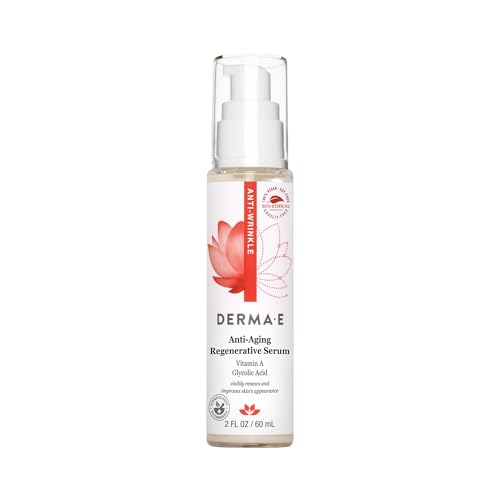
This serum is a standout for sensitive skin precisely because it does not rely on a high glycolic acid concentration to deliver results. The formula combines glycolic acid with Vitamin A and antioxidant Vitamin E, creating a gentle exfoliation path that resurfaces without stripping. Customers with rosacea have reported unexpected calming effects, which points to a formulation that respects the skin barrier rather than attacking it.
The texture is thicker than a typical watery serum — it feels more like a lightweight night cream. This consistency allows controlled application on reactive areas like the cheeks and neck. Several users noted a slight tackiness after application, so it is best used as a standalone night treatment rather than layered under makeup. The 2-ounce bottle offers strong longevity given the small amount needed per use.
If your primary concern is avoiding redness while still getting the smoothing and brightening benefits of glycolic acid, this serum’s nutrient-dense, cruelty-free formula provides a safe entry point. The absence of parabens, sulfates, and synthetic fragrances further reduces the likelihood of a reaction, making it a reliable daily option for even the most cautious skin types.
Why it’s great
- Hydrating formula that soothes rather than irritates, even for rosacea-prone skin
- Clean ingredient profile without common irritants like parabens or sulfates
Good to know
- Slightly sticky finish may not layer well under makeup
- Long-term wrinkle reduction is gradual and not dramatic
2. Naturium Glycolic Acid Resurfacing Gel 10%
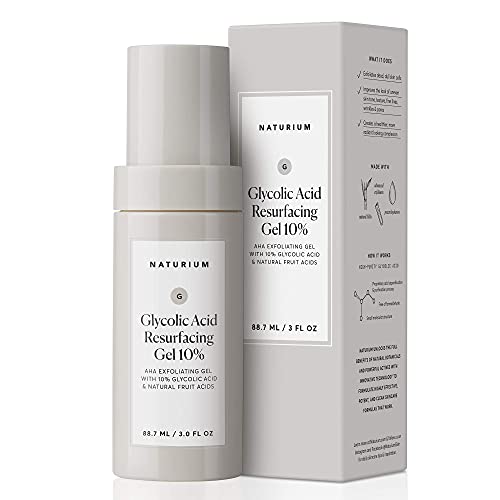
For those whose sensitive skin is also acne-prone or marked by large pores, this gel formula delivers a higher active percentage (10% glycolic acid) while maintaining a pH-balanced, synthetic fragrance-free profile. The gel vehicle slows down absorption compared to a watery toner, which helps mitigate the shock of immediate acid contact. Users report an initial purging phase followed by clearer, smoother skin — a sign the product is working at a cellular level.
The inclusion of natural fruit acids alongside the glycolic acid creates a multi-acid exfoliation pathway that is less aggressive than a straight 10% glycolic solution. It is designed for daily use but starting at two to three times per week is recommended for sensitive complexions. A few customers noted that combining it with a salicylic acid cleanser caused stinging, so pairing it with a gentle, non-acid cleanser is wise.
This product bridges the gap between over-the-counter gentleness and professional-strength resurfacing. If your skin can tolerate a controlled 10% leave-on gel, the Naturium formula offers a direct route to improved texture and reduced congestion without the irritation typically associated with that concentration.
Why it’s great
- Effective for acne and pore refinement without stripping the skin
- pH-balanced, paraben-free, and synthetic fragrance-free formulation
Good to know
- May cause initial purging; start with fewer weekly applications
- Can sting if layered with other active ingredients like salicylic acid
3. Prequel Skin Multi-Acid Milk Peel

Do not let the 15% glycolic acid concentration scare you. This is a rinse-off peel formulated as a milky liquid, which means contact time is short and the nourishing base — enriched with squalane and protective botanicals — actively counteracts dryness. The multi-acid complex includes phytic, malic, mandelic, and lactic acids, each with a larger molecular size than glycolic alone, creating a staggered exfoliation that is less likely to overwhelm reactive skin.
Clinical data from the brand shows visible improvements in radiance, pore size, and dark spots within four weeks. Users on prescription retinoids have reported successful integration without excessive irritation, though a patch test is mandatory before full-face application. The texture is fluid but not runny, and it dries down quickly without a sticky residue. Because it is a peel and not a leave-on, you control exactly how long the acids stay on your skin.
For sensitive skin that has built some tolerance to lower-concentration AHAs, this product represents the next logical step. It delivers the potency of a professional peel in a home format that prioritizes hydration and barrier support. Just start at once per week, monitor for tingling, and always follow with a rich moisturizer and sunscreen the next day.
Why it’s great
- High acid concentration mitigated by a non-drying milk base and squalane
- Clinically proven improvements in texture and radiance within 4 weeks
Good to know
- Not recommended for diagnosed skin conditions or very reactive skin without a patch test
- Overuse can lead to dryness; strict adherence to 1-2 times weekly is important
4. Paula’s Choice SKIN PERFECTING 2% BHA Liquid Exfoliant
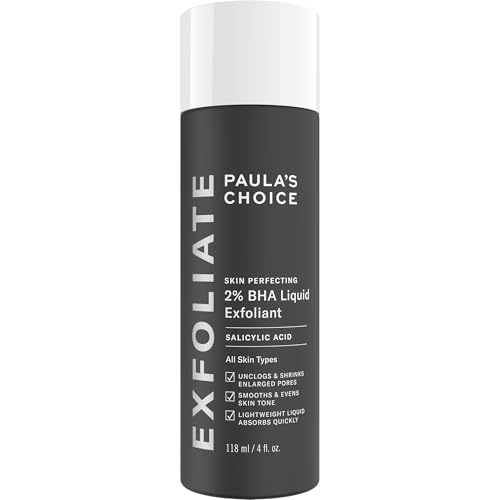
This product is not a glycolic acid formula — it uses 2% salicylic acid (BHA) instead — and that is exactly why it earns a spot on this list. For sensitive skin that reacts to AHAs but still needs chemical exfoliation, BHA offers a different mechanism: it is oil-soluble, penetrates pores directly, and is often better tolerated by those with redness or rosacea. Paula’s Choice formulates this without fragrance, alcohol, or drying surfactants.
The watery consistency allows even, light application via a cotton pad. Users report visible clearing of blackheads and closed comedones within a week, along with a reduction in pore size over time. Initial tingling is common but typically subsides quickly. Because BHA is less aggressive on the skin’s surface than glycolic acid, this can be a daily option for those whose primary concerns are congestion and texture rather than fine lines.
If your sensitive skin struggles with clogged pores and breakouts but cannot handle glycolic acid without flushing, this BHA exfoliant is the smarter first step. It addresses the root cause of congestion without peeling the surface layer, making it a complementary or alternative tool in a barrier-conscious routine.
Why it’s great
- Oil-soluble BHA penetrates pores to clear blackheads without surface irritation
- Fragrance-free, non-drying formula suitable for daily use on reactive skin
Good to know
- Dispensing system can be messy and wasteful with the product bottle
- Initial tingling possible; start with alternate-day application
5. TULA Secret Solution Pro-Glycolic 10% pH Resurfacing Toner
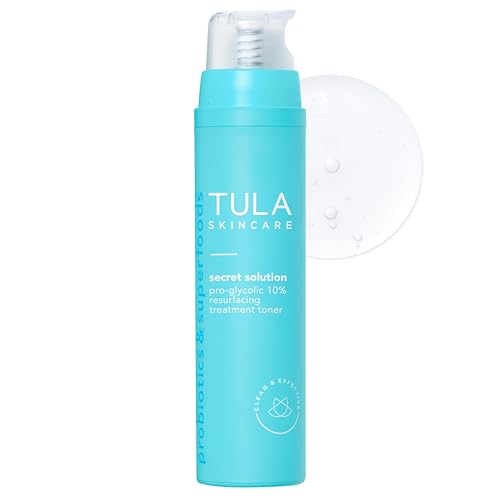
TULA’s approach to glycolic acid centers on microbiome support via prebiotic extracts, which is a thoughtful angle for sensitive skin. The 10% glycolic acid concentration is balanced with hydrating ingredients that make this toner feel more like a lightweight gel than a stripping liquid. Alcohol-free and designed for twice-daily use, it aims to exfoliate while reinforcing the skin’s natural barrier rather than weakening it.
Customer feedback highlights improved skin smoothness and a more even tone, though results for firmness are less consistent. The gel consistency requires several pumps to cover the face, which reduces the cost-per-use value compared to more concentrated serums. A few users reported minor breakouts, likely due to other ingredients in the proprietary blend rather than the glycolic acid itself. The pump mechanism has been noted as occasionally defective.
For sensitive skin that wants a straightforward, daily-use glycolic toner from a reputable brand focused on gut-skin axis science, this is a solid entry. It works best as a gentle maintenance step rather than a transformative treatment. If you have not reacted well to lower-cost glycolic options, the prebiotic buffer in this formula may provide the extra layer of protection your barrier needs.
Why it’s great
- Prebiotic technology supports the skin microbiome during exfoliation
- Alcohol-free gel texture hydrates while it resurfaces
Good to know
- Need multiple pumps per use, making the 2.7 oz bottle less economical
- Pump mechanism can be unreliable; some users had to remove the top to dispense product
FAQ
Can I use glycolic acid if my skin stings from vitamin C serums?
How often should sensitive skin exfoliate with glycolic acid?
Final Thoughts: The Verdict
For most users, the best glycolic acid for sensitive skin winner is the DERMA E Anti-Aging Regenerative Serum because it exfoliates gently while nourishing the barrier, making it a reliable daily option even for those with rosacea. If you want a more potent resurfacing effect for acne scars and texture, grab the Prequel Skin Multi-Acid Milk Peel. And for pore congestion without AHA irritation, nothing beats the Paula’s Choice 2% BHA Liquid Exfoliant.