
When a wildfire, hurricane, or power outage forces you out the door in under five minutes, the difference between chaos and control comes down to one thing: a properly stocked go bag kit you can grab without thinking. Most people underestimate the logistical nightmare of assembling food, water, first-aid, shelter, and power from scratch under pressure — and that’s exactly why a pre-built or carefully curated kit matters more than which brand name is on the pouch.
I’m Mohammad Maruf — the founder and writer behind Drink4Good. I’ve spent years analyzing emergency preparedness gear, comparing shelf-life claims, calorie densities, filtration specs, and backpack ergonomics across dozens of kits to separate marketing fluff from real survival capability.
After deep research into calorie counts, water filtration methods, bag durability, and real-user feedback over hundreds of hours of analysis, I’ve narrowed the market to the seven strongest contenders for a go bag kit that actually works when the lights go out.
How To Choose The Best Go Bag Kit
Selecting a go bag kit isn’t about buying the most expensive bag or the one with the longest feature list. It’s about matching the kit’s calorie count, water-filtration capability, shelter quality, and bag ergonomics to your specific evacuation scenario, climate, and family size. Below are the three most critical factors to evaluate before you buy.
Calorie Density & Shelf Life
The food in a go bag kit must deliver enough energy per ounce to sustain you for 72 hours without requiring extra water for rehydration. Look for kits using pressed food bars or freeze-dried meals with a shelf life of at least five years — longer for freeze-dried options. Kits that list total calorie counts below 1,200 per person per day leave you short on energy during an evacuation where physical exertion is highest.
Water Filtration Redundancy
Relying solely on pre-packaged water pouches is risky — they add weight and run out. The best go bag kits include at least two water-handling methods: sealed water pouches for immediate drinking plus a portable filter straw or purification tablets that let you safely use rivers, taps, or collected rainwater. Filter-straw capacity matters — look for at least 20 gallons of filtration life per person.
Backpack Ergonomics & Durability
A go bag that feels comfortable under load for two miles is useless if the zippers blow out on mile three. Prioritize packs made with high-denier fabric (900D or higher nylon), YKK zippers, padded shoulder straps, and a sternum strap or hip belt that transfers weight off your shoulders. Avoid kits with flimsy backpack straps that dig in under 20 pounds of gear.
Quick Comparison
On smaller screens, swipe sideways to see the full table.
| Model | Category | Best For | Key Spec | Amazon |
|---|---|---|---|---|
| Sirius Survival 50L Bug Out Bag | Premium | Two-person readiness | 900D Oxford 50L backpack | Amazon |
| Emergency Zone Deluxe 2-4 Person Kit | Premium | Extended family shelter | 121-piece first aid kit | Amazon |
| Urban Survival Bug-Out Bag By Emergency Zone | Premium | Up to 6-person coverage | 5-year shelf life food bars | Amazon |
| Ready America 72 Hour Deluxe Kit | Mid-Range | 4-person evacuation | 107-piece first aid + hand-crank radio | Amazon |
| Essentials Deluxe Survival Kit by Emergency Zone | Mid-Range | Lightweight individual carry | Frontier straw filter (30 gal) | Amazon |
| Mardingtop 60L Internal Frame Backpack | Budget-Friendly | Customizing your own kit | Expandable 60-75L capacity | Amazon |
| Mountain House 3-Day Emergency Food Assortment | Budget-Friendly | Long-term food storage | 30-year shelf life guarantee | Amazon |
In‑Depth Reviews
1. Sirius Survival 50L Bug Out Bag
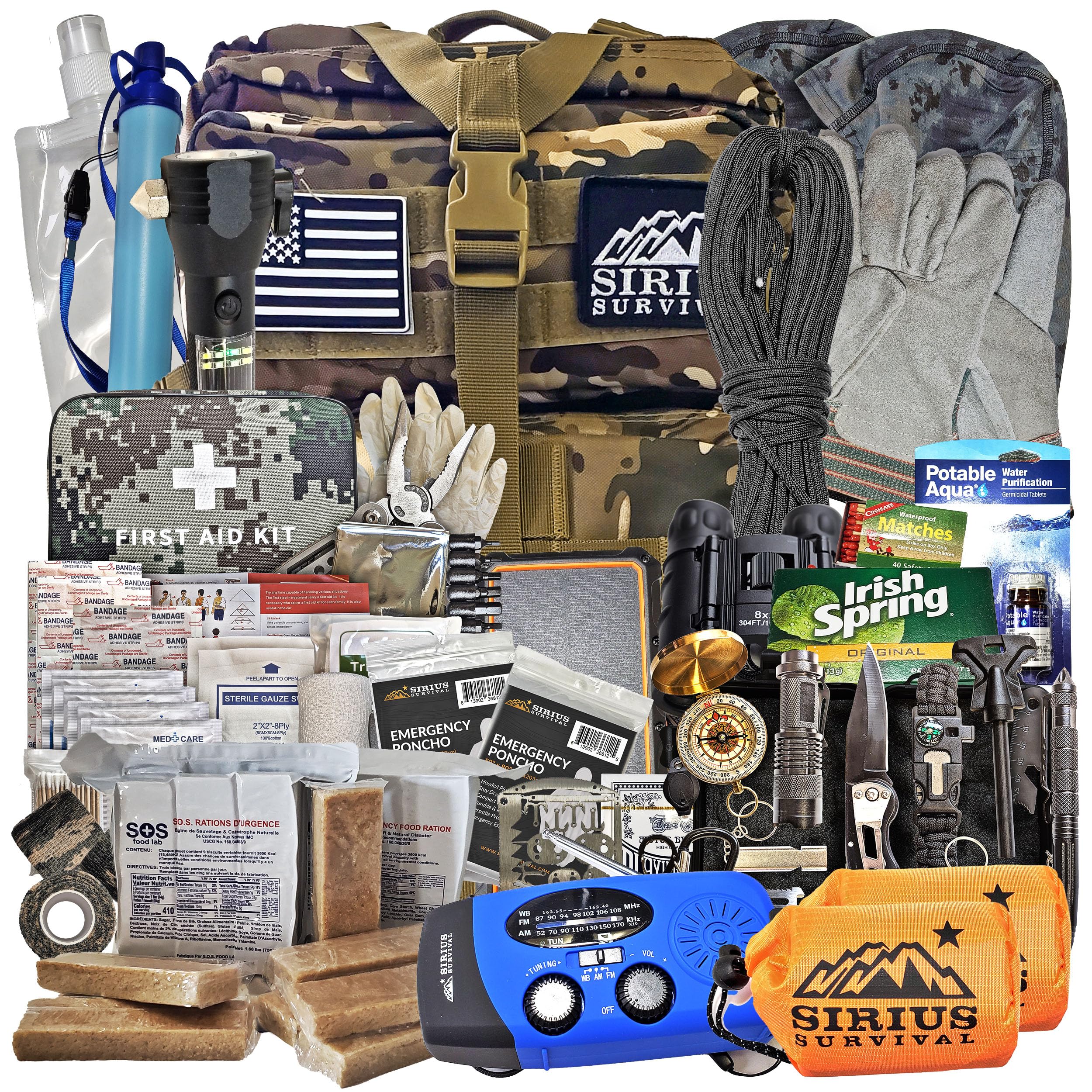
The Sirius 50L Bug Out Bag is the gold standard for a grab-and-go kit that doesn’t compromise on any critical category. It rides on a 900D Oxford fabric backpack with comfortable padding, YKK-quality zippers, and enough internal organization to keep food rations separate from the first-aid pouch without digging. With 7,200 calories of SOS food rations — a full three-day supply for two people — you avoid the common pitfall of running out of energy on day two.
Water handling is genuinely redundant here: sealed water pouches for immediate hydration, plus a dedicated filter straw for drawing from streams or taps during extended sheltering. The included solar AM/FM/NOAA radio, solar power bank, stainless multi-tool, fire starters, and bivvy bags cover shelter, communication, and warmth without forcing you to add anything essential. At 13.5 pounds, the weight-to-coverage ratio is exceptional for a two-person scenario.
What elevates this kit above the field is the detail work — the 175-piece count isn’t filler; it includes practical extras like soap, paracord, a compass, and a comprehensive guide. The backpack has room left over for personal documents and medications, which is exactly what you need when you have 60 seconds to leave.
Why it’s great
- Highest-denier fabric (900D) for abrasion resistance
- Solar-powered NOAA radio and power bank for off-grid comms
- Food rations require no water or cooking
Good to know
- Heavier than minimalist kits at 13.5 lbs
- 90-day warranty is shorter than some competitors
2. Emergency Zone 2 & 4 Person 72 Hour Survival Kit

This Emergency Zone kit wins points for sheer comprehensiveness at a mid-range price point. The 121-piece first aid kit is the most complete in this comparison — it includes quality bandages, trauma shears, tweezers, and enough supplies to handle minor to moderate injuries during a multi-day evacuation. The included tube tent, ponchos, and sleeping bags provide real shelter redundancy rather than flimsy space blankets that tear on the first gust.
Water coverage is triple-layered: sealed pouches for immediate use, a collapsible container for bulk transport, and Chlo-Floc purification tablets for treating questionable sources. The 3,600-calorie SOS food bars deliver 1,200 calories per person per day for two people, which is adequate for short-term survival. The bag itself is medium gray nylon with no tactical markings, keeping a low profile when discretion matters most.
The backpack straps earned consistent praise for being comfortable under moderate loads, though the internal organization relies on Ziploc-style bags rather than dedicated pouches. This kit works best as a foundation — you’ll want to add a dedicated multi-tool and a better water filter, but the sleeping bags and first-aid kit alone justify the investment for family preparedness.
Why it’s great
- Largest first aid kit (121 pieces) in the roundup
- Triple water system: pouches, container, purification tablets
- Includes sleeping bags and tube tent for real shelter
Good to know
- Straps may loosen under heavy loads over long distances
- No MOLLE attachment points for modular gear
3. Urban Survival Bug-Out Bag by Emergency Zone

Designed to cover up to six people in a single backpack, this kit packs an impressive amount of caloric density into a nondescript black bag. The SOS food rations and water pouches are US Coast Guard approved with a five-year shelf life, and the food bars are engineered to be non-thirst inducing — a crucial detail when water availability is uncertain. At 6.78 kilograms (under 15 pounds), it’s remarkably light for its coverage scope.
The included Emergency Preparedness Guidebook is a standout feature — it walks you through creating a communication plan, administering basic first aid, and responding to specific disasters like earthquakes, wildfires, and nuclear events. This transforms the kit from a pile of gear into a usable system for someone who hasn’t trained for emergencies. The backpack dimensions (18x12x8 inches) leave room for adding personal items like medications and clothing.
Where this kit falls short of the premium tier is in water filtration redundancy — it relies primarily on the sealed water pouches and doesn’t include a dedicated filter straw or purification tablets. You’ll want to add a Sawyer Mini or LifeStraw to extend your water supply beyond the included pouches. For urban dwellers who need a lightweight, inconspicuous kit that covers a large family, this is a strong starting point.
Why it’s great
- Covers up to 6 people in one 15-lb backpack
- Non-thirst-inducing food bars reduce water demand
- Included guidebook provides actionable survival training
Good to know
- No water filter straw included for extended hydration
- Bag dimensions may feel bulky for smaller frames
4. Ready America 72 Hour Deluxe Emergency Kit
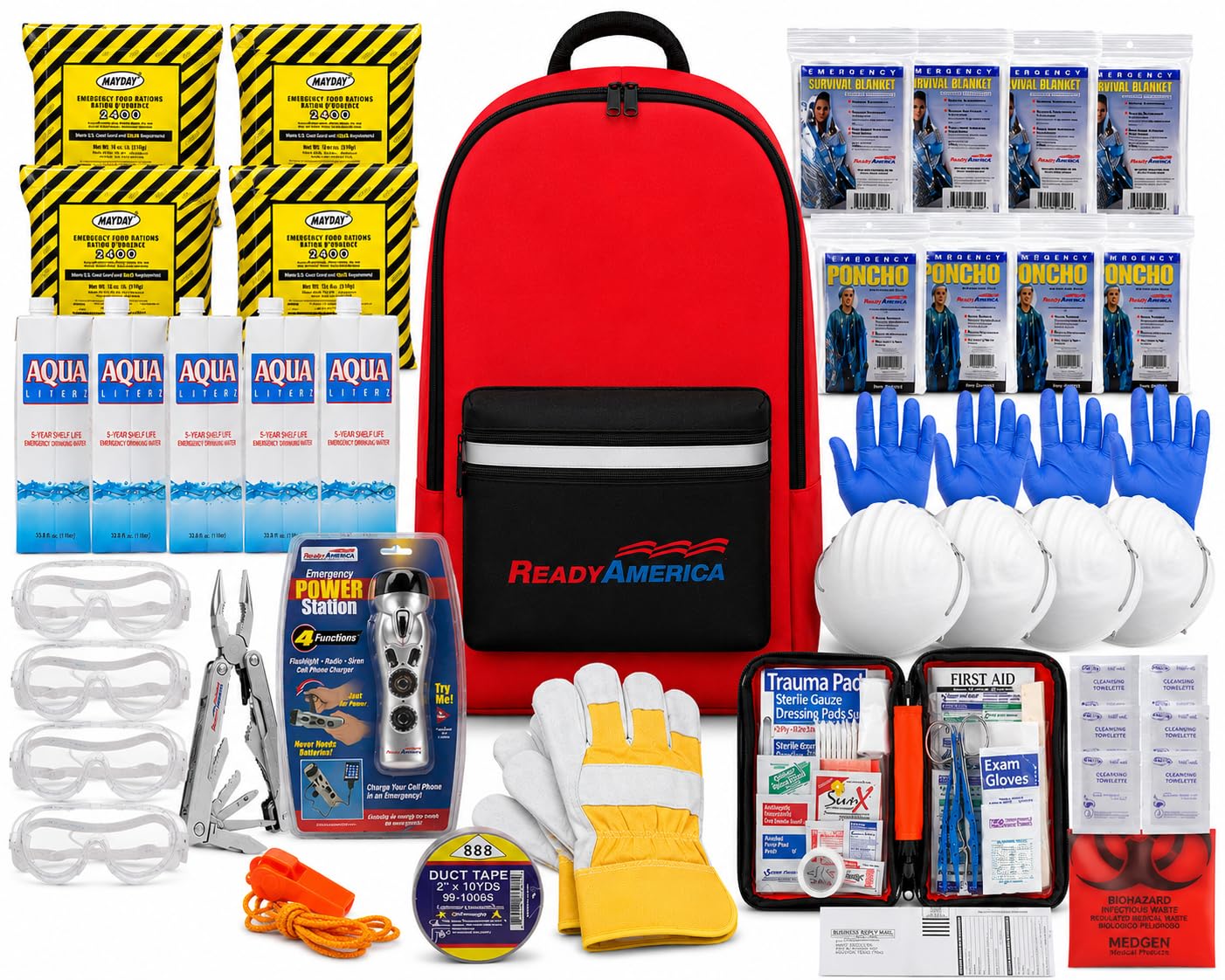
The Ready America kit strikes an excellent balance between comprehensiveness and cost, making it a top contender for anyone assembling a household emergency plan without breaking the bank. It supports four people with 2,400-calorie food bars and one-liter water cartons per person, plus a 107-piece first aid kit that includes N95 masks, safety goggles, and nitrile gloves for dealing with debris and airborne hazards after a quake or fire.
The included four-function emergency power station — combining a flashlight, AM/FM radio, siren, and cell phone charger — is powered by a hand crank, meaning you never need to worry about dead batteries. The survival blankets, ponchos, light sticks, and multi-tool round out the shelter and tool categories adequately. The nylon backpack is durable enough for short-distance carries and has external pockets for quick-access items.
Where the kit shows its mid-range positioning is in water volume: four 1-liter cartons for four people over 72 hours works out to only one liter per person per day, which is below the recommended two liters. Buyers consistently add water purification tablets or an extra filter straw. The food bars also have a shorter shelf life compared to freeze-dried options — plan to rotate them every four to five years.
Why it’s great
- Hand-crank radio/flashlight/charger eliminates battery dependency
- Comprehensive first aid with N95 masks and goggles
- Lightweight enough for a child to carry
Good to know
- Water supply (1L/person/day) needs supplementation
- Food bars require rotation every 4-5 years
5. Essentials Complete Deluxe Survival Kit by Emergency Zone
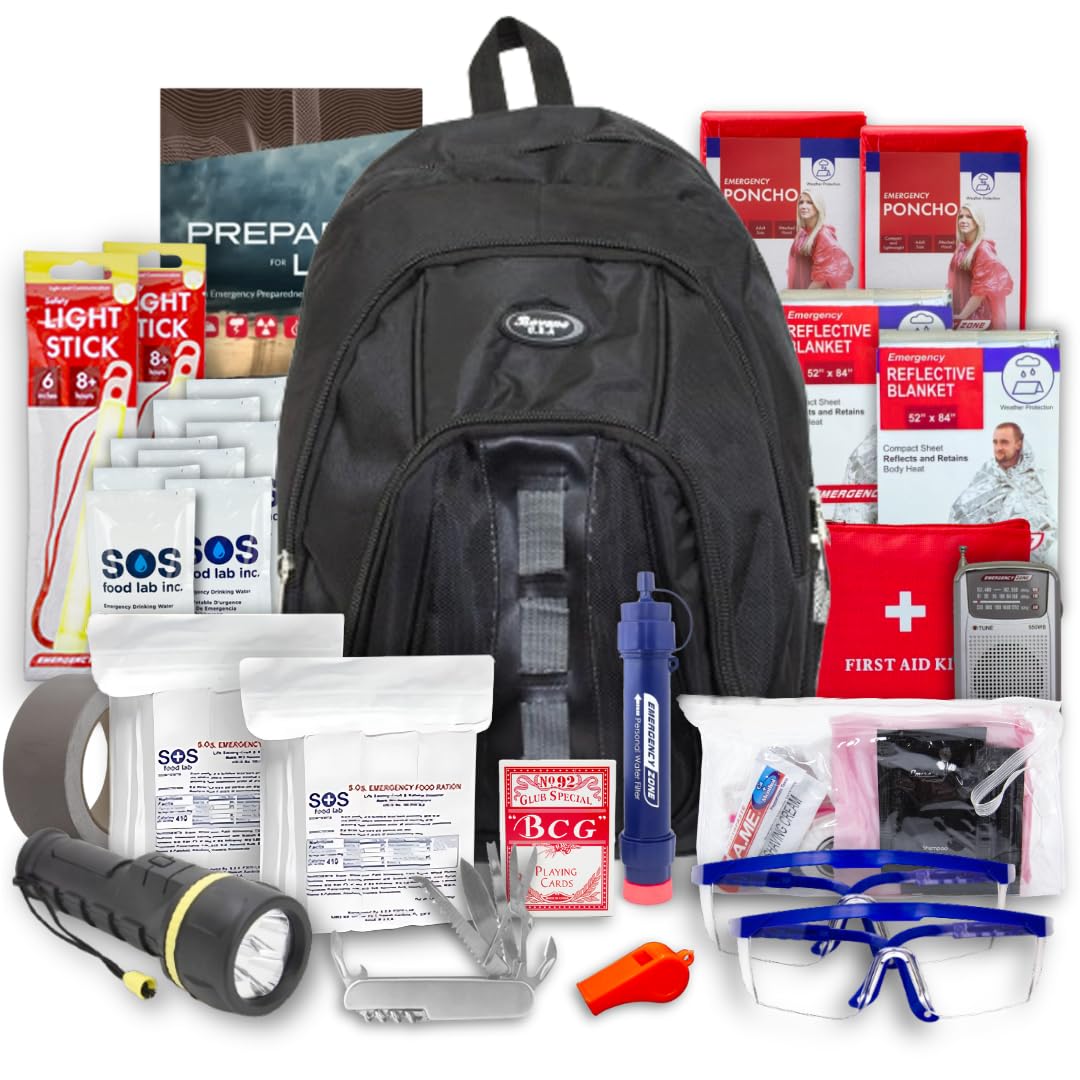
This kit is purpose-built for the solo prepper or couple who wants a lightweight, discreet bag that doesn’t scream “survival gear” from across the room. The Frontier Straw Filter is the headline feature — capable of filtering up to 30 gallons of water, it gives you the ability to safely drink from streams, lakes, or even questionable tap water after a disaster. This single addition elevates the kit above most in its tier because it solves the water problem without adding bulky pouches.
The 53-piece first aid kit is basic but functional — it covers cuts, scrapes, sprains, and minor burns without being overkill. The SOS food rations have a five-year shelf life and are designed to be calorie-dense without requiring extra water for rehydration. The backpack itself is well-reviewed for strong zippers and enough interior space to add a change of clothes, documents, and a small tool kit without overstuffing.
Where the kit compromises is on total food volume — it’s designed for one person for 72 hours or two people for a shorter duration, so larger families will need to supplement. The included flashlight and whistle are basic rather than tactical-grade. For a drop-in-your-car or office go bag that’s ready immediately, the compact size and filtration capability make this a smart, no-regret buy.
Why it’s great
- Frontier Straw Filter handles 30 gallons of untreated water
- Lightweight and discreet for office or car storage
- Strong zipper quality and room for personal add-ons
Good to know
- Calorie supply best for one person for 72 hours
- Flashlight and whistle are entry-level quality
6. Mardingtop 60L Military Internal Frame Backpack
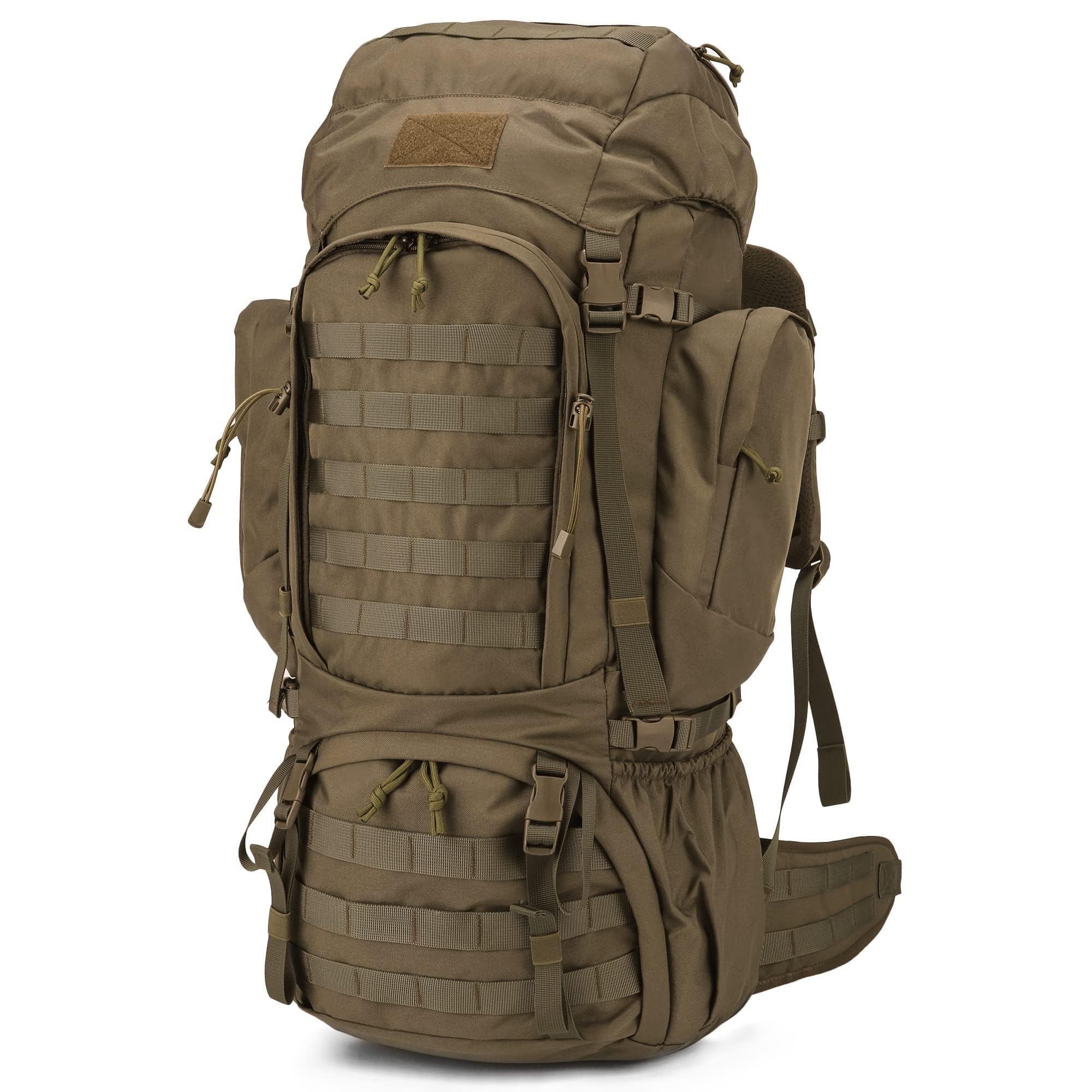
Not everyone wants a pre-packed kit — many experienced preppers prefer to curate their own gear based on personal needs, climate, and medical requirements. The Mardingtop 60L pack serves as the ideal blank canvas for building a custom go bag. It features an internal frame that transfers weight to the hips, a MOLLE system for attaching pouches, and the ability to expand from 60 to 75 liters using the compression system. The YKK zippers and durable stitching are surprising finds at this price point.
User reviews consistently highlight the bag’s ability to handle moderate loads up to 50 pounds for distances under 20 miles, making it suitable for a car-to-shelter evacuation or a short hike to a rally point. The included rain cover adds weather protection, and the multiple compartments — sleeping bag compartment, hydration sleeve, side pockets — make organization straightforward. The shoulder straps are narrow, so buyers with broader shoulders may want to add padding.
The trade-off is that you’re starting from scratch — this bag comes with nothing inside. You’ll need to source food, water filtration, first-aid, shelter, and tools separately. For preppers who already have favorite gear (like a specific water filter or trauma kit), this is actually an advantage. For first-time buyers, it requires more planning and research than buying a pre-assembled kit.
Why it’s great
- Internal frame with load-transferring hip belt
- Expandable from 60L to 75L for extra gear
- MOLLE system allows modular pouch attachment
Good to know
- Empty — you must source all supplies separately
- Narrow shoulder straps may cause discomfort over time
7. Mountain House 3-Day Emergency Food Assortment
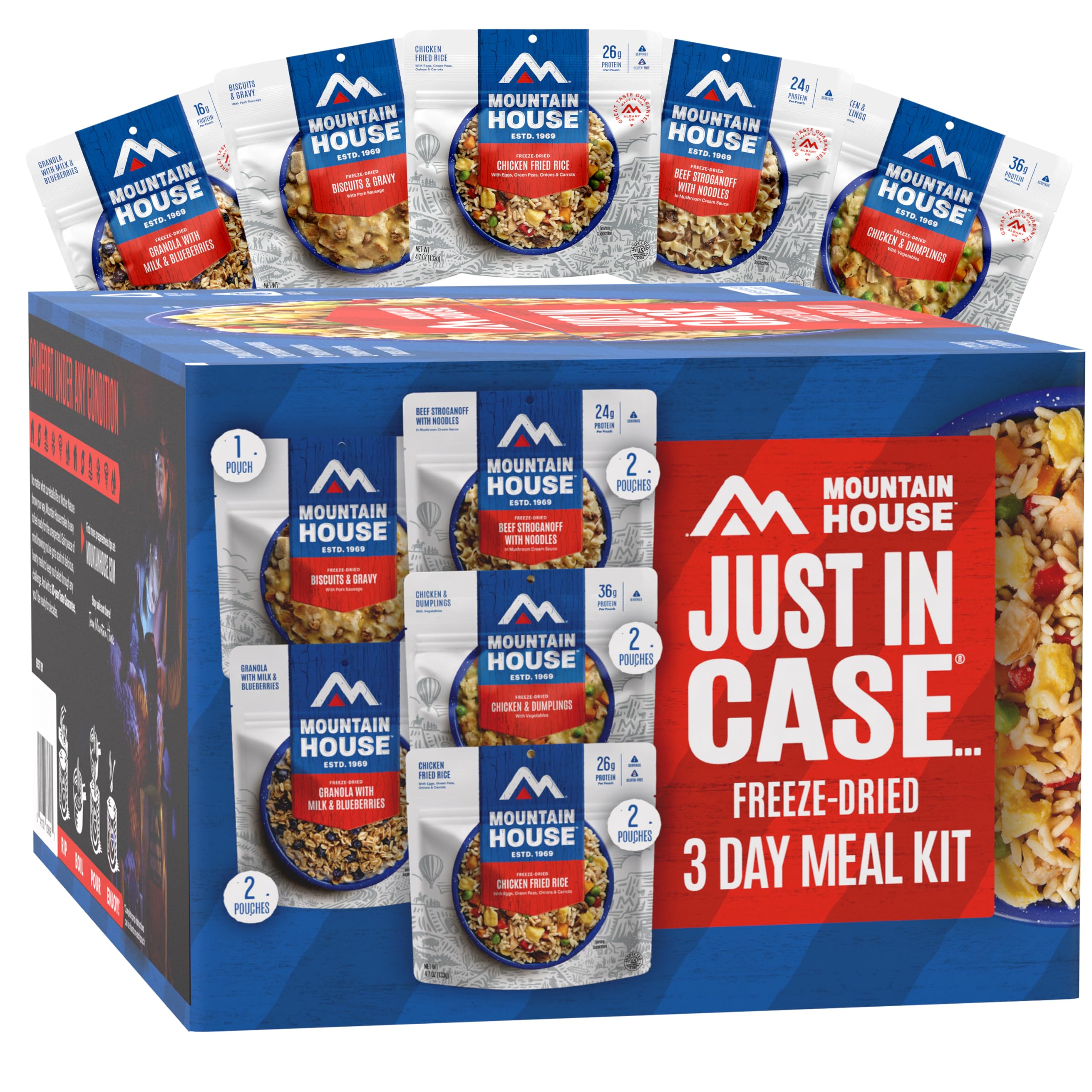
Mountain House is the gold standard for long-term emergency food storage, and this 3-day assortment delivers nine pouches of freeze-dried meals in a compact 3.6-pound package. The kicker is the 30-year taste guarantee — properly stored, these meals remain edible and flavorful for three decades, making them ideal for a go bag that sits untouched for years and still works when you open it. The assortment includes Chicken Fried Rice, Chicken & Dumplings, Beef Stroganoff, Biscuits & Gravy, and Granola with Milk.
Each pouch provides 1,706 calories per day, which exceeds the minimum 1,200-calorie standard for 72-hour kits. Preparation is simple: add hot or room-temperature water directly to the pouch and wait. In a power-outage scenario, you can use room-temperature water with double the hydration time — no stove required. The meals consistently score high marks for taste, which matters enormously when morale is already low during an emergency.
This is not a complete go bag — it’s a food module. You’ll need a separate backpack, water source, first aid kit, shelter, and tools. It pairs perfectly with the Mardingtop backpack (product 6) or can supplement a pre-packed kit that lacks adequate calories. The need for water to rehydrate is also a constraint — you’ll need about 12 cups of water total for all nine pouches, so a filter straw or water reserve is essential.
Why it’s great
- Unmatched 30-year shelf life for true set-and-forget storage
- 2,000+ calories per day with excellent flavor
- Ultra-light at 3.6 lbs for a full 3-day supply
Good to know
- Requires 12 cups of water to prepare all meals
- Not a complete kit — backpack and other gear sold separately
FAQ
How many calories per day should a 72-hour go bag kit provide?
Should I buy a pre-assembled kit or build my own go bag?
What’s the difference between 5-year and 30-year shelf life food?
Is a go bag kit the same as a bug out bag?
Final Thoughts: The Verdict
For most users, the go bag kit winner is the Sirius Survival 50L Bug Out Bag because it combines the highest fabric durability, redundant water filtration, solar power, and 7,200 calories in one well-organized 50-liter pack that leaves room for personal items. If you want the most comprehensive first aid and shelter package for a family, grab the Emergency Zone 2 & 4 Person 72 Hour Kit. And for a lightweight, discreet kit that fits in a car or office and includes a 30-gallon water filter straw, nothing beats the Essentials Deluxe Survival Kit by Emergency Zone.