
That gutless take-off or the faint smell of hot metal after a long ride means your drive system is struggling. Choosing the right centrifugal or torque-converter clutch for a go kart isn’t just about bolt holes — it’s about matching the bore, tooth count, chain pitch, and engagement RPM to the exact weight and engine power of your kart.
I’m Mohammad Maruf — the founder and writer behind Drink4Good. I’ve spent years dissecting small-engine driveline specs and cross-referencing hundreds of real owner installs to understand exactly why some clutches last a season and others fail in a weekend.
After reviewing bore sizes from 3/4 inch to 1 inch, chain pitches of #35, #40, #41, and #420, and analyzing both fixed-ratio centrifugal and variable-ratio torque converter designs, I have assembled a clear guide to the best go kart clutch options available today.
How To Choose The Best Go Kart Clutch
Every go kart clutch serves one job: connect the spinning engine crankshaft to the chain and wheels only when the engine reaches a certain speed. A mismatch on bore diameter, tooth count, or chain pitch turns a fun kart into a frustrating project. Here are the three decisions that matter most.
Bore Size and Shaft Fitment
The clutch bore must match your engine’s crankshaft diameter exactly — typically 3/4 inch for smaller engines like the Predator 212, or 1 inch for larger 8-13 hp blocks. A 3/4 inch clutch on a 1 inch shaft is useless, and an undersized bore can strip the keyway in minutes. Always measure the shaft diameter and confirm the keyway width before ordering.
Chain Pitch and Sprocket Teeth
#35 chain is lighter and common on smaller frames, while #40, #41, and #420 chain are thicker and handle more torque. The clutch sprocket must match the chain pitch exactly — a #35 chain will not seat on a #40 sprocket. Tooth count affects your final drive ratio; 10-tooth and 12-tooth are the standard starting points for most builds.
Centrifugal Clutch vs. Torque Converter
A standard centrifugal clutch is a fixed-ratio unit — it locks fully at around 2000 RPM and stays locked until the engine slows. A torque converter (30 series) uses a belt and variable pulley system to change the effective ratio as speed increases, giving you more low-end torque and a higher top speed. If your kart is heavy or you carry a passenger, a torque converter is the stronger choice.
Quick Comparison
On smaller screens, swipe sideways to see the full table.
| Model | Category | Best For | Key Spec | Amazon |
|---|---|---|---|---|
| SJVLXHI Super 30 Series | Torque Converter | Upgraded torque & smooth engagement | 3/4″ bore, 2000±200 RPM engagement | Amazon |
| MOOSUN 30 Series Torque Converter Kit | Torque Converter | Complete kit with belt & mounting plate | 12T #35 chain, asymmetrical belt | Amazon |
| MOJTBE 212CC Torque Converter | Torque Converter | Heavy #40 chain builds | 10T #40/41/420 chain, 3/4″ bore | Amazon |
| Podoy 30 Series Torque Converter Clutch | Torque Converter | Belt-and-clutch combo replacement | 3/4″ bore, 203589 asymmetrical belt | Amazon |
| Sutmorly Heavy Duty Clutch Assembly | Centrifugal Clutch | Large bore 1″ shaft engines up to 13hp | 1″ bore, 14T #40/41/420 sprocket | Amazon |
| KIKITE Go Kart Clutch 10 Tooth | Centrifugal Clutch | Budget-friendly #40/#41 chain swaps | 10T #40/41/420 chain, 3/4″ bore | Amazon |
| KIKITE Go Kart Clutch 12 Tooth | Centrifugal Clutch | Entry-level #35 chain replacement | 12T #35 chain, 3/4″ bore, chain included | Amazon |
In‑Depth Reviews
1. SJVLXHI Super 30 Series Torque Converter Driver

The SJVLXHI Super 30 Series driver is built around a machined 3/4-inch bore and targeted engagement at 2000±200 RPM, giving a crisp launch that owners of Coleman CT200U and KT196 karts report as “instant” with less belt slip than stock units. The entire unit is machined metal — no cheap stamped parts — which helps it survive the heat cycles of extended trail riding.
Real-world feedback on Predator 212 and Ghost engines shows a noticeable increase in low-end torque, with several riders noting that the kart pulls harder up hills and accelerates more smoothly from a stop. The included 203589-style belt is asymmetrical, so careful belt orientation during install is required, but the packaging includes a clear reference for proper direction.
Build quality stands out in this price tier. The pulley face is true, the spring tension is consistent, and the clutch shoes grab without excessive chatter. This is the unit to choose when you want a near-bolt-on upgrade that transforms throttle response without needing to modify the engine mounting plate.
Why it’s great
- Machined construction resists warping under hard use
- Clean engagement at 2000 RPM eliminates belt slip lag
- Direct fit for popular Coleman, Baja, and Massimo mini bikes
Good to know
- Belt must be installed with asymmetrical orientation correct
- Some users found the supplied bolts needed shorter threads
2. MOOSUN 30 Series Torque Converter Kit
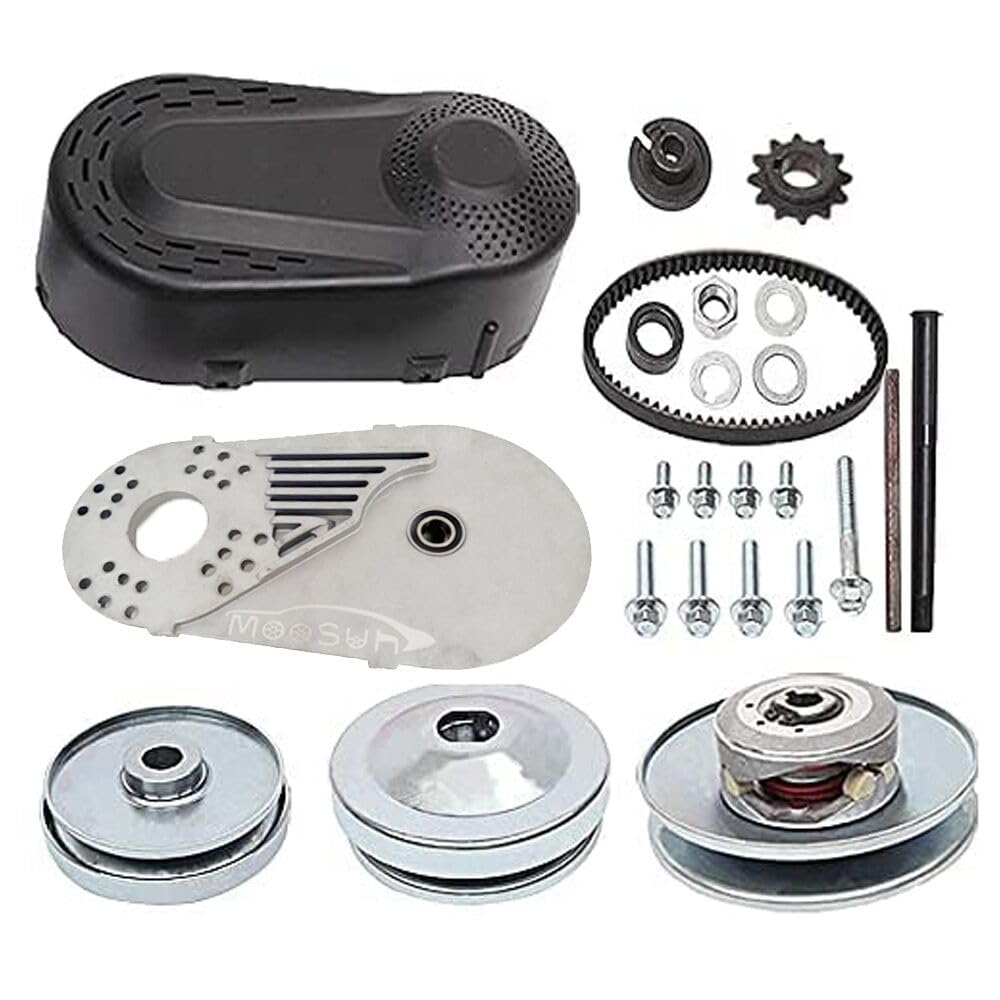
The MOOSUN kit is the rare all-in-one solution: it includes the driver pulley, driven pulley, asymmetrical belt, aluminum mounting plate, plastic cover, and a 12-tooth #35 sprocket. This is a 30-series torque converter — not a fixed centrifugal clutch — meaning it varies the gear ratio as speed increases, giving a noticeable boost in low-end grunt without sacrificing top speed.
Installers consistently praise the fit on Predator 212 and Coleman KT196 platforms, noting the plate bolts cleanly to the engine’s existing mounting holes. The 27.76-inch belt is a direct replacement for Comet 203589 specs, and the aluminum plate keeps weight reasonable at just over 12 pounds for the full set.
On the trail, this kit delivers smoother acceleration and better hill-climbing ability compared to a stock centrifugal clutch. The belt runs cooler because the variable ratio reduces sustained slip. The only recurring note from owners is that the plastic cover is fragile — fine for occasional use but not built for heavy impacts against rocks or branches.
Why it’s great
- Includes driven pulley, plate, belt, and cover — all in one box
- Genuine variable-ratio performance for better torque and speed
- Belt matches Comet 203589 dimensions exactly
Good to know
- Plastic cover is not impact-resistant
- Bolts may need slight thread trimming for a flush fit
3. MOJTBE 212CC Torque Converter 30 Series
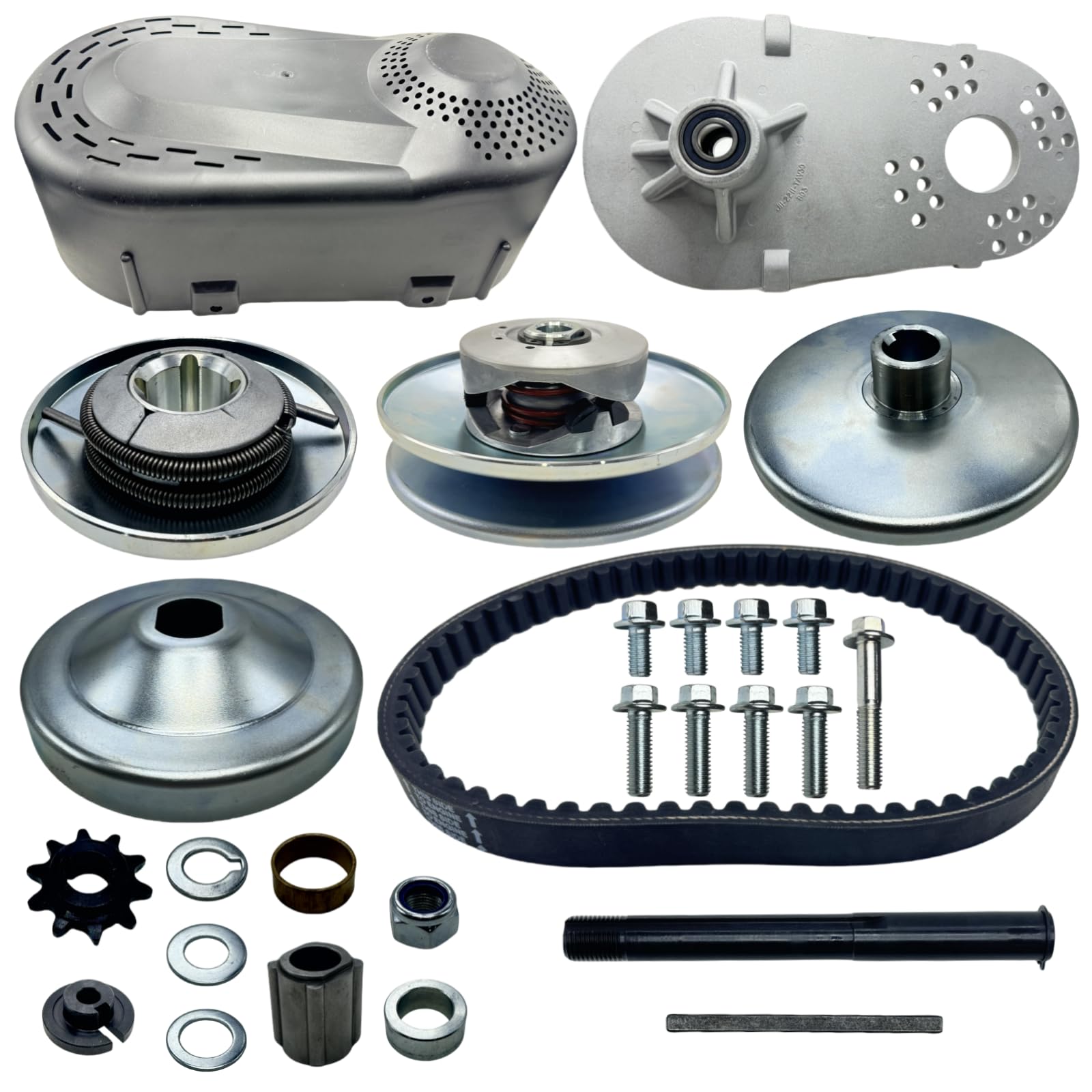
This MOJTBE kit is tailored for builders using #40, #41, or #420 chain — the thicker, higher-torque pitch that larger engines demand. The 10-tooth sprocket provides a slightly lower final drive ratio than a 12-tooth, which translates to harder acceleration off the line, ideal for heavier karts or riding with a passenger.
The 30-series design matches Comet TAV2 mounting patterns (218353A, 219552A, 219456A), and the 3/4-inch bore fits Predator 212, Honda GX clones, and Briggs engines. Buyers report that the belt and pulleys align well when the plate is bolted on, though one reviewer noted that the plastic cover arrived cracked in transit — not a functional issue but worth checking upon arrival.
Performance feedback centers on durable construction and solid throttle response. The belt shows good heat resistance, and the driver clutch engages predictably without excessive vibration. For anyone running a 6.5 hp Predator through #40 chain, this kit removes the guesswork of sourcing individual parts.
Why it’s great
- #40/#41/#420 sprocket handles higher torque loads
- Bolt-on fit for popular Comet TAV2 patterns
- Delivers stronger launch than 12T centrifugal setups
Good to know
- Plastic cover is thin and can crack during shipping
- Requires proper belt directional orientation for best life
4. Podoy 30 Series Torque Converter Clutch
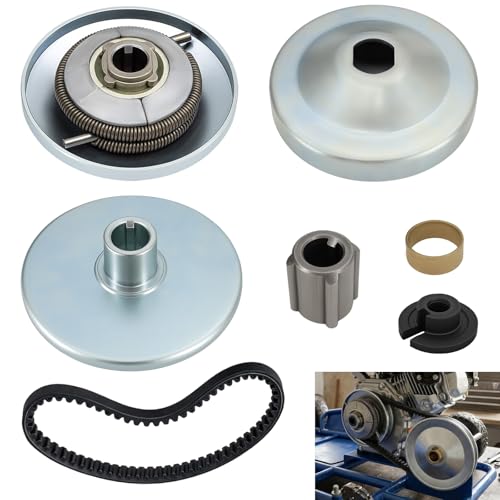
The Podoy 30 series driver is a cast-iron clutch pulley paired with a 203589 asymmetrical drive belt, sold as a two-piece replacement set for Comet 30-series and Manco 5957 systems. The cast-iron construction provides dense mass for heat absorption, a tangible advantage over aluminum pulleys in sustained high-RPM riding.
Buyers report that the clutch and belt combo revives aged karts that previously suffered from weak starts and belt slip. The asymmetrical belt design requires careful orientation — the outside face is flatter, and installation backwards will cause premature wear. Most users fit this on mini bikes with 212cc engines and note smoother acceleration than generic unbranded replacements.
The catch is that a small number of units arrived missing a mounting screw, and the aluminum alloy pulley showed slightly more runout than premium competitors. Still, for someone replacing a worn-out driver on a 3/4-inch shaft engine, the Podoy set hits a practical price point without compromising the core function.
Why it’s great
- Cast-iron driver dissipates heat more effectively than aluminum
- Includes correct 203589 belt for immediate install
- Restores acceleration on tired original clutches
Good to know
- Some units missing small hardware — check contents on arrival
- Asymmetrical belt orientation is critical for longevity
5. Sutmorly Heavy Duty Clutch Assembly 1″ Bore

This Sutmorly centrifugal clutch is built for engines above 6.5 hp — up to 13 hp — with a 1-inch bore that fits larger crankshafts found on Honda Prokart, Cadet, and fun kart builds. The 14-tooth #40/#41/#420 sprocket is unusually high for a centrifugal clutch, which lowers the final drive ratio and gives more top-end speed at the cost of some mechanical advantage.
Owners emphasize that the clutch feels robust compared to budget 3/4-inch units. The hub casting is thick, the shoes are substantial, and the unit weighs nearly 5 pounds. Several buyers used it on 301cc Predator engines and reported that it held together under hard acceleration, though one installer noted that the bearing arrived dry and needed grease before use.
The 400-pound combined kart-and-rider weight limit is a hard ceiling — exceed it and the clutch will overheat rapidly, glazing the shoes and drum. For lighter karts with big engines, this clutch offers a solid 1-inch-bore option that doesn’t require stepping up to a full torque converter system.
Why it’s great
- 1-inch bore accommodates large 8-13 hp engine cranks
- 14-tooth sprocket provides higher top-speed gearing
- Thick hub and shoe construction for durability
Good to know
- Bearing ships dry — lubricate before first use
- Hard 400-pound weight limit — exceeding it causes rapid heat failure
6. KIKITE Go Kart Clutch 10 Tooth

The KIKITE 10-tooth clutch fits a 3/4-inch shaft and uses #40, #41, or #420 chain, making it a direct swap for Predator 212 and Honda GX160/200 engines. The 10-tooth sprocket gives a lower gear ratio than a 12-tooth, which means the engine reaches engagement RPM faster and puts more torque to the wheels from a standstill.
User feedback across mini bike and go kart builds is uniformly positive — multiple owners report daily riding for months without failure. The clutch body has good heat dissipation, and the included 5-foot length of #40/#41/#420 chain simplifies the replacement process if you are converting from a smaller #35 setup.
The main limitation is the built-in weight restriction. KIKITE explicitly states this clutch is for single-wheel-drive karts with tires no taller than 15 inches. If your kart is heavier or has larger tires, the clutch will run hot and wear quickly. For lightweight, simple builds, it is a reliable, low-cost solution.
Why it’s great
- 10-tooth sprocket provides strong low-end torque
- Includes 5 feet of #40/#41/#420 chain
- Proven track record of reliability on Predator 212 builds
Good to know
- Not suitable for karts with tires taller than 15 inches
- For single-wheel-drive applications only
7. KIKITE Go Kart Clutch 12 Tooth
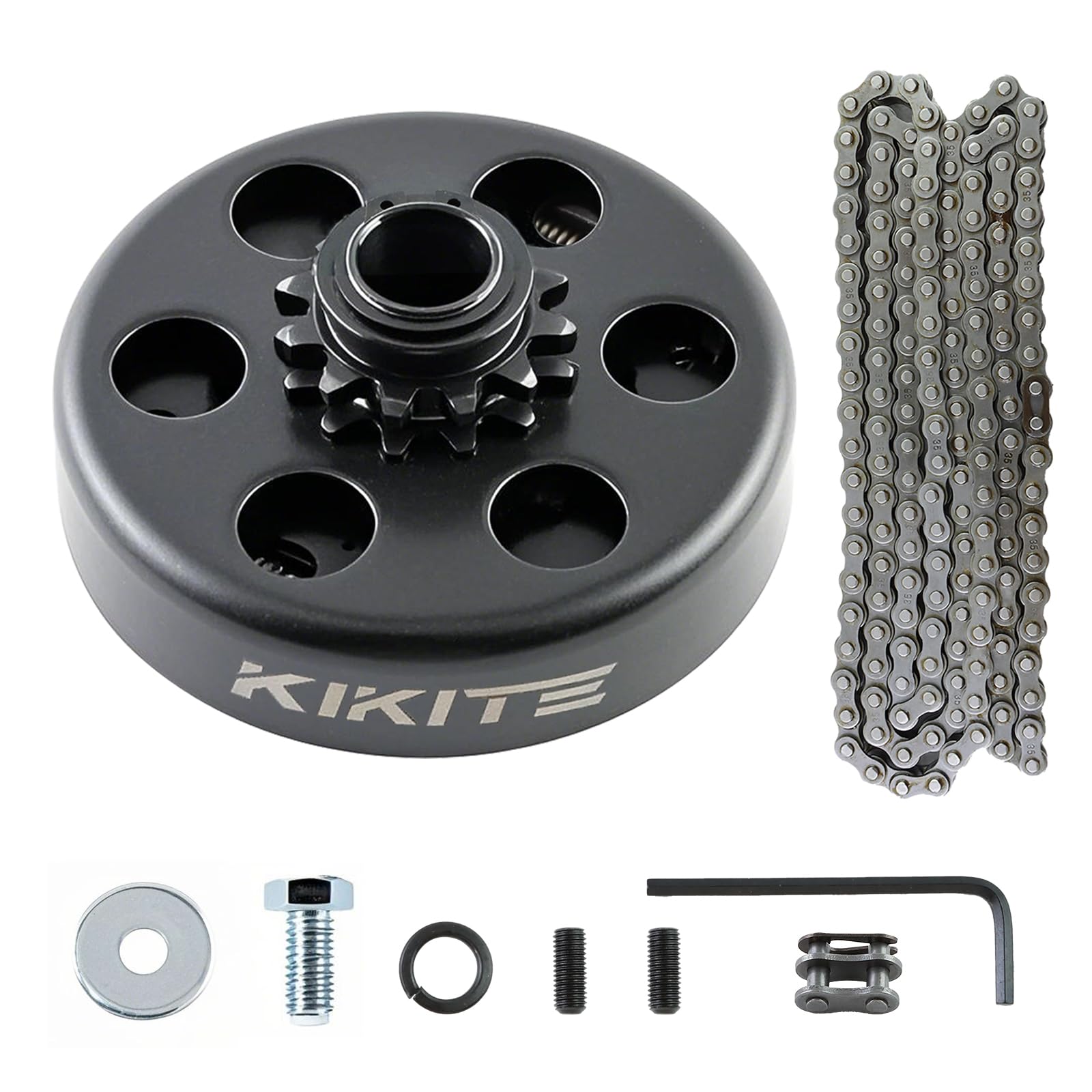
This KIKITE 12-tooth unit is the #35 chain version of the brand’s centrifugal clutch line, sharing the same 3/4-inch bore and compatibility with Honda, Predator, Briggs, and Tecumseh engines. The 12-tooth sprocket provides a slightly taller first gear compared to a 10-tooth, which favors smoother acceleration and a higher top speed on lightweight mini bikes.
Buyers confirm that the clutch fits Baja MB165/MB200 and Yerf-Dog karts without modification. The included 5-foot length of #35 chain lets you complete the drivetrain replacement in one purchase. One owner noted the unit has been ridden daily for six months with zero issues — a strong indicator of consistent build quality at this price level.
As with the 10-tooth KIKITE, the weight and tire-size limitations apply: this is designed for single-wheel-drive karts with tires not exceeding 15 inches. For a no-fuss replacement on a small, light kart running #35 chain, this clutch delivers dependable performance without demanding a premium budget.
Why it’s great
- 12-tooth #35 sprocket suits lighter, higher-RPM builds
- Includes matching #35 chain for a complete swap
- Proven daily-driver reliability from real owner reports
Good to know
- Not recommended for karts with tires above 15 inches
- Single-wheel-drive application only
FAQ
Can I use a 3/4 inch clutch on a 1 inch shaft?
How do I know if I need a torque converter or a standard centrifugal clutch?
What does the tooth count on the sprocket do?
Why does my clutch smell like it’s burning?
Final Thoughts: The Verdict
For most users, the best go kart clutch winner is the SJVLXHI Super 30 Series because it delivers machined build quality, crisp 2000 RPM engagement, and direct bolt-on fitment for popular 3/4-inch shaft engines. If you want a complete all-in-one torque converter kit with both pulleys and a mounting plate, grab the MOOSUN 30 Series Kit. And for a heavy-duty 1-inch bore centrifugal clutch on a big-engine kart, nothing beats the Sutmorly Heavy Duty Assembly.