
A goat pasture that stays lush through repeated browsing without constant reseeding requires more than just throwing down grass seed. The specific balance between hardy grasses, protein-rich legumes, and endophyte-free forage determines whether your herd gets the nutrition it needs without developing health issues from toxic fescue. Choosing the wrong mix means bare patches, wasted money, and undernourished animals.
I’m Mohammad Maruf — the founder and writer behind Drink4Good. I’ve spent years combing through forage seed specifications, analyzing protein content, germination rates, and the specific blend ratios that support healthy goat grazing across various climates and soil types.
These recommendations focus entirely on safety, palatability, and sustained productivity for your goats. This guide evaluates the best goat pasture seed mix options available now, covering clover-heavy blends, alfalfa mixes, and premium endophyte-free formulas built for heavy traffic and multi-species grazing.
How To Choose The Best Goat Pasture Seed Mix
Goats are browsers, not lawn-mowers — they prefer variety, picking leaves and legumes over coarse stems. A successful seed mix must combine palatable grasses, high-protein legumes, and zero endophyte-infected fescue, which can cause reproductive problems. Start by matching your climate zone, then check the blend’s tolerance to repeated grazing.
Endophyte-Free Requirement
Endophytes are fungi living inside certain tall fescue varieties. They make the grass tough and drought-hardy, but they produce alkaloids that reduce milk production, lower fertility, and can cause heat stress in goats. Every seed in your mix must be endophyte-free or include only safe species like orchardgrass, perennial ryegrass, or timothy. This is non-negotiable for breeding animals.
Legume Content for Protein
Clover and alfalfa fix atmospheric nitrogen, reducing your fertilizer needs while boosting crude protein to 15-20% range. White clover tolerates close grazing, red clover provides a mid-season protein bump, and alfalfa offers multiple cuttings per year. A mix with at least 20-30% legume by weight gives goats the amino acids they need for muscle development and milk production.
Grazing Tolerance & Recovery
Goats tear at plants rather than chewing cleanly, so the seed mix must include species that regrow fast after being bitten down to a few inches. Perennial ryegrass and orchardgrass recover quickly. Timothy and bluegrass need lower grazing pressure. If your pasture is small and gets heavy use, prioritize high-tolerance blends with deep root systems.
Quick Comparison
On smaller screens, swipe sideways to see the full table.
| Model | Category | Best For | Key Spec | Amazon |
|---|---|---|---|---|
| Barenbrug Pasture25 | Premium Mix | Multi-species pasture repair | Endophyte-free, 25 lb covers 1 acre | Amazon |
| X-Seed Over-Seeder | Premium Blend | Heavy grazing, tough soils | Micro-Boost formula, 4-species blend | Amazon |
| Barenbrug Equinemaster25 | Premium Mix | High-traffic horse & goat areas | 6-species blend, temperate zones | Amazon |
| Outsidepride Ladino Clover | Legume Only | Nitrogen fixing & protein boost | Nitrocoated, drought-tolerant, 5 lbs | Amazon |
| Outsidepride Alfalfa | Legume Only | High-yield hay & forage | Winter hardy, 3-4 harvests/year | Amazon |
| DLF Pasture Booster Clover | Legume Mix | Budget-friendly clover overseeding | Red & white clover blend, 5 lbs | Amazon |
| Pennington Bermudagrass | Warm-Season Grass | Southern drought-prone pastures | Cold-tolerant, Penkoted technology | Amazon |
In‑Depth Reviews
1. Barenbrug SeedPasture25 Grass Seed
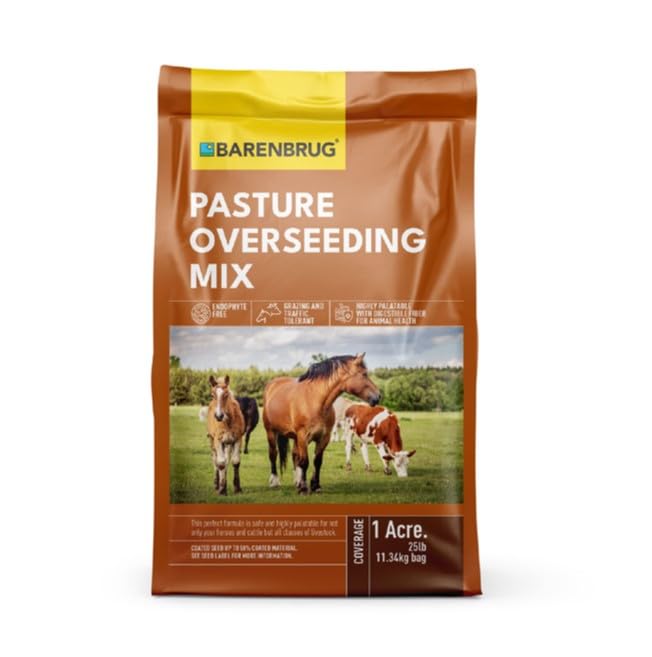
Barenbrug designed this blend specifically for rapid establishment in less-than-ideal conditions, making it a strong choice for overgrazed or patchy goat pastures. The seed is endophyte-free, meaning it contains no toxic fescue fungi that can harm goat fertility or cause agalactia. It performs best in northern and transition zones, with a mix that handles both grazing and hay production.
At 25 pounds covering one full acre, this bag delivers real value for anyone managing multiple animals. The grass is palatable and highly digestible for goats, sheep, cattle, and horses, so it works well in mixed herds. Users report visible germination within 10-14 days with moderate watering, even on untilled ground.
One distinct advantage is the blend’s ability to withstand repeated grazing pressure — goat tearing doesn’t kill the crown. Customers note that it survives heavy dog traffic and hot conditions, with clover in the mix drawing bees and chickens. If you need a turnkey, endophyte-free pasture fix that establishes fast, this is the front-runner.
Why it’s great
- Endophyte-free for safe goat grazing
- One bag covers a full acre
- Fast germination even on unprepared soil
Good to know
- Best suited for northern and transition climate zones
- Clover content may need annual overseeding
2. X-Seed Land Over-Seeder Pasture Forage Seed Mix
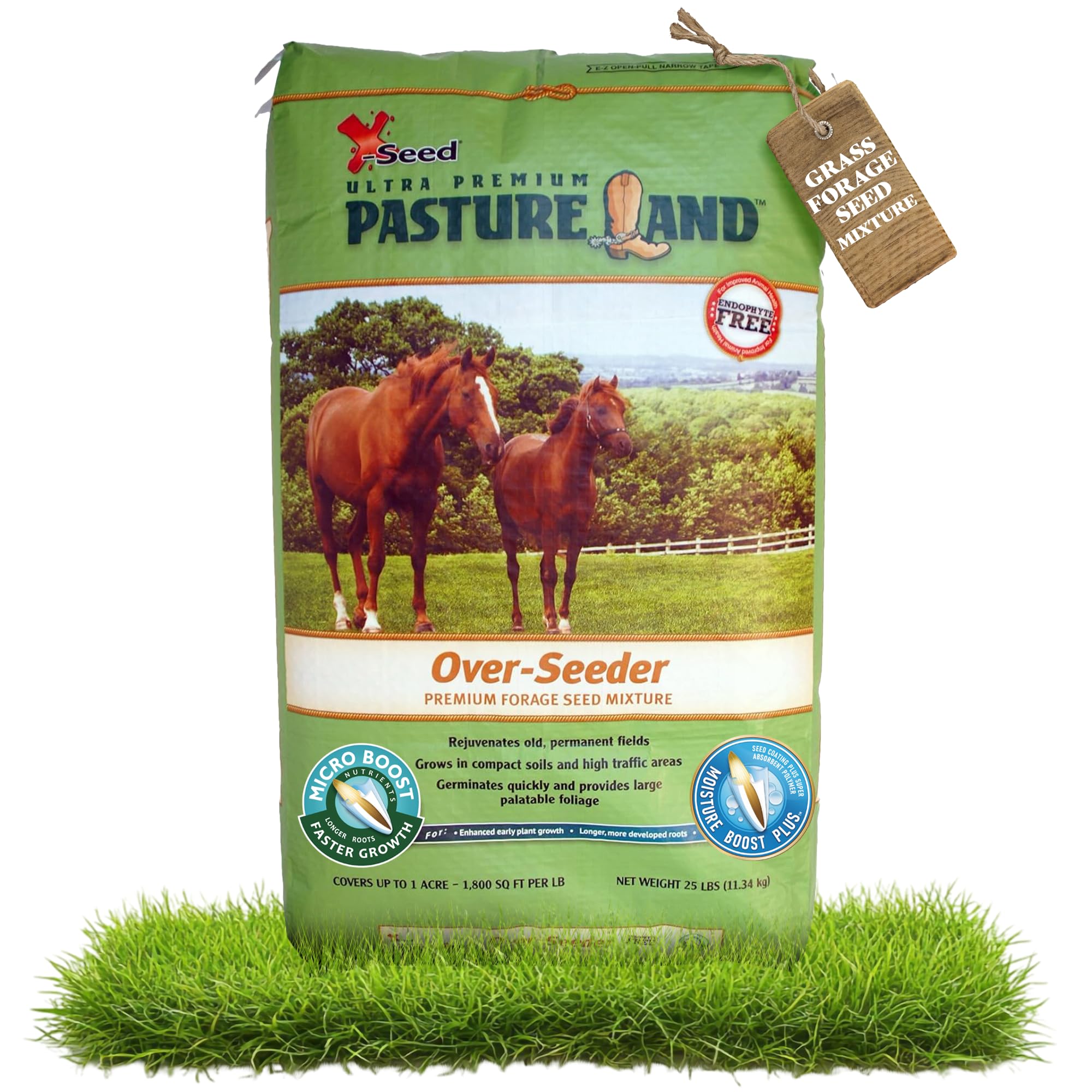
X-Seed’s Over-Seeder blend combines intermediate ryegrass, orchardgrass, annual ryegrass, and clover into a 25-pound bag engineered for restoring old or run-down pastures. The Micro-Boost nutrient coating improves germination speed and root depth, which helps seedlings survive goat trampling and hot, dry spells. It is entirely endophyte-free and safe for all livestock classes including goats.
The four-species mix provides both quick cover from annual ryegrass and longer-term persistence from orchardgrass and clover. Annual ryegrass grows fast in cool weather, giving your goats something to graze while the slower perennials establish. The clover component fixes nitrogen, improving soil over time without synthetic inputs.
Customer reports highlight excellent results in high-traffic horse and goat paddocks, with visible lush growth four weeks after planting when kept off the area. Some users noted slower germination on untilled hillsides, but tilled test patches sprouted in under a week. The blend performs well from spring through fall in most temperate regions.
Why it’s great
- Micro-Boost coating accelerates root development
- Diverse blend for cool and warm climates
- Endophyte-free with clover for nitrogen fixation
Good to know
- Slow to germinate on compacted or untilled ground
- Contains annual ryegrass which may die back in summer heat
3. Barenbrug Pasture Seed 23094 (Equinemaster25)
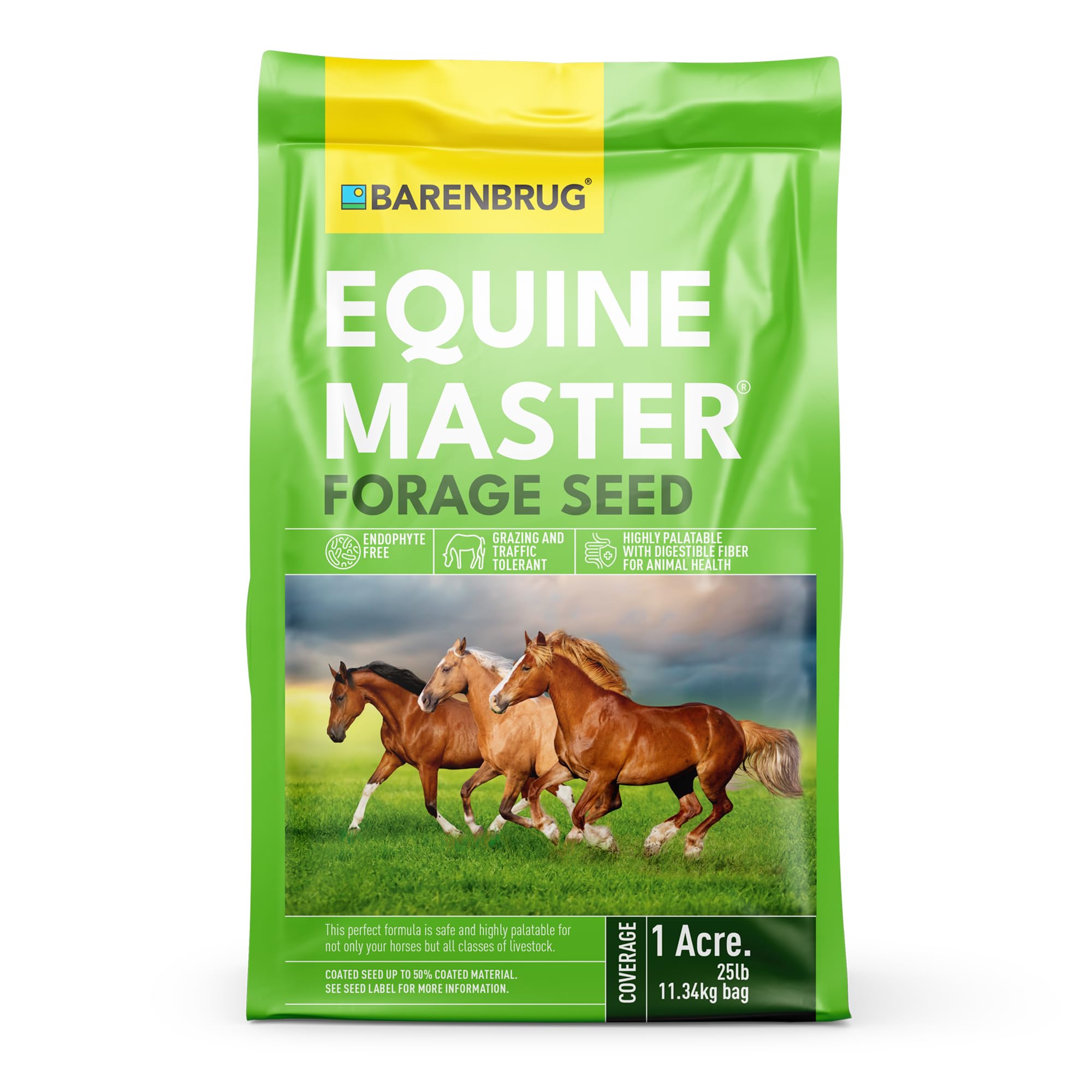
This Barenbrug formula includes Kentucky Bluegrass, White Clover, Timothy, Orchardgrass, Forage Perennial Ryegrass, and Diploid Intermediate Rye — six species designed to thrive in northern and transition climate zones. The diversity means goats can selectively browse their preferred leaves while the less palatable species fill gaps. All components are safe for goats, with no endophyte-infected tall fescue present.
The clover and ryegrass components provide rapid early growth, while the timothy and bluegrass add long-term persistence under moderate grazing pressure. This blend is marketed primarily for horses, but goats thrive on the same forage species when protein content is adequate. The 25-pound bag covers one full acre when broadcast at the recommended rate.
Users in New England and Kentucky report good results from late-winter or early-spring seeding, with visible cover within two to three weeks. The mix tolerates high traffic areas well, though some customers noted that sustained heavy grazing may require a second overseeding pass the following season. The deep-rooted grasses help with erosion control on slopes.
Why it’s great
- Six-species diversity for selective goat browsing
- One bag covers a full acre
- Excellent for temperate northern regions
Good to know
- Not optimized for deep southern or arid climates
- May need annual overseeding under heavy pressure
4. Outsidepride Perennial White Ladino Clover Seed
Ladino clover is a giant white clover variety that provides exceptional protein content — often exceeding 20% crude protein — making it an ideal high-nutrient addition to any goat pasture. This 5-pound bag from Outsidepride is nitrocoated and inoculated, meaning the seeds carry beneficial rhizobia bacteria that kickstart nitrogen fixation immediately after germination. The blend thrives across USDA zones 3-10, handling both hot summers and cold winters.
Goats love clover, and Ladino’s large leaves make it easy to browse. The deep root system makes it more drought-tolerant than standard white clover, reducing watering needs once established. It also attracts pollinators, which benefits the broader ecosystem. As a perennial, it regrows year after year from the same root system, providing a steady protein supply without replanting.
Customer reviews highlight rapid germination — around 14 days — and excellent spread in both full sun and partial shade. One user in Maryland noted that after a slow first season, the clover became thick and lush by the second year, even surviving heavy dog and pool traffic. Use this as a standalone protein patch or overseed into an existing grass pasture.
Why it’s great
- High crude protein content for goat nutrition
- Nitrocoated and inoculated for fast establishment
- Drought-tolerant once established
Good to know
- 5-pound bag covers ~3,300 sq ft at recommended rate
- May need annual reseeding in high-traffic areas
5. Outsidepride Perennial Alfalfa Seeds

Alfalfa is the gold standard for livestock forage protein, and Outsidepride’s Vernal variety is a winter-hardy, non-GMO heirloom that produces three to four harvests annually. The seeds are nitrocoated and inoculated, ensuring robust nitrogen fixation and improved water absorption. This is a legume-only product designed for those who want a dedicated high-protein forage patch or hay field for their goats.
The rapid regrowth after cutting makes it ideal for rotational grazing systems — you can graze goats on a section, then rest it for regrowth while they move to another paddock. Alfalfa’s deep taproot also improves soil structure and drains excess moisture. It performs best in full sun with moderate watering and well-drained soil.
One customer in Southern California reported feeding 25 rabbits with a small planted patch, noting seeds sprouted in three days. Multiple users praise the consistent quality and high germination rate over several years. For goats, alfalfa provides the amino acid profile needed for muscle development and milk production, but introduce it gradually to avoid bloat.
Why it’s great
- Excellent protein content for goat growth and milk
- 3-4 harvests per year from a single planting
- Non-GMO heirloom quality
Good to know
- Requires full sun and well-drained soil
- Introduce slowly to goats to prevent bloat
6. DLF Pasture Booster Clover Seed Mixture
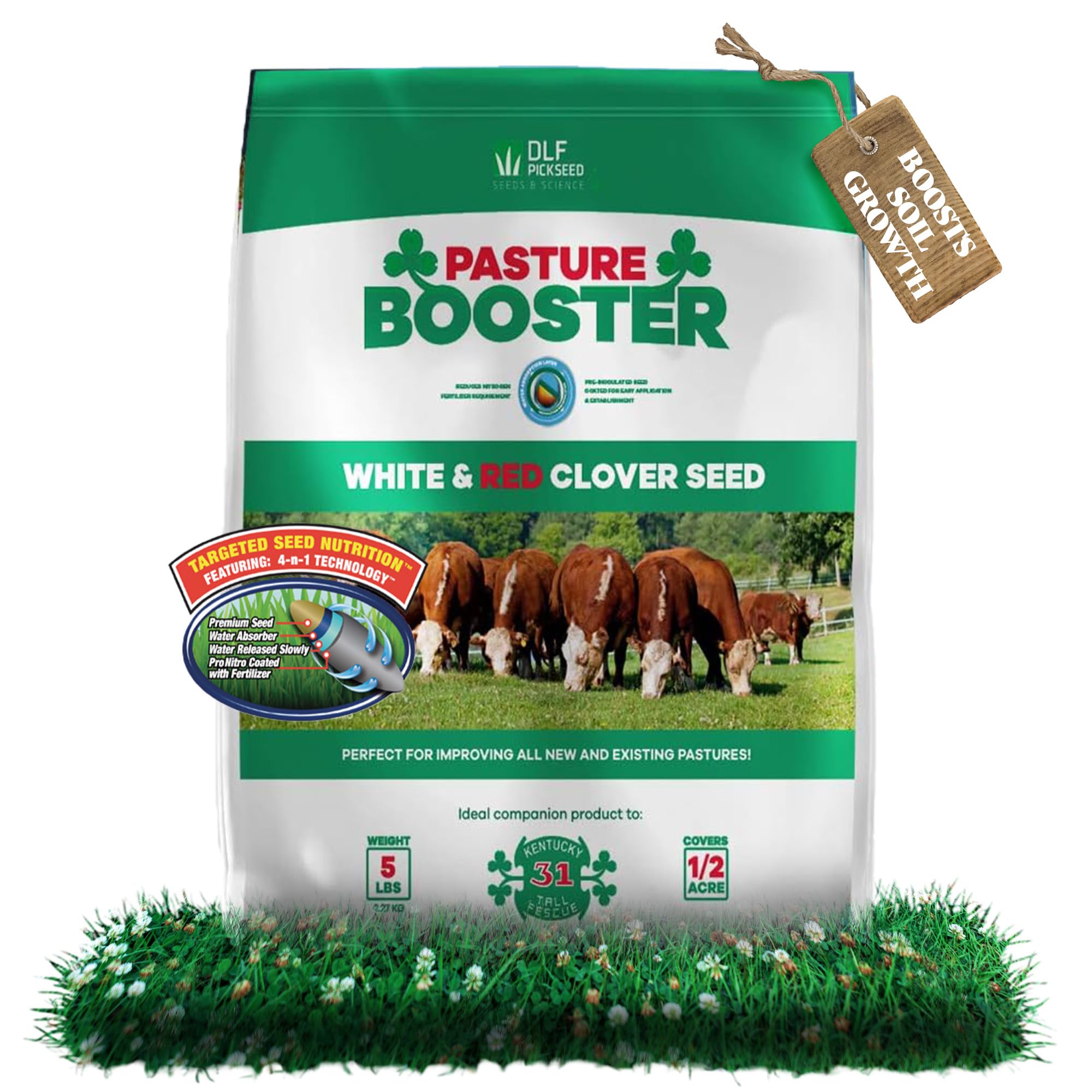
DLF’s Pasture Booster combines medium red clover and white Dutch clover in a single 5-pound bag, providing a balanced legume option for goat owners on a tighter budget. The red clover offers a mid-season protein boost, while the white clover persists under closer grazing and spreads via stolons. The mix is pre-inoculated, so you can broadcast it directly without additional seed treatment.
Goats will selectively graze the clover first, leaving grass for later, so this mix works best when overseeded into an existing grass pasture or used as a dedicated protein patch. The drought tolerance is decent — white clover has a deeper root system than most people expect. Germination typically occurs within 7-14 days with consistent moisture.
User feedback is largely positive, with several customers reporting good germination even with minimal care. One farmer uses it for chicken grazing areas mixed with grass seeds, while another spreads it in small patches for deer. A small number of reviews reported no visible sprouting, likely due to poor seed-to-soil contact or inadequate watering. The 5-pound bag covers roughly 2,500-3,500 square feet depending on broadcast density.
Why it’s great
- Budget-friendly legume blend for pastures
- Pre-inoculated for no-fuss planting
- Combines red and white clover for staggered growth
Good to know
- Smaller coverage area than bulk bags
- Germination can be inconsistent without proper soil prep
7. Pennington Bermudagrass Grass Seed 5 lb

For goat owners in the southern half of the US, Bermudagrass is a heat-loving, drought-tolerant grass that forms a dense, wear-resistant turf perfect for heavy traffic. Pennington’s 5-pound bag uses an improved cold-tolerant variety with Penkoted technology, which coats the seed to improve germination rates and protect against soil-borne diseases. This is a grass-only product — it contains no legumes, so you’ll need to supplement with clover or alfalfa if you want higher protein content for goats.
Bermudagrass spreads aggressively through stolons and rhizomes, filling in bare spots quickly. It stays green through hot summers when cool-season grasses go dormant, but it will brown out in winter. The deep root system makes it naturally more drought-tolerant than fescue or bluegrass, requiring less irrigation once established. Goats will graze it, especially the young tender growth, but it’s lower in protein than clover or alfalfa.
Customer reviews from Florida and San Antonio report excellent results in hot climates, with thick lawns and pastures emerging when kept consistently moist during germination. Some users noted slower germination than expected, but high final coverage after consistent watering. Penkoted technology helps the seed survive in less-than-perfect soil conditions. Pair this with a clover patch for balanced goat nutrition throughout the growing season.
Why it’s great
- Exceptional heat and drought tolerance
- Aggressive self-spreading for bare spot repair
- Penkoted technology improves germination reliability
Good to know
- Goes dormant and browns in winter months
- Lower protein than legume mixes — pair with clover
FAQ
Can goats graze straight alfalfa without getting bloat?
How much pasture seed mix do I need per goat?
Is Bermudagrass safe for goats to eat?
Final Thoughts: The Verdict
For most users, the best goat pasture seed mix winner is the Barenbrug SeedPasture25 because it combines endophyte-free safety, fast establishment, and full-acre coverage at a price that makes sense for serious goat keepers. If you want high protein without replanting every year, grab the Outsidepride Ladino Clover for a dedicated legume patch. And for hot southern climates where Bermudagrass thrives, nothing beats the Pennington Bermudagrass paired with a clover supplement.