
Starting out in golf means making contact you’re proud of one moment and watching a ball slice deep into the trees the next. The right ball won’t fix your swing overnight, but it can forgive an off-center hit, reduce side spin, and keep your round moving without punishing your wallet when one goes swimming. That balance of forgiveness, feel, and affordability separates a beginner-friendly ball from a tour-level rocket that only frustrates a developing game.
I’m Mohammad Maruf — the founder and writer behind Drink4Good. I’ve spent years analyzing golf ball construction, compression ratings, and cover materials to understand how each spec translates to real performance for players who are still building consistency.
After sorting through dozens of options and reading hundreds of verified player reviews, I’ve narrowed down the field to five models that genuinely help new golfers play better. This guide covers the best golf balls for beginners and explains exactly why each one earns a spot in your bag.
How To Choose The Best Golf Balls For Beginners
Picking your first golf ball feels deceptively simple, but the wrong choice can mask your progress. A tour-level ball designed for 100+ mph swing speeds will feel like a rock off your driver and offer zero feedback. Meanwhile, a beginner-specific ball built with a soft core and low compression will launch higher, spin less off the tee, and give you a noticeably softer feel on every strike. Here are the specific factors that matter most for a new golfer.
Compression Rating and Swing Speed
Compression measures how much a ball deforms at impact. Lower compression numbers (40-60) are ideal for swing speeds under 85 mph, which covers the vast majority of beginners. These balls compress more easily, transferring energy efficiently even on slower swings. The result is higher launch, less spin, and straighter ball flight — exactly what a developing player needs.
Construction Layers and Spin Control
Beginner balls are almost always two-piece designs: a large, soft core surrounded by a durable cover. This construction reduces spin off the driver and fairway woods, meaning your slice or hook won’t be exaggerated as much as it would with a three-piece or four-piece tour ball. Stay away from multi-layer urethane covers until your swing is consistent enough to shape shots intentionally.
Cover Material and Durability
Surlyn and ionomer covers are the standard for entry-level and mid-range balls. They resist scuffs and cuts better than soft urethane, which matters when you’re still learning to find the center of the clubface. A durable cover means a single ball can survive a full round — or even two — before showing wear, saving you money in the long run.
Visibility and Color Options
Bright colors, matte finishes, and alignment stripes make a real difference for beginners. Finding your ball in the rough or under a bush keeps the game moving and reduces frustration. Many beginner-focused balls now come in neon yellow, orange, or multi-color packs specifically designed for easy tracking from tee to landing zone.
Quick Comparison
On smaller screens, swipe sideways to see the full table.
| Model | Category | Best For | Key Spec | Amazon |
|---|---|---|---|---|
| Callaway Supersoft Max | Multi-Layer | Straight flight & soft feel | 1.68-inch diameter; slightly larger core | Amazon |
| Bridgestone e6 | Rubber | Slice reduction & control | Soft seamless cover; low compression | Amazon |
| Wilson Duo Soft | Multilayer | World’s softest feel | High energy core; 2-layer construction | Amazon |
| TaylorMade Distance+ | Multi-Layer | Max distance on a budget | React Speed Core; Extended Flight dimple | Amazon |
| Wilson Chaos | 2-Piece | Value pack for range & course | 24-ball pack; Surlyn cover | Amazon |
In‑Depth Reviews
1. Callaway Supersoft Max Golf Balls

The Callaway Supersoft Max takes everything beginners love about the standard Supersoft and makes it slightly larger — the 1.68-inch diameter is imperceptible until you place it next to a normal ball, but the effect on launch is noticeable. Multiple verified players report that irons launch about two clubs higher with this ball, which translates to softer landings and more holding power on the green. The soft feel off both driver and putter earned consistent praise from women golfers, seniors, and high-handicap players alike.
One reviewer specifically noted that this ball produces a very straight flight with driver and irons while maintaining good feel around the greens. The trade-off some players observed is slightly shorter total distance compared to the standard Supersoft, paired with a tendency to lip out on putts due to the wider diameter. For a beginner still developing swing speed and accuracy, the higher launch and reduced side spin far outweigh the marginal distance loss.
The rubber multi-layer construction gives this ball a perceptibly soft compression that rewards slower swing speeds. It’s an ideal bridge ball — forgiving enough for a 20-handicapper but responsive enough to let you feel when you’ve made pure contact. If you want one ball that grows with you through your first two seasons, this is it.
Why it’s great
- Noticeably higher launch helps hold greens
- Very soft feel across all clubs
- Straight flight with reduced slice spin
Good to know
- Slightly shorter total distance than standard Supersoft
- Larger diameter may cause lip-outs on putts
2. Bridgestone e6 Golf Balls

The Bridgestone e6 has been a staple in the beginner and high-handicap market for years, and the latest iteration doubles down on what made it famous: a softer, larger core that compresses quickly to produce faster ball speed with less spin. Multiple verified buyers — including self-described high handicappers with a serious slice — reported that the e6 noticeably tamed their curve and gave them more fairways hit. The soft yellow color option was praised for visibility in the rough, a real bonus when you’re still learning to keep the ball in play.
Several senior golfers specifically called out the e6 as an excellent option for slower swing speeds, noting that the soft feel and low compression allowed them to maintain distance without sacrificing control. One reviewer who switched from Callaway Super Soft found the performance identical but preferred the e6’s price point. The soft seamless cover contributes to better spin and feel on approach shots, giving beginners a chance to hold greens even with mid-irons.
The rubber construction provides a balance of durability and responsiveness that two-piece Surlyn balls sometimes lack. If your primary goal is to reduce that banana slice and start finding the center of the fairway more often, the e6 is the most effective tool in this lineup for that specific job. It’s also one of the few beginner-focused balls that several reviewers called “great for seniors” — a strong signal that the compression rating genuinely suits slower swing speeds.
Why it’s great
- Noticeably reduces slice spin for high handicappers
- Soft feel with good control on approach shots
- Bright yellow color easy to spot in rough
Good to know
- Not a distance-focused ball — prioritizes control
- Pack contains only one dozen
3. Wilson 2025 Duo Soft Golf Balls
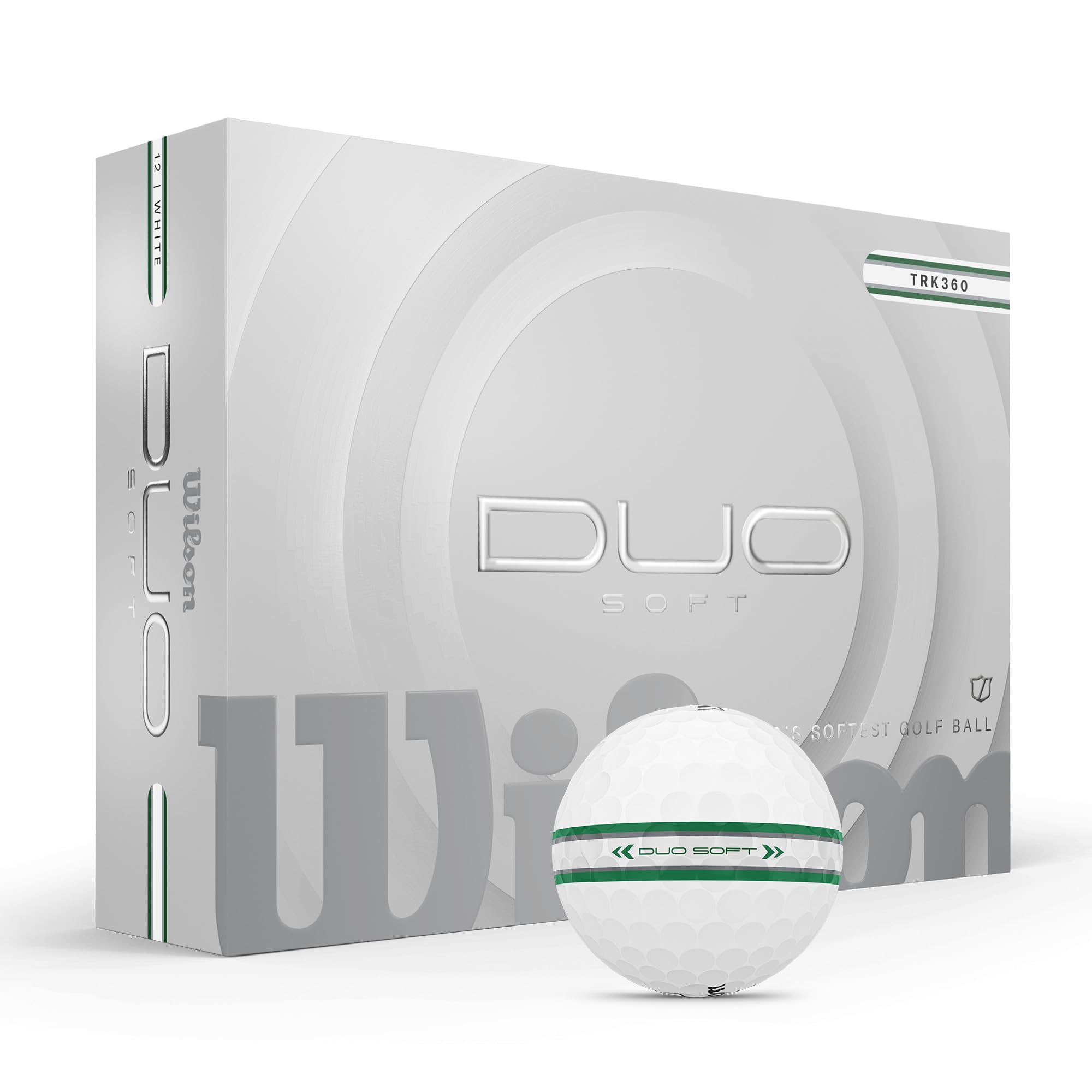
Wilson has earned a reputation for making some of the softest golf balls on the market, and the 2025 Duo Soft TRK360 continues that tradition with a two-layer construction that prioritizes feel above everything else. Verified buyers — including weekend players and seniors — consistently describe the feel off the clubface as “buttery” and note that the ball performs well on drives, chips, and putts alike. The green and silver stripe pattern provides decent visibility while adding a modern look that stands out in a sea of white.
Several reviewers specifically mentioned that the Duo Soft is perfect for slower swing speeds and older players, with one calling it “as advertised” for seniors looking to maintain distance without sacrificing softness. The high-energy core is designed to maximize distance off the tee even at lower compression, and multiple players confirmed that the ball flies straight and carries well despite its plush feel. The Surlyn cover holds up well against scuffs from mishits, which is critical for beginners who are still developing a consistent strike.
The trade-off with an ultra-soft ball is reduced greenside spin — you won’t get much check or backup on wedge shots. But for a beginner, that’s actually a positive: less spin means fewer big hooks or slices, and more predictable roll-out on approach shots. If your number-one priority is a soft, satisfying feel that makes every strike feel good, the Duo Soft is the category leader.
Why it’s great
- Industry-leading soft feel on all shots
- High energy core provides straight distance
- Durable Surlyn cover resists scuffs
Good to know
- Very low greenside spin — limited check
- Best suited for swing speeds under 85 mph
4. TaylorMade 2025 Distance+ Golf Balls
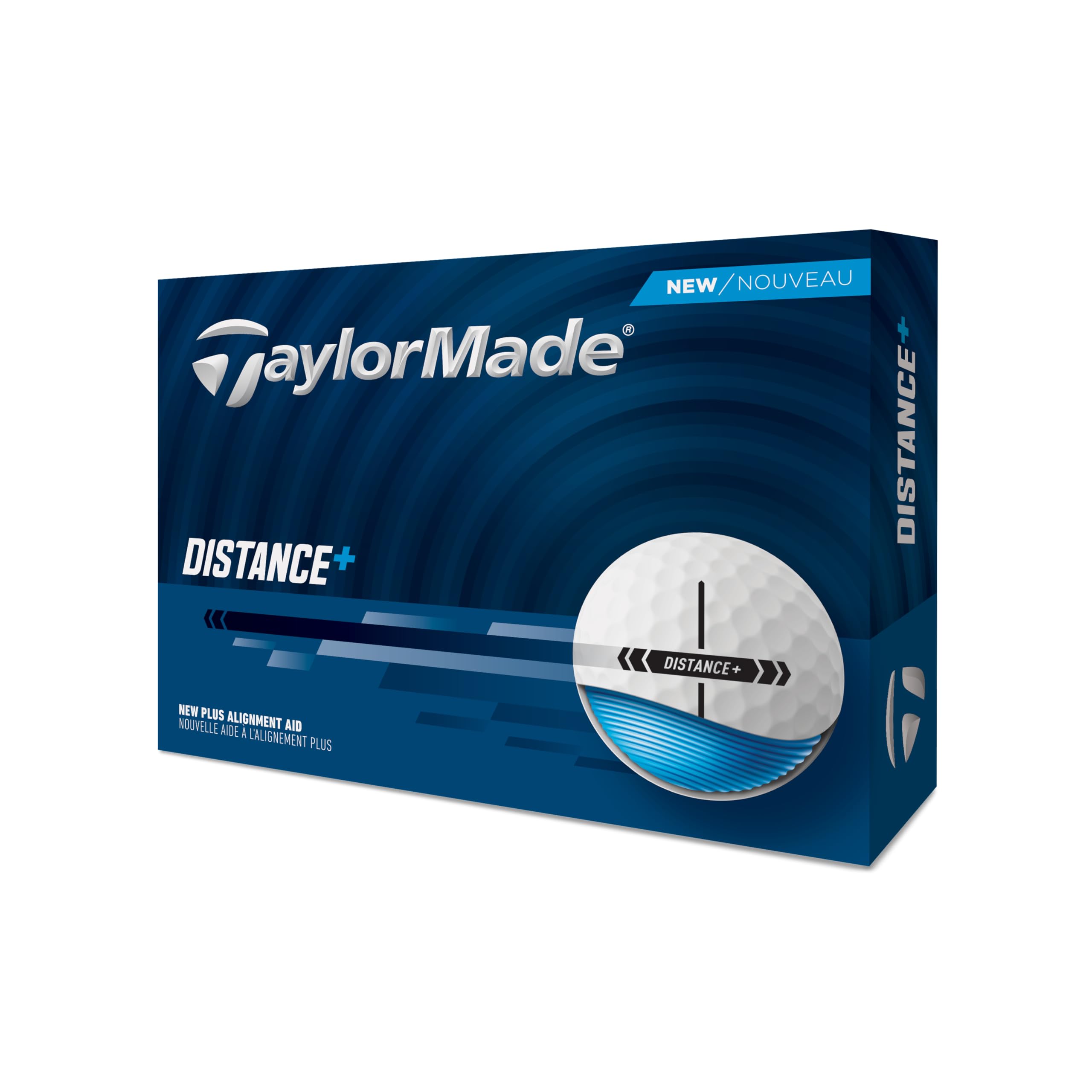
The TaylorMade Distance+ is the ball for the beginner who cares most about one thing: how far it goes. The 2025 version introduces an Extended Flight Dimple Pattern that works with the React Speed Core to produce a penetrating ball flight that holds its speed through the air. Verified buyers consistently call it a great value for “average players trying to get maximum distance off the tee” without spending premium ball money. One reviewer who has purchased multiple boxes confirms the performance is consistent batch to batch.
For a beginner, that’s fine — the trade-off is that drives fly straighter and carry further. The Plus Alignment Aid printed on the ball is a helpful visual for lining up putts, a small feature that builds good habits early. The ionomer cover is tough and holds up well against cart path scrapes and tree roots, making each ball last longer.
This is not a soft-feel ball. It’s firmer than the Duo Soft or e6, and that firmness translates to more feedback on mishits. But if you’re still trying to squeeze every yard out of your driver, the Distance+ offers the best distance-per-dollar ratio in this lineup. Pair it with a 24-pack for maximum value if you tend to lose a few per round.
Why it’s great
- Excellent distance off the tee for moderate swing speeds
- Extended Flight Dimple Pattern reduces drag
- Durable ionomer cover lasts multiple rounds
Good to know
- Firmer feel — not ideal for players who want soft feedback
- Low spin means little to no check on greens
5. Wilson 2024 Chaos Golf Balls

The Wilson Chaos is the volume play for beginners who lose balls regularly and don’t want to feel the sting of watching a premium ball disappear into the water hazard. This 24-ball pack at a budget-friendly price per ball makes it the most cost-effective entry point in the guide. Verified buyers repeatedly call it “great value” and note that the bright multi-color options make it much easier to spot your ball in the rough — a real time-saver when you’re playing with a group.
Several reviewers who bought the Chaos for themselves said the ball performs “as well as other higher-priced balls” in terms of distance and control, while others specifically recommended it for beginners who are still learning to keep their ball in play. The 2-piece Surlyn construction gives a firm feel off the clubface — comparable to the TaylorMade Distance+ — with good durability on the driving range and the course. One player who uses them on both range and course confirmed they hold up well against repeated abuse.
The trade-off is that the Chaos doesn’t offer the soft feel or low-compression benefits of the Duo Soft or e6. It’s a straightforward, no-frills distance ball with a firm response. But if you’re in your first season and still hitting 10-12 shots into the woods per round, the Chaos lets you play without worrying about cost per ball. Stock up and swing freely.
Why it’s great
- 24-ball pack offers unbeatable value per ball
- Bright multi-colors improve visibility on the course
- Durable Surlyn cover handles range sessions well
Good to know
- Firm feel — less feedback than softer beginner balls
- Limited greenside control and spin
FAQ
Should I buy used or refurbished golf balls as a beginner?
What compression rating is best for a new golfer with a slow swing speed?
How many golf balls should a beginner buy at once?
Do colored or matte golf balls help beginners see their shots better?
Final Thoughts: The Verdict
For most users, the best golf balls for beginners winner is the Callaway Supersoft Max because it combines a soft, forgiving feel with noticeably higher launch and straight flight that helps new players hold more greens. If you want maximum slice reduction and control, grab the Bridgestone e6. And for the deepest value per ball when you’re still losing a few each round, nothing beats the Wilson Chaos 24-pack.