
You step up to a six-footer, read the break perfectly, and pull the putter back. The strike feels pure, but the ball rolls past the hole two feet off-line. That gap between intention and execution — missed lines, incorrect distance, disconnected body mechanics — eats strokes off your scorecard round after round. The right training tools close that gap fast, turning sloppy practice into repeatable muscle memory you can trust under pressure.
I’m Mohammad Maruf — the founder and writer behind Drink4Good. For this guide, I spent dozens of hours analyzing swing trainers, putting mirrors, rangefinders, and compact practice aids to separate the gadgets that deliver measurable feedback from those that just clutter your bag.
Whether you are a weekend warrior trying to break 90 or a single-digit handicapper refining your setup, the best golf gadget is the one that gives you a clear, repeatable path from practice green to the first tee.
How To Choose The Best Golf Gadget
Golf gadgets fall into three functional buckets: putting tools, swing trainers, and distance-measuring devices. The best choice depends entirely on which part of your game leaks the most strokes. Buying a rangefinder when your putting stroke consistently misses the start line wastes money that could go into a mirror or gate system. Start by identifying your weakest scoring zone, then pick a gadget that offers direct, measurable feedback on that specific skill.
Putting Feedback vs. Full Swing Connection
Putting aids — mirrors, gate systems, alignment rails — train face angle, path, and setup position in a very small motion. They give you instant visual or tactile confirmation of where the putter face is pointing at impact and whether your stroke travels on the intended line. Full swing trainers, like the inflatable arm-band ball or impact bags, focus on body sequencing: keeping the arms connected to the torso, rotating through the ball, and delivering the club on an inside path. Decide which range you need to improve before you review any gadget specs.
Measurable vs. Feeling-Based Feedback
The most effective gadgets provide an objective measurement — a mirror that shows your eye position relative to the ball, a rangefinder that returns a yardage number, or a gate that forces the putter head through a specific opening. Gadgets that rely only on “feel” (padded straps, weighted rings, glow-in-the-dark shafts) rarely produce lasting change because they do not expose the exact error. Prioritize tools that make the flaw visible, not just the feeling different.
Portability and Course Integration
Some gadgets are strictly for home or practice green use — putting mats and full-size mirrors that require flat ground and storage space. Others are designed to clip onto a hat, attach to a golf cart magnetically, or fit in a pocket during a round. If you want a gadget that delivers value during actual play (yardage, voice distance, alignment checks between shots), prioritize compact, lightweight designs with quick setup or one-button operation.
Quick Comparison
On smaller screens, swipe sideways to see the full table.
| Model | Category | Best For | Key Spec | Amazon |
|---|---|---|---|---|
| Voice Caddie VC300SE | GPS Range Finder | Voice distance on course | Over 40,000 preloaded courses | Amazon |
| WHYGOLF Putting System | Putting Trainer | Adjustable gate alignment | 1/16 in. aluminum alloy base | Amazon |
| Pelz Golf DP4007 | Putting Tutor | Face alignment on turf or carpet | 8.75 in. plastic ramp | Amazon |
| Tour Striker Smart Ball | Swing Trainer | Arm-body connection drills | 6 in. inflatable ball with lanyard | Amazon |
| EyeLine Golf Alignment Mirror | Putting Mirror | Eye and shoulder alignment | 23.25 in. acrylic mirror | Amazon |
| Kaidrus Rangefinder | Laser Range Finder | Fast pin lock with slope | 1500 yard range / 7x mag | Amazon |
| GimYaa Putting Mat | Putting Mat | Home practice with auto return | 118 in. velvet surface | Amazon |
In‑Depth Reviews
1. Voice Caddie VC300SE Golf GPS Rangefinder

The Voice Caddie VC300SE is a GPS-based distance aid that announces front, middle, and back yardages every time you press the button. Instead of squinting at a small screen or laser through glare, you hear a clear male voice say “147 yards to the middle” while keeping your eyes on the fairway. The unit automatically recognizes which course you are on from over 40,000 preloaded tracks worldwide with no subscription fees — a massive practical advantage over subscription-based apps.
At just one ounce, the VC300SE clips onto the brim of your cap or a cart-mounted carabiner and stays there for a full 36 holes per charge. The LCD screen shows hole number, a simple distance graphic, and battery status, but the real interface is your ear. During a round you never have to pull out your phone or fumble with a bulky device — one button, one voice reading, then back to club selection.
Course detection takes roughly a minute when you first arrive at the tee, and the device auto-advances to the next hole as you walk off the green. Reviewers consistently note it is lightweight enough to forget you are wearing it and accurate enough to replace a full laser rangefinder for recreational play. The only trade-off is the lack of on-screen graphics — you get numbers, not a map — but for pure distance data without looking down, this is the most practical mid-round gadget on the list.
Why it’s great
- Voice output keeps eyes on the target and hands free
- Automatic course recognition with free updates
- Ultra-light clip design — usable for 36 holes per charge
Good to know
- No graphical hole layout — numbers only
- Auto-advance may lag at tee boxes depending on GPS signal
2. WHYGOLF Putting System
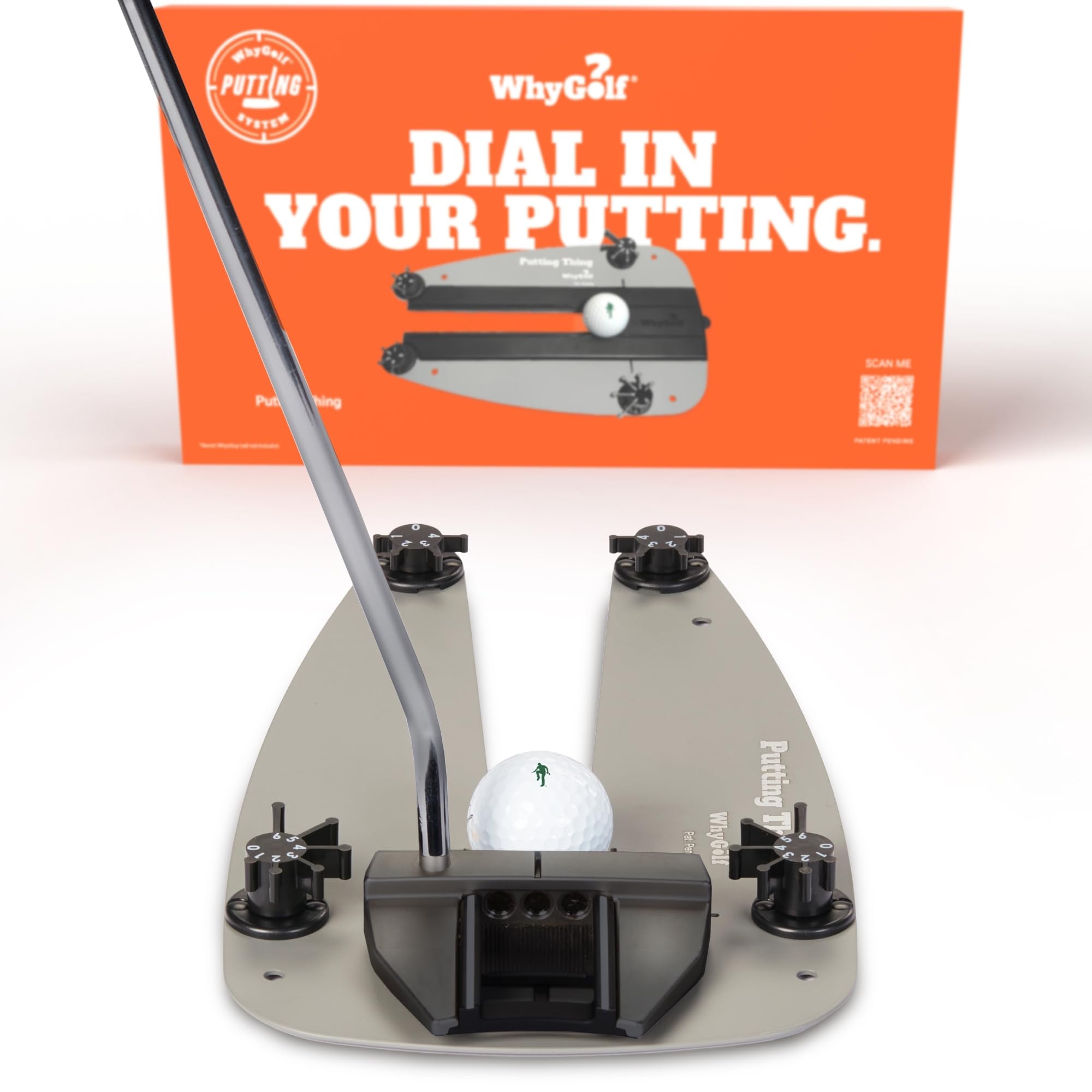
The WHYGOLF Putting System collapses multiple training tools — a putting mirror, ball gates, and an alignment rail — into a single 1/16-inch-thick aluminum alloy plate that folds flat into a travel bag. The standout feature is the fully adjustable putter and ball gates: you set the width to match your putter head, creating a physical channel that punishes any off-center strike or open face by knocking the ball off line. This is immediate tactile feedback — not a theory, but a hard miss.
Beneath the gate system, a built-in mirror lets you check eye position and shoulder alignment, while the alignment rail reinforces a square face at address. The unit weighs about 0.37 kilograms and is rigid enough to stay flat on a practice green or indoor mat without curling at the edges. It ships with an alignment rail and a padded carry bag, making it genuinely portable for taking to the putting green before a round.
Customer feedback consistently highlights the durability of the aluminum base and the confidence the gates build within a few sessions. The learning curve is minimal — place it down, adjust the gates, and putt. Unlike a simple mirror that only shows your setup, the WHYGOLF system forces a correct stroke by making every bad hit visible and every good hit feel rewarded. For golfers who struggle with face control and path consistency, this is the most complete single-device putting solution at this tier.
Why it’s great
- All-in-one mirror + gate + alignment rail design
- 1/16-inch aluminum alloy lies flat and resists bending
- Adjustable gate width accommodates different putter head sizes
Good to know
- Does not include a separate putting mat
- Gate alignment may feel restrictive at first for beginners
3. Kaidrus Golf Rangefinder
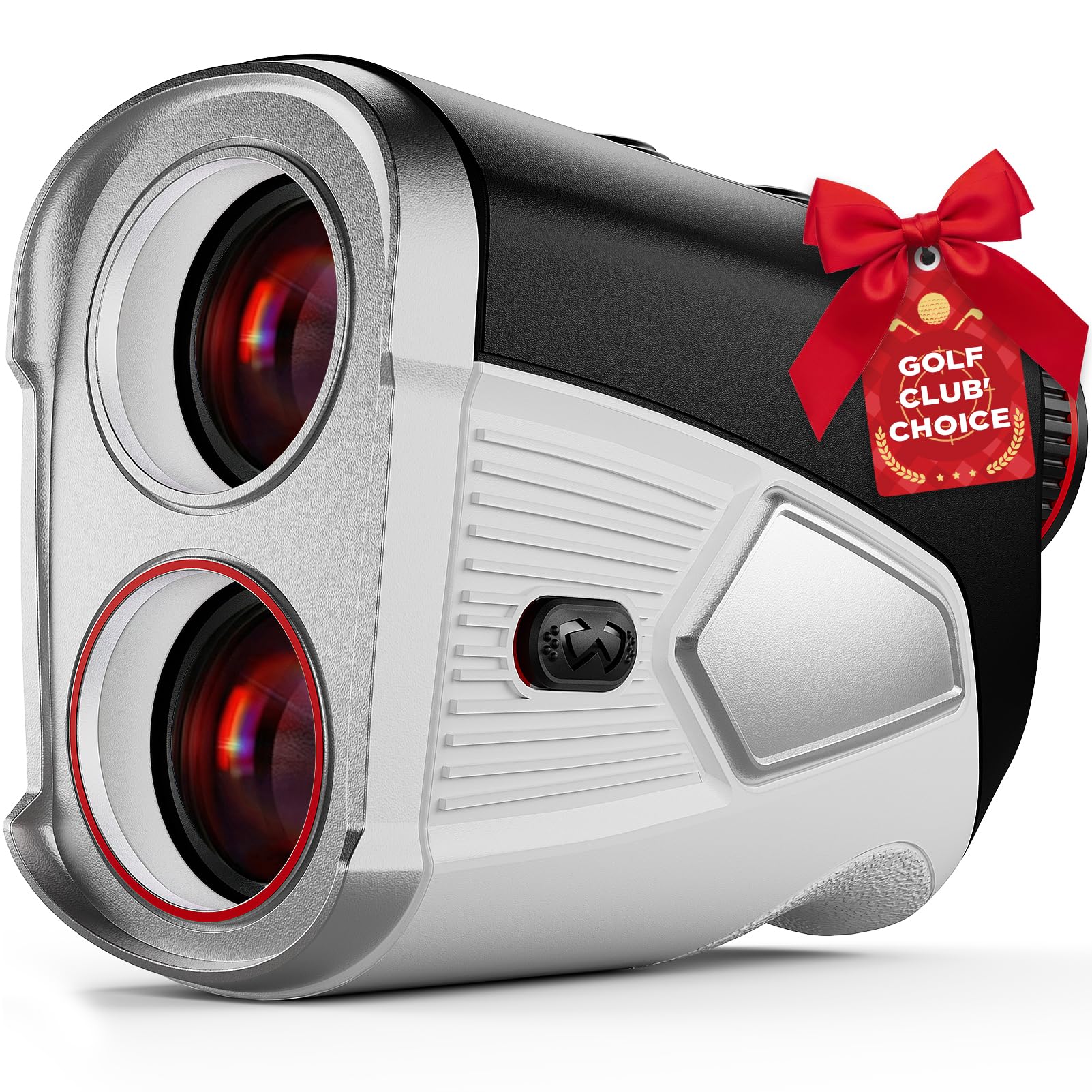
The Kaidrus Rangefinder delivers laser-based distance measurement up to 1500 yards with 7x magnification, a flag-lock mode that vibrates in your hand when it locks onto the pin, and a slope switch that toggles compensation on or off for tournament legality. The 0.5-second lock speed means you press the button once and feel the buzz immediately — no squinting, no reacquiring the target. For recreational rounds where you want fast, reliable numbers without fussing with settings, this unit simplifies the process dramatically.
It runs on a rechargeable lithium-ion battery that lasts multiple rounds and powers up via USB-C. The chassis includes a built-in magnetic mount that clings to any metal surface on a golf cart, and the included premium case provides secure storage. The slope mode automatically adjusts yardage for uphill and downhill shots, which is especially useful on hilly courses where a standard laser reading can be misleading by 10-15 yards.
Reviewers praise the clarity of the LCD display and the instant vibration confirmation, which removes any doubt about whether the laser locked onto the flag or a background tree. The primary caveat from user feedback is that the first unit had accuracy errors, but the replacement performed flawlessly — indicating potential QC variance rather than a design flaw. At this price, you get slope compensation and 7x magnification that would cost significantly more from traditional rangefinder brands.
Why it’s great
- 0.5-second flag lock with vibration feedback
- Slope compensation toggle preserves tournament legality
- Up to 1500-yard range with 7x magnification
Good to know
- Build quality can vary between units
- Slope mode is less accurate at extreme uphill/downhill angles
4. EyeLine Golf Alignment Putting Mirror
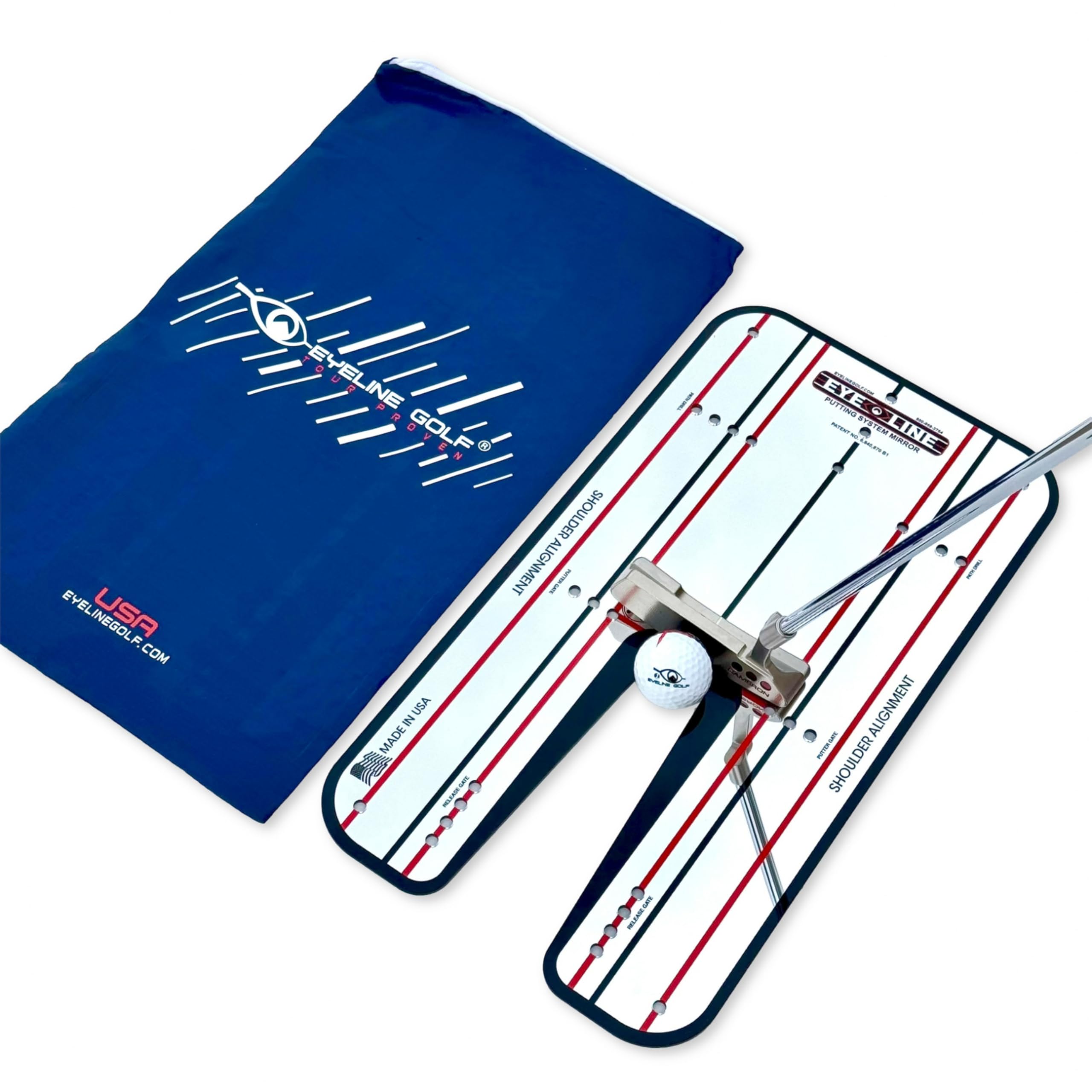
The EyeLine Golf Alignment Mirror is a 23.25-inch acrylic panel with a mirrored surface at the ball position and a second mirror behind the stroke arc. The front mirror instantly reveals whether your eyes are directly over the ball — a setup error that causes most missed putts. The rear mirror shows your shoulder alignment relative to the target line. Together, they provide a split-second visual check on two of the most common putting faults without needing a second person or a video camera.
The mat includes an embedded stroke arc with multiple tee gate positions (three different widths) so you can progress from a wide forgiving gate to a narrow precision channel as your stroke improves. The entire unit weighs very little, folds into a protective case, and can be used on any flat surface — indoors on carpet or outdoors on a practice green. The durable acrylic surface resists scratching and stays clear over repeated use.
Customer feedback highlights how quickly the mirror exposes misalignment that players never knew they had — particularly closed shoulder lines and off-center eye positions. Several reviewers noted that fixing their setup alone improved putting immediately, without any stroke practice. The only criticism is that the gate slots at the far end may release balls prematurely if you have a long follow-through, requiring you to place balls outside the slots as an alternative gate.
Why it’s great
- Dual mirrors show eye position and shoulder alignment simultaneously
- Adjustable tee gates accommodate all skill levels
- Lightweight, portable design with protective case
Good to know
- Gate slots can release balls during long follow-throughs
- Reflective surface may require occasional cleaning for best clarity
5. Pelz Golf DP4007 Putting Tutor

The Pelz Golf DP4007 Putting Tutor is a simple plastic ramp that changes the way you think about putting. You place the ramp behind the ball with the opening pointing toward your target line. When you strike a square-faced putt, the ball rolls cleanly through the ramp opening and continues toward the hole. When you hit it with an open or closed face, the ball hits the side of the ramp and deflects off-line. This instant, unmistakable feedback trains your brain to square the putter face without any conscious compensation.
At 8.75 inches long and made from plastic, the tutor is small enough to fit in a golf bag pocket or a desk drawer. You can use it indoors on carpet or outdoors on the practice green — no power, no batteries, no setup beyond placing it on the ground. The design works equally well with a long putter and is forgiving enough to use with the widest alignment setting when you first start, slowly narrowing your focus as your stroke improves.
Customer feedback strongly emphasizes its effectiveness for developing start-line consistency and tempo across short and long putts. The main limitation is that the tutor tends to shift on artificial turf surfaces because its flat plastic base does not grip synthetic fibers. On real grass or firm carpet, it stays put, but on loose fiber mats you may need to hold it in place or weight it down. For the price, however, this is one of the most direct face-alignment training tools available.
Why it’s great
- Teaches square-face impact through immediate deflection feedback
- Ultra-portable — fits in pocket, works on any flat surface
- Adjustable angle helps learn green-reading and break
Good to know
- Tends to slide on synthetic turf or artificial mats
- Plastic construction feels lightweight but not premium
6. Tour Striker Smart Ball

The Tour Striker Smart Ball is a 6-inch inflatable ball attached to a lanyard that you hold between your forearms during practice swings. The goal is to keep your arms connected to your torso throughout the swing — if you lose connection, the ball drops. This direct sensory feedback addresses a fundamental fault in recreational golfers: hands and arms that separate from the body during the backswing, causing sequencing problems, casting, and off-center contact.
You can use the Smart Ball with every club in the bag, from wedges to driver, and even during putting drills. It inflates via a simple valve and compresses enough to fit in a golf bag pocket. The heavy-duty lanyard adjusts for different arm sizes, and the ABS material resists punctures during normal use. The drill set is straightforward: hold the ball between your forearms, take a half swing, then a full swing, and feel the ball press against your arms throughout the motion.
Reviewers who stuck with the Smart Ball reported immediate improvements in swing tempo and consistent ball striking. Skeptics note that for about -50, the component parts are simple — a plastic bladder and a cord — and cheaper knockoffs exist. However, the build quality of the lanyard and valve mechanism on the original Tour Striker version justifies the premium, as several budget clones have reported air leaks or snapping cords. For a single drill gadget that reliably teaches connection, this is the benchmark.
Why it’s great
- Teaches arm-to-body connection across all clubs
- Compresses small for bag storage
- Durable lanyard and ABS construction
Good to know
- Basic construction — no advanced features for the price
- Some users find the inflatable ball pops under heavy use
7. GimYaa Golf Putting Mat

The GimYaa Golf Putting Mat brings the practice green to your living room with a 118-inch-long velvet surface, a solid wood base, and an automatic ball return system that uses gravity rather than electronics. The surface is made from a crystal velvet material designed to roll as true as a well-maintained green, with two hole sizes (3.2 inches and 2.5 inches) to vary difficulty. The auto-return mechanism collects the ball after each putt and channels it back to striking position, allowing you to focus on stroke repetition without bending down.
The mat rolls out flat and stays put thanks to a non-slip rubber sole underneath. The wooden base that houses the cup and ball return is sturdy enough to handle repeated putts without shifting. Assembly is simple — the base comes in pieces that connect magnetically, and the velvet fabric requires no ironing if stored properly. The total setup footprint is roughly 10 feet by 1 foot, making it workable in a hallway, home office, or garage without dominating the space.
Customers appreciate that the mat lies flat out of the box with minimal creasing, and the auto-return is a genuine time-saver during long practice sessions. The velvet surface provides moderate speed — slightly slower than a fast green, which actually encourages a firmer stroke that translates well to real-course conditions. The main downsides are that the ball return path can be slightly noisy on hardwood floors, and the far end of the mat may develop subtle wrinkles over time that require a steam iron to flatten.
Why it’s great
- Gravity-based auto ball return eliminates bending and reloading
- Velvet surface rolls smooth with realistic speed
- Solid wood base with two cup sizes for progression
Good to know
- Noise from ball return on hard flooring
- Velvet may require occasional steaming to remove storage wrinkles
FAQ
Will a putting mirror actually improve my putting or is it just a gimmick?
Can I use a GPS rangefinder during a tournament if it has slope compensation?
Do arm-body connection trainers like the Tour Striker Smart Ball work for tall golfers with longer arms?
Final Thoughts: The Verdict
For most users, the best golf gadget winner is the Voice Caddie VC300SE because it gives you precise yardage through voice output without ever taking your eyes off the fairway — a decisive advantage for course management and club selection. If you want a complete putting system that improves face alignment, eye position, and stroke path in one compact package, grab the WHYGOLF Putting System. And for a budget-friendly home practice station that keeps you putting for hours without bending over, nothing beats the GimYaa Putting Mat with its auto-return and velvet roll.