
That sinking feeling when you club down for a 150-yard approach, swing smooth, and watch your ball sail ten yards over the green. It’s rarely your swing. It’s bad information. A course’s yardage markers and sprinkler heads only tell you part of the story, and a 15-foot elevation change can turn a stock 8-iron into something else entirely. The right laser rangefinder kills that guesswork, giving you a precise number in under a second.
I’m Mohammad Maruf — the founder and writer behind Drink4Good. I’ve spent hundreds of hours analyzing optics specs, slope compensation algorithms, and real-world accuracy data across the entire rangefinder market, from budget entry-level units to tour-validated premium lasers.
This guide cuts through the marketing noise to help you find the best golf gps rangefinder for your specific game — whether you need tournament-legal simplicity, smartphone integration, or stabalized optics for shaky hands.
How To Choose The Best Golf GPS Rangefinder
Before you buy, understand a key truth: a laser rangefinder gives you distance to a specific target (the pin), while a GPS unit gives you distances to the front, center, and back of the green along with hazard layouts. Many premium models now combine both. The question isn’t which type to buy — it’s which combination of features fits how you actually play.
Slope Compensation: When You Actually Need It
A rangefinder with slope reads the angle of incline or decline and calculates the adjusted “plays-like” yardage. On a normal flat hole, this barely matters. On a course with severe elevation changes — think mountain courses or links with deep bunkers — slope can change your carry distance by 10 yards or more. The catch: slope is illegal in tournament play. Look for a physical on/off switch so you can toggle it off for competition rounds without leaving a trace.
Flag Lock Speed and Vibration Feedback
The core job of a golf laser is locking onto the flagstick and ignoring trees, bushes, or other golfers behind it. Good models offer “Flag Lock” or “PinSeeker” mode with a vibration burst that confirms the lock. The speed of that lock matters: a 0.1-second lock means you can range multiple targets (front bunker, pin, back slope) in the time it takes your partner to tee off. Cheaper models sometimes lock onto background objects, so consistent target acquisition at 200+ yards is a real differentiator.
Optics Quality and Display Readability
Magnification (6x or 7x) determines how clearly you can see the flag at distance, but lens coating quality and eyepiece adjustments matter equally. A rangefinder with poor optics will produce a dim, washed-out image in low light or bright glare. Red and black dual-display options improve contrast in varying conditions. If you wear glasses, look for long eye relief — at least 16mm — so you don’t have to squint or remove your prescription frames.
Battery and Power System
Traditional rangefinders run on a single CR2 lithium battery that lasts roughly one season with moderate play. Newer models are shifting to internal rechargeable lithium-ion packs with USB-C charging, which save money over time but add complexity if you forget to charge. Some innovative designs offer both — a primary rechargeable cell with a CR2 backup — giving you fail-safe power on the course. Pay attention to the battery chemistry: rechargeable models advertise 40,000+ measurements per charge, while disposable CR2 batteries are universally available at any pro shop.
Quick Comparison
On smaller screens, swipe sideways to see the full table.
| Model | Category | Best For | Key Spec | Amazon |
|---|---|---|---|---|
| ACEGMET PFS5 | Mid-Range | Coach Mode & Dual Power | 450mAh USB-C + CR2 backup | Amazon |
| REDTIGER GolfVue 1 Pro | Mid-Range | 6-Mode Versatility | 1200-yard range, 0.5-yard accuracy | Amazon |
| Bushnell Phantom 3 Slope GPS | Mid-Range | Touchscreen GPS No Laser | 38,000+ preloaded courses | Amazon |
| Precision Pro NX9 Slope | Mid-Range | Tournament Legal Slope Switch | 900-yard range, IP54 waterproof | Amazon |
| Blue Tees Series 4 ULTRA | Mid-Range | OLED Display & Auto Depth Filter | 1200-yard range, IP54 rating | Amazon |
| Bushnell Tour V6 Shift | Premium | Tour-Proven Laser Performance | 1300-yard range, IPX6 waterproof | Amazon |
| Garmin Approach Z30 | Premium | Garmin Ecosystem Integration | Range relay to Garmin watch | Amazon |
| Nikon COOLSHOT PROIII STABILIZED | Premium | Image Stabilization Optics | Hyper Read 0.1-second lock | Amazon |
| Garmin Approach Z82 | Premium | Laser + GPS Course Overlay | 10-inch flag accuracy, 2-D maps | Amazon |
In‑Depth Reviews
1. ACEGMET PFS5 Golf Rangefinder
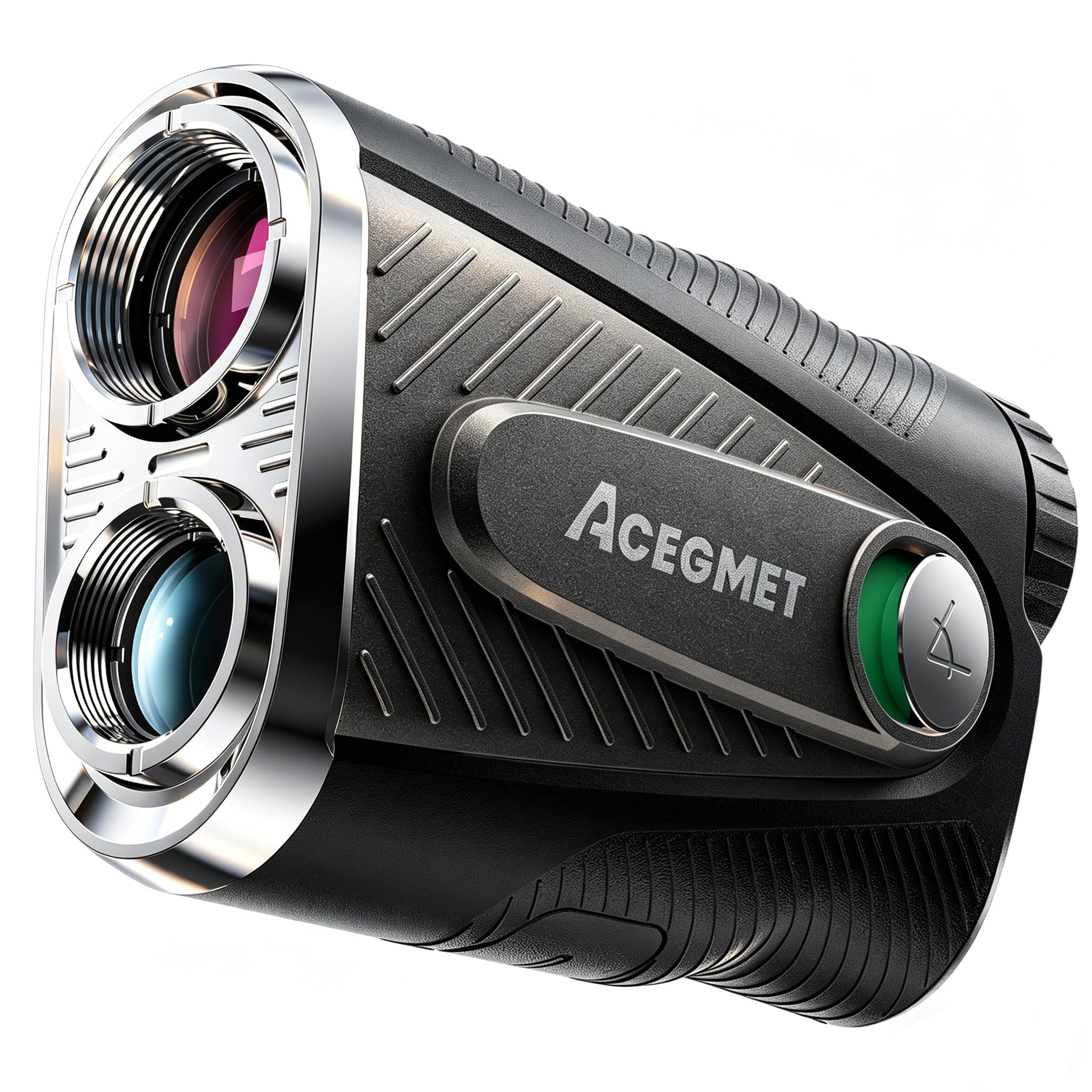
The ACEGMET PFS5 lands in a sweet spot few budget-to-mid rangefinders ever reach: it packs genuinely useful innovation rather than just a low price tag. Its Coach Mode uses on-course triangulation to calculate ball-to-pin distance without forcing you to walk up to the ball first — a practical time-saver during casual rounds. The dual power system (450mAh USB-C rechargeable plus a CR2 backup) completely eliminates battery anxiety on the course. Reviews consistently report 40,000+ measurements per charge, which translates to many seasons without touching a charging cable.
Optically, the 7x magnification and red-and-black dual display handle everything from morning glare to overcast afternoons. The patented EnviroSlope Tech adjusts distance based on temperature, humidity, and air pressure — not just the angle of the slope — making it more accurate on humid or high-altitude courses than standard inclinometer systems. The 0.1-second Flag Lock with vibration confirmation is genuinely fast, and the 5500 Gauss magnetic strip combined with the included belt clip means you won’t leave it behind on the cart.
Build quality receives high marks across user feedback: the diamond-textured rubberized grip feels solid, and the unit survived a direct driver hit from 10 yards in one verified incident. The 24-month warranty and lifetime technical support add a safety net that budget models rarely offer. Minor inconsistency in pin lock on elevated shots was noted by some users, but the overall accuracy (±1 yard) and feature density at this price point are exceptional.
Why it’s great
- Dual power (USB-C rechargeable plus CR2 backup) eliminates mid-round battery failure
- Coach Mode calculates distances without walking to the ball
- EnviroSlope compensates for temperature and humidity, not just angle
Good to know
- Pin lock can occasionally struggle with flags positioned above the player’s line of sight
- Red display may take a moment to adjust in direct sunlight
2. REDTIGER GolfVue Series 1 Pro

REDTIGER’s GolfVue Series 1 Pro offers an aggressive features-per-dollar ratio that directly challenges the premium brands. Six one-button modes — slope compensation, flag locking, horizontal distance, height measurement, speed measurement, and continuous scan — cover every routine a golfer needs without a complicated menu system. The 0.5-yard accuracy claim is verified by multiple user reports that found it matching Bushnell readings shot for shot, making this a genuine alternative rather than a compromise.
The built-in magnetic stripe and included belt clip make cart attachment effortless, and the IP54 waterproof rating gives confidence in light rain or morning dew. USB-C rechargeable with a battery-level display means no scrambling for CR2 batteries before a tee time. Users consistently praise the clear transflective LCD and 7x magnification for providing quick, readable yardage even against bright backgrounds, and the physical slope switch makes it easy to toggle for tournament play.
Multiple long-term users reported the internal battery lasting over eight months of weekly play without a recharge — far exceeding typical lithium-ion expectations. The 2-year unconditional assurance and lifetime technical support surpass the warranty terms of most competitors in this tier. Some reviewers noted minor inconsistency, with readings varying 2-3 yards on successive ranges of the same target, though this was not a universal complaint.
Why it’s great
- Six measurement modes accessible via one-button cycling
- USB-C rechargeable battery lasts months of weekly play
- 2-year unconditional warranty with lifetime technical support
Good to know
- Some units show slight yardage variation (2-3 yards) on consecutive readings
- Not ideal for users who prefer dedicated rechargeable cells over internal lithium packs
3. Bushnell Phantom 3 Slope GPS
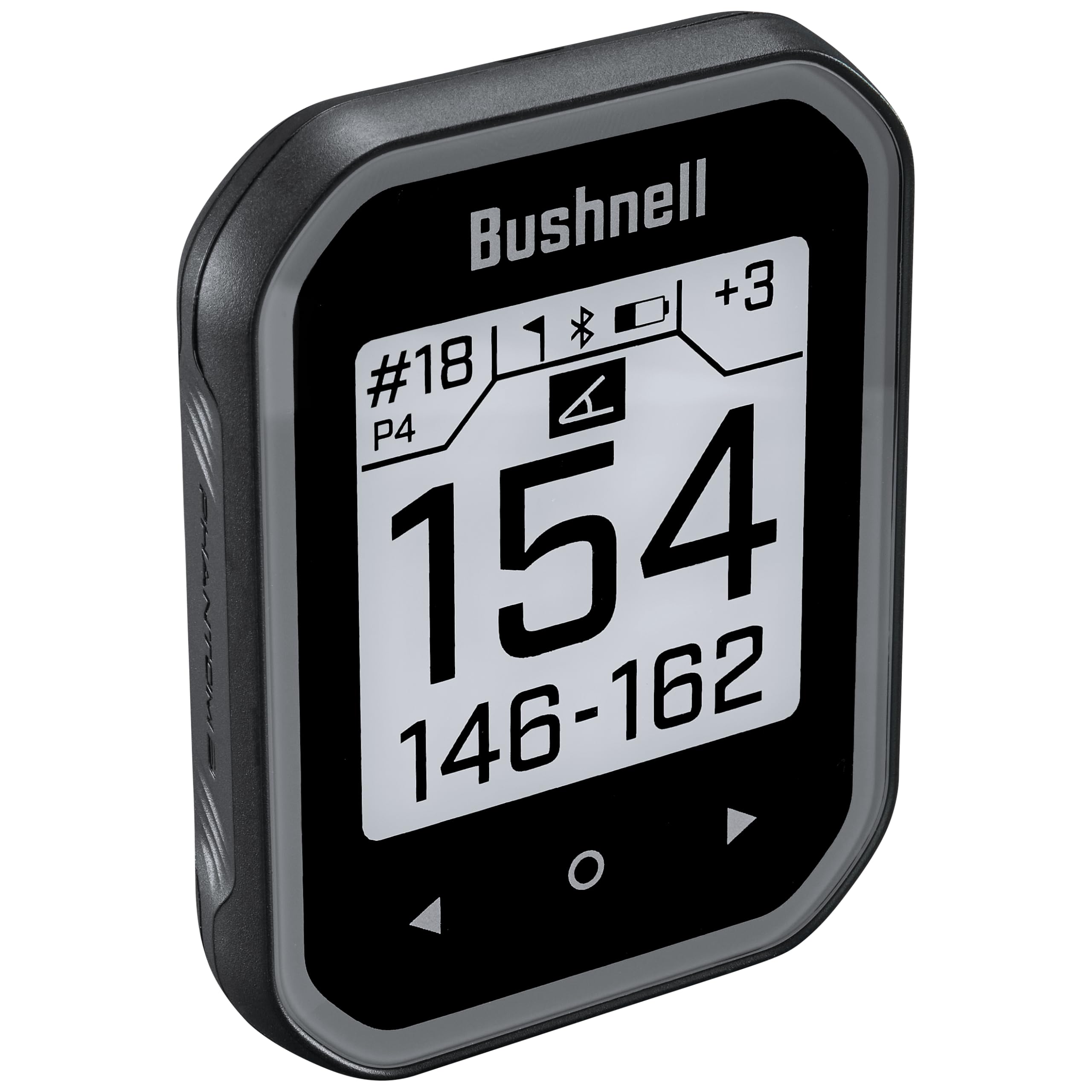
The Phantom 3 Slope GPS is not a laser rangefinder — it’s a dedicated GPS unit with a color touchscreen that displays front, center, and back green distances for 38,000+ courses worldwide. This distinction matters because it means no aiming required: just look at the screen and know the full picture of the green immediately. Bushnell’s patented Slope Technology calculates incline-adjusted yardages through the touchscreen interface, and the built-in BITE magnet attaches securely to any cart bar for constant visibility during play.
Bluetooth connectivity syncs with the Bushnell Golf App, unlocking hole layout graphics, layup distances, and hazard positions that a standard laser simply cannot provide. Users report the 14-to-18-hour battery life covers four full rounds easily, and the auto-course recognition means zero setup between holes. The movable pin feature lets you drag a marker to the exact flag position on the green display for more precise yardage than the generic center distance.
Where this unit truly shines is course management: knowing the depth of the green (front to back) and the exact position of hazards lets you club for a safe miss rather than just aiming at the stick. The neon green color scheme is a deliberate design choice — users admit it prevents accidentally leaving the device on the cart. Touchscreen responsiveness with a gloved hand can be a minor frustration, but the overall navigation is intuitive enough that most players adapt quickly.
Why it’s great
- Full front, center, and back distances eliminate laser aiming guesswork
- Bluetooth sync provides hazard layouts and hole overlays
- 18-hour battery life covers four rounds on a single charge
Good to know
- Touchscreen struggles with gloved fingers in wet conditions
- Not a laser — cannot range specific targets like trees or bunker edges independently
4. Precision Pro NX9 Slope
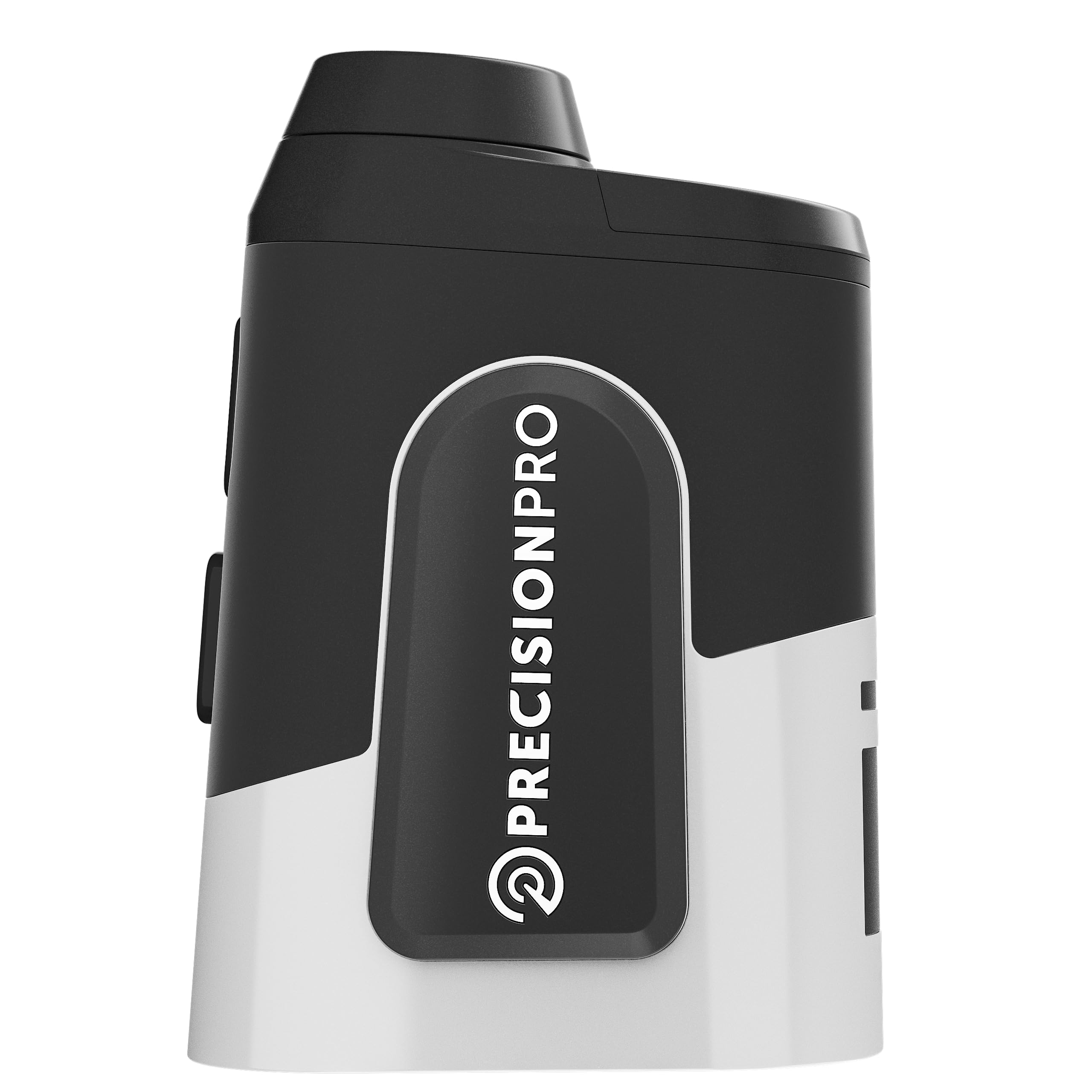
The NX9 Slope from Precision Pro is built for the golfer who wants premium performance without Bushnell-level pricing. The standout feature is the physical Adaptive Slope Switch — a tactile control that clearly indicates whether slope compensation is active or deactivated. This is critical for tournament compliance: with a physical switch, there is zero ambiguity about the device’s legal status on the course. The 6x HD optics deliver crisp visuals up to 999 yards, and the Flag Lock vibration confirms pin acquisition reliably at distances where lesser units hunt and miss.
At 12 ounces with a rubberized chassis, the NX9 feels substantial in hand without being heavy. The IP54 water resistance means light rain won’t end your round, and the included hard case with a magnetic closure protects the optics between rounds. Users upgrading from the NX7 Pro consistently report faster lock times and more consistent yardage readings, calling it a meaningful generational improvement rather than a simple refresh.
Multi-season users praise the lithium battery life, with many reporting a single CR2 lasting an entire season of 18-hole outings. The yard-to-meter toggle is hidden in a 5-second power button hold — not something you’ll need mid-round, but worth noting for international travel. The magnet for cart attachment is strong enough that one reviewer claimed it survived being accidentally knocked by a fairway rake. Overall, this is a precision tool for the player who needs tournament-legal distance data with zero feature bloat.
Why it’s great
- Physical slope switch provides clear tournament-legal confirmation
- Fast, reliable flag lock with clear vibration feedback
- Water-resistant chassis (IP54) handles light course rain
Good to know
- Unit-to-meter switch requires holding power button 5-6 seconds
- 6x magnification is adequate but less than some competitors’ 7x optics
5. Blue Tees Series 4 ULTRA

Blue Tees has carved out a reputation for modern, feature-packed rangefinders at mid-premium prices, and the Series 4 ULTRA is their most refined version yet. The OLED display with adjustable brightness delivers exceptional contrast in both low-light and bright conditions — a genuine advantage over standard LCD units that wash out in midday sun. The Adaptive Slope Switch Technology works with an Auto-Depth Filter that actively filters out background distractions, ensuring the laser locks on the flag rather than a tree 40 yards behind it.
Active Track mode provides distance readings while moving, useful for rangefinding from a moving cart, and the Pulse Vibration gives clear haptic lock confirmation. The IP54 dust and waterproof rating means the electronics are sealed against typical course conditions. The magnet design uses a thermoplastic elastomer material that reviewers describe as the strongest magnetic hold they’ve encountered on a rangefinder, paired with a mountaineer buckle for belt carry.
One consistent user note: the OLED display shows a lot of information, and some players find the viewfinder cluttered compared to simpler models. The brightness adjustment requires a fast double-tap that can be finicky in practice. Battery life is excellent — multiple verified reports of still running on the original batteries after months of use. The lack of an internal rechargeable battery is a miss for a unit at this tier, though the included batteries last long enough that most users don’t mind.
Why it’s great
- OLED display provides superior readability in varying light conditions
- Adaptive slope and auto depth filter improve flag-lock precision
- Strongest magnetic cart mount in this category
Good to know
- Detailed OLED display can feel visually cluttered in the viewfinder
- Uses disposable AA/AAA batteries instead of internal rechargeable cell
6. Bushnell Tour V6 Shift

For decades, Bushnell’s Tour series has been the baseline that all other rangefinders are measured against. The V6 Shift continues that tradition with a 1300-yard range, 6x magnification, and Bushnell’s signature Visual Jolt + Pinseeker feedback system — a red visual ring plus vibration that together give absolute confidence the laser has locked the flag. The external slope switch is intuitive and tactile, letting you toggle on the fly without entering menus.
The BITE magnetic cart mount is integrated into the body itself rather than an add-on bracket, meaning there’s no clipping or velcro — it sticks and stays. The IPX6 waterproof rating is significant: this device can handle heavy rain, not just mist or drizzle, making it a true all-weather tool. Ultra-clear optics with Bushnell’s proprietary lens coatings produce a bright, sharp image edge-to-edge, and users consistently report faster lock times than previous V-series iterations.
Multiple users who upgraded from cheaper models explicitly noted that the V6 Shift delivers consistent, repeatable yardages where their previous units would sometimes vary or fail to lock at 200+ yards. The “Patriot Pack” adds a premium case and a veteran coin, but the real value is in the consistent performance. The only notable catch is price — this is a genuine tour-level tool, and the cost reflects that. Battery life with a single CR2 is estimated at roughly one full season of weekly play.
Why it’s great
- Visual Jolt and vibration provide unmistakable flag-lock confirmation
- IPX6 waterproof rating handles real rain, not just light mist
- Integrated BITE mount is built into the body, not an accessory
Good to know
- Premium pricing places it above many high-performance alternatives
- CR2 battery not included in the box despite the price point
7. Garmin Approach Z30

The Garmin Approach Z30 is not just a laser rangefinder — it’s a data relay hub for golfers already invested in the Garmin ecosystem. Its primary superpower is Range Relay: when you laser the pin, the distance automatically sends to your paired Garmin watch or the Garmin Golf smartphone app, updating your club distances and shot tracking in real time. For players using Garmin club sensors and a compatible watch, this creates a seamless feedback loop that cheaper standalone lasers simply cannot replicate.
Optically, the 6x magnification delivers clear images up to 400 yards, and the PlaysLike Distance feature adjusts yardages for uphill and downhill shots based on elevation change from your position. The external indicator light lets you and your playing partners know whether the device is in tournament mode — a thoughtful social feature for competition rounds. The magnetic cart mount is well-executed, though users note the magnetic strength is adequate rather than exceptional.
The Find My Garmin feature connects to the smartphone app to locate a misplaced device on the course — a lifesaver for forgetful golfers. Battery life is rated up to one year of play on a single CR2 cell, and users report the lightweight 7.4-ounce body is easy to handle all round. The real consideration: if you don’t already own a Garmin watch, you’re paying for integration you won’t use. As a standalone laser, it’s good but not exceptional. As a Garmin ecosystem node, it’s irreplaceable.
Why it’s great
- Range Relay sends laser distances directly to Garmin watch for automatic club tracking
- Find My Garmin helps locate lost units via smartphone app
- Lightweight 7.4-ounce design with PlaysLike distance for elevation changes
Good to know
- Limited to 400-yard range — less than premium alternatives
- Best value only realized within the Garmin watch ecosystem
8. Nikon COOLSHOT PROIII STABILIZED

Nikon brings its legendary optical engineering to the golf course with the COOLSHOT PROIII STABILIZED, and the headline feature is exactly what it sounds like: image stabilization. This is not a gimmick — for players with less-than-steady hands (or anyone ranging on a windy day), the stabilization dramatically reduces the jitter in the viewfinder, keeping the laser on target when your hand naturally micro-shakes. The effect is most noticeable at longer ranges, making this arguably the best tool for players who routinely hit approach shots from 180+ yards.
The Hyper Read measurement system delivers distances in 0.1 seconds, and the Dual Locked ON Quake provides both a visual indicator and vibration for flag lock confirmation. The 6x monocular features multilayer-coated optics that Nikon is famous for, producing bright, contrast-rich images even in flat afternoon light. Golf Mode with ID Technology adjusts for incline and decline, while Actual Distance Mode disables slope for tournament legality, with an ADI indicator LED confirming compliance.
At 7.2 ounces, it’s featherlight for a stabilized unit, and the rainproof design means you don’t panic at the first drop of rain. The single notable complaint is the lack of a rechargeable battery — it uses a CR2 cell when many contemporaries have moved to USB-C. The included holster has a weak magnet closure according to several users, which is a minor ergonomic miss on an otherwise superb device. The stabilization genuinely changes how you range targets, making it worth the premium for players who value visual clarity.
Why it’s great
- Image stabilization eliminates hand-shake jitter for steadier pin targeting
- Hyper Read technology delivers distances in 0.1 seconds consistently
- Nikon multilayer-coated optics produce exceptional image brightness and clarity
Good to know
- Uses disposable CR2 battery rather than internal rechargeable cell
- Carrying case magnet closure is not durable enough for the build quality
9. Garmin Approach Z82

The Garmin Approach Z82 is the closest thing to a rangefinder supercomputer currently available. It combines a laser rangefinder accurate to within 10 inches of the flag with a full-color 2-D CourseView mapping overlay displayed directly in the viewfinder. This means you see the hole layout — bunkers, water hazards, doglegs — superimposed on your field of view while simultaneously lasering the flag. The Laser Range Arc feature draws an arc on the map at the exact distance the laser measured, letting you see every hazard at that carry distance instantly.
The image stabilization makes it easier to hold the laser steady on the pin, and vibrational feedback confirms lock. Hazard View lets you scroll through each hazard on the map to quickly check carry distances, which is immensely valuable on unfamiliar courses. The 41,000+ preloaded course database updates automatically, so you never need to manually download a new layout. Users report the pin-finder works quickly and accurately, though the OLED screen can show a lot of information that takes a round or two to learn to parse efficiently.
The Z82’s biggest downside is its battery life: about two rounds per charge, and it charges via micro-USB — not USB-C, which feels dated at this price tier. The device lacks a built-in magnet or dedicated cart clip, relying on the included carabiner-style carrying case for attachment, which some users find less convenient than a magnetic solution. The wind speed feature is described as inconsistent by multiple reviewers. But for the player who wants laser precision, GPS course data, hazard intelligence, and slope compensation in one pocket-sized device, nothing else comes close to this level of integration.
Why it’s great
- 2-D course map overlay in the viewfinder shows hazards and hole layout while ranging
- 10-inch flag accuracy is the tightest tolerance in the market
- Laser Range Arc displays every hazard at your exact carry distance
Good to know
- Battery lasts only about two full rounds per charge
- No magnetic mount — relies on carabiner clip for cart attachment
FAQ
Can I use a slope adjusted rangefinder in USGA tournament play?
What is the difference between a laser rangefinder and a GPS golf rangefinder?
Final Thoughts: The Verdict
For most users, the golf gps rangefinder winner is the ACEGMET PFS5 because it delivers tournament-viable slope compensation, innovative Coach Mode, and a dual power system at a nearly unbeatable value — making it the single best upgrade for the widest range of golfers. If you want image stabilization that compensates for unsteady hands, grab the Nikon COOLSHOT PROIII STABILIZED. And for the player who demands maximum course intelligence — laser precision, hazard mapping, and GPS overlays all in one viewfinder — nothing beats the Garmin Approach Z82.