
The shaft is the engine of the iron. Amateurs obsess over clubhead design while the real performance gains—trajectory, dispersion, and consistency—come from the steel or graphite cylinder connecting your hands to the ball. Choosing the wrong flex or weight profile turns a solid swing into a weak fade or a hook you cannot feel coming.
I’m Mohammad Maruf — the founder and writer behind Drink4Good. Over years of analyzing launch monitor data and breaking down shaft profiles from every major OEM, I’ve learned that the difference between a decent iron shot and a great one almost always traces back to the shaft’s weight, bend profile, and tip stiffness.
Whether you are upgrading a game-improvement set or building a players’ cavity-back from scratch, this breakdown of the best golf shafts for irons is designed to match you with the right flex, weight, and feel for your swing speed and ball flight preference.
How To Choose The Best Golf Shafts For Irons
Matching an iron shaft to your swing is not about picking the most expensive option. It is about aligning three core variables—flex, weight, and tip profile—with your swing speed, tempo, and feel preference. Steel shafts dominate for feel and control, while graphite shafts offer vibration dampening and lighter overall weight for higher swing speed players or those with joint concerns.
Flex and Weight Relationship
Flex (Regular, Stiff, X-Stiff) is the most visible spec, but weight in grams is the silent performance driver. A 130-gram steel shaft will stabilize an aggressive transition better than any flex label alone. Conversely, a 60-gram graphite shaft can help a smoother swinger generate more clubhead speed without swinging harder. Always test weight before committing to a flex number.
.355 Taper vs .370 Parallel Tips
Tip diameter determines compatibility with your iron heads. .355 taper tips are drop-in ready for most forged and players’ cavity-back heads, requiring no reaming. .370 parallel tips are common in game-improvement and oversized heads, needing proper tip trimming to dial in flex. Buying the wrong tip diameter means either shimming (which can twist) or reaming (which removes metal).
Launch and Spin Profile
Low-launch shafts keep ball flight down for players with naturally high ball flight or strong swing speeds. Mid-launch profiles are the most versatile. High-launch shafts help players with slower swing speeds get the ball airborne and carry more distance. Shafts with a softer tip section generally increase launch and spin, while stiff-tip profiles lower trajectory and reduce spin for tighter dispersion.
Quick Comparison
On smaller screens, swipe sideways to see the full table.
| Model | Category | Best For | Key Spec | Amazon |
|---|---|---|---|---|
| Project X Cypher Iron | Graphite | High launch & speed | 60 grams, 5.5 flex | Amazon |
| Project X LZ Steel Set | Steel | Loading Zone feel | 120g, 6.0 flex | Amazon |
| UST Recoil 460 ESX | Graphite | Senior flex control | 46g, F2 flex | Amazon |
| Project X HZRDUS Black | Steel | Low spin & stability | 62g, 6.5 flex | Amazon |
| True Temper DG 105 S300 | Steel | Mid-weight stiff feel | 103g, S300 flex | Amazon |
| True Temper DG 105 R300 | Steel | Regular flex consistency | 101g, R300 flex | Amazon |
| UST Recoil 440/450/460 ESX | Graphite | Distance for mid swing | 64g, R flex | Amazon |
In‑Depth Reviews
1. Project X Cypher Iron Shaft

The Project X Cypher is a graphite shaft engineered for players who want high launch without sacrificing stability. At 60 grams in a 5.5 regular flex, this .370 parallel tip shaft is built for swing speeds in the 80-90 mph range, delivering an effortless increase in clubhead speed through its ultra-lightweight construction. The matte black finish and smooth energy transfer make it a favorite for players transitioning from steel to graphite.
User reviews highlight how the Cypher’s high-launch profile helped older players regain carry distance and stopping power on greens. The softer tip section produces a noticeable kick at impact without feeling loose or sloppy. Multiple buyers reported successfully building their own iron sets at home with standard tools, noting the shaft’s forgiveness and consistent feel across the set.
The Cypher is sold as single uncut shafts with a .370 tip, so factor in the cost of grips and ferrules for a full build. The 60-gram weight is extremely light compared to steel, so players accustomed to 120-gram shafts should expect a very different tempo and ball flight. Plan for a slight adjustment period to dial in timing.
Why it’s great
- Ultra-light 60g design increases swing speed instantly
- High-launch profile helps get the ball airborne easily
- Stable yet smooth feel at impact
Good to know
- .370 tip requires compatible iron heads or reaming
- Very light weight may feel odd for long-time steel users
2. Project X LZ Steel Iron Shaft Set

The Project X LZ (Loading Zone) shafts are designed with a softer mid-section that allows the player to consciously load the shaft during the downswing for increased energy transfer and a unique kick feel. This .355 taper tip set is available in 5.0 (110g), 5.5 (115g), 6.0 (120g), and 6.5 (125g) flexes, giving every swing speed a progressive weight option. The reinforced tip and butt sections keep the shaft stable through impact despite the softer middle.
Buyers who switched from KBS shafts report that the LZ produces a noticeably higher ball flight with a smoother transition feel. The Loading Zone technology delivers exactly what the name promises—a mid-section that bends and releases aggressively without losing directional control. The set packaging (6, 7, or 8 shafts) makes it easy for club builders to order a complete iron set in one SKU.
The LZ shafts are taper tip only, so they are best suited for forged players’ irons and classic cavity backs that accept .355 tips. The progressive weight means the 6.0 (120g) is a popular choice for mid-to-fast swing speeds seeking a balance between feel and control. Be prepared for a more active feel compared to a standard Project X or Dynamic Gold.
Why it’s great
- Loading Zone mid-section adds a unique kick feel
- Progressive weight profiles match different swing speeds
- Higher ball flight with stable tip and butt sections
Good to know
- .355 taper tip only—not for parallel head sets
- Active feel may be too lively for players preferring a stiff handle
3. UST Mamiya Recoil 460 ESX Iron Shaft Set

The UST Mamiya Recoil 460 ESX is a senior flex graphite shaft designed specifically for players with swing speeds under 80 mph. At just 46 grams in the F2 flex, this .370 parallel tip shaft dramatically reduces overall club weight, enabling higher clubhead speed and improved launch. The Recoil technology creates a spring effect in the shaft walls for more efficient energy transfer to the ball, translating directly into distance gains.
Club builders and senior golfers consistently report that these shafts help regain lost yardage without swinging harder. The softer tip section improves feel and trajectory, while the stiffer mid and butt sections maintain shot control. One reviewer noted switching from steel shafts to the 460 ESX and instantly gaining 10 yards of carry on every iron shot.
This is a set of 6 shafts, ideal for a full iron build. The extremely low weight (46g) means swing timing changes significantly for players coming from 100g+ shafts. The F2 senior flex is designed for smooth, deliberate swings—aggressive transition players should look at the F3 or F4 flex in other Recoil models.
Why it’s great
- Ultra-light 46g weight boosts swing speed
- Recoil spring effect adds distance on every shot
- Senior flex F2 is perfect for slower swing speeds
Good to know
- Only available in .370 parallel tip format
- Not suitable for aggressive or fast tempo swings
4. Project X HZRDUS Black Shaft

The HZRDUS Black is a low-spin, low-launch shaft built for players with aggressive swing speeds who need to kill spin and bring the ball flight down. At 62 grams in 6.5 flex, it targets swing speeds around 105 mph and above. The stiff tip profile produces a stable, torque-free feel at impact, minimizing left-right dispersion on mishits.
One reviewer noted that the HZRDUS Black corrected a slice by closing the clubface earlier through impact, thanks to the shaft’s stability during the transition. The 62g weight is relatively light for a stiff profile, making it easier to square the face without overloading the shaft. Multiple buyers paired it with driver and fairway wood builds, praising its low spin performance.
The HZRDUS Black is primarily a driver/wood shaft in the aftermarket, but some builders install it in long irons (2-4 iron) to keep trajectory down on windy days. The 6.5 flex is extremely stiff—players with smooth, moderate tempo should choose a lower flex option. The .370 parallel tip may need reaming for heads designed for .335 tip shafts.
Why it’s great
- Very low spin for piercing ball flight
- Stiff tip provides exceptional stability at impact
- Helps square clubface for players with a slice
Good to know
- Only available in 6.5 flex (very stiff)
- Best suited for driver/woods, less common for full iron sets
5. True Temper Dynamic Gold 105 S300 Stiff Flex

The Dynamic Gold 105 S300 is True Temper’s mid-weight steel offering, splitting the difference between the heavy 130g classic DG and ultra-light steel designs. At 103 grams with a stiff profile and a .355 taper tip, it delivers the same low/mid launch and tight dispersion as the original Dynamic Gold but at a weight that makes it easier to swing for moderate-tempo players. It is a direct replacement shaft for many stock iron sets.
Buyers consistently describe these shafts as a perfect drop-in replacement for existing DG shafts. One reviewer installed them in Titleist T200 irons and reported an identical feel to the original shaft. The S300 flex is widely considered the standard stiff flex for male golfers, and the 103g weight provides enough mass for feedback without feeling overly heavy.
The .355 taper tip limits compatibility to iron heads designed for taper tips—most forged and players’ irons. The 38.5-inch 6-iron length is standard, but builders should verify length requirements for their specific set. S300 is a true stiff; players on the border of regular and stiff should test before committing.
Why it’s great
- 103g weight is a perfect middle ground for steel feel
- Low/mid launch profile is versatile for most players
- Drop-in replacement for many OEM iron sets
Good to know
- .355 taper tip only—not for game-improvement parallel heads
- S300 flex may be too stiff for smooth swingers
6. True Temper Dynamic Gold 105 R300 Regular Flex
The DG 105 R300 shares the same steel construction and .355 taper tip as the S300 but is a regular flex weighing 101 grams. This shaft is designed for players with swing speeds between 75-85 mph who want the feedback and stability of steel without the stiffness of a true S flex. The low/mid launch profile keeps trajectory consistent and manageable.
Customers who reshafted full iron sets with the R300 reported that the flex felt perfect for their tempo, delivering straight ball flight without excessive right misses. The 101g weight still provides enough mass for decent feel and feedback on center strikes, unlike many ultralight steel options that feel hollow.
The regular flex means the tip section is softer, which may produce a slightly higher ball flight than the S300 version. These shafts are a budget-friendly way to rebuild an older iron set with a consistent flex profile. The 38-inch 7-iron length is standard, but as with any single-length shaft, ensure the tip trim matches your desired build.
Why it’s great
- 101g is light enough for players needing regular flex
- Consistent low/mid launch in a steel profile
- Great budget option for full set reshafting
Good to know
- .355 taper tip limits compatibility
- Regular flex may launch too high for some mid speed players
7. UST Mamiya Recoil 440/450/460 ESX Graphite Iron Shafts
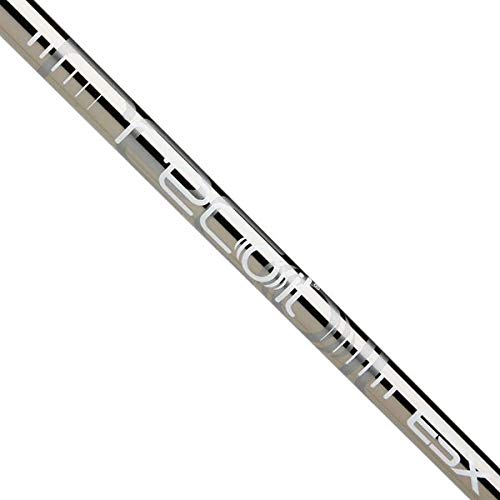
The UST Mamiya Recoil ESX series covers the 440 (F4 stiff), 450 (F3 regular+), and 460 (F2 senior) flex options in a single drop-down. Specs show a 64g weight for the F3 flex, making this a mid-weight graphite option for swing speeds between 80-95 mph. The Recoil wall technology produces a spring-like effect for energy transfer, while the stiffer mid and butt sections provide control that many lightweight graphite shafts lack.
Club builders rate these shafts highly for their consistent tip trimming instructions and the noticeable distance gains they deliver. The softer tip section produces a high launch, helping players with moderate swing speed maximize carry. Multiple buyers with senior and regular swing speeds reported that the Recoil ESX helped them gain 5-10 yards per iron over their previous steel shafts.
The 41-inch uncut length offers flexibility for building any iron in the set. The .370 parallel tip is compatible with most modern game-improvement heads, but not with .355 taper iron heads without reaming. The weight drops significantly between flexes—check the specific ESX model (440, 450, or 460) before ordering to ensure the right flex and weight combination.
Why it’s great
- Recoil wall technology adds spring-like distance
- High launch profile helps moderate swing speeds
- Multiple flex options in one SKU
Good to know
- .370 parallel tip only—not for taper tip heads
- Weight varies significantly between 440/450/460 models
FAQ
Should I buy steel or graphite shafts for my irons?
What does .355 taper tip mean compared to .370 parallel?
Can I install iron shafts myself as a beginner?
Final Thoughts: The Verdict
For most users, the best golf shafts for irons winner is the Project X Cypher because its ultra-light graphite construction blends effortless speed with high-launch control for the broadest range of players. If you want the active kick feel and progressive weight of steel, grab the Project X LZ. And for senior swing speeds seeking maximum distance without sacrificing feel, nothing beats the UST Recoil 460 ESX set.