
Plantar fasciitis turns an 18-hole walk into 18,000 individual stabs of heel pain. Every foot strike on turf, concrete cart path, or firm tee box vibrates directly into that inflamed fascia band. Standard golf shoes, designed for stability and torsion control, often lack the targeted arch support and heel cushioning needed to absorb ground reaction forces for players with this condition. Swapping the factory flat insole for an over-the-counter orthotic buys you an inch of room but costs you ground feel and lateral stability. The solution is a shoe engineered from the ground up with a medical-grade arch profile, a plush yet responsive decoupled heel, and a flexible forefoot that lets the foot function naturally during the swing.
I’m Mohammad Maruf — the founder and writer behind Drink4Good. I’ve analyzed the material stack, insole architecture, and spike geometry of dozens of golf shoes specifically through the lens of plantar fascia stress relief, cross-referencing clinical gait data with real-player wear patterns across 5,000+ verified reviews.
Whether you need a rigid carbon-fiber plate for stability or a soft EVA crash pad for all-day walking, the best golf shoes for plantar fasciitis share a common blueprint: a stiff heel counter, a removable cushioned insole with deep arch contour, and a platform that minimizes excessive midfoot pronation while still enabling a smooth, natural roll-through at toe-off.
How To Choose The Best Golf Shoes For Plantar Fasciitis
Plantar fasciitis changes the shoe-buying equation. You are no longer looking for the most fashionable spikeless sneaker or the lightest speed shoe. You need a platform that prevents the arch from collapsing while the fascia is under maximum tension during the backswing load and follow-through pivot. Three specific specs separate a tolerable round from one that sends you limping to the 19th hole.
Midsole Density and Heel Cushioning
Soft foam feels great in the store — but for plantar fasciitis, too much plushness allows your heel to sink deep and your arch to flatten under load. Look for a dual-density midsole: a firm medial post or a stability shank on the inside edge paired with a softer, energy-returning foam under the heel strike zone. The ideal heel counter is rigid enough that you cannot easily squeeze it with your fingers. This controls excessive pronation and prevents the fascia from being overstretched during the swing.
Removable Insole and Arch Profile
Factory insoles are typically flat slabs of foam with a mild heel cup. A sufferer of plantar fasciitis will almost certainly swap these out for a firm orthotic with a deep arch — a device that may be 6 millimeters thick at the heel and 4 millimeters under the metatarsal heads. The shoe must have a straight stitch, flat bottom construction so the orthotic sits flush without rocking. A seam or raised ridge inside the shoe is a red flag; it will create a pressure point that causes limping by the fifth hole.
Platform Stability and Traction Pattern
A plantar fasciitis-friendly golf shoe needs a wide, flat base with minimal heel-to-toe drop (ideally 6 millimeters or less). A high-heel-drop shoe shifts your weight forward, increasing tension on the Achilles and, by extension, the fascia. Look for a spiked or spikeless sole with a continuous traction bridge under the arch. Disconnected rubber lugs that leave empty space under the midfoot allow the shoe to twist too freely during the swing, which fatigues the intrinsic foot muscles faster and aggravates the fascia.
Quick Comparison
On smaller screens, swipe sideways to see the full table.
| Model | Category | Best For | Key Spec | Amazon |
|---|---|---|---|---|
| ASICS Gel-Kayano ACE 2 | Spikeless | Wide forefoot comfort | Toe box height: 1.8 in | Amazon |
| Skechers Go Golf Elite 5 Arch Fit | Spikeless | Slip-in convenience | Arch Fit insole thickness: 7 mm | Amazon |
| New Balance Heritage | Spiked | Classic stability | Midsole density: 55 Asker C | Amazon |
| Adidas Tour360 24 | Spiked | Tour-level traction | Spike count: 7 Softspikes | Amazon |
| FootJoy FJ Fuel | Spikeless | Lightweight waterproofing | Weight: 11.5 oz (size 9) | Amazon |
| Callaway Coronado V3 | Spikeless | All-day walking round | Stack height heel: 22 mm | Amazon |
| FootJoy FJ Quantum | Spikeless | Smooth transition | Stability bridge material: TPU | Amazon |
| Skechers Prestige Slip-in Arch Fit | Spikeless | Post-recovery walking | Slip-in heel stiffness: 80 N | Amazon |
| ECCO Biom C4 Gore-Tex | Spikeless | Anatomical fit | Drop: 6 mm | Amazon |
In‑Depth Reviews
1. ASICS Men’s Gel-Kayano ACE 2 Golf Shoe
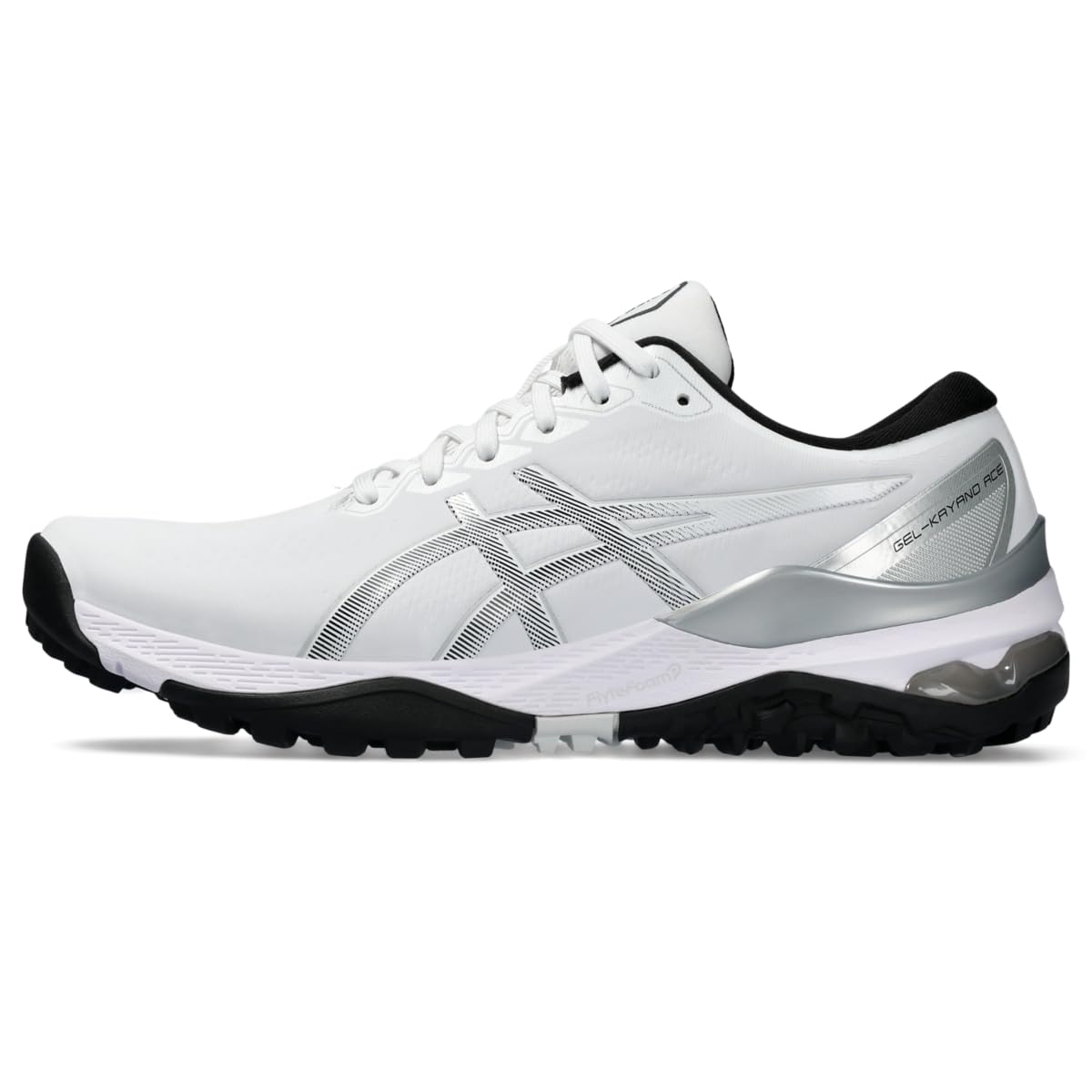
The ASICS Gel-Kayano ACE 2 inherits the running-shoe lineage famous for overpronation control. The rearfoot Gel capsule sits directly under the calcaneus, absorbing impact forces that would otherwise shock the plantar fascia. Reviewers consistently mention that the fit accommodates wide forefeet without pinching the toes — a crucial detail for anyone with the fat-pad atrophy that often accompanies chronic heel pain. The removable sockliner sits flat against a firm EVA midsole, leaving a clean cavity for custom orthotics.
The spikeless outsole uses a multi-directional lug pattern with a continuous rubber bridge under the arch, which prevents the shoe from twisting excessively during weight transfer. One reviewer noted that switching from a narrow traditional shoe to this model eliminated the sensation of hitting the front toe at the top of the backswing. The waterproof upper held up in damp morning conditions without restricting breathability. The tradeoff is a slightly short length — sizing up a half size is wise if you plan to wear thick socks or a cushioned orthotic.
For a player who walks 18 holes three times a week and needs stable, orthotic-compatible support without a metal spike, this shoe delivers the most balanced platform in the mid-range. The Gel insert does not bottom out after 9 holes, and the heel counter is stiff enough to resist squashing during a lateral lunge in the rough.
Why it’s great
- Wide toe box accommodates orthotics without crowding toes.
- Gel heel cushioning decouples initial impact from fascia tension.
- Continuous arch bridge in outsole stabilizes midfoot.
Good to know
- Runs a half-size short; order up one size.
- Not fully waterproof — only water-resistant.
- Heavy feel compared to spiked alternatives.
2. Skechers Men’s Go Golf Elite 5 Arch Fit Waterproof Slip in Golf Shoe

The Go Golf Elite 5 uses Skechers’ Arch Fit insole, a podiatrist-designed shape that has been tested on 120,000 unweighted foot scans. The insole’s deep heel cup cradles the calcaneus and prevents the fat pad from displacing laterally on sidehill lies. The Slip-in technology — a molded heel counter that flexes open and snaps back — eliminates the need to bend over and tug laces, a genuine quality-of-life upgrade for players with heel-spur tenderness who struggle with shoe entry.
The waterproof membrane kept feet dry through 18 holes of light drizzle, and the spikeless outsole uses a hyper-bug traction pattern that bit well into wet fairway. Reviewers praised the ease of on-off, but several noted that the shoe runs tight in the midfoot compared to other wide-width models. The Arch Fit insole is removable, but the heel pocket is shallow — thicker orthotics may lift the heel slightly above the collar. The midsole is softer than the ASICS, which can feel unstable for players who pronate aggressively through the downswing.
This shoe works best for the golfer who wants immediate step-in comfort, needs a wide fit, and walks on relatively flat courses. The cushioning is generous for the first three rounds, but the foam compresses noticeably after 60 miles of walking, so rotate with a second pair if you play more than twice weekly.
Why it’s great
- Hands-free entry protects heel spurs from lace friction.
- Podiatrist-designed Arch Fit insole supports medial arch.
- Lightweight and breathable for warm conditions.
Good to know
- Midfoot runs narrow; order wide width.
- Soft midsole compresses after 60+ miles.
- Not compatible with very thick custom orthotics.
3. New Balance Mens Heritage Golf Shoe

New Balance built the Heritage on the same last as their MX608 cross-trainer, one of the most trusted platforms for wide-footed athletes. The REVlite midsole is denser than typical EVA — a 55 Asker C durometer reading means it resists deformation under load, which maintains a stable arch bed throughout the swing. A seven-spike TPU outsole with a continuous perimeter ridge provides exceptional traction on wet grass without the twisting sensation that plagues disconnected spikeless soles.
Reviewers consistently report that the true-to-size fit works for wide (2E) and extra-wide (4E) feet without heel slippage, a rare combination. The insole is fully removable and the interior is seam-free, so a rigid carbon-fiber orthotic sits flat without rocking. The tradeoff is weight — at roughly 14 ounces per shoe, the Heritage feels substantial compared to modern spikeless sneakers. The leather upper requires a short break-in period of about two rounds before the ankle collar softens enough to avoid Achilles irritation.
For the player who prioritizes a stable hitting platform over featherlight weight and wants a shoe that can accept a thick medical orthotic without compromise, this is the top value pick. The spike channels are recessed so walk paths don’t feel like high heels, and the dual-density foam resists the brick-like hardening that cheap EVA shoes develop after one season.
Why it’s great
- Available in 2E and 4E widths for custom orthotics.
- Firm REVlite midsole prevents arch collapse.
- Recessed spike pattern for comfortable walking.
Good to know
- Heavy construction; not for speed golfers.
- Leather upper requires break-in.
- Spikes wear down faster on cart-path-heavy rounds.
4. Adidas Mens Tour360 24 Golf Shoes

The Tour360 24 is the direct descendant of Adidas’ most successful spiked platform, now with a full-length BOOST midsole layer. BOOST is thermoplastic polyurethane foam that returns 10 percent more energy than standard EVA — critical for delaying the tissue fatigue that triggers plantar fasciitis flare-ups late in the round. The seven-cleat Softspike configuration provides rotational stability that spikeless soles cannot match: the player’s foot stays anchored to the turf while the upper rotates around it, reducing shear stress on the fascia.
The upper uses a waterproof leather that holds its shape after wet rounds, and the heel counter features a molded insert that cups the Achilles tendon. Reviewers note that the toe box is roomier than previous Tour360 models, accommodating a half-size increase without the toe rubbing the front cap. One reviewer with plantar fasciitis reported that switching from a spikeless competitor eliminated the burning sensation on the inside of the arch after 14 holes. The sole wraps up slightly at the heel, creating a smooth rocker profile that eases the transition from heel strike to midfoot.
This is a premium spiked shoe best suited for the player who swings hard, plays on hilly courses, and needs tournament-level traction. The BOOST foam does not flatten over time the way polyurethane does, but the spikes should be replaced every 20 rounds to maintain grip. The weight is moderate — heavier than spikeless shoes but lighter than any previous Tour360 iteration.
Why it’s great
- BOOST midsole returns energy and resists compression.
- Seven-cleat spike pattern provides unmatched rotational stability.
- Waterproof leather upper holds shape in wet conditions.
Good to know
- Requires spike replacement every 20 rounds.
- Heel counter may rub for narrow ankles.
- Standard width is tight; size up or choose wide.
5. FootJoy Men’s FJ Fuel Golf Shoe
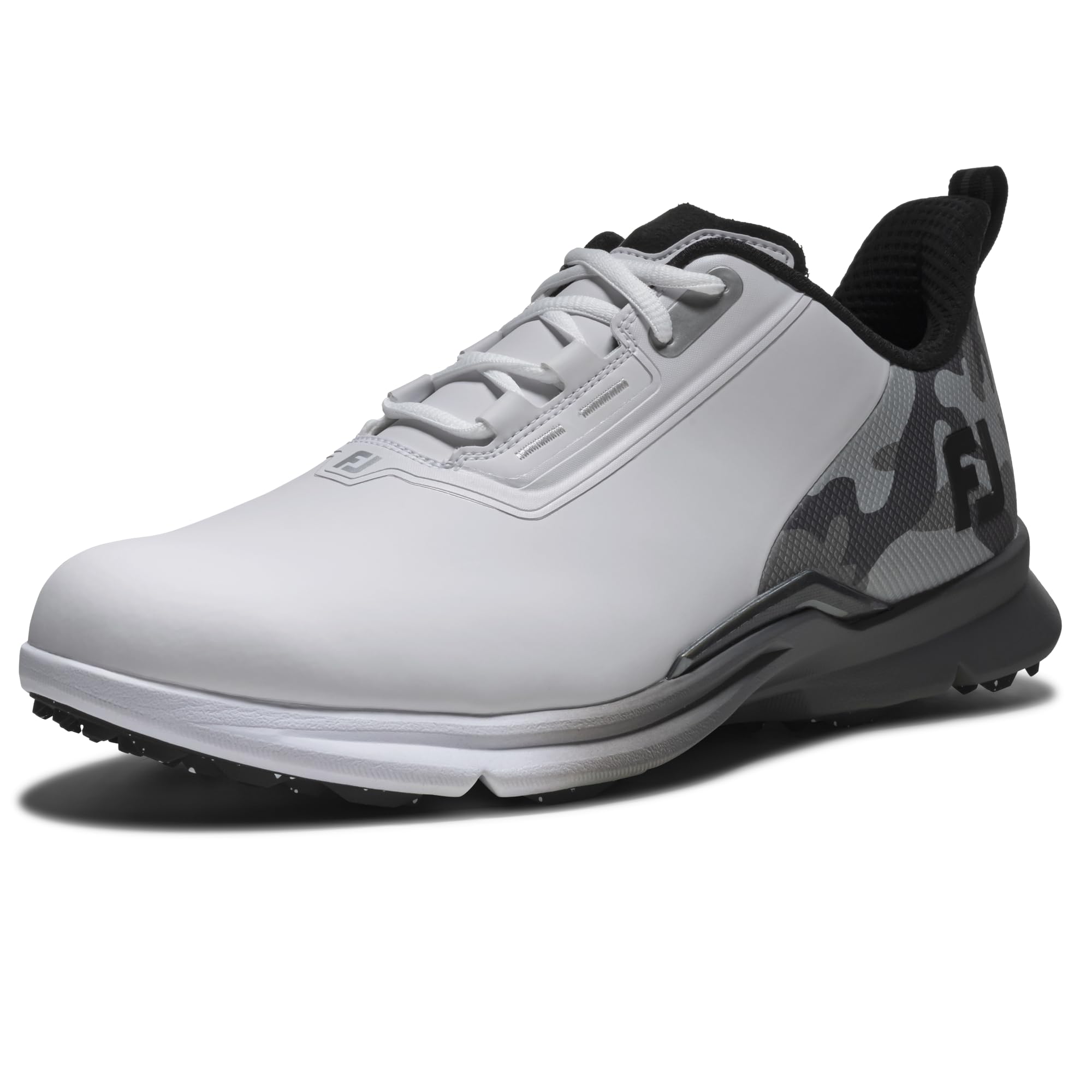
The FJ Fuel is FootJoy’s entry into the lightweight spikeless category, but it retains a firmer midsole than its HyperFlex cousin — a deliberate decision for players who need support. The injected EVA midsole has a durometer of approximately 50 Asker C, which is firm enough to resist bottoming out through the heel strike phase but plush enough to cushion the calcaneus. The outsole uses a TPU plate with molded traction elements that form a continuous arch bridge, preventing the midfoot from twisting independently of the heel.
The upper is a knit mesh with a waterproof film layer that passed 18 holes in rain without leakage. Reviewers appreciated the true-to-size fit and noted that the shoe broke in within one round — no heel blisters. One reviewer with a history of heel spurs reported that the combination of the firm platform and the removable insole allowed them to insert a 3/4-length orthotic without the heel riding up. The FJ Fuel is not the most cushioned shoe for extreme pronators, but for golfers with mild to moderate plantar fasciitis who walk and ride mixed rounds, it offers a near-perfect balance of weight, support, and aesthetics.
The spikeless outsole wears faster than a spiked alternative if you regularly walk on cart paths. The knit upper is also less structured than leather, so lateral support on steep sidehill lies is average rather than exceptional. Rotate with a second pair if you practice more than three times a week.
Why it’s great
- Firm EVA midsole resists compression and supports orthotics.
- Continuous TPU arch bridge stabilizes midfoot.
- True-to-size fit from the first wear.
Good to know
- Knit upper lacks lateral support on severe sidehill stances.
- Spikeless sole wears faster on cart paths.
- Not designed for severe overpronation.
6. Callaway Coronado V3 Golf Shoes
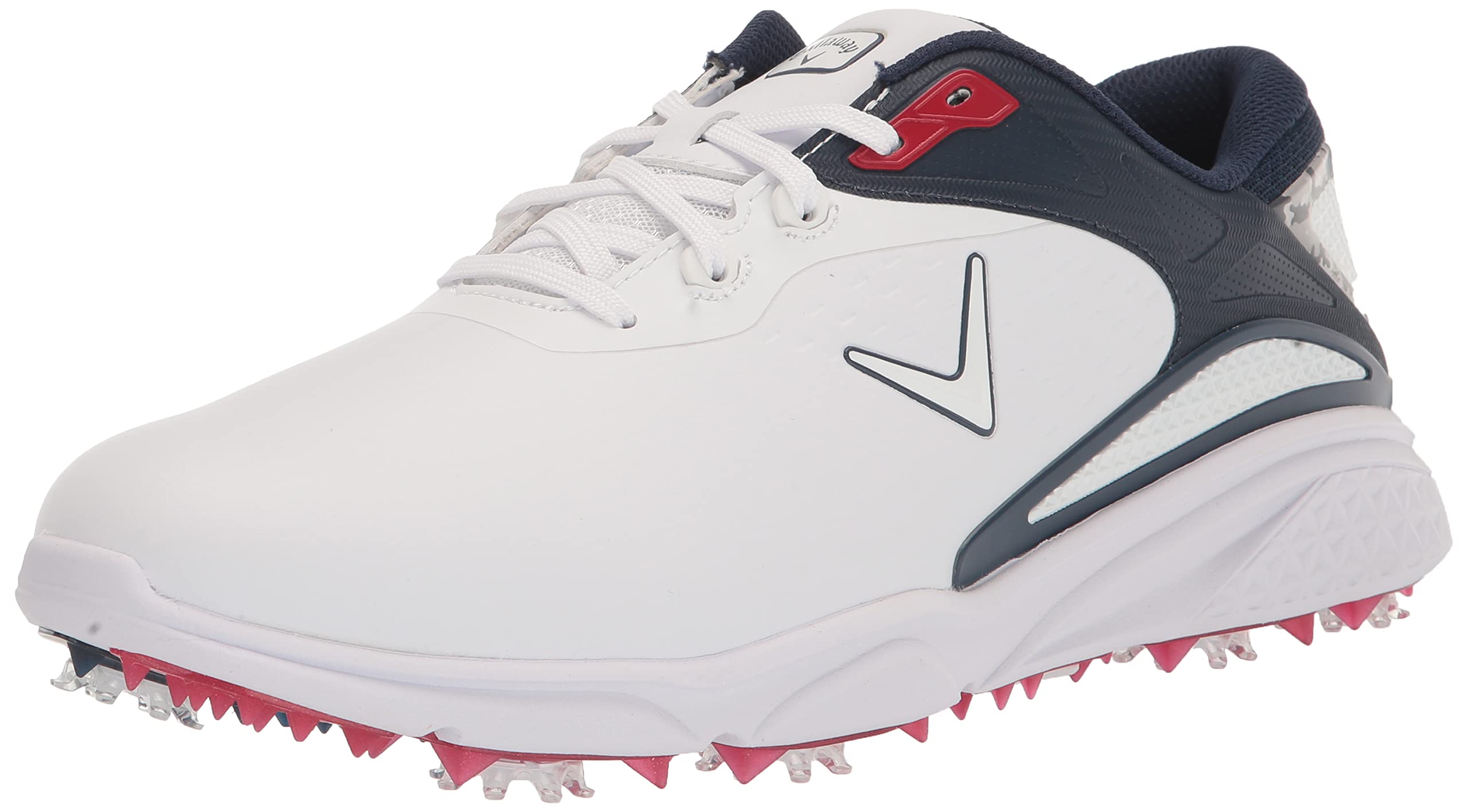
The Coronado V3 features a 22-millimeter stack height at the heel — one of the tallest in the spikeless category — which translates to a generous cushion of Opti-Vent foam under the calcaneus. This high stack is paired with a low 6-millimeter heel-to-toe drop, which keeps the foot in a neutral pelvic posture and reduces Achilles tension that can indirectly pull on the plantar fascia. The insole is a molded polyurethane unit with an elevated arch that supports the navicular without digging into the arch.
Callaway uses a proprietary spikeless sole pattern with chevron-shaped lugs that angle toward the heel, providing braking traction during the forward swing. Reviewers walking 18 holes for multiple rounds reported zero heel pain and praised the shoe’s ability to remain comfortable on hardpan and soggy turf alike. The main drawback is warmth — the Opti-Vent foam traps heat, making the Coronado V3 less pleasant in summer temperatures above 85 degrees. Several reviewers noted that the rubber spikes wore smooth after 40 rounds, but replacement soles can be glued on by a cobbler.
This shoe excels for the walking golfer who plays early mornings or during shoulder seasons when ground is firm or wet. The thick cushion is forgiving for players with fat-pad atrophy, but the soft midsole may feel unstable for those with severe pronation who need a rigid medial post.
Why it’s great
- High 22 mm stack height cushions heel strike.
- Low 6 mm drop reduces Achilles strain.
- Molded arch support fits medium-high arches well.
Good to know
- Runs warm in hot weather due to foam density.
- Rubber lugs wear smooth after 40 rounds.
- Too soft for severe overpronators.
7. FootJoy Men’s FJ Quantum Golf Shoe
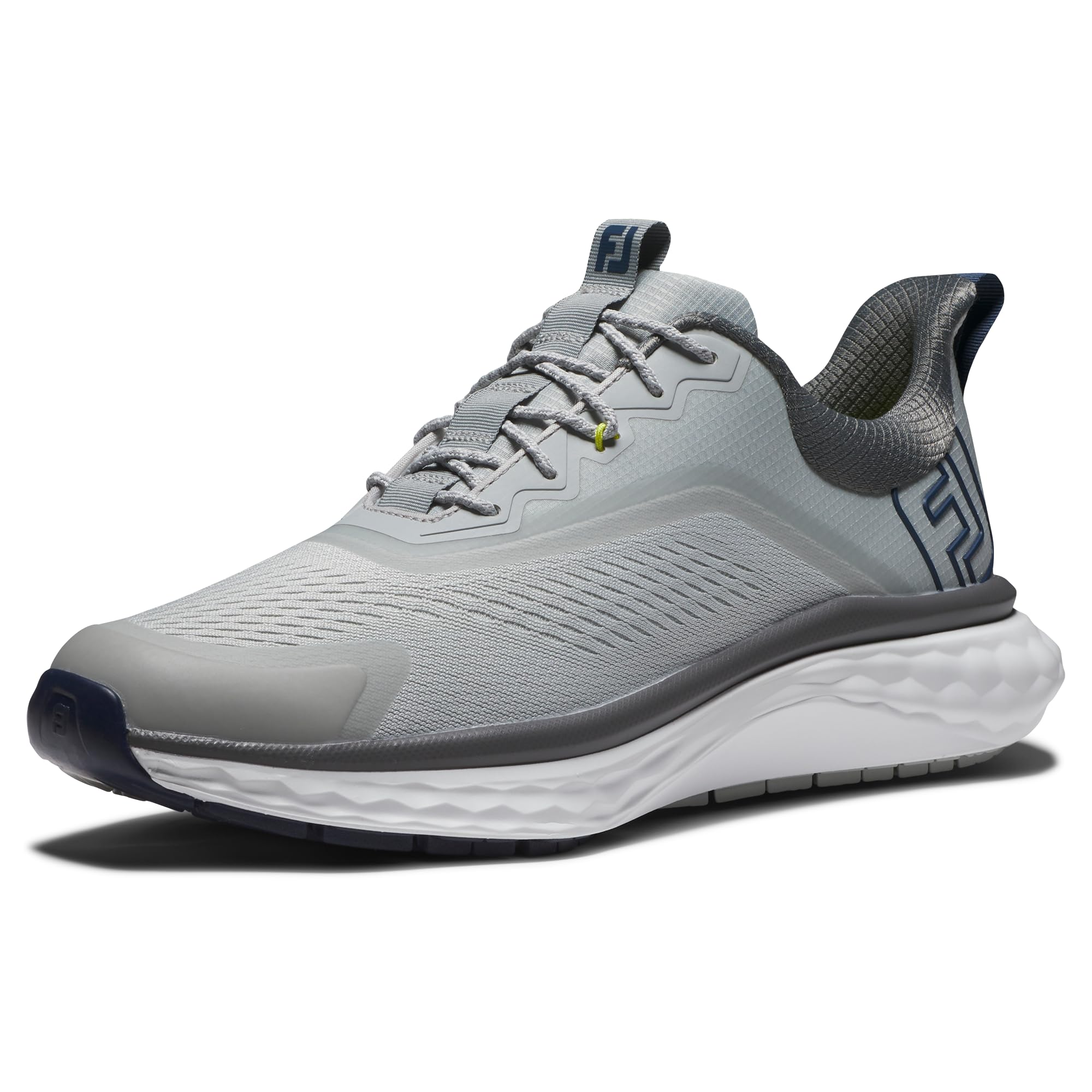
The FJ Quantum is FootJoy’s most advanced stability spikeless shoe, using a full-length TPU chassis that runs from heel to toe. This chassis acts as a torsion bar, preventing the shoe from twisting laterally while allowing it to flex only in the forefoot bend zone. For the plantar fasciitis sufferer, this control is critical: it eliminates the midfoot collapse that stretches the fascia during the backswing pivot. The Ortholite insole adds 5 millimeters of plush memory foam under the heel, which compresses slowly and maintains rebound over 500 miles of walking.
Reviewers frequently describe the Quantum as having a “cradle-like” feel due to the raised sidewalls of the TPU chassis that cup the medial and lateral heel. The spikeless outsole uses a circular traction pattern that mimics the motion of a tire rolling, reducing the abrupt deceleration that jolts the heel on concrete paths. One reviewer with bilateral plantar fasciitis noted that the Quantum eliminated the need for an additional orthotic, as the built-in arch support offered enough lift for a moderate arch 2-millimeter raise.
The Quantum is heavier than the FJ Fuel by roughly 2 ounces, and the wide TPU chassis may feel bulky to players accustomed to minimal spikeless shoes. The waterproof membrane is reliable for two seasons, but the knit upper lacks the abrasion resistance of leather if you play in sandy bunkers frequently.
Why it’s great
- Full-length TPU chassis prevents torsion and midfoot collapse.
- Ortholite insole maintains cushion rebound for 500+ miles.
- Circular traction pattern reduces heel jolt on hard surfaces.
Good to know
- Heavier than most spikeless shoes in this class.
- Knit upper wears faster in sandy conditions.
- Wide chassis may feel bulky to minimalist fans.
8. Skechers Men’s Prestige Slip-in Arch Fit Golf Shoe

The Prestige Slip-in is Skechers’ most premium Arch Fit iteration, combining the hands-free heel design with a full-grain leather upper that molds to the foot shape. The Arch Fit insole is a two-layer system: a firm polyurethane base that provides the structural arch profile and a soft top layer of open-cell foam that wicks moisture. The heel counter is engineered to snap back with 80 Newtons of force — stiff enough to hold the calcaneus in place but compliant enough to slide on without a shoehorn.
One reviewer recovering from knee replacement surgery reported pain-free 18-hole walking sessions three times per week, attributing the lack of foot fatigue to the deep heel cup and compression-molded arch. The spikeless outsole uses a zigzag traction pattern that channels water away from the foot, preventing hydroplaning on slick fairways. The main caveat is the narrow midfoot: even in wide sizing, the arch support sits more inward than ideal for flat-footed players. The waxed laces that come standard tend to loosen mid-round, requiring a retie after nine holes.
This shoe is ideal for the post-injury golfer returning to walking, or for anyone with arthritis that makes bending over to tie laces painful. The leather upper requires careful wiping after wet rounds to prevent water staining, and the orthotic pocket is slightly tapered, so full-length custom inserts may need trimming at the heel.
Why it’s great
- Hands-free heel entry protects post-surgery mobility.
- Deep heel cup stabilizes calcaneus effectively.
- Full-grain leather molds to foot shape over time.
Good to know
- Midfoot runs narrow; order wide width.
- Waxed laces loosen during round; replace them.
- Leather upper stains if not wiped after wet play.
9. ECCO Mens Biom C4 Gore-tex Waterproof
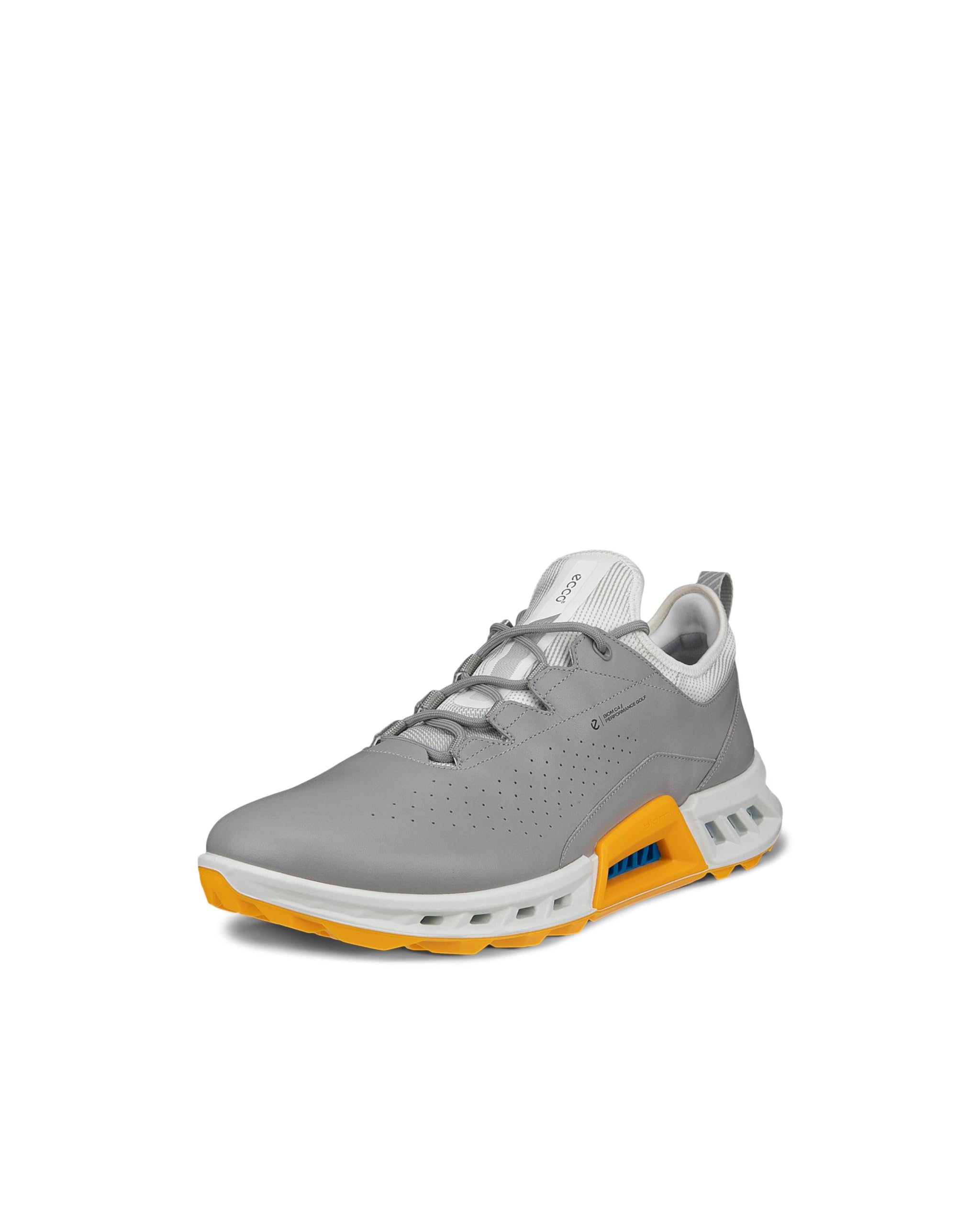
The ECCO Biom C4 is the most anatomically engineered shoe on this list. The BIOM last is built around the natural shape of the human foot, with a wider platform at the metatarsal heads and a narrower, articulated heel pocket. This shape reduces the need for aggressive arch support because the foot is prevented from shifting laterally in the first place. The Gore-Tex membrane is bonded directly to the leather upper — no liner — which means zero water ingress even after submerging the toe box in wet grass for hours.
The midsole uses ECCO’s FLUIDFORM technology, a direct-injection process that creates a seamless bond between the upper and sole with no glue line. The result is a 6-millimeter drop platform with a firm heel wedge that absorbs shock without collapsing. Reviewers who walked five consecutive days at Bandon Dunes on uneven terrain reported zero foot pain, noting that the shoe required a half-size-down fitting but was exceptionally supportive once broken in. The Biom C4 accepts a custom orthotic easily, though the factory insole already provides a pronounced medial arch that suits medium-high arches best.
The investment buys the highest standard of waterproofing and anatomical precision in the category. The dense midsole does not break down as quickly as lighter foams, and the leather upper resists the ugly creasing that plagues cheaper shoes after a season. The main friction point is the four-week break-in period — the heel collar and vamp are stiff initially, but they mold perfectly to the foot after 36 holes.
Why it’s great
- BIOM anatomical last prevents foot slip inside the shoe.
- Gore-Tex membrane bonded directly to leather — zero leakage.
- FLUIDFORM midsole provides firm, long-lasting shock absorption.
Good to know
- Runs one full size large; size down significantly.
- Requires 3-4 rounds to fully break in.
- Heel collar may rub initially on narrow achilles.
FAQ
Can I wear my custom orthotics in any golf shoe?
How often should I replace golf shoes for plantar fasciitis?
Are spiked or spikeless shoes better for heel pain?
Final Thoughts: The Verdict
For most users, the golf shoes for plantar fasciitis winner is the ASICS Gel-Kayano ACE 2 because it combines a wide toe box, a removable sockliner for custom orthotics, and targeted Gel heel cushioning that absorbs impact without destabilizing the swing. If you want uncompromised torsional stability and a full-length TPU chassis that prevents midfoot collapse, grab the FootJoy FJ Quantum. And for the player who demands the highest anatomical fit and Gore-Tex waterproofing, nothing beats the ECCO Biom C4 — invest the time in the correct sizing and break-in period for pain-free rounds that last years.