
For most golfers, the difference between a great round and a frustrating one comes down to knowing exactly how far you hit each club and making smart decisions based on real data, not guesswork. A quality tracking system removes the mystery from your bag, giving you precise yardages, shot patterns, and the insights you need to lower your scores.
I’m Mohammad Maruf — the founder and writer behind Drink4Good. I’ve spent hundreds of hours analyzing the hardware specs, user experiences, and long-term value of every major golf shot tracker on the market to build this definitive guide.
Whether you want a clip-on GPS, a full shot-tracking sensor set, or a launch monitor for practice, this guide to the best golf shot tracking system will help you find the perfect fit for your game and budget.
How To Choose The Best Golf Shot Tracking System
Choosing a golf shot tracker starts with understanding how you play and what data you actually need. A GPS-only device gives you front, center, and back distances to the green, while a full shot-tracking system records every swing and builds a performance profile. Launch monitors focus on ball flight and club data for practice sessions. Your decision should balance accuracy, ease of use, battery life, and any ongoing subscription costs.
GPS Accuracy and Course Coverage
The core job of any tracker is delivering reliable yardages. Look for devices with at least 38,000 preloaded courses to ensure coverage at your home course and during travel. Models with automatic course and hole recognition save time, but some units require manual hole changes when you start on the back nine. Satellite lock speed varies — higher-end units with multi-GNSS support acquire signals faster in wooded or hilly terrain.
Subscription Costs vs. One-Time Purchase
Some of the most advanced shot-tracking systems require an annual membership after the first free year. Arccos sensors, for example, give you a free first year but then charge a recurring fee for app access and data analysis. Other models like the Shot Scope V5 or Garmin Approach G12 have no subscription — you buy the hardware once and use it indefinitely. Factor in these long-term costs when comparing value.
Form Factor and On-Course Convenience
Clip-on units attach to your belt, bag, or cart handle and are always within sight. Watch-style trackers stay on your wrist but can feel bulky during your swing. Handheld devices with touchscreens offer intuitive menus but require you to carry one more item. Magnetic cart mounts are convenient if you ride, but be careful not to leave the device attached when you return the cart. Consider how the device fits into your existing setup and whether you prefer glance-and-go yardages or a more detailed interface.
Quick Comparison
On smaller screens, swipe sideways to see the full table.
| Model | Category | Best For | Key Spec | Amazon |
|---|---|---|---|---|
| Bushnell Phantom 3 Slope | GPS | Slope-adjusted distances on the course | 18-hour battery, 38K courses | Amazon |
| Arccos Smart Sensors | Sensors | Automatic shot tracking with AI caddie | 14 sensors, wind/temp adjusted | Amazon |
| Shot Scope V5 GPS Watch | Watch | No-subscription shot tracking on wrist | 36K courses, 100+ stats | Amazon |
| Garmin Approach G80 | Handheld | GPS plus integrated launch monitor | 41K courses, launch radar | Amazon |
| Bushnell Wingman View | Speaker/GPS | Music and audible GPS in one unit | LCD screen, hazard view | Amazon |
| Voice Caddie SC4 PRO | Launch Monitor | Pro-grade launch data for home practice | Doppler radar, 3D range | Amazon |
| Rapsodo MLM2PRO | Launch Monitor | Tour-level data with simulator access | Doppler + dual cameras | Amazon |
| Garmin Approach G12 | Clip-On GPS | Ultra-compact GPS for any bag | 42K courses, 30-hour battery | Amazon |
| SkyTrak Launch Monitor | Launch Monitor | Photometric accuracy for simulator setups | Camera system, 4-hour battery | Amazon |
In‑Depth Reviews
1. Bushnell Golf Phantom 3 Slope GPS
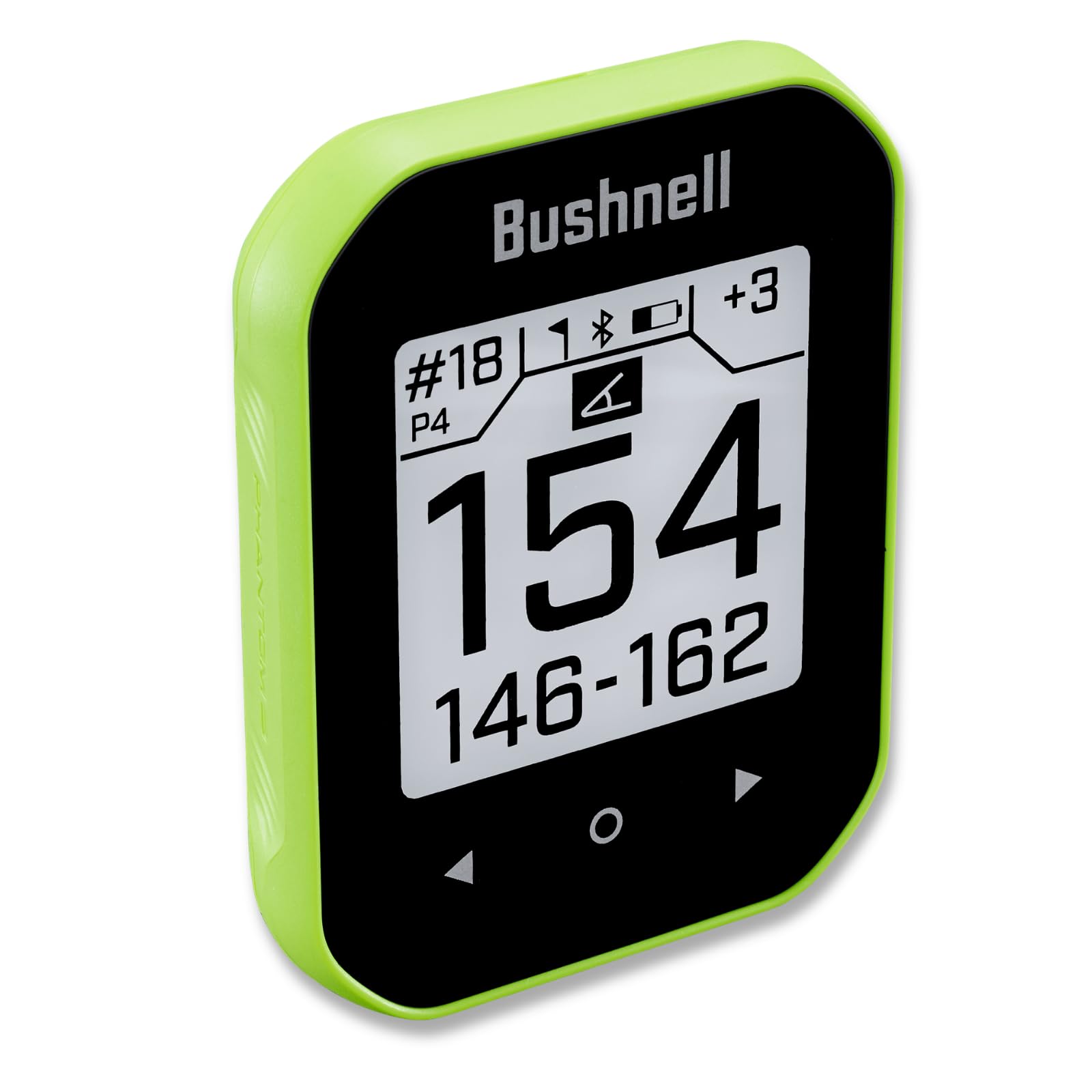
The Bushnell Phantom 3 Slope delivers exactly what its name promises — slope-adjusted distances through Bushnell’s patented technology, displayed on an easy-to-read touchscreen. With 38,000+ preloaded courses, auto course and hole recognition, and a built-in BITE magnet that secures firmly to any cart bar, this handheld GPS is built for the golfer who wants quick, reliable numbers without fiddling with a laser. The 18-hour battery life comfortably covers four rounds on a single charge, so you won’t stress about battery mid-round.
The touchscreen interface is intuitive, showing front, center, and back distances in large, legible numbers. Hazard distances are also displayed, giving you a clear picture of what lies ahead. The Phantom 3 syncs with the Bushnell app for course updates and score tracking, but the unit works perfectly standalone if you prefer to keep things simple.
Some users report a learning curve for advanced features like hazard codes, and the clip is less reliable than the magnetic mount. The screen readability is excellent even without glasses, though direct sunlight can cause minor glare. Overall, this is one of the most accurate and convenient GPS units at its price point, especially if you value slope adjustments.
Why it’s great
- Patented slope technology for precise yardages on hilly courses
- Excellent 18-hour battery life
- Strong magnetic cart mount for quick viewing
Good to know
- Advanced features like hazard codes require reading the manual
- Clip attachment is less secure than the magnet
2. Arccos Smart Sensors Gen 3+

The Arccos system screws onto the butt end of each club, turning your entire bag into a data-collection machine. The GEN 3+ set includes 13 regular sensors and one putter sensor, all weather-resistant and lightweight. Once paired with your smartphone, the Arccos Caddie app automatically detects every shot, logs distances, and uses artificial intelligence to suggest club choices based on real-time wind, elevation, temperature, and humidity. This is the official game tracker of the PGA Tour, and the level of detail is remarkable for a consumer product.
Installation is straightforward — screw each sensor onto your grip, set up the app, and start playing. The system requires the phone to be in your pocket or bag, so there’s no screen to glance at during the round. After the round, the app gives you strokes gained analysis, handicap benchmarking, and a full breakdown of your strengths and weaknesses.
The biggest catch is the subscription: the first year is free, but after that you pay an annual fee for full app access. Some users also note occasional missed shots, especially with partial swings or chips. If you’re committed to data-driven improvement and don’t mind the recurring cost, this is the most comprehensive automatic system available.
Why it’s great
- Fully automatic shot tracking — no tapping or buttons required
- AI caddie adjusts for wind, elevation, temp, and humidity in real time
- Detailed strokes gained and performance analytics
Good to know
- Requires annual subscription after the first free year
- Occasional missed shots with partial swings
3. Shot Scope V5 GPS Watch

The Shot Scope V5 pairs a comfortable GPS watch with 16 screw-in shot tracking tags for automatic club detection. With 36,000 preloaded courses, full hole maps, and yardages to greens, hazards, layup points, and doglegs, it offers all the data you need without a single subscription fee. The watch displays front, middle, and back distances clearly, and you can quickly measure distances to any point on the hole map using the button interface.
Performance tracking is automatic — the watch detects each shot, identifies the club used, and logs the location. After the round, the Shot Scope app shows over 100 statistics, including Strokes Gained and Handicap Benchmarking. The battery lasts approximately 36 holes in GPS mode, easily covering two rounds before needing a charge.
Some users report inconsistent shot tracking, with missed shots or incorrect club assignments requiring manual correction during post-round editing. The display is dimmer than some competitors, making it harder to read in bright sunlight. However, for golfers who want comprehensive data without ongoing costs, the V5 is one of the best values on the market.
Why it’s great
- No subscription — buy once, use forever
- Automatic club detection with grip tags
- Detailed Strokes Gained and handicaps analysis
Good to know
- Shot tracking can miss or mislabel shots occasionally
- Display brightness is lower than some competitors
4. Bushnell Golf Wingman View

The Bushnell Wingman View combines a premium Bluetooth speaker with an audible and visual GPS rangefinder, all housed in a single rugged unit. The built-in LCD screen displays distance readings and music information, while the included remote lets you press a button for audible front, center, and back yardages from 36,000+ courses. It also provides up to six audible and viewable hazard distances per hole, which is a huge advantage on blind shots or unfamiliar courses.
Audio quality is loud and clear, making it easy to stream music or podcasts during your round. The magnetic cart mount holds the speaker securely to the cart bar, and the removable remote can be attached to your belt or bag for convenient access. The battery lasts a full 18 holes with music playing, and the IP54 weather resistance protects against light rain and splashes.
Syncing the device with your phone can be a bit finicky initially, and some users find the remote difficult to remove from its holder. The yardage display does not rotate, so it may be hard to read from certain seats in the cart. If you enjoy music on the course and want GPS without pulling out your phone, this is a unique and effective solution.
Why it’s great
- Combines premium Bluetooth audio with full GPS functionality
- Provides audible and viewable hazard distances
- Strong magnetic cart mount for secure attachment
Good to know
- Initial Bluetooth sync can be frustrating
- Remote is difficult to detach from its holder
5. Garmin Approach G80

The Garmin Approach G80 is an all-in-one handheld that blends a premium GPS rangefinder with an integrated launch monitor. The 3.5-inch sunlight-readable touchscreen displays full-color course maps for more than 41,000 courses. The built-in radar measures club head speed, ball speed, smash factor, swing tempo, and estimated distance — data typically reserved for launch monitors costing twice as much. This makes the G80 equally useful on the course for precise yardages and at the range for swing analysis.
The GPS mode includes auto course and hole recognition, green view with manual pin positioning, and distances to hazards and doglegs. The launch monitor mode works without special balls and provides instant feedback after each swing. Practice modes like Tempo Training and Distance Training help you build consistency. The battery lasts up to 15 hours with GPS, covering multiple rounds.
The launch monitor accuracy is not at the level of dedicated units like the TrackMan — ball flight distance can be off by 5-10 yards, and swing speed readings sometimes fluctuate above 100 mph. The mounting clip is also flimsy for the price. Still, for golfers who want a single device that handles GPS and basic launch data, the G80 is a unique and capable tool.
Why it’s great
- Combines high-quality GPS with a usable launch monitor
- Sunlight-readable color touchscreen with course maps
- Practice modes for tempo and distance training
Good to know
- Launch monitor accuracy is not pro-level — expect some variance
- Mounting clip feels cheap for the premium price
6. Voice Caddie SC4 PRO Launch Monitor

The Voice Caddie SC4 PRO uses a Prometrics Doppler radar engine to deliver pro-grade launch data — ball speed, club head speed, carry distance, spin rate, launch angle, and more — both indoors and outdoors. It comes with a built-in 3D Driving Range and includes access to the E6 Connect home golf simulator, giving you virtual course play without additional subscription fees. Setup is simple, and the device works with standard golf balls, so there are no special consumables to buy.
Multiple training modes, including Practice/Target Mode and Speed Training, keep practice sessions focused and engaging. The unit is portable and lightweight, making it easy to move from the garage to the backyard. The companion VOICECADDIE S app unlocks detailed statistical analysis, distance calibration, and swing speed radar for deeper insights.
Some users report occasional inaccuracies with shot direction reversal (right showing as left) and carry distances being off by up to 40 yards on specific shots. For consistent results, you need at least 14 feet of ball flight distance indoors. The SC4 PRO is a strong option for budget-conscious golfers building a home simulator, though hardcore data enthusiasts may want to step up to a camera-based system.
Why it’s great
- Excellent value for a home simulator launch monitor
- Includes 3D Driving Range and E6 Connect access
- Works with standard golf balls — no special equipment needed
Good to know
- Shot direction can be reversed on some readings
- Requires 14+ feet of ball flight for best accuracy indoors
7. Rapsodo MLM2PRO Launch Monitor
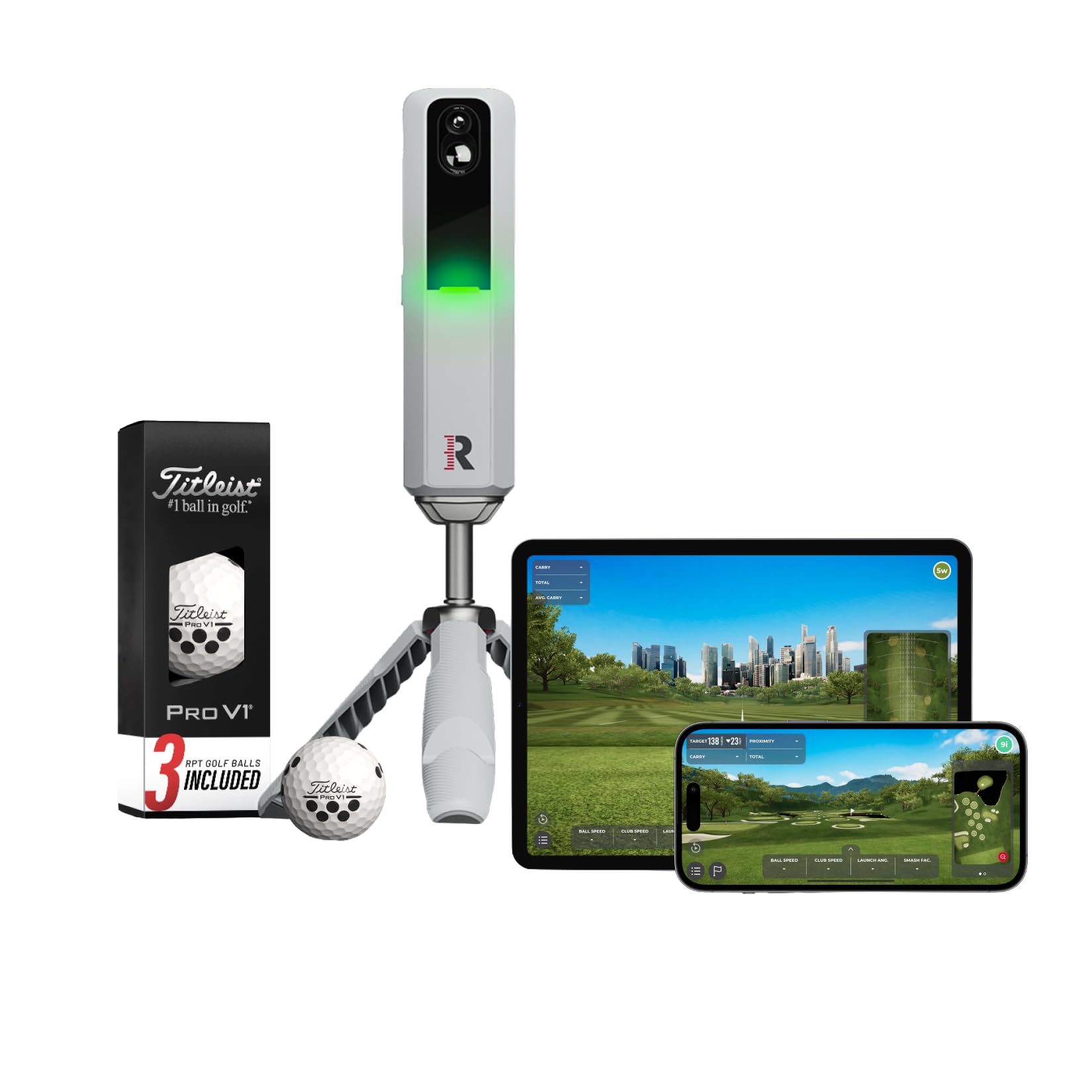
The Rapsodo MLM2PRO combines Doppler radar with dual high-speed cameras to capture 15 key metrics, including spin rate, spin axis, carry distance, club speed, club path, and launch angle. The camera system captures slow-motion impact video, allowing you to see exactly where the ball makes contact with the clubface. This level of detail is rare at this price point and makes the MLM2PRO a powerful training tool for both range practice and home simulator use.
It comes with a 45-day premium trial that unlocks simulated courses, third-party app integration, target range, impact vision, Rapsodo Combine, and speed training. After the trial, a paid membership is required for full access. The unit is lightweight, includes a tripod and carrying case, and connects wirelessly to your smartphone or tablet for easy data viewing.
Connectivity can be a pain point — the unit creates its own WiFi network, which can struggle with interference in crowded environments. Short chips under 6-8 feet are often not read. The required Callaway Rapsodo balls wear out quickly and are expensive to replace. Despite these quirks, the MLM2PRO delivers tour-level data accuracy (within 2-3% of TrackMan) for a fraction of the price, making it a top pick for serious golfers building a home practice setup.
Why it’s great
- Dual camera and Doppler radar capture 15 metrics including spin axis and club path
- Slow-motion impact video for detailed swing analysis
- Includes premium trial with 30,000+ simulated courses
Good to know
- Requires paid membership after 45-day trial for full features
- Short chips under 6-8 feet may not register
8. Garmin Approach G12

The Garmin Approach G12 is a tiny, clip-on GPS that punches far above its size. It measures just 1.8 inches square and 0.5 inches thick, yet comes preloaded with over 42,000 courses worldwide. It clips securely to your belt, bag, or cart, giving you instant access to front, back, and middle yardages, plus hazard and dogleg distances. The big numbers mode is a thoughtful touch for quick reading, and the IPX7 water resistance means you can keep playing in rain without worry.
Battery life is a standout feature — up to 30 hours in GPS mode, which translates to roughly five to six rounds of golf. The G12 syncs with the Garmin Golf app for digital scorecards, weekly leaderboards, and club tracking when paired with Approach CT10 sensors. The auto course and hole recognition works reliably, though satellite lock can be slower in some areas.
The belt clip is not the most secure, and the small size makes it easy to lose — users strongly recommend using the included lanyard. The lack of a touchscreen means you navigate using a single button, which takes some getting used to. For a no-fuss, clip-and-go GPS that lasts all season, the G12 is an excellent entry-level choice.
Why it’s great
- Ultra-compact and lightweight — fits anywhere
- Exceptional 30-hour battery life
- IPX7 water resistant for rainy rounds
Good to know
- Clip is not very secure; use the lanyard to avoid losing it
- Single-button navigation takes some practice
9. SkyTrak Golf Launch Monitor

The SkyTrak uses high-speed photometric technology — essentially a high-speed camera — to capture ball launch data, including ball speed, launch angle, backspin, sidespin, and calculated carry and total distance. It projects a 3D ball flight on your connected device, giving you immediate visual feedback. Unlike radar-based units, SkyTrak does not require a long ball flight, making it ideal for small indoor spaces and garage simulators.
The unit is compact and wireless, with a built-in rechargeable battery that lasts up to 4 hours of continuous use. It connects to iOS, Android, and PC devices via WiFi, and the included 30-day game improvement software trial gives you a taste of the features. For full simulation and course play, you can add SkyTrak’s game improvement or simulation packages at an additional cost.
Accuracy is generally good, though some users report distances being consistently 10-15 yards short compared to on-course numbers, and occasional missed shots are common. The unit must be perfectly level and aligned for best results, and it works best with a protective case. For golfers who primarily want to practice at home and don’t need the high sampling rate of a TrackMan, SkyTrak remains a benchmark in the camera-based launch monitor category.
Why it’s great
- Camera-based system works well in small indoor spaces
- Portable with built-in rechargeable battery
- Detailed ball flight visualization and data
Good to know
- Distances can read 10-15 yards short; may need calibration
- Requires perfect leveling and alignment for best results
FAQ
What is the difference between a GPS rangefinder and a shot tracking system?
Do I need a subscription to use golf shot tracking devices?
Can I use a launch monitor indoors without special golf balls?
How accurate are GPS golf devices compared to laser rangefinders?
What battery life should I expect from a golf shot tracker?
Final Thoughts: The Verdict
For most users, the best golf shot tracking system winner is the Bushnell Phantom 3 Slope because it combines accurate slope-adjusted GPS, a long battery life, and an intuitive touchscreen at a very reasonable mid-range price. If you want automatic shot tracking and AI-powered insights, the Arccos Smart Sensors are the most comprehensive data system, despite the subscription. For golfers building a home simulator on a budget, the Voice Caddie SC4 PRO offers impressive launch data and driving range access without breaking the bank.