
Adding ten yards to your drive isn’t about brute force—it’s about sequencing your body’s power through the ball at the right moment. A Golf Speed Trainer bridges the gap between raw strength and efficient motion, teaching your muscles to release the club head with maximum velocity without sacrificing control. Without one, most golfers leave distance on the table, relying on an arm-dominated swing that bleeds speed before it ever reaches the ball.
I’m Mohammad Maruf — the founder and writer behind Drink4Good. I break down the mechanics, materials, and build quality of training aids that promise real performance gains, analyzing user feedback and design specs to find the tools that actually deliver measurable speed improvements.
This guide focuses on the best golf speed trainer options, cutting through marketing claims to highlight the devices that effectively build club head speed through proper tempo, lag, and ground force mechanics.
How To Choose The Best Golf Speed Trainer
Selecting a speed trainer means understanding which physical constraint it targets. Some devices focus on swing path and plane, others on tempo and lag, and a few on the ground force transfer that generates raw club head speed. The right choice depends on your swing flaw and your willingness to commit to daily repetition.
Weighted Shaft vs. Plane Guide
A weighted-shaft trainer, like a swing stick or lag trainer, exaggerates the feel of the club head to help you delay your release. This builds lag and whip speed. A plane guide, like a speed trap with alignment rods, gives instant feedback on path and face contact, fixing the slice or hook that robs distance. Determine first if your speed loss is mechanical (path), or purely about force production (lag and ground pressure).
Ground Reaction Force (GRF) Trainers
Many golfers overlook their lower body. The Force Pedal type trainers isolate the ground pressure transfer from trail foot to lead foot. Proper GRF sequencing can independently increase club head speed by 3-8 mph. If your swing feels upper-body heavy, a GRF trainer is likely a more effective investment than another weighted stick.
Portability and Durability
Consistency comes from daily use. A trainer that stores easily in your golf bag or home office will get far more swings than one that requires a trip to the range. Look for items under 40 inches if you intend to use them indoors, and check grip material for sweat absorption and long-term wear. Rubber grips with a non-slip texture last longer than hard plastic alternatives.
Quick Comparison
On smaller screens, swipe sideways to see the full table.
| Model | Category | Best For | Key Spec | Amazon |
|---|---|---|---|---|
| EyeLine Golf Speed Trap 2.0 | Plane Guide | Path and face correction | Polycarbonate base, 17.5″ | Amazon |
| Ripcoil RP6 | Whippy Shaft | Hittable driver shaft for tempo | 42.5″ Graphite shaft, Titanium head | Amazon |
| SKLZ Gold-Flex | Weighted Swing Stick | Full tempo and lag training | 48″ length, 1.5 lb weight | Amazon |
| Callaway Swing Stick Lag Trainer | Lag Trainer | Warm-up and flexibility | 37.5″ length, 1 lb weight | Amazon |
| The Force Pedal | GRF Aid | Lower body ground force transfer | Two silicone discs: firm and soft | Amazon |
| Tour Striker Smart Ball | Connection Drill | Arm-body synchronization | 6″ inflatable ball, ABS plastic | Amazon |
| Balight Swing Trainer Aid | Weighted Swing Stick | Entry-level tempo and form | 48″ length, 2.5 lb weighted head | Amazon |
In‑Depth Reviews
1. EyeLine Golf Speed Trap 2.0

The Speed Trap 2.0 is less a swing stick and more a diagnostic laboratory. Its polycarbonate base is wide enough to fit a driver, and the tether-mounted foam pillars provide immediate, unambiguous feedback on whether your club path is inside-out or over-the-top. Hitting the pillars tells you exactly where your swing plane breaks down—no guesswork, no video review required.
The impact zone markers show whether you’re catching the ball before the turf or scooping through, which directly affects compression and distance. For golfers fighting a slice or a hook, this device isolates path correction faster than any weighted stick. Multiple users reported eliminating an out-to-in swing within weeks and gaining significant yardage off the tee as a result.
It works for both right and left-handed players, and the tethers keep the rods from scattering after a direct hit. The only caveat is that this is best for someone who already has a semi-grooved swing and needs fine-tuning—complete beginners might find the instant correction less forgiving than a weighted tempo aid.
Why it’s great
- Instant path feedback stops slicing within sessions.
- Wide base fits driver and fairway woods comfortably.
- Tethered rods reduce setup frustration.
Good to know
- Less effective for raw lag or speed development.
- Base is plastic—heavy mishits may risk cracking.
2. Ripcoil RP6
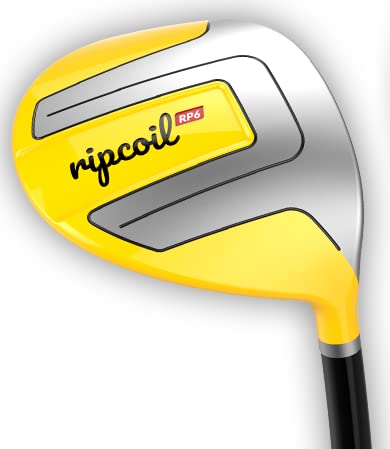
The Ripcoil RP6 is unique: it’s a training aid with a driver head you can actually hit off a tee. The whippy graphite shaft is designed to simulate the lag and release of a proper swing, and the titanium head provides real feel at impact. At 42.5 inches, it’s slightly shorter than a standard driver, encouraging a more compact, repeatable motion.
Users reported that after two weeks of practice, their rotation improved significantly and their body sequencing became more synchronized. The exaggerated whip penalizes casting (early release) instantly—if you throw the clubhead at the ball too early, the shot goes nowhere. That feedback loop is incredibly effective for building muscle memory for delayed release.
The instructions are a bit sparse, and some users found the shaft not whippy enough to fully feel the head weight during a smooth swing. For best results, start with half-speed hits and progress gradually. Despite these small quirks, it’s one of the few aids on this list that allows you to practice with real ball flight while still grooving speed and tempo.
Why it’s great
- You can actually hit real golf balls with it.
- Whippy shaft teaches delayed release naturally.
- Right-handed and left-handed compatible.
Good to know
- Instructions are basic; supplemental video guidance needed.
- Some feel the head weight isn’t heavy enough for tempo awareness.
3. SKLZ Gold-Flex Swing Trainer

The SKLZ Gold-Flex is one of the most recognized weighted swing sticks on the market, and for good reason. Its exaggerated flex in the shaft promotes a longer backswing and a controlled lag, while the weighted ball end helps groove proper tempo. At 48 inches, it’s longer than a standard driver, forcing you to maintain a wider arc and stay on plane throughout the swing.
The built-in grip guide reinforces proper hand placement, which is often overlooked in speed training. Users consistently report adding 10-20 yards of distance after a month of daily swings. The stick is heavy enough to build golf-specific muscle strength, yet flexible enough to encourage a smooth, rhythmic motion rather than a jerky one.
It’s ambidextrous and fits in most carry golf bags, making it easy to warm up before a round. The main drawback is that the grip is not replaceable—once it wears out, the stick is essentially done. For the cost, it remains a solid all-in-one tempo and speed tool suitable for both casual weekend players and more serious competitors.
Why it’s great
- Exaggerated shaft flex teaches lag and pause at top effectively.
- Grip guide builds consistent hand placement.
- Weighted head builds golf-specific strength.
Good to know
- Grip is non-replaceable; will eventually wear out.
- Longer length can feel awkward in tight indoor spaces.
4. Callaway Swing Stick Lag Trainer

The Callaway Swing Stick is a straightforward lag trainer designed to improve swing tempo and flexibility. It measures 37.5 inches—the same as a standard 6-iron—so the feel is familiar and comfortable. The weighted head provides enough resistance to strengthen the hands and forearms without being so heavy that it encourages bad habits.
This model is particularly effective as a warm-up tool before a round. Swinging it for a few minutes loosens up the back, improves mobility, and gets the arms and torso working together. Users praise its ability to reduce back tightness and promote a natural stretch, even on days when there’s no time for a full range session.
It stores easily in any golf bag and is affordable enough to be a no-regret purchase. The main limitation is that it’s less effective as a pure speed builder—it’s better for rhythm and flexibility than for generating raw club head speed. For someone looking primarily to warm up and groove tempo, it’s an excellent entry-level choice.
Why it’s great
- Perfect length for indoor practice and pre-round warm-up.
- Light and easy to swing, promotes good posture.
- Fits in any standard golf bag.
Good to know
- Not heavy enough to build significant lag or power.
- Plastic shaft has less feedback than graphite alternatives.
5. The Force Pedal

The Force Pedal shifts the focus from the upper body to the ground. Ground Reaction Force (GRF) is the secret to elite club head speed, and this simple pair of silicone discs—one firm (yellow), one soft (orange)—trains your body to transfer pressure from the trail foot to the lead foot correctly. Using them during practice swings builds the lower body sequencing that most amateurs completely neglect.
Users report gaining 15-20 yards on drives and half a club on mid-irons after incorporating the pedals into their warm-up routine. The discs are durable, easy to carry to the range, and can be used regardless of skill level. Even just ten reps before hitting can significantly improve your timing and the distance of every shot.
The price point feels steep for two pieces of silicone, but considering the yardage gains reported by tour professionals and teachers, it’s a targeted investment. For golfers whose swing is already grooved but who need more raw power, this is arguably the most efficient tool on the list.
Why it’s great
- Directly trains the lower body power transfer that adds 15+ yards.
- Portable, durable, and usable with any club or drill.
- Two thicknesses allow progressive overload.
Good to know
- Relatively expensive for its physical simplicity.
- Requires commitment to drills; not a passive swing aid.
6. Tour Striker Smart Ball

The Tour Striker Smart Ball takes a completely different approach: instead of weighted resistance, it uses an inflatable ball held between the arms to force proper body connection. The drill is simple—hold the ball in place during the swing to keep your arms connected to your torso—which prevents the arms from flying independent of the body, a common cause of lost speed and inconsistent contact.
Users find it particularly effective for grooving a one-piece takeaway and a connected transition. The ball is soft enough to be comfortable, and the lanyard is high-quality, designed to withstand repeated use without breaking. It’s a favorite among instructors because the feedback is immediate: if the ball drops, your arms disconnected somewhere in the swing.
The main criticism is the price—some feel the simple construction isn’t worth the premium. However, for golfers struggling with over-the-top moves or early extension, this device addresses the root cause in a way that weighted sticks cannot. It’s best used in conjunction with a speed-building tool to ensure that increased swing speed stays controlled and connected.
Why it’s great
- Forces connected arms-to-body swing for better sequencing.
- Portable, easy to store, no setup needed.
- Effective for both full swings and short game practice.
Good to know
- Price feels high for a simple inflatable ball.
- Not a direct speed builder; better paired with other tools.
7. Balight Swing Trainer Aid

The Balight Swing Trainer Aid offers a compelling value proposition: a weighted swing stick design at a fraction of the cost of many competitors. The 2.5-pound head provides substantial resistance, helping to build muscle memory for a powerful release, while the flexible shaft mimics the feel of a real club. It comes in two sizes—48 inches for adults over 5’6” and 40 inches for juniors or beginners.
Users have reported impressive results, with some dropping their handicap by five points after consistent daily use. The non-slip textured grip helps reduce hand fatigue during extended practice sessions, and the ambidextrous design works for both left and right-handed golfers. It also can be used for chipping and putting drills, adding versatility.
The main trade-off is in build quality. A few customers reported the grip sliding off within a few days, requiring reinstallation with tape. The shaft is fiberglass with a vinyl covering, which is less durable than graphite. For the price, it’s an excellent entry-level trainer that can deliver real speed and tempo improvements, but it may require minor maintenance over its lifespan.
Why it’s great
- Affordable entry point for weighted swing training.
- 2.5 lb head builds strength and muscle memory.
- Two size options accommodate different heights and ages.
Good to know
- Grip can slip and may need re-taping.
- Fiberglass shaft is less premium than graphite.
FAQ
Can a Golf Speed Trainer help me add 20 yards to my drive?
Should I use a weighted trainer or a plane guide trainer first?
How many minutes a day should I use a Golf Speed Trainer?
Can I take a speed trainer onto the course for warmup?
What’s the difference between lag training and speed training?
Final Thoughts: The Verdict
For most users, the best golf speed trainer winner is the EyeLine Golf Speed Trap 2.0 because it addresses the most common distance killer—path inconsistency—with immediate, tangible feedback. If you want to focus on raw lag and club head speed, grab the Ripcoil RP6 for its unique ability to let you hit real balls while training delayed release. And for dedicated power development without needing a swing change, nothing beats the The Force Pedal for targeting the ground reaction force that translates directly into more yards off the tee.