
Hitting the pavement or hitting the trails requires a training partner that can keep pace, map the route, and measure the effort without needing a charge mid-run. A dedicated training watch is more than just a timepiece — it is a compact data center on your wrist that tracks distance, heart rate, elevation, and recovery so you can push your limits with precision.
I’m Mohammad Maruf — the founder and writer behind Drink4Good. My market research focuses on wearable technology, specifically the sensor accuracy, battery endurance, and satellite lock performance that separate a good training companion from a frustrating one.
After analyzing hundreds of hours of real-world athlete feedback and technical specifications, I have assembled the definitive guide to the best gps running watch for every type of runner, from weekend warriors to marathon competitors.
How To Choose The Best GPS Running Watch
Selecting the right training watch requires balancing battery life, satellite accuracy, screen technology, and data insights. Beginners often focus on price or brand, while experienced athletes prioritize sensor precision and battery endurance.
Battery Life and GPS Mode Endurance
A watch that dies mid-run defeats its purpose. Look for a stated battery life in standard GPS mode — not just smartwatch standby. Premium models offer 26 to 55 hours of continuous GPS tracking, while budget-friendly options typically deliver 20 to 38 hours. If you train for ultramarathons or multi-day events, prioritize models with endurance or tour GPS modes that extend tracking time.
GPS Accuracy and Satellite Systems
Standard GPS receivers lose signal under heavy tree cover or between tall buildings. Dual-frequency or multi-band GPS chipsets drastically improve accuracy in challenging environments. The best watches access multiple satellite constellations — GPS, GLONASS, Galileo, BeiDou — simultaneously for faster lock times and tighter track precision.
Display Type: AMOLED vs. MIP
AMOLED screens offer rich color and high brightness for indoor and shaded environments, while MIP (Memory-in-Pixel) displays remain readable under direct sunlight with lower power draw. Trail runners who spend hours in bright sun often prefer MIP, while road runners and casual athletes gravitate toward the vibrant AMOLED experience.
Quick Comparison
On smaller screens, swipe sideways to see the full table.
| Model | Category | Best For | Key Spec | Amazon |
|---|---|---|---|---|
| Garmin Forerunner 970 | Premium | Triathlon & data-driven runners | 26 hours GPS battery | Amazon |
| Suunto Race 2 | Premium | Endurance trail racing | 55 hours best GPS mode | Amazon |
| Apple Watch Ultra 3 | Premium | Apple ecosystem athletes | 20 hours low-power GPS | Amazon |
| Garmin fēnix 8 | Premium | Adventure & multi-sport | 47 hours GPS mode | Amazon |
| Samsung Galaxy Watch Ultra | Premium | Android smartwatch integration | Dual-frequency GPS | Amazon |
| COROS PACE Pro | Mid-Range | Value-focused serious runners | 1.3-inch AMOLED display | Amazon |
| COROS PACE 3 | Mid-Range | Ultra-light daily training | 30g with nylon band | Amazon |
| Amazfit Active Max | Budget | Budget-friendly full features | 25-day battery life | Amazon |
| SUUNTO 9 Peak Pro | Mid-Range | Durable GPS with heritage | 40 hours best GPS mode | Amazon |
In-Depth Reviews
1. Garmin Forerunner 970

The Garmin Forerunner 970 sets the standard for data-intensive training with a bright 1.4-inch AMOLED display, sapphire lens, and titanium bezel that withstands daily abuse. Its 26-hour GPS battery covers full Ironman-distance days, and the built-in LED flashlight provides extra safety during pre-dawn or post-dusk runs.
Triathletes benefit from the auto-transition mode that seamlessly tracks swim-to-bike-to-run splits, while the running economy metrics — including step speed loss and running tolerance — help serious athletes fine-tune form and avoid overtraining. The multi-band GPS locks quickly and maintains accuracy even on technical trail loops.
Garmin Coach provides adaptive training plans for 5K through marathon distances, and the Training Readiness score combines sleep quality, HRV status, and recovery data to guide daily effort. The learning curve is real, but the depth of actionable insight justifies the investment for performance-focused runners.
Why it’s great
- Exceptional 15-day smartwatch battery with fast recharge
- ECG app and advanced running dynamics from the wrist
- Built-in flashlight adds real safety utility
Good to know
- Steep initial setup and navigation learning curve
- Optional HRM 600 monitor required for step speed loss data
2. Suunto Race 2
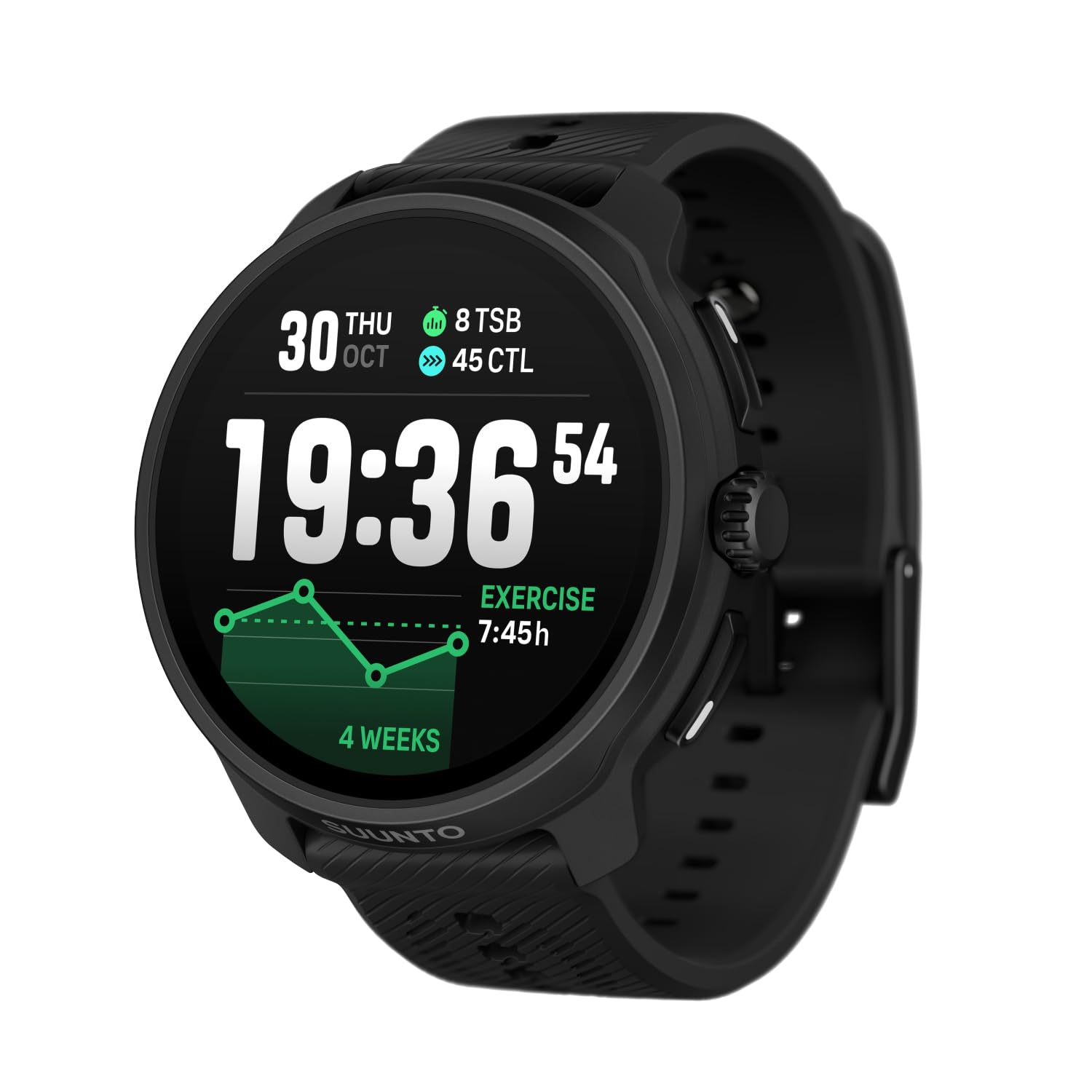
The Suunto Race 2 delivers a refined 1.5-inch AMOLED touchscreen with a crown, 32GB of global offline map storage, and dual-band GPS for pinpoint accuracy on remote trails. Its 55-hour best GPS mode battery supports multi-day expeditions, and the 16-day daily battery means you charge less than once every two weeks.
The ClimbGuidance feature provides real-time ascent and descent data for technical terrain, and the Suunto Coach adapts training plans based on your evolving performance and recovery. Athletes upgrading from the original Race will notice significantly improved heart rate accuracy and a sleeker, lighter chassis that feels more comfortable during overnight wear.
With over 115 sport modes and a clean, intuitive app interface, the Race 2 avoids the complexity bloat found in some competing ecosystems. The build quality — including stainless steel bezel and sapphire glass — inspires confidence from road miles to alpine climbs.
Why it’s great
- Massive 32GB storage for global topo and ski maps
- Fast GPS lock with dual-band multi-GNSS
- Sapphire glass resists scratching on rocky terrain
Good to know
- Setup for custom data screens is less intuitive than some rivals
- No music playback or payment support
3. Apple Watch Ultra 3
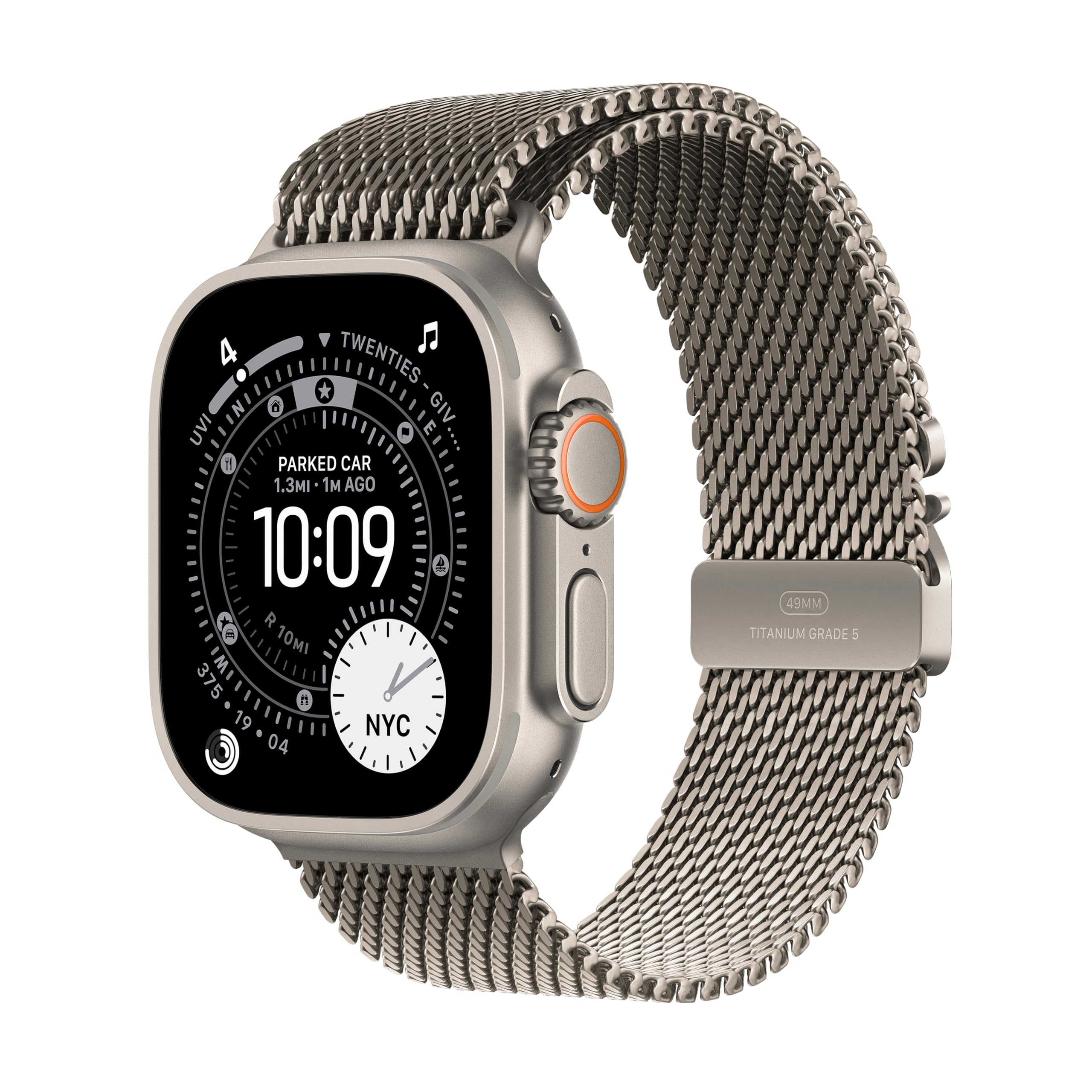
The Apple Watch Ultra 3 combines a rugged 49mm titanium case with a massive, bright display and precision dual-frequency GPS. With up to 42 hours of normal use and 20 hours of GPS tracking in low-power mode, it handles long race days and multi-sport sessions without mid-day charging anxiety.
Built-in cellular and satellite communication provide serious safety features — including crash detection and the ability to text emergency services when no cell signal exists. Runners benefit from the Pacer, Heart Rate Zones, and Workout Buddy features, while the customizable Action Button offers instant access to a workout or flashlight.
The Ultra 3 excels as a daily smartwatch with deep health insights — sleep apnea detection, irregular rhythm notifications, and blood oxygen readings — but its battery endurance trails dedicated running watches from Garmin and Suunto. For iPhone users who want a seamless wearable that also performs admirably on runs, this is the go-to choice.
Why it’s great
- Built-in satellite SOS and crash detection
- Stunning always-on Retina display with 3,000 nits
- Seamless integration with iPhone health ecosystem
Good to know
- Battery life falls short of Garmin and Suunto alternatives
- Metal bands may scratch the titanium case without care
4. Garmin fēnix 8

The Garmin fēnix 8 delivers a robust 1.4-inch AMOLED display inside a stainless steel bezel with dive-rated 40-meter water resistance and leakproof metal buttons. Its 47-hour GPS battery supports everything from marathon training to multi-day backpacking, and the integrated LED flashlight with red-light mode proves invaluable during night navigation.
Multi-band GPS with SatIQ technology automatically optimizes satellite reception for power efficiency, while the barometric altimeter, gyroscope, and 3-axis compass provide reliable dead-reckoning even without phone connectivity. The off-grid voice command feature allows you to control watch functions without a paired smartphone.
Health monitoring includes wrist-based heart rate, Pulse Ox, sleep tracking, and an ECG app for atrial fibrillation detection. The Training Readiness score merges HRV, recovery, and sleep quality to tell you exactly when to push and when to rest. Scuba and apnea dive support further expands this watch’s capability beyond running.
Why it’s great
- 40-meter dive rating and leakproof metal buttons
- Excellent ~15-day battery with multi-sport GPS usage
- Off-grid voice commands without phone connection
Good to know
- Premium pricing places it firmly at the top of the market
- Weight may feel substantial for smaller wrists during sleep tracking
5. Samsung Galaxy Watch Ultra
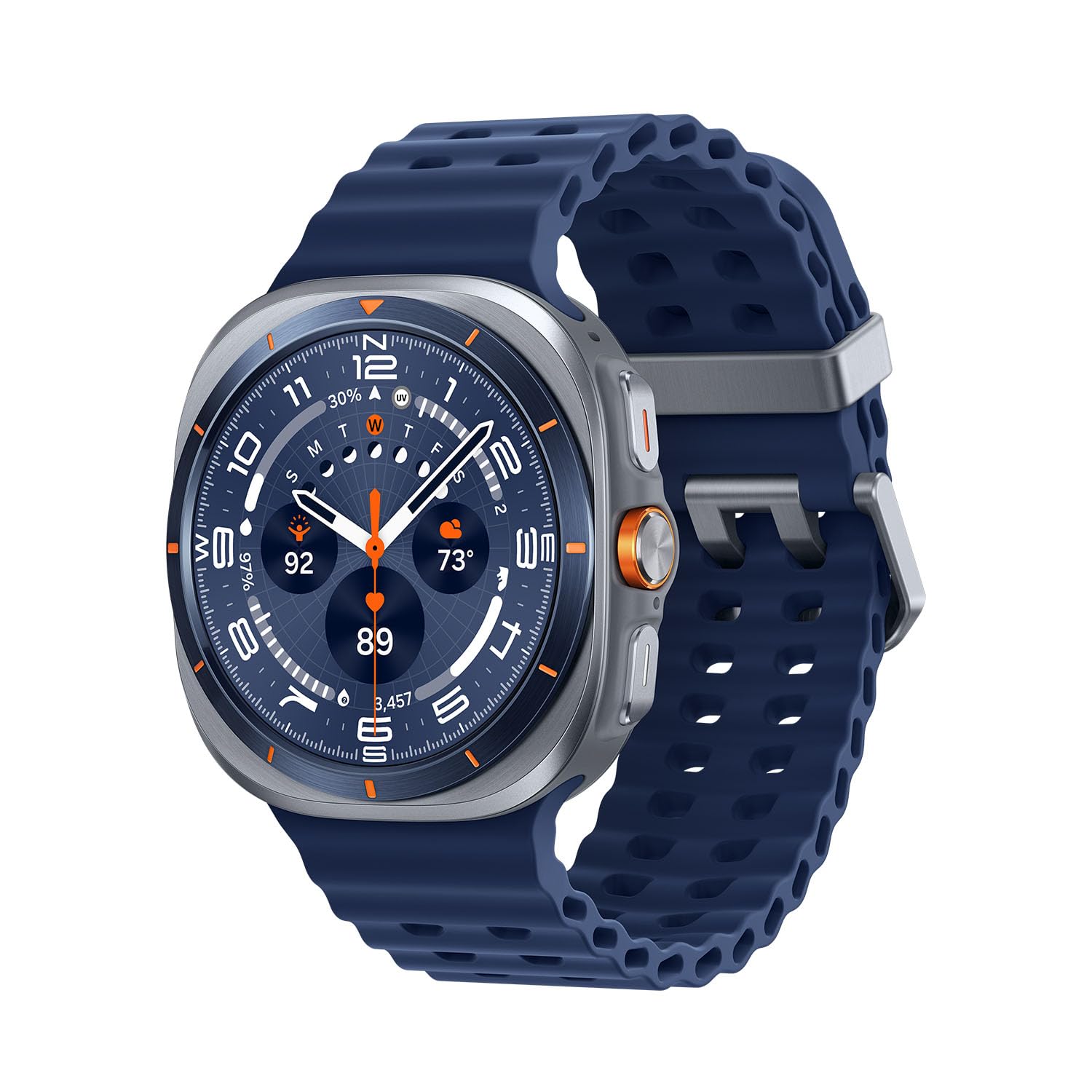
The Samsung Galaxy Watch Ultra wraps a durable titanium case around a feature-rich platform with LTE, dual-frequency GPS, and Samsung’s longest-lasting battery. The Energy Score powered by Galaxy AI summarizes overnight recovery, activity, and heart rate data into a single actionable number multiple times per day.
Running Coach analyzes your age, weight, oxygen levels, and heart rate to guide pace and effort during workouts, while Advanced Sleep Coaching provides detailed sleep stage analysis with an improved algorithm. Blood pressure monitoring and ECG add clinical-grade health tracking, though the blood pressure feature requires calibrating with a separate cuff.
The watch integrates deeply with Android phones via the Galaxy Wearable app, and the native Gemini assistant provides hands-free control. Battery life ends most days at 70-75 percent, and fast charging refills to full in about 30 minutes, making the daily top-off manageable for most users.
Why it’s great
- Full LTE connectivity without phone tethering
- Blood pressure monitoring and advanced sleep coaching
- Fast charging replenishes battery in ~30 minutes
Good to know
- Stock band feels plasticky; aftermarket bands improve comfort
- Background apps can drain battery faster than dedicated sport watches
6. COROS PACE Pro

The COROS PACE Pro delivers a brilliant 1.3-inch AMOLED display with 1,500-nit brightness, a lightning-fast processor that triples map zoom speed over previous generations, and a USB-C charging port that reduces cable clutter. The 20-day smartwatch battery and 38-hour continuous GPS mode keep training uninterrupted for weeks.
Dual-frequency GPS accuracy impresses on both city streets and remote trails, and the free global offline maps with turn-by-turn navigation eliminate the need for subscription services. Training Status, custom workouts, and detailed activity summaries are accessible through the clean COROS app interface without paywalls.
At a mid-range price point, the PACE Pro undercuts premium competitors while offering an AMOLED display, responsive touchscreen with crown button, and extensive activity tracking. The improved WiFi transfer ensures quick sync after runs, and the lightweight 49-gram build disappears on the wrist during speed work.
Why it’s great
- Free global offline topo maps with no subscription
- USB-C charging with keychain adapter for travel
- Excellent value combining AMOLED display with premium features
Good to know
- Watch face selection is limited compared to Garmin ecosystem
- Band quality is basic; aftermarket bands recommended for long-term wear
7. COROS PACE 3

The COROS PACE 3 weighs just 30 grams with the nylon band, making it virtually unnoticeable during long runs and overnight sleep tracking. Its 11.7mm ultra-slim profile and 17-day daily battery life eliminate the bulky feeling common to feature-heavy watches, while the 38-hour continuous GPS mode supports ultra-distance training without recharging.
Dual-frequency satellite chipset ensures accurate tracking even in dense urban environments, and the barometric altimeter records precise elevation gain data for trail sections. The always-on 1.2-inch transflective touchscreen remains readable in direct sunlight — a significant advantage over AMOLED watches for summer trail runners.
Route planning via the COROS app syncs breadcrumb navigation directly to the watch, and the extensive activity library covers run, trail run, swim, strength, ski, and snowboard. The combination of featherlight weight, dual-frequency accuracy, and long battery makes the PACE 3 the best option for runners prioritizing comfort and practicality over flashy displays.
Why it’s great
- Ultra-light 30g design with nylon band for 24/7 wear
- Transflective display excels in direct sunlight
- Excellent battery life — 75 percent remaining after a marathon
Good to know
- Charging cable port may become loose over several months of use
- Nylon band can be tight for large-handed users during initial fitting
8. Amazfit Active Max

The Amazfit Active Max packs a 1.5-inch AMOLED display with an impressive 3,000-nit peak brightness, making it easily readable under direct sunlight. The 25-day battery life with typical usage eliminates charging anxiety entirely, and the 4GB onboard storage lets you download music and maps directly to the watch for phone-free runs.
Five satellite positioning systems ensure fast and accurate GPS tracking across various environments, while the BioCharge Energy Monitoring score suggests when to push harder and when to rest based on workout and stress data. The Zepp Coach feature generates personalized AI-driven training plans for distances from 3K to full marathon, with adaptive adjustments based on performance.
Bluetooth calling, hands-free message replies via Zepp Flow, and 170+ sport modes make the Active Max a versatile training companion. The smartwatch features — including stress, heart rate, SpO2, and sleep tracking — punch well above the budget-friendly price point, though the deeper performance analytics don’t match dedicated running watch platforms from Garmin or COROS.
Why it’s great
- Exceptionally bright 3,000-nit AMOLED display
- 4GB storage for offline music and maps
- Long 25-day battery with typical use
Good to know
- Training analytics less comprehensive than premium brands
- Magnetic charging base lacks USB-C cable
9. SUUNTO 9 Peak Pro

The SUUNTO 9 Peak Pro combines 80 years of Finnish craftsmanship with military-grade durability, featuring a stainless steel or titanium case, sapphire crystal glass, and 100-meter water resistance. It offers 40 hours of GPS tracking in best mode, 70 hours in endurance mode, and an impressive 300 hours in tour mode for multi-week adventures.
Four satellite systems provide fast connectivity and reliable tracking in mountainous terrain and steep canyons, while the 97 sport modes cover everything from triathlon training to avalanche mapping. The 10-minute quick charge delivers 2 hours of GPS training — a lifesaver when you forget to charge before a run.
The Suunto app supports structured workout creation, daily activity journaling, and seamless syncing with Strava, TrainingPeaks, and 200 other platforms. At a mid-range price, the Peak Pro delivers premium build quality and battery longevity without the subscription fees of some competitors, though the MIP display and lack of music playback reflect its earlier generation status.
Why it’s great
- Handcrafted in Finland with renewable energy
- Military-grade titanium and sapphire glass construction
- 10-minute charge yields 2 hours of GPS training
Good to know
- MIP display less vibrant than modern AMOLED panels
- Heart rate accuracy can be inconsistent on stair climbers
FAQ
How accurate is the heart rate sensor on wrist-based GPS watches compared to a chest strap?
What is the practical difference between AMOLED and MIP displays for running?
Do I need a watch with offline maps for trail running?
Final Thoughts: The Verdict
For most runners, the best gps running watch is the Garmin Forerunner 970 because it combines a bright AMOLED display, 26-hour GPS battery, and the deepest training analytics ecosystem available. If you prioritize featherlight comfort and all-day wearability for daily training, grab the COROS PACE 3. And for extreme endurance athletes who need 55-hour GPS tracking with global offline maps, nothing beats the Suunto Race 2.