
Whether you lock your bike outside a café or store it in a shared garage, the nagging worry of theft or misplacement is real. A dedicated tracker changes that, giving you a direct line to your bike’s location and movement whenever you need it — no more frantic searches or sleepless nights.
I’m Mohammad Maruf — the founder and writer behind Drink4Good. I’ve spent years analyzing GPS hardware specs, battery chemistries, and real-world tracking accuracy from dozens of units to understand what actually keeps a bike traceable after the fact.
From an ultra-discreet Apple Find My accessory to a full training computer with multi-band GNSS, this guide covers the top contenders to help you find the best gps tracker for bike security and performance that fits your riding style.
How To Choose The Best GPS Tracker For Bike
Selecting a tracker means balancing how you ride with how much risk you’re willing to accept. Three factors separate a useful device from a dead plastic brick on your frame: the type of tracking technology, the battery life, and how securely it mounts to your bike.
Tracking Technology: Bluetooth vs. Cellular vs. GPS Computer
Bluetooth-only trackers (including those using Apple Find My) rely on proximity to nearby smartphones to report a location. They are small and require no monthly fee but only work in populated areas. True cellular GPS trackers like the Invoxia PRO use LTE-M networks and provide location updates anywhere with cell coverage, independent of other phones — they typically require a subscription. Dedicated GPS computers like the Garmin Edge 540 log precise ride data and can broadcast a location via live tracking if paired with a phone, but they are primarily for performance, not theft recovery.
Battery Life and Power Source
Consider how often you want to charge or replace a battery. Coin-cell-powered devices (CR2032) can last a year or more and are low-maintenance. Rechargeable units with lithium-ion batteries (650mAh to 300mAh) need to be charged every few weeks or months depending on update frequency. Devices with a larger battery capacity like the Bikevee (650mAh) or Invoxia (300mAh) offer longer intervals between charges, but also add a bit of bulk.
Mounting and Anti-Theft Hardware
A tracker that can be easily removed defeats its purpose. Look for models that come with security bolts or a unique tool for installation. Trackers that hide under a bottle cage are less noticeable. Always use the included mounting hardware to ensure the tracker stays put even on rough terrain.
Quick Comparison
On smaller screens, swipe sideways to see the full table.
| Model | Category | Best For | Key Spec | Amazon |
|---|---|---|---|---|
| Garmin Edge 540 | Premium Computer | Serious training & navigation | Multi-band GNSS | Amazon |
| Invoxia GPS Tracker PRO | Cellular Tracker | Real-time location anywhere | 4G LTE-M | Amazon |
| Knog Scout | Alarm + Tracker | Theft deterrence & recovery | 85 dB alarm | Amazon |
| COOSPO BC107 | GPS Computer | Budget training data | ANT+ support | Amazon |
| Bikebac Tracker | Apple Find My | iPhone ecosystem users | IP67+ waterproof | Amazon |
| Orbit Velo | Apple Find My | Long-life tracking | 3-year battery | Amazon |
| Bikevee GPS Computer | Entry-Level Computer | Basic ride data | 28-hour battery | Amazon |
In‑Depth Reviews
1. Garmin Edge 540

For cyclists who want a full training computer paired with navigation, the Edge 540 sets the standard. Its multi-band GNSS locks onto satellites quickly and maintains accuracy even under heavy tree cover or near tall buildings, which is a common pain point for ride tracking. Button controls are a deliberate choice — they work perfectly with sweaty fingers or while wearing gloves.
Beyond navigation, the 540 offers adaptive coaching that adjusts daily suggested workouts based on your recovery status. The ClimbPro feature displays remaining ascent and grade on any ride, not just pre-loaded courses, helping you pace climbs intelligently. Battery life reaches 26 hours in demanding use and up to 42 hours in battery saver mode, covering multi-day tours without a charge.
Pairing with a compatible power meter and heart rate monitor unlocks stamina insights and power guide features that recommend targets throughout a course. The trade-off is the premium price, but the software ecosystem and robust build justify the cost for dedicated riders who live by their data.
Why it’s great
- Multi-band GNSS for reliable tracking in tricky environments.
- Adaptive coaching and stamina tracking keep training on point.
- Excellent battery life for long rides and tours.
- Physical buttons are easy to use in all conditions.
Good to know
- Premium price point — a serious investment.
- Setup can be complex; instructions are not always clear.
- Home-area route planning may occasionally suggest unusual paths.
2. Invoxia GPS Tracker PRO
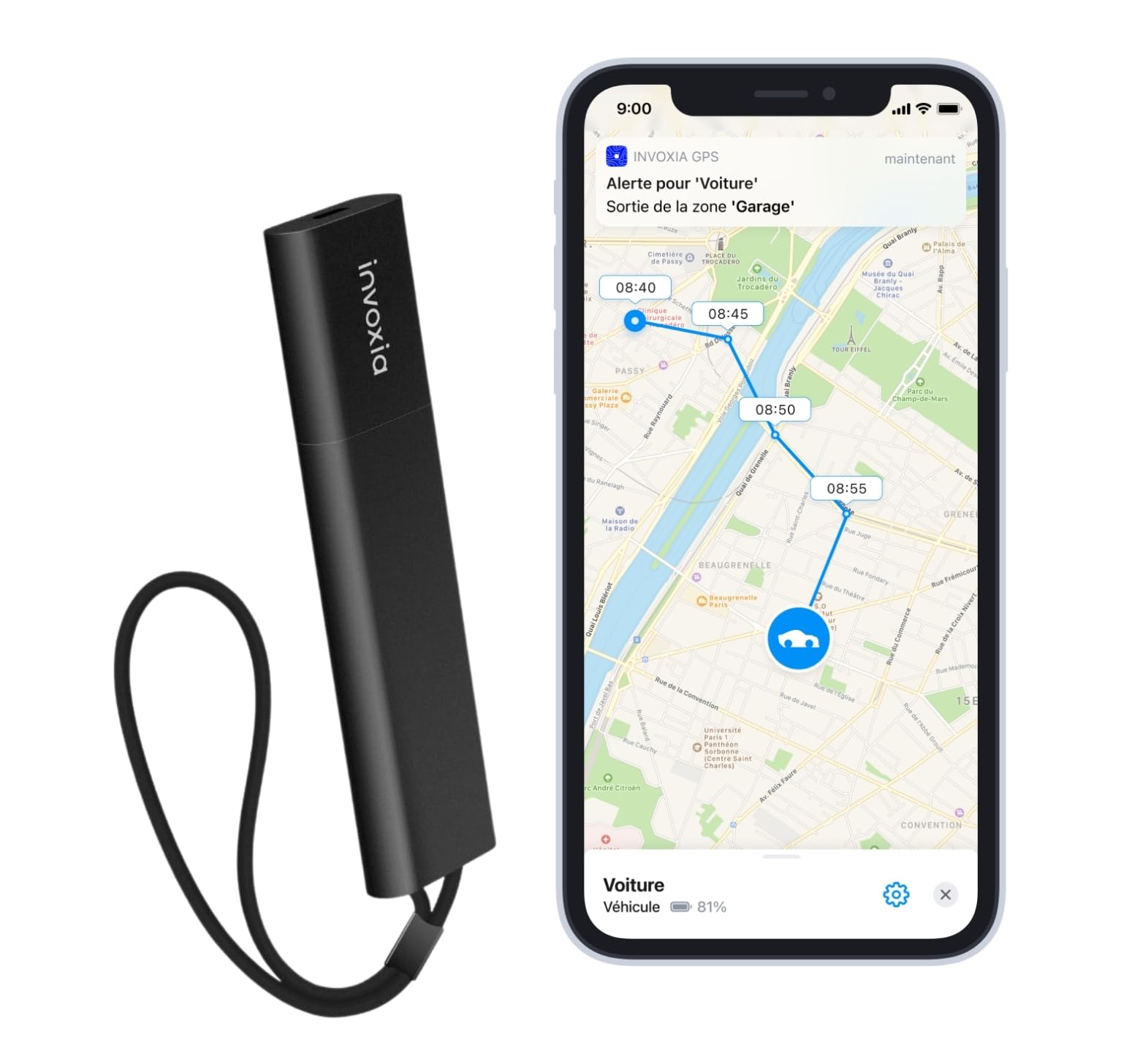
If you need real-time location updates independent of nearby smartphones, the Invoxia is your pick. It uses the 4G LTE-M cellular network, so you can track your bike from the companion app anywhere with cellular coverage in the continental US and Hawaii. Motion and tilt alerts fire immediately if someone moves your bike, helping you react quickly — not retroactively hours later.
The tracker is compact and lightweight (30 grams), making it easy to conceal under a seat or in a frame bag. Battery life is up to 3 months when location updates are set to longer intervals, and the device recharges in about 90 minutes via USB-C. The adjustable update schedule lets you balance tracking granularity against battery drain.
One point of clarity: while the device itself does not come with a subscription, an affordable monthly plan is required for the cellular data service. The tracker also works for vehicles, motorcycles, and even as a personal tracker for loved ones, making it a versatile purchase. Customer support has been noted to be responsive, with the CEO personally addressing early issues.
Why it’s great
- Real-time GPS tracking via cellular network — no phone proximity needed.
- Compact size (30g) is easy to hide inside a frame or bag.
- Motion and tilt alerts notify you immediately of tampering.
- Rechargeable battery with adjustable update intervals.
Good to know
- Requires a monthly subscription for cellular service.
- Some users report battery life shorter than the 3-month claim.
- Intended for theft recovery, not real-time speed or ride data.
3. Knog Scout Bike Alarm & Finder

The Knog Scout combines a motion-activated alarm with Apple Find My integration, offering both deterrence and recovery. When armed, the 85-decibel siren sounds if the bike is moved, which is often enough to scare off casual thieves or at least alert nearby owners. The companion app allows you to arm or disarm the alarm from up to 1.5 meters away, and the LEDs clearly show the arming status at a glance.
Mounting is cleverly designed to fit under a bottle cage, keeping the device low-profile and out of direct sight. The included anti-tamper screws add an extra layer of security, making it harder for someone to simply pop the tracker off. The rechargeable battery lasts for weeks on a single charge, and it uses a standard USB-C cable for refueling.
For iOS users who want both an alarm and basic tracking, the Scout is a strong hybrid. Bear in mind that Find My network tracking depends on nearby Apple devices, so it works best in populated areas. The alarm is a deterrent, not a guarantee, but combined with a good lock, it raises the effort bar significantly for potential thieves.
Why it’s great
- Integrated 85 dB alarm actively deters theft.
- Apple Find My works seamlessly with your Apple devices.
- Mounts discreetly under a bottle cage.
- Rechargeable battery lasts weeks per charge.
Good to know
- Tracking is limited to iPhone users and populated areas.
- Alarm alone may not stop a determined thief with tools.
- Occasional reliability issues reported with app pairing.
4. COOSPO Bike Computer BC107

The COOSPO BC107 punches well above its price class by including dual-satellite positioning (GPS + BeiDou) and full ANT+ compatibility. You can pair a heart rate monitor, speed and cadence sensor, and even a power meter — features typically reserved for units costing three times as much. The 2.4-inch LCD screen is compact but clear, with auto-backlight that adjusts automatically for day or night rides.
Setting up the BC107 is straightforward via the CoospoRide app, which lets you configure data fields, load GPS tracks, and sync activity files to Strava. The device records a .fit file for each ride, which you can upload directly. This makes it a reliable training tool without subscribing to any premium service.
Battery life is solid for a device in this range, and the IP67 waterproof rating means you can ride through rain without worry. The included standard mount works for most handlebars, though the company recommends a separate long front mount for certain positions. The biggest caveat is that it only supports ANT+ sensors — Bluetooth-only sensors won’t pair directly.
Why it’s great
- Budget-friendly price with premium features (ANT+, dual GPS).
- Compact, lightweight design with a clear 2.4-inch display.
- Easy app setup and Strava sync via CoospoRide.
- IP67 waterproof rating for all-weather riding.
Good to know
- Only supports ANT+ sensors; no Bluetooth sensor pairing.
- App update sometimes breaks automatic Strava sync.
- Instructions can be hard to follow for first-time users.
5. Bikebac Tracker

The Bikebac Tracker is designed specifically for the Apple ecosystem, integrating directly with the Find My network. Once paired via Bluetooth, it appears in your Find My app like any other Apple device, and you can set up notifications for when the tracker is left behind or starts moving. It is a dedicated, no-subscription solution for bike tracking.
A major advantage is the replaceable CR2032 battery, which lasts up to 12 months before you need a new one. You can buy a 10-pack of these coin cells for a few dollars, making the long-term cost of ownership extremely low. The IP67+ waterproof rating ensures the device handles heavy rain and puddles without issue.
Mounting is versatile: it attaches to the bottle cage mount or to the seat post using the provided mounts. Security bolts are included to deter removal. While the tracker is a bit chunky compared to an AirTag, it does not emit the same audible chime, keeping its location more discreet. It works for most bicycles and e-bikes.
Why it’s great
- Simple Apple Find My integration with zero subscription fees.
- 12-month battery life with a cheap, replaceable coin cell.
- IP67+ waterproofing is genuinely weatherproof.
- Comes with security bolts for theft-resistant mounting.
Good to know
- Bulkier than an AirTag, limiting concealment options.
- Reliant on the Apple Find My network (needs nearby iPhones).
- Some units have reported reliability issues.
6. Orbit Velo Advanced Bike Tracker

For riders who want to install a tracker and forget about it, the Orbit Velo offers a 3-year claimed battery life with a replaceable coin cell. That is three years of peace of mind with zero charging routines. It connects to Apple Find My, so your bike appears in the same interface as your AirPods and iPad. The iCloud sync means you can check the tracker’s last known location from any Apple device.
The tracker is compact at just 60 grams and mounts using the bottle cage screws. The package includes security bolts, a special torx wrench, double-sided tape, and zip ties — everything you need for a secure installation. The IPX6 waterproof rating protects against heavy rain, so you can ride confidently in wet conditions without pulling the tracker off.
One trade-off is the reliance on high-quality batteries to approach the 3-year life. Some users have found that the included battery shows low charge within days, so it is worth swapping it for a premium brand immediately upon setup. Otherwise, it is a clean, practical, and low-maintenance solution for Apple users.
Why it’s great
- 3-year battery life is class-leading — nearly zero maintenance.
- Compact and lightweight (60g) with a clean profile.
- Includes security bolts and all necessary mounting hardware.
- Seamless iCloud sync across all Apple devices.
Good to know
- Battery life depends on using high-quality replacement coin cells.
- Some units arrive with a low battery, requiring immediate replacement.
- Find My network dependent — works best in populated areas.
7. Bikevee GPS Computer
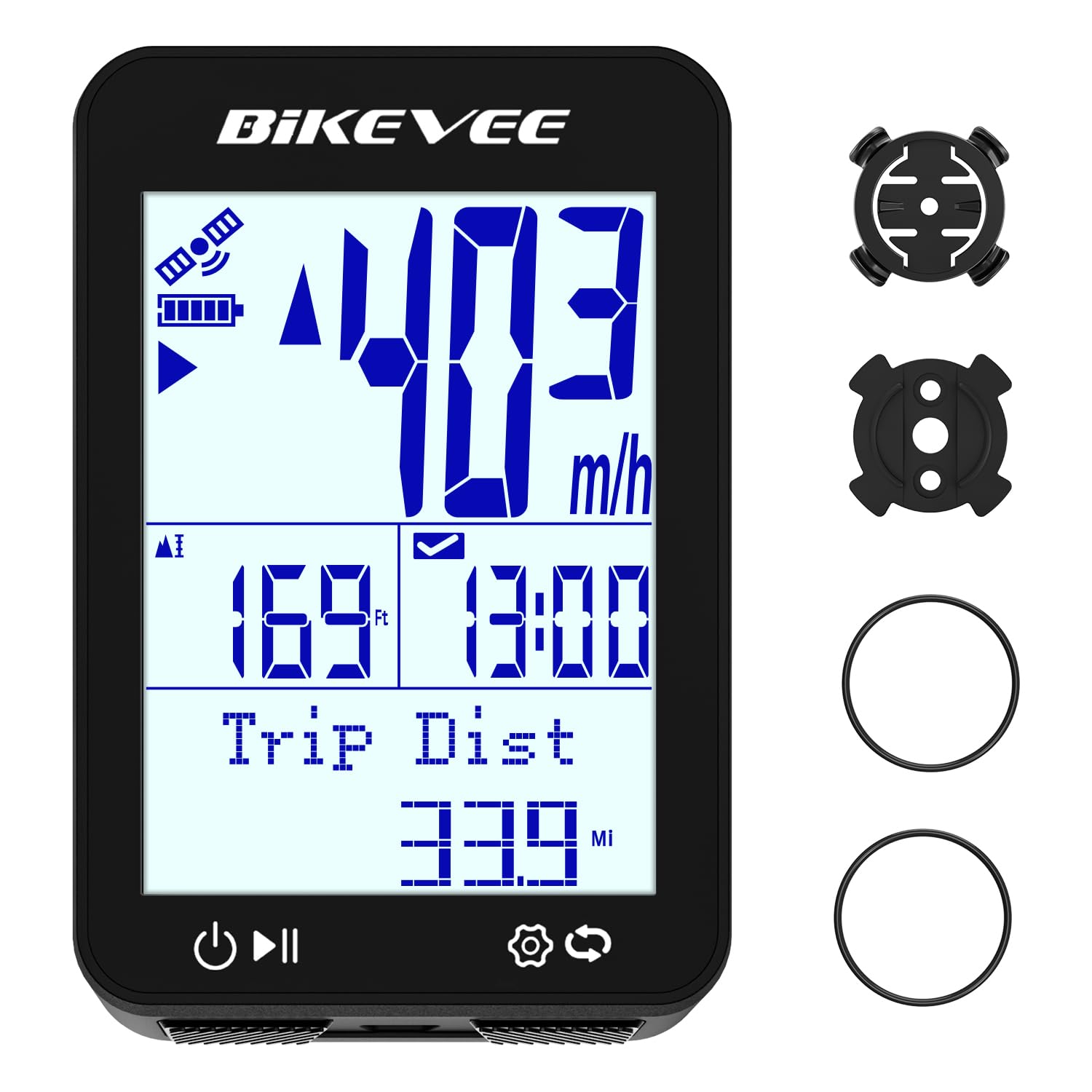
The Bikevee GPS Computer is a no-frills option for cyclists who want the basics — speed, distance, ride time, and elevation — without dealing with wheel magnets or complicated wiring. GPS positioning is entirely wireless, so setup is clean: just mount the unit on your handlebars and go. The 2.4-inch LCD screen has auto-backlight, making it readable in bright sun or at dusk.
The 650mAh battery delivers up to 28 hours of ride time on a single charge, which is more than enough for a full week of commuting or a weekend of long-distance touring. The IPX7 waterproof rating means it can survive being submerged in up to 1 meter of water for 30 minutes, so sudden downpours are no concern. It supports 9 languages, including English, German, French, Italian, and Spanish, making it accessible to international riders.
The obvious trade-off is the lack of sensor connectivity. There is no Bluetooth or ANT+ support for heart rate, cadence, or power meters. It also has no navigation or mapping features. For riders who just want accurate basic data and a long battery life, it is an excellent entry-level computer. GPS acquisition can take a short distance to lock on, but once connected, the readouts match closely with high-end units.
Why it’s great
- Wireless GPS setup — no wheel magnets or sensors needed.
- 28-hour battery life covers multi-day rides on a single charge.
- IPX7 waterproof rating provides impressive weather protection.
- Large, clear display with auto-backlight for day or night use.
Good to know
- No ANT+ or Bluetooth support for external sensors (HR, cadence).
- No navigation or mapping features — basic data only.
- GPS can take up to 0.5 mile to get a satellite lock.
- Display customization options are limited from the factory.
FAQ
Can a GPS tracker recover my bike after it is stolen?
Do I need a subscription for a bike GPS tracker?
How accurate is GPS tracking on a bike computer?
Where is the best place to hide a bike GPS tracker?
Final Thoughts: The Verdict
For most users, the best gps tracker for bike winner is the Knog Scout because it combines a loud, motion-activated alarm with Apple Find My tracking, offering both active deterrence and recovery assistance in one discreet package. If you want real-time location updates anywhere regardless of phone proximity, grab the Invoxia GPS Tracker PRO with its 4G cellular tracking. And for riders who prioritize training data and navigation above theft recovery, nothing beats the Garmin Edge 540 as a complete ride computer.