
A boat drifting off the trailer, an engine stolen from the dock, or a crew member overboard in open water — these aren’t hypotheticals for anyone who owns a vessel. A dedicated marine GPS tracker provides the one thing every captain needs: a reliable way to know exactly where your boat is, whether it’s parked at the marina, cruising offshore, or being towed away in the middle of the night.
I’m Mohammad Maruf — the founder and writer behind Drink4Good. I specialize in breaking down marine electronics and security hardware, analyzing satellite frequency bands, battery chemistries, and waterproofing ratings to find what actually holds up on the water.
This guide breaks down the key specs, subscription models, and real-world performance data that define a proper gps tracker for boats, from theft prevention units to emergency rescue beacons.
How To Choose The Best GPS Tracker For Boats
Not every GPS tracker that works in a car will survive a saltwater splash or a day on the deck. Marine environments demand specific hardware ratings, connectivity methods, and mounting strategies that consumer-grade trackers simply don’t offer.
Waterproofing and Buoyancy Standards
An IP67 rating means the tracker can survive submersion in one meter of fresh water for 30 minutes. For a boat GPS tracker, IP68 (continuous submersion beyond one meter) or buoyant design that floats if dropped overboard is the real benchmark. Units like the Garmin GPSMAP 79s and ACR ResQLink are designed to float, which is non-negotiable if you’re using the device on deck or in a kayak.
Subscription vs No-Fee Connectivity
Cellular trackers (Tracki, VITALGLOW) rely on LTE networks and require active data plans, but they offer the lowest upfront cost and frequent location pings. Satellite-based devices (ACR PLBs, Nautilus Lifeline) use the global COSPAS-SARSAT system or VHF/DSC frequencies for SOS signals and have no monthly subscription, but they operate only when activated in an emergency. The Monimoto 9 sits in the middle with a low annual fee, using LTE-M for motion-triggered tracking. Matching the connectivity model to your boating frequency and risk tolerance determines long-term value.
Installation and Power Source
Hardwired trackers like the VITALGLOW draw power from the boat’s battery and never need recharging, making them ideal for permanent installation in a helm or bilge compartment. Wireless trackers (Monimoto, Tracki) run on internal rechargeable batteries and offer flexible placement, but require periodic charging. If the boat sits on a trailer or in a slip without shore power, a battery-powered unit with several months of standby life is the practical choice.
Quick Comparison
On smaller screens, swipe sideways to see the full table.
| Model | Category | Best For | Key Spec | Amazon |
|---|---|---|---|---|
| Monimoto 9 | Anti-Theft | Motion-triggered theft alerts | IP68 + 900mAh battery | Amazon |
| Garmin GPSMAP 79sc | Handheld Nav | Navigation with coastal charts | Preloaded BlueChart g3 | Amazon |
| ACR ResQLink View RLS | Emergency PLB | Offshore SOS with return link | 406 MHz + GPS + RLS | Amazon |
| Standard Horizon GX2410GPS | Fixed VHF | Integrated VHF radio with AIS | Built-in GPS + AIS receiver | Amazon |
| ACR ResQLink View | Emergency PLB | Compact SOS with strobe | 406 MHz + LED strobe | Amazon |
| Garmin GPSMAP 79s | Handheld Nav | Waypoint tracking and routes | Floats + 20h battery | Amazon |
| Nautilus Lifeline | Rescue VHF | Diver and kayak rescue | AIS + DSC + 425ft depth | Amazon |
| VITALGLOW Hardwired | No-Fee Hardwired | Permanent theft tracking | No subscription + 30s updates | Amazon |
| Tracki Mini | Compact Cellular | Budget-friendly asset tracking | 4G LTE + 600mAh battery | Amazon |
In‑Depth Reviews
1. Monimoto 9 US Version

The Monimoto 9 is not a live-tracking device that drains your battery reporting every turn. It stays dormant until its paired key fob separates from the tracker, then it calls your phone within seconds of unauthorized movement. This motion-triggered logic makes it the most battery-efficient anti-theft option for boats kept at a mooring or stored on a trailer — the 900mAh rechargeable battery lasts months in standby.
Installation is truly wireless. You zip-tie the IP68-rated housing inside a helm compartment, under a seat, or behind a panel, and the key fob stays in your pocket or vehicle. When the boat moves without the fob present, you get an instant phone call, not just an app notification. The built-in eSIM includes a two-month trial, then the annual data fee is modest compared to monthly LTE plans.
The trade-off is that the Monimoto is a theft-recovery tool, not a live navigational GPS. It delivers location updates only after motion is detected, so you cannot use it to check your boat’s position at random times. For owners who want a silent, waterproof guard that sleeps until a thief wakes it, this design is precisely what matters.
Why it’s great
- IP68 dust and water resistance rated for marine compartments
- Wireless installation with zero boat wiring required
- Instant phone call alert, not just a silent app ping
- Low annual subscription fee after trial ends
Good to know
- Not a live-view tracker — only reports location on motion trigger
- Location accuracy is good but not sub-meter precision
- Requires periodic USB-C recharging every few months
2. Garmin GPSMAP 79sc

The 79sc is the handheld marine GPS that does everything except sink. It floats, carries a preloaded BlueChart g3 coastal chart set with detailed depth contours and navigational aids, and supports six satellite constellations including GPS, GLONASS, and Galileo for rapid fixes even in narrow fjords or tree-lined channels. The 3-axis tilt-compensated electronic compass shows heading while standing still, which is critical when drifting without a fixed reference.
Memory capacity handles 10,000 waypoints and 250 routes, so you can mark fishing spots, harbor entrances, and hazard buoys across years of trips without purging old data. The barometric altimeter tracks pressure trends to help forecast weather shifts — a feature that matters when you’re 20 miles offshore and see the barometer dropping. Battery life reaches about 19 hours on two AA batteries in GPS mode.
The non-intuitive menu system and the convex back that causes the unit to slide on flat surfaces are real ergonomic complaints. It is a purpose-built marine tool designed for deliberate waypoint navigation, not casual touchscreen browsing. If you need coastal charting in a floating, battery-independent package that works when your phone dies, the 79sc delivers.
Why it’s great
- Preloaded BlueChart g3 coastal charts with depth details
- Floats and is IPX6 water-resistant at the unit level
- Multi-constellation satellite support for fast locking
- Barometric altimeter for pressure trend monitoring
Good to know
- Convex back causes unit to slide on flat surfaces
- Menu navigation has a steep learning curve
- No touchscreen — all button-operated
3. ACR ResQLink View RLS (PLB-435)

The PLB-435 is the only personal locator beacon on this list with Return Link Service, meaning after you activate the 406 MHz distress signal, a satellite transmits back a confirmation that search and rescue received your alert. That confirmation eliminates the uncertainty of whether your SOS went through — a meaningful psychological advantage when you are bobbing in cold water waiting for help.
It uses GPS, Galileo, and MEOSAR satellite networks for global positioning, holds a 5-year battery life in storage, and provides over 28 hours of continuous transmission once activated. The built-in infrared strobe helps rescue aircraft spot you at night, while the buoyant housing and multifunction clip system let you attach it to a PFD or life raft without a separate pouch.
There is no subscription fee because the COSPAS-SARSAT satellite system is government-funded and free to use worldwide. The trade-off is that this is a rescue-only device — it does not offer real-time tracking or theft alerts. You activate it only when human life is in immediate danger. For offshore boaters, solo sailors, and anyone who ventures beyond cell range, the RLS confirmation feature justifies the premium price.
Why it’s great
- Return Link Service confirms SOS was received
- Buoyant, compact, and easy to clip on a life jacket
- No subscription fees — free global rescue network
- IR strobe and 28-hour transmission duration
Good to know
- Emergency use only — not a real-time tracker
- Battery must be replaced every 5 years
- Higher upfront investment than subscription trackers
4. Standard Horizon GX2410GPS
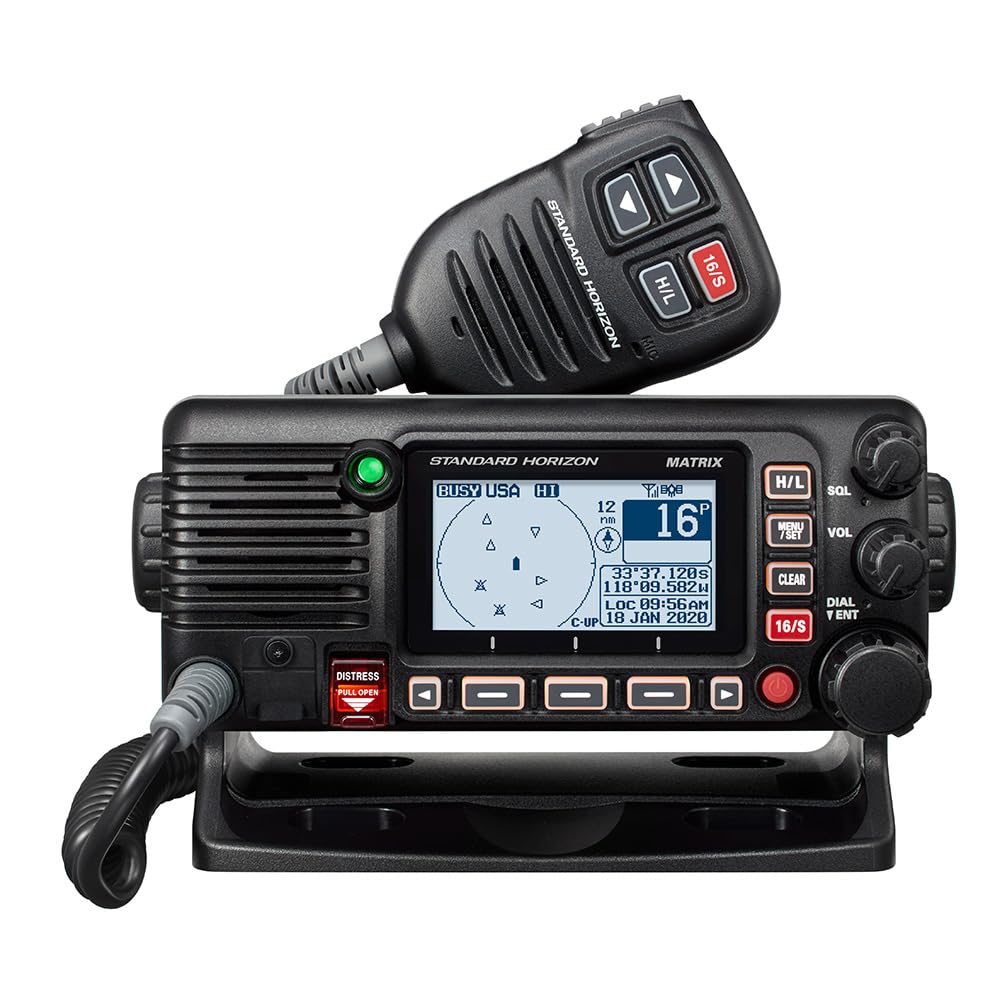
The GX2410GPS is a fixed-mount VHF radio with an internal GPS receiver and AIS reception built into one chassis. This means it displays the position, speed, and heading of AIS-equipped vessels within range directly on the radio screen, overlaying critical traffic data while you maintain voice communication on Channel 16. For a boat that already has a dedicated chartplotter, this unit adds a layer of situational awareness without requiring a separate AIS box.
Integration with NMEA2000 lets the GPS position feed into your onboard network, sharing location data with your autopilot, chartplotter, and other instruments. The three-year warranty from Standard Horizon is longer than most marine electronics offer, and the 25-watt transmit power covers the typical range needed for coastal and inland waterway communication.
It is critical to note that the AIS functionality is receive-only — the GX2410GPS does not transmit your boat’s position to other vessels. For full AIS transmit capability, you would need a separate transceiver or a higher-tier radio. This unit is ideal as a GPS-enabled VHF backup with traffic awareness, not as a primary navigation device.
Why it’s great
- Internal GPS feeds NMEA2000 network with position data
- AIS receiver shows nearby vessel traffic on the display
- Three-year warranty exceeds industry standard
- Combines VHF, GPS, and AIS in a single installation
Good to know
- AIS is receive-only — does not broadcast your position
- Not a standalone navigation chartplotter
- Requires permanent hardwiring to boat power
5. ACR ResQLink View (PLB 425)

The ACR ResQLink View PLB 425 is the compact sibling of the RLS model. It still transmits a 406 MHz emergency signal with GPS-coordinates directly to search and rescue satellites, and it includes both a visible LED strobe and an infrared strobe for night detection. At 4.52 inches tall and weighing under half a pound with batteries, it slides into a PFD pocket or attaches to a belt loop without bulk.
The battery is user-replaceable and lasts 5 years in storage mode, with 28 hours of active transmission life once deployed. The OLED screen displays battery status and GPS fix confirmation, so you know the beacon is functioning before you rely on it in an emergency. Buoyancy is built in, so it floats if dropped overboard, and the housing is rated to survive submersion.
The PLB 425 lacks the Return Link Service of the newer PLB-435, meaning you activate it and trust the signal reached the satellite without a confirmation message. For boaters who want a proven, compact, no-subscription emergency beacon at a lower cost than the RLS version, this is a strong choice. Some units have shipped without a clear manufacture date on the label, so inspect the packaging immediately upon arrival to verify remaining battery life.
Why it’s great
- No subscription for global emergency SOS via 406 MHz
- LED and infrared strobe for day and night rescue visibility
- Compact size fits easily in a PFD or dry bag
- Buoyant design with user-replaceable battery
Good to know
- No Return Link Service confirmation
- Battery manufacture date may not be clearly marked
- Emergency use only — no tracking capability
6. Garmin GPSMAP 79s

The Garmin GPSMAP 79s is essentially the same rugged floating handheld as the 79sc, but it comes with a worldwide basemap instead of the detailed BlueChart g3 coastal charts. If you boat primarily on inland lakes, rivers, or areas where high-detail coastal charts are not needed, the worldwide basemap provides sufficient shoreline and landmass references without the extra chart cost.
The hardware is identical — IPX6 water resistance, multi-constellation satellite lock, 3-axis compass, barometric altimeter, and the same 20-hour battery life on two AA batteries. The screen is scratch-resistant and fogproof glass, and the unit stores up to 10,000 waypoints and 250 routes. The button-driven interface is the same as the 79sc, with the same convex back that prevents it from sitting flat.
The critical difference between the 79s and the 79sc is the map data. If you navigate coastal waters, channels, or harbor entrances, the 79sc’s BlueChart g3 coverage with depth contours and buoys is worth the extra cost. If your boating is strictly inland, the 79s saves money on a feature you would rarely use.
Why it’s great
- Floats and is built for marine use
- Multi-constellation GPS lock for fast positioning
- 20-hour battery life on standard AA batteries
- Stores 10,000 waypoints for long-term trip logging
Good to know
- Worldwide basemap lacks detailed coastal charts
- Convex back causes unit to slide on flat surfaces
- No touchscreen — button-driven interface only
7. Nautilus LifeLine Marine Rescue GPS nexGen

The Nautilus LifeLine nexGen is not a general-purpose boat tracker — it is a marine rescue GPS designed for divers, kayakers, and paddleboarders who carry it on their person while in the water. It transmits both an AIS distress signal that appears on nearby vessel chartplotters and a DSC digital call that alerts VHF radios within range, giving two independent rescue alerts from a single device.
The depth rating of 425 feet with the outer lid closed makes it usable for scuba diving, and the IP68 rating means it functions even with the cap open in rain or spray. The GPS position is accurate to within one meter, and the device transmits that position repeatedly so rescuers can follow your drift. It weighs only 4.6 ounces with batteries and includes a proprietary tool for winding the antenna.
The battery compartment seals have been reported as a weak point in earlier units, with some users experiencing flooding. Inspect the o-rings and gaskets before each trip, and consider replacing the CR123A batteries at the start of each season. For anyone who spends time in the water rather than just on top of it, this is the only device on the list that combines AIS, DSC, and dive-depth waterproofing.
Why it’s great
- AIS and DSC dual-alert system reaches multiple rescue paths
- Rated to 425 feet for scuba use
- GPS accuracy within one meter for precise location
- Compact and lightweight at 4.6 ounces
Good to know
- Battery o-ring seal requires regular inspection
- No subscription needed but requires CR123A batteries
- Antenna deployment tool is small and easy to lose
8. VITALGLOW Hardwired GPS Tracker
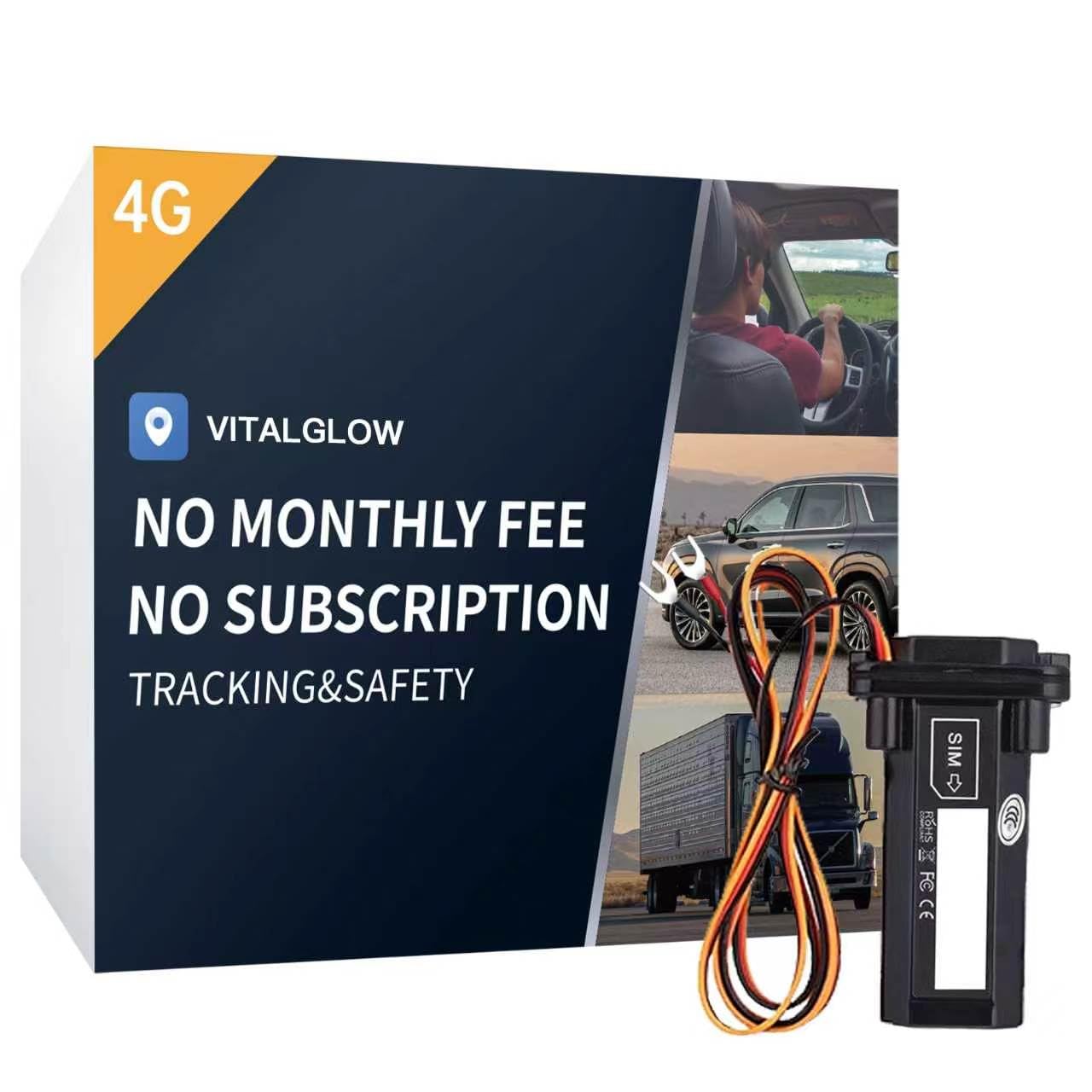
The VITALGLOW tracker disrupts the subscription model by offering real-time 4G LTE tracking with no monthly fee, no activation fee, and no hidden charges — the SIM and data are included for the life of the device. Location updates arrive every 30 seconds, making this one of the most responsive no-subscription trackers available. The route playback feature stores 180 days of trip history with stop-point details.
Hardwired installation removes the need for battery charging. Two wires (red and black) connect to the boat’s 9V to 95V power source, and an optional orange wire detects when the ignition or battery switch is on. The IP67 waterproof rating means it can survive rain and deck spray, though it is not designed for submersion. Global coverage works in 170+ countries through the included 4G SIM.
The trade-off for no monthly fees is a higher upfront cost and the need for a permanent power connection. This tracker is best suited for boats with a battery that stays energized at the dock or for trailers that are regularly connected to a tow vehicle with power. The aluminum enclosure and magnet mount allow flexible placement, but you must route power to the device.
Why it’s great
- No subscription fees for the entire device lifetime
- 30-second update interval for near-real-time tracking
- 180-day trip history with stop-point analysis
- Works on 9V to 95V power — compatible with most boat systems
Good to know
- Requires hardwired installation — not wireless
- IP67 rated for spray but not for submersion
- App alert customization is limited
9. Tracki Mini GPS Tracker
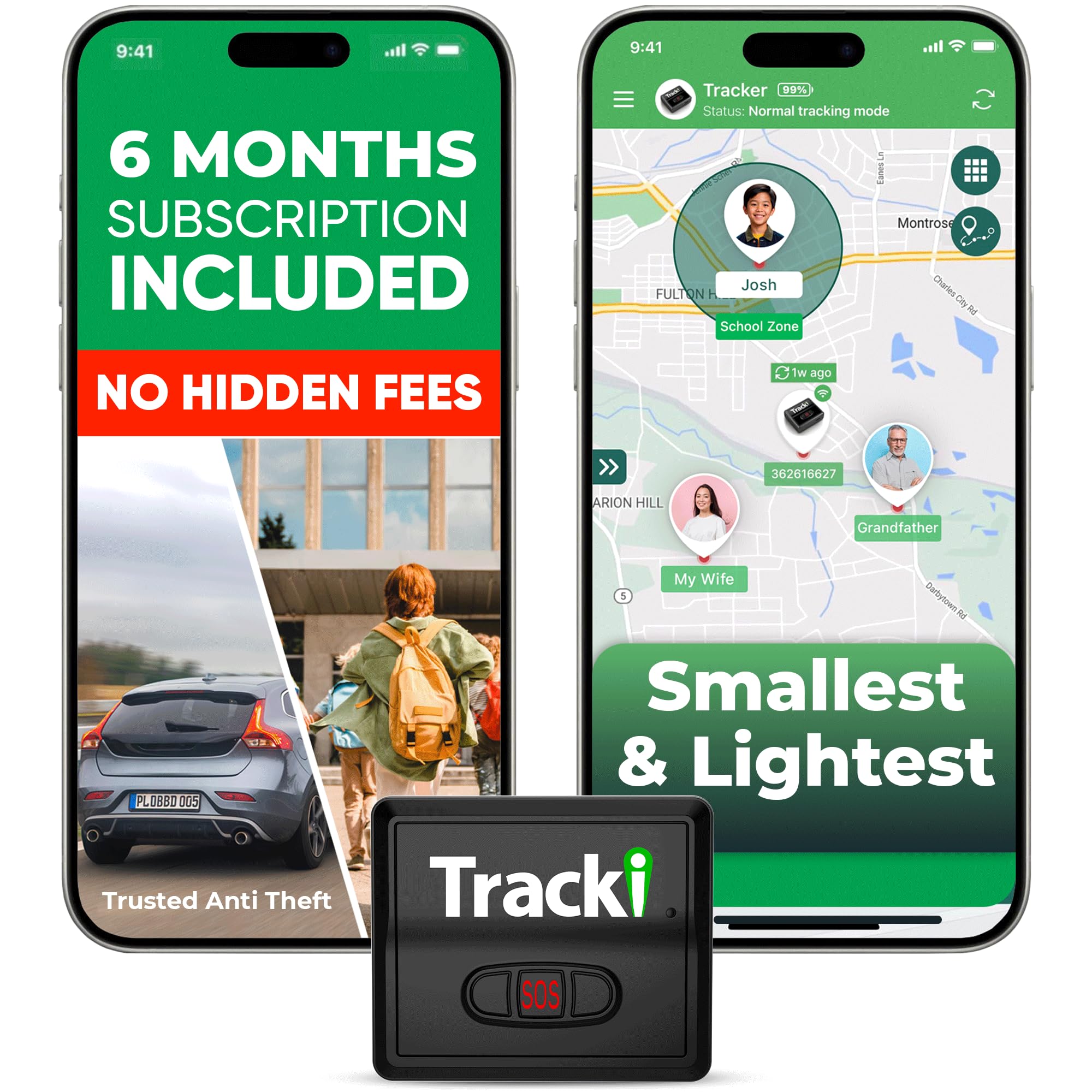
The Tracki Mini is the smallest tracker on the list at 1.81 x 1.5 x 0.6 inches and 1.26 ounces, making it easy to conceal in a glove box, a life jacket pocket, or a dry bag. It operates on 4G LTE with 1-minute auto-updates and 5-second manual pings, and the included six-month subscription covers the SIM and real-time tracking through the Tracki app. Geofence, speed, and movement alerts are configurable per asset.
The 600mAh rechargeable battery delivers 5 to 7 days of active use or up to 45 days in battery-save mode. An optional waterproof magnetic box extends battery capacity and adds weather protection, though the bare unit is not rated for submersion. The SOS button and two assignable quick-dial buttons add a personal safety layer if the tracker is carried by a crew member rather than hidden on the boat.
The Tracki is a cellular tracker, so performance depends on LTE coverage. In remote anchorages or offshore zones with no cell signal, it cannot report location. The plastic enclosure and clip attachment are adequate for light marine use but should be supplemented with the waterproof box for long-term boat installation. For the price, it is a capable entry-level tracker for trailered boats and small craft kept near cell coverage.
Why it’s great
- Ultra-compact at 1.26 ounces for hidden placement
- Six-month subscription included for out-of-box tracking
- Geofence and movement alerts are easy to configure
- Bluetooth proximity mode helps locate it nearby
Good to know
- Requires cellular coverage — no signal offshore
- Bare unit is not waterproof without optional case
- App activation can sometimes require a phone call
FAQ
Can I use a car GPS tracker on a boat without any modifications?
What is the difference between a PLB and a GPS tracker for theft prevention?
How do subscription costs compare across different boat GPS tracker types?
Final Thoughts: The Verdict
For most users, the gps tracker for boats winner is the Monimoto 9 because its motion-triggered call alert and IP68 waterproofing solve the core theft-prevention problem without requiring constant charging or a permanent power connection. If you want detailed coastal navigation with a floating handheld, grab the Garmin GPSMAP 79sc. And for offshore safety with confirmation your SOS was received, nothing beats the ACR ResQLink View RLS.