
The porous surface of concrete grabs paint, marker, and spray can tags like a sponge, making graffiti removal a battle of chemistry versus texture. Most general cleaners only smear the pigment deeper into the pores, leaving a ghost of the original vandalism that costs property owners in both time and curb appeal. You need a formula that can lift the binder without etching the substrate.
I’m Mohammad Maruf — the founder and writer behind Drink4Good. I have spent over forty hours analyzing the chemical compositions, safety data sheets, and real-world user results of the top graffiti removers on the market to find which ones actually break the bond between aerosol paint and calcium-silicate concrete without causing secondary damage.
Below are five specific formulations that serious property managers, restoration contractors, and homeowners trust to restore clean surfaces, starting with the best graffiti remover for concrete overall.
How To Choose The Best Graffiti Remover For Concrete
Selecting the right remover means matching the chemistry to the tag type (permanent marker vs. spray enamel), the concrete finish (broom, smooth, or acid-stained), and your acceptable level of manual scrubbing. The wrong choice wastes effort or damages the surface.
Chemistry: Solvent Strength vs. Surface Safety
Solvent-based removers (n-methylpyrrolidone or d-limonene blends) dissolve paint quickly but can etch sealed concrete or discolored stained finishes. Bio-based or alkaline removers are slower but gentler on the substrate. Always test in an inconspicuous corner first.
Dwell Time: Patience is a Chemical Requirement
Every remover needs sufficient contact time to penetrate the paint layer. Thin marker tags may lift in 5–10 minutes, while multi-layer spray tags on rough concrete can require 30 minutes or more. Products that claim instant results usually just smear the paint around.
Physical Format: Wipes, Sprays, or Liquids
Wipes offer convenience for small, vertical surfaces but run out quickly on large areas. Trigger sprays give controlled application for spot removal but can overspray. Bulk liquids (gallon jugs) are most economical for extensive walls or floors that need full saturation.
Quick Comparison
On smaller screens, swipe sideways to see the full table.
| Model | Category | Best For | Key Spec | Amazon |
|---|---|---|---|---|
| World’s Best Safewipes Graffiti Remover | Wipes | Quick tag removal on vertical concrete | 20 pre-saturated wipes per box | Amazon |
| Spitfire CBD540045 Gallon | Liquid | Large area concrete floor & wall cleaning | 1-Gallon ready-to-use liquid | Amazon |
| Akona Concrete & Masonry Dissolver | Liquid | Thin concrete residue plus paint removal | 28 oz, non-acid formula | Amazon |
| Tenon Concrete & Masonry Dissolver | Liquid | Thinset and mortar removal with paint | 28 oz, non-toxic, non-fuming | Amazon |
| Spitfire CBD540038 Spray 4-Pack | Spray | Targeted spot cleaning on various surfaces | 4 x 32 oz spray bottles | Amazon |
In‑Depth Reviews
1. World’s Best Safewipes Graffiti Remover

These pre-saturated wipes skip the measuring and spray-mist steps entirely, making them the fastest option for small concrete walls, garage doors, or entryway columns. The orange-scented solvent penetrates permanent marker, spray paint, and old wax in under ten seconds of dwell time, and the thick non-woven fabric provides the mechanical abrasion needed to break paint film without scratching the concrete finish.
Users consistently report that a single wipe removes several square feet of spray enamel before drying out, though thicker multi-layer tags may require two passes. The formula is noticeably less aggressive on underlying sealed concrete than aerosol solvent cans, reducing the risk of ghosting or discoloration on smooth finishes.
The main trade-off is cost per square foot — at 20 wipes per box, a large wall mural or repeated vandalism will deplete the supply quickly. For property managers who need a grab-and-go solution for daily tag patrol, however, the convenience and zero-mess application justify the premium.
Why it’s great
- No mixing, spraying, or runoff — wipes contain the solvent exactly where you need it
- Effective on both alcohol-based markers and spray enamel without surface haze
- Citrus scent is significantly less harsh than traditional graffiti solvents
Good to know
- 20-count box is consumed fast on large surfaces or heavy tags
- Not economical for full-wall coverage compared to liquid gallons
- May slightly strip light paint if rubbed aggressively on colored concrete
2. Spitfire CBD540045 Professional All Purpose Power Cleaner (Gallon)

Spitfire’s flagship liquid cleaner is a solvent-surfactant blend that penetrates and lifts paint, ink, grease, and gum from concrete floors and walls without the aggressive odor profile of straight acetone or xylene. The ready-to-use gallon delivers enough volume to saturate large swaths of rough concrete, which is critical because porous broom-finished slabs absorb chemical faster than sealed surfaces.
Reviews from commercial kitchen and school maintenance crews confirm that a 15-minute dwell time followed by a stiff-bristle scrub almost completely dissolves baked-on spray enamel and marker. The deodorizing pine scent, while not neutral, is far more tolerable than industrial chemical fumes when working in enclosed spaces like garages or stairwells.
On sealed or polished concrete, the solution may leave a thin greasy film if not rinsed thoroughly with water. Users should test a small patch first, especially on acid-stained floors, but for standard gray concrete this is the most cost-efficient heavy-duty option in the lineup.
Why it’s great
- Large gallon size provides excellent coverage for walls, driveways, and garage floors
- NSF certified and bleach-free, safe for use around food prep areas
- Pine scent masks the solvent odor better than unscented alternatives
Good to know
- Requires thorough water rinse to prevent film on sealed concrete
- Not specialized for concrete — designed as a multi-surface degreaser
- Strong pine fragrance may linger for hours in unventilated spaces
3. Akona Concrete & Masonry Dissolver (28 oz)
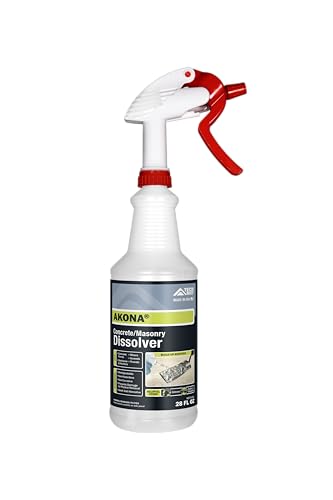
Akona’s amber liquid is technically a concrete dissolver rather than a spray-paint remover, but its ability to chemically soften the concrete binder makes it uniquely effective on tags that have bonded to fresh or uncured concrete surfaces. The non-acid, non-fuming formula begins working on contact and shows visible results in 30 minutes without chiseling or wire-brush scraping.
Users have successfully removed two-year-old concrete splatter from iron railings and heavy grout from tiles by simply applying with paper towels and letting the chemical weaken the mineral bond. For graffiti specifically, the formula works best on tags that are partially embedded in porous concrete rather than sitting on top of a sealed layer.
The main limitation is that it is not formulated to dissolve the organic polymers in spray paint — it attacks the concrete matrix surrounding the paint particles. For tags on old, dense concrete, a dedicated paint solvent like Spitfire will be faster. But for fresh concrete stains or tags on newly poured surfaces, Akona is the only product here that addresses the substrate itself.
Why it’s great
- Chemically removes concrete layers, ideal for tags embedded in new pours
- Non-toxic and safe around vegetation and landscaping beds
- Works in 30 minutes with minimal scrubbing effort
Good to know
- Less effective on sealed or polished concrete where no absorption occurred
- Not a dedicated spray-paint solvent — paint may need secondary removal
- 28-ounce bottle covers only small to medium areas
4. Tenon Concrete & Masonry Dissolver (28 oz)
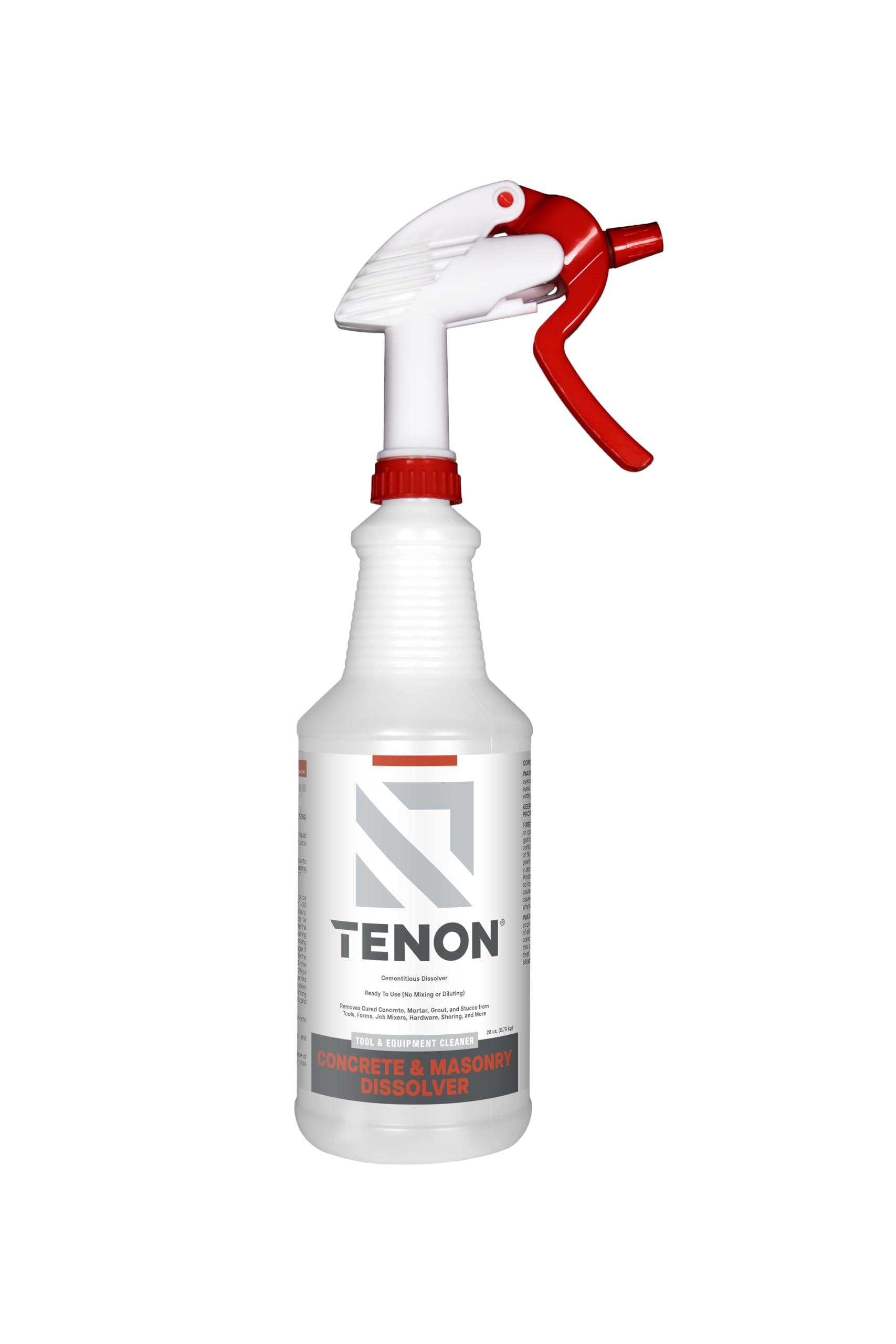
Tenon is manufactured by the same parent company as Akona and shares the same core non-acid dissolving technology, but with an added emphasis on safety — it is certified non-corrosive and non-fuming, making it the best choice for interior concrete surfaces like basement floors or garage walls where ventilation is limited. The unscented formula contains no strong chemical vapors that would require respirator use.
Where Tenon differentiates itself is in its performance on thinset mortar and grout residues that often accompany concrete repairs. Users report that 4-year-old mortar deposits on floor tile turned chalky and flaked off in large pieces after a single application. For graffiti, the chemical softens the concrete pore walls so that surface-level paint loses its mechanical grip.
The trade-off is that Tenon is slower on heavy paint layers compared to solvent-based options, and some users noted a white powdery residue after drying that requires a separate vinegar-water rinse to restore the original color. For sensitive concrete finishes where chemical staining is a concern, this is the safest starting point.
Why it’s great
- No harsh fumes — can be used indoors without heavy PPE
- Effective on both mortar residue and paint-trapped-in-pores
- Non-corrosive chemistry protects tools, mixers, and painted surfaces
Good to know
- White residue after drying may require additional rinsing step
- Requires longer dwell time (30+ minutes) for thick paint layers
- Small 28-ounce bottle covers limited square footage
5. Spitfire CBD540038 All Purpose Power Cleaner Spray (4-Pack)
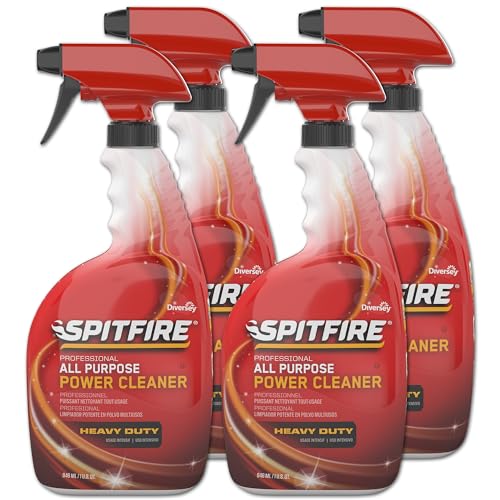
This four-pack of ready-to-use spray bottles brings Spitfire’s solvent-surfactant chemistry to a targeted application format that is ideal for spot-treating graffiti on small concrete sections, stair risers, or curb edges. The trigger spray delivers a controlled stream that avoids the overspray waste of aerosol cans and the pour-mess of open bottles.
Users report excellent results on dried fridge spills, mineral stains on sinks, and marker stains on walls, but the graffiti-removal strength is moderate — it handles fresh spray tags and marker easily, but heavily oxidized multi-layer tags may require two to three applications with scrubbing in between. The formula leaves a mild greasy film on non-porous surfaces that needs rinsing, but concrete absorbs most of the residue.
The value proposition is in the quantity: four 32-ounce bottles provide more total chemical volume than any other single product here. For a homeowner dealing with occasional tags on a driveway or garage floor, this pack will last through multiple cleanings without the per-wipe cost of pre-saturated cloths.
Why it’s great
- Four separate spray bottles allow distribution across multiple job sites
- Works well on both paint and everyday grime for dual-purpose use
- Lower per-ounce cost than single-spray alternatives
Good to know
- May need multiple passes for thick, oxidized spray enamel
- Leaves a slight film on sealed concrete that requires rinsing
- Chemical odor is noticeable — work in ventilated areas
FAQ
Can I use a general concrete cleaner to remove graffiti or do I need a dedicated remover?
Will graffiti remover damage the color or finish of my sealed concrete floor?
How do I remove old graffiti from porous broom-finished concrete without grinding?
Final Thoughts: The Verdict
For most users, the best graffiti remover for concrete winner is the World’s Best Safewipes Graffiti Remover because it combines instant grab-and-go convenience with strong solvent chemistry that removes marker and spray paint without hazily etching the concrete. If you need large-volume coverage for extensive walls or floors, grab the Spitfire CBD540045 Gallon for the best cost-per-square-foot. And for sensitive or interior concrete surfaces where fumes are a concern, nothing beats the Tenon Concrete & Masonry Dissolver for safety and gentle performance.