
You spot a fresh tag on your alley wall or a stray paint splatter on your driveway, and the first impulse is to grab whatever cleaner is under the sink. That gamble often ends with a smeared mess, a ruined surface, or a headache from chemical fumes that linger for hours. A dedicated formula is the only real way to lift acrylics, alkyds, and permanent markers without collateral damage to the substrate below.
I’m Mohammad Maruf — the founder and writer behind Drink4Good. I’ve spent weeks dissecting the chemical compositions, application methods, and real-world user feedback across the top graffiti removers on the market to isolate which formulations actually deliver on their aggressive claims without destroying the surface they’re supposed to protect.
This guide breaks down five professional-grade and heavy-duty solutions that cut through paint, ink, resin, and tar, helping you identify the right graffiti remover for your specific surface, exposure level, and budget priorities without guesswork.
How To Choose The Best Graffiti Remover
A graffiti remover is not a universal solvent. The wrong choice can etch concrete, dull automotive clear coats, or leave a greasy film that attracts new dirt within hours. The decision hinges on the paint chemistry, the surface porosity, and whether you need a ready-to-use spray for quick hits or a concentrate for large-scale restoration.
Solvent Base: Water, Citrus, or Petroleum
Water-based removers are gentle on latex paints and fresh marks but struggle against cured acrylics and permanent inks. Citrus-based formulations (typically d-limonene) penetrate cured alkyds and markers without the neurotoxicity of xylene, making them the safest indoor choice. Petroleum-based solvents (mineral spirits, naphtha) strip almost anything but pose flammability and off-gassing risks that limit their use in enclosed spaces.
Surface Compatibility
Porous substrates like unsealed brick, concrete, and wood absorb solvents and can wick the stain deeper if the remover is not paired with a proper rinse protocol. Non-porous surfaces (metal, glass, glazed tile, automotive paint) tolerate stronger solvents but are prone to etching or clouding if the dwell time exceeds the manufacturer’s window. Always test on a hidden patch before committing to the full application.
Concentration and Application Method
Concentrated formulas allow you to adjust the stripping strength: a 1:1 ratio for cured multi-layer tags and a 1:4 ratio for fresh drips or overspray. Ready-to-use trigger sprays offer convenience for small jobs, but they cap the maximum potency at what the manufacturer pre-diluted in the bottle. For restoration work on large walls or fleet vehicles, a concentrate mixed in a pump sprayer delivers both coverage and control.
Quick Comparison
On smaller screens, swipe sideways to see the full table.
| Model | Category | Best For | Key Spec | Amazon |
|---|---|---|---|---|
| Zep Cherry Bomb | Petroleum Gel | Industrial hand & graffiti cleanup | Petroleum solvent base with pumice | Amazon |
| Unsmoke Wall Wash | Citrus Concentrate | Smoke & paint residue on walls | Citrus solvent, 1-gallon concentrate | Amazon |
| Spitfire Power Cleaner | All-Purpose Degreaser | Graffiti & ink on hard surfaces | NSF certified, 32 oz pack of 4 | Amazon |
| Simple Green Crystal | Non-Toxic Concentrate | Fragrance-free, sensitive surfaces | Biodegradable, 1-gallon concentrate | Amazon |
| Goof Off FG720 | Spray Degreaser | Quick stain spot removal | Biodegradable, 16-oz trigger spray | Amazon |
In‑Depth Reviews
1. Zep Cherry Bomb 1 Gal

The Zep Cherry Bomb is formulated around a petroleum solvent base that dissolves cured paints, asphalt, tar, and adhesives on contact. Its gel consistency clings to vertical surfaces like concrete walls and brick, which prevents drip-off during the crucial dwell time. The pumice suspended in the gel provides a mild abrasive action that helps break the paint film without requiring aggressive scrubbing, making it effective against multi-layer tags that have baked on in the sun.
Users consistently report that this formula outperforms standard orange-pumice hand cleaners and general degreasers on industrial soils. The cherry scent masks the solvent odor, but the product is clearly built for shop or outdoor use — the manufacturer explicitly restricts sale in California due to VOC content. On non-porous surfaces like metal garage doors or glazed block, it strips even stubborn alkyd enamels in under three minutes with minimal residue.
The primary trade-off is that the petroleum base can leave a greasy film on smooth surfaces if not rinsed with a surfactant. Several reviewers noted that a follow-up wipe with a basic dish soap was necessary to eliminate the slimy feel, particularly in cooler weather when the gel thickens. For heavy-duty outdoor restoration where surface-etching is less of a concern, this is the fastest-acting option in the lineup.
Why it’s great
- Gel consistency clings to vertical surfaces, preventing drips during dwell time
- Pumice adds mechanical abrasion that breaks paint films without strenuous scrubbing
- Petroleum base dissolves cured alkyds, asphalt, and tar that water-based removers cannot touch
Good to know
- Greasy film residue requires a surfactant rinse on smooth surfaces
- High VOC content restricts use in enclosed or poorly ventilated spaces
2. Unsmoke Wall Wash with Biosolv
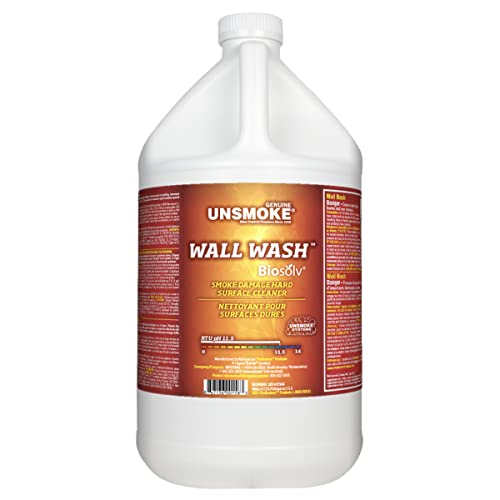
Unsmoke Wall Wash with Biosolv is a citrus-solvent concentrate designed to tackle paint, soot, nicotine tar, and cooking grease without the respiratory irritation of petroleum-based alternatives. The 1-gallon container yields up to 4 gallons of working solution at the standard 1:3 dilution, making it the most economical choice for large-scale wall restoration projects. Its proprietary brightening agents lift discoloration from porous surfaces, so the wall looks clean even after the paint itself is gone.
Real-world testing on nicotine-stained ceilings and smoke-damaged drywall shows that a 1:1 ratio with a 30-minute dwell time removes cured alkyd paint that conventional degreasers leave behind. The citrus scent is noticeably milder than xylene or naphtha, and the formula rinses completely with a damp towel — no greasy film to chase. Reviewers who used it on RV interiors and fire-damaged rooms noted that three passes (first concentrate-heavy, then two rinse passes) restored surfaces to near-original condition.
The limitation is its solvent strength: while excellent against alkyds and food-based soils, it struggles against epoxy-based graffiti paints and industrial-grade urethanes that require a higher solvent polarity. It is also a concentrate that requires proper PPE when handling the undiluted liquid, as the Biosolv can irritate skin on prolonged contact. For residential and light commercial graffiti removal where low odor is a priority, this is the most surface-safe option tested.
Why it’s great
- Citrus solvent base minimizes respiratory irritation compared to petroleum alternatives
- Residue-free rinse eliminates the need for secondary surfactant washing
- Concentrate provides excellent per-square-foot value for large wall surfaces
Good to know
- Struggles against epoxy and industrial-grade urethane paints
- Requires gloves and ventilation when handling undiluted concentrate
3. Spitfire CBD540038 Power Cleaner
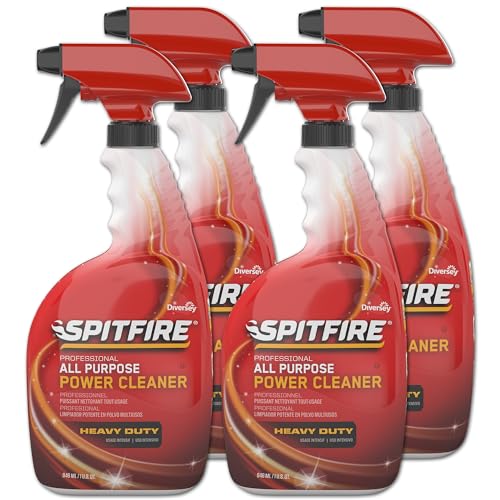
Spitfire Power Cleaner is an NSF-certified, ready-to-use spray that blends degreasing surfactants with a solvent system capable of breaking down spray paint, ink, marker, and adhesive residues on hard surfaces. The 32-ounce bottles come in a pack of four, giving you multiple spray heads for different rooms or job sites. Its bleach-free formula means it won’t discolor colored grout or painted drywall, which is a common failure of harsher graffiti removers that rely on chlorine stripping.
User feedback consistently highlights its speed on kitchen counter marks and classroom graffiti: a 30-second dwell dissolves fresh latex and water-based markers, while cured acrylic requires a second application. The pine scent is divisive — some find it pleasant, others note it is strong enough to linger for an hour after rinsing. On non-porous surfaces like glass, stainless steel, and glazed tile, it rinses completely without streaking, which sets it apart from degreasers that leave a cloudy film.
The key limitation is that Spitfire is technically a heavy-duty all-purpose cleaner that can remove graffiti, not a dedicated graffiti stripper. It lacks the aggressive solvent load to lift fully cured epoxy or two-part automotive paints in a single pass. For light graffiti, marker vandalism, and general surface restoration, it delivers excellent versatility, but for deeply embedded multi-layer tags, you will likely need multiple treatments or a switch to a stronger concentrate.
Why it’s great
- NSF certification makes it suitable for food-prep areas and daycares
- Bleach-free formula prevents discoloration on grout, paint, and porous stone
- Ready-to-use trigger spray eliminates dilution guesswork for quick jobs
Good to know
- Struggles with cured epoxy and two-part urethane paints in a single pass
- Pine scent can be overpowering in enclosed spaces without ventilation
4. Simple Green 19128 Crystal Industrial Cleaner
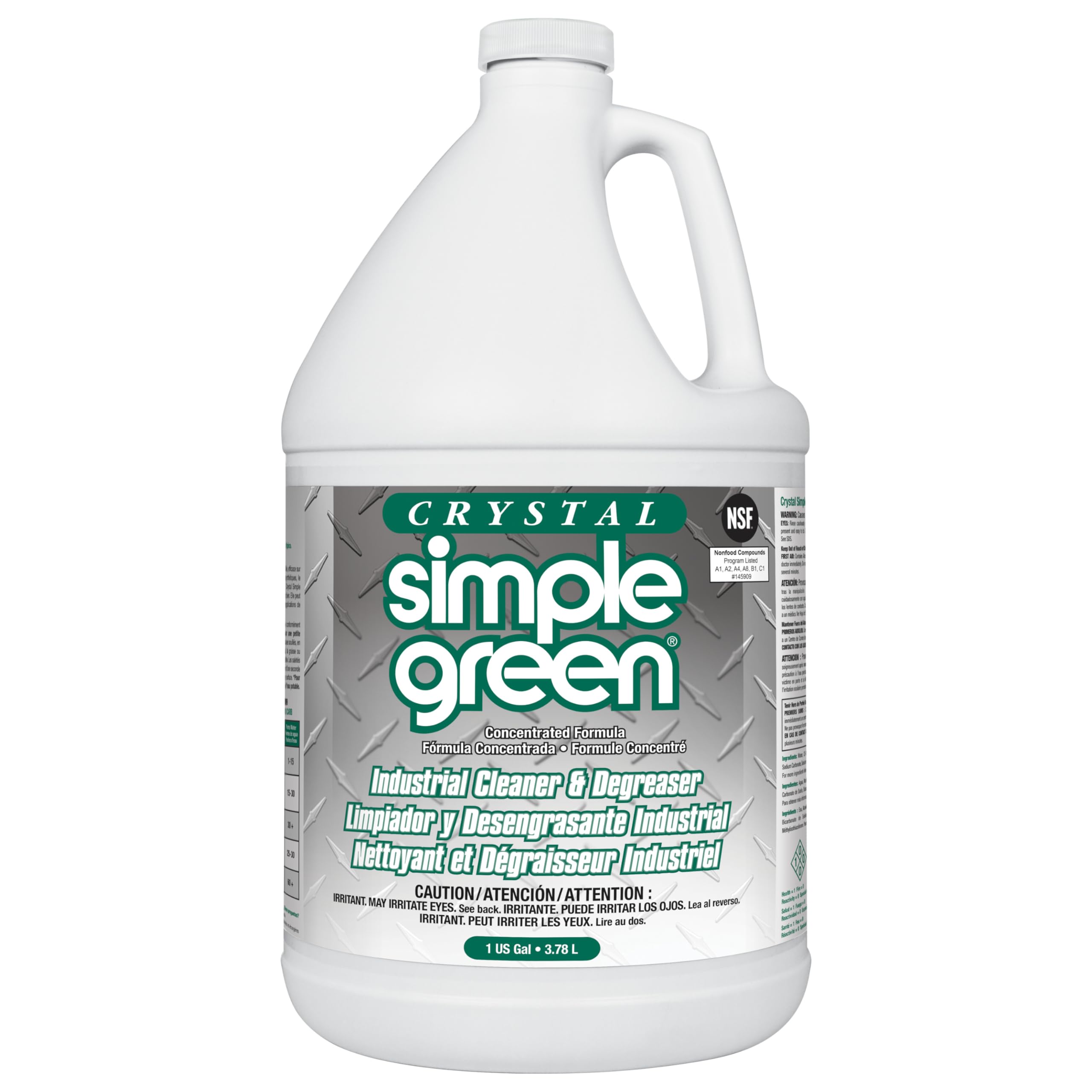
Simple Green Crystal is the fragrance-free, dye-free industrial variant of the classic all-purpose cleaner, formulated for applications where added scent or color could contaminate sensitive environments. It is a non-toxic, biodegradable concentrate that cuts through grease and grime without the caustic alkalinity or solvent strength of dedicated paint removers. This makes it the safest choice for graffiti cleanup on painted interior walls, sealed concrete, and automotive finishes where you want to avoid stripping the underlying clear coat.
User reports confirm that at a 1:1 ratio it removes fresh latex drips and marker stains with minimal agitation, and at a 1:10 ratio it serves as a mild degreaser for routine maintenance. The clear formula leaves no residue on glass or metal, and the lack of fragrance means it can be used in schools, healthcare facilities, or pet-friendly homes without triggering sensitivities. Reviewers who used it on warehouse floors and service vehicles praised its ability to lift oil-based grime without the lingering chemical odor of other industrial degreasers.
The trade-off is that Crystal is a mild cleaner, not a strong solvent. It will not remove cured alkyd paint, epoxy, or urethane in any practical time frame. For graffiti that has been sitting for more than 48 hours, you need a longer soak or a hotter formulation. It also requires dilution mixing, so it is less convenient for quick spot-cleaning than a trigger-spray product. Think of it as the low-risk starting point for sensitive surfaces — not the finish line for tough tags.
Why it’s great
- Non-toxic, biodegradable formula safe for use around pets and food areas
- Fragrance-free composition prevents chemical odor contamination in enclosed spaces
- Clear concentrate leaves zero dye residue on light-colored surfaces
Good to know
- Mild solvent profile ineffective against cured alkyd paint and epoxy graffiti
- Requires manual dilution, making it less convenient for small spot treatments
5. Goof Off FG720 Heavy Duty Spot Remover
Goof Off FG720 is a 16-ounce trigger spray formula marketed as a household spot and stain remover, but it punches above its weight on light graffiti jobs involving latex paint, permanent marker, and sticky residue. Its biodegradable surfactant blend lifts water-based paint from fabric and hard surfaces without the heavy solvent load of industrial strippers, making it a safe first attempt on upholstery, finished wood, and automotive interiors. The fresh scent is notably mild compared to the chemical odors of the petroleum-based products in this lineup.
Reviewers report impressive results removing dried latex paint from kids’ clothing and marker stains from velvet upholstery in under five minutes. On non-porous surfaces like baseboards and metal trim, a spray-and-wipe motion lifts fresh acrylic drips with no visible damage to the underlying finish. The trigger spray provides targeted application, which minimizes waste and overspray compared to a wet rag or sponge method.
The main drawback is that it is a thin liquid that runs off vertical surfaces quickly, so it requires multiple applications for any significant tag or thick paint layer. It also leaves a faint chemical odor on fabric that can persist through several wash cycles, as noted by users who tried it on heavy-duty chore coats. For quick household touch-ups and small marker graffiti, it is a budget-friendly starter, but for exterior wall restoration or multi-layer tags, you will quickly outgrow its capacity.
Why it’s great
- Biodegradable formula reduces environmental impact during rinse-off
- Trigger spray allows precise, low-waste application on small stains
- Effective on fresh latex and marker stains within minutes
Good to know
- Thin liquid runs off vertical surfaces, requiring multiple passes for thick paint
- Chemical odor can persist on fabric through multiple wash cycles
FAQ
Can I use a graffiti remover on painted brick without stripping the original paint?
How do I remove old graffiti that has been on concrete for months?
What is the difference between a graffiti remover and a regular degreaser?
Final Thoughts: The Verdict
For most users, the graffiti remover winner is the Unsmoke Wall Wash because its citrus concentrate strips cured paint and smoke residue without the harsh fumes of petroleum solvents, and it rinses completely with no greasy film. If you need maximum solvent aggression for industrial-scale restoration on concrete and masonry, grab the Zep Cherry Bomb. And for quick household marker and latex cleanups on sensitive surfaces, nothing beats the Goof Off FG720 for its straightforward trigger-spray convenience.