
Selecting a safe, nutrient-dense grain to support healthy weight gain and steady digestion is the single most important decision for a thriving herd. Bulk bins at farm-supply stores can hide moisture issues and inconsistent quality, making it difficult to know exactly what your cattle are consuming.
I’m Mohammad Maruf — the founder and writer behind Drink4Good. This guide is built from hours of cross-referencing feed-grade specifications, organic certifications, and bulk packaging methods to find the most reliable options for your operation.
Whether you are finishing steers or supplementing a cow-calf diet, the right choice starts with understanding fiber levels and processing. Here is the definitive, research-backed selection for grain for cattle.
How To Choose The Best Grain For Cattle
Cattle feeders must balance energy density with fiber content to avoid acidosis and maintain rumen function. Not all grains are equal: whole barley offers a superior starch-to-fiber ratio, while oat groats provide a safer, high-fiber alternative for starter rations. Processing method is equally critical — intact kernels slow fermentation, while cracked or rolled grains release energy faster. Look for a clean, uniform grain with no musty smell or visible mold. Always verify the feed is free from pesticides and GMOs if you are raising organic beef.
Understanding Feed-Grade vs. Whole-Grain
Feed-grade grains are specifically grown and harvested for livestock, meaning they are safe and nutritionally adequate but may contain slight imperfections that would disqualify them from the human food market. This is not a flaw; it simply means the grain is priced for volume feeding. For cattle, a feed-grade whole barley that retains its outer hull is ideal because the hull slows starch degradation in the rumen, reducing the risk of bloat.
The Role of Fiber in Rumen Health
Cattle need a minimum amount of effective fiber — usually from forage — to stimulate chewing and saliva production. When adding grain to the ration, the grain’s own fiber can supplement this. Whole oat groats are higher in fiber and lower in starch than barley, making them a safer choice for animals transitioning onto grain for the first time. Barley provides more energy per pound, which helps with faster finishing, but it requires careful introduction.
Freshness, Storage, and Packaging
Grains in resealable, heavy-duty bags that block light and moisture will stay fresh significantly longer than those shipped in paper sacks. Inspect the package for any signs of damage or moisture intrusion before purchase. A grain that smells musty or has visible dust is likely old and may have lost nutritional value or developed mold. Buying in 10-pound or 5-pound bags allows you to test a small batch before committing to a larger volume from the same supplier.
Quick Comparison
On smaller screens, swipe sideways to see the full table.
| Model | Category | Best For | Key Spec | Amazon |
|---|---|---|---|---|
| Ernst Grain & Livestock Whole Barley | Feed-Grade | All-around herd feeding | 10 lb resealable bag | Amazon |
| Mulberry Lane Farms Oat Groats | Whole Grain | High-fiber starter rations | 5 lb organic, USDA | Amazon |
| Food to Live Pearl Barley | Hulled | Cooking and milling | 10 lb bulk bag | Amazon |
| Mulberry Lane Farms Hulled Barley | Whole Grain | Small-scale feed trials | 5 lb organic, USDA | Amazon |
| 1000 Springs Mill Purple Barley | Specialty | Canning and specialty rations | 4 x 16 oz resealable | Amazon |
In‑Depth Reviews
1. Ernst Grain & Livestock Whole Barley
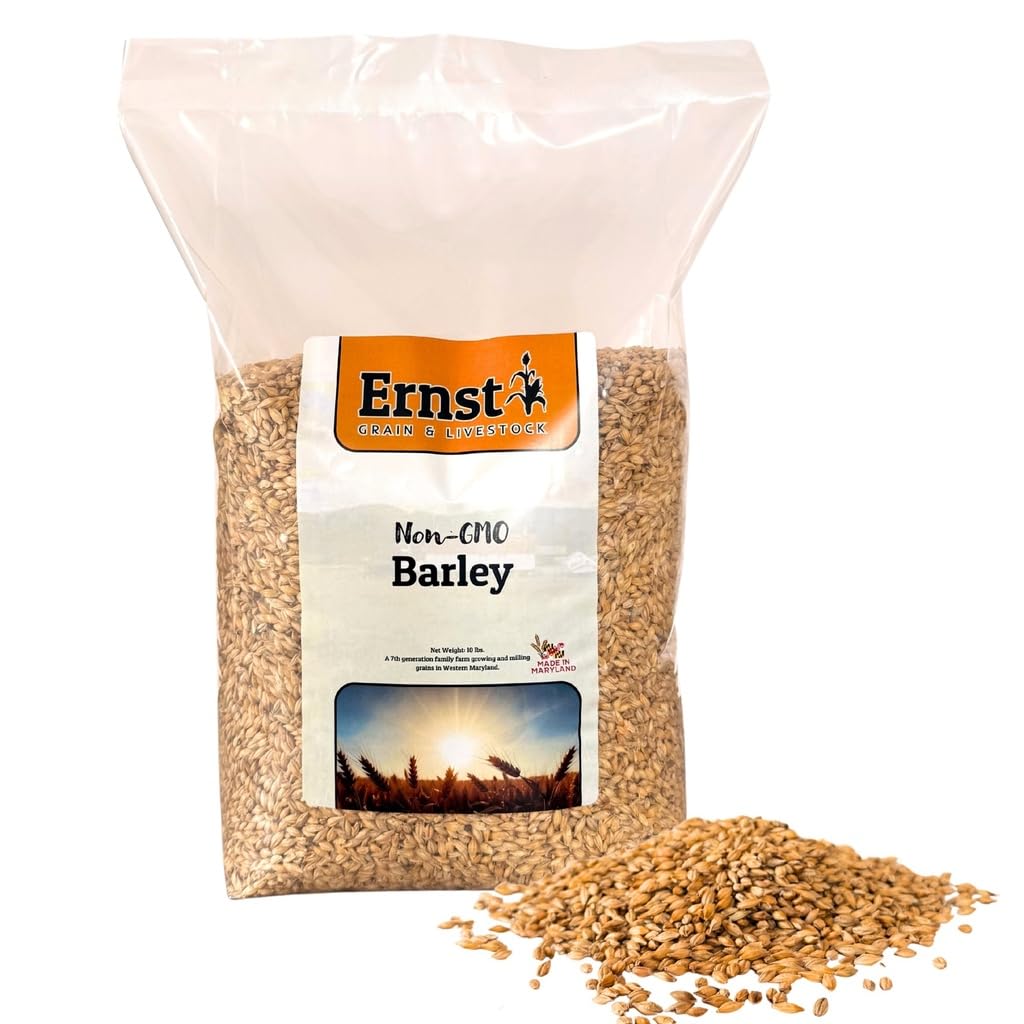
This is the purest feed-grade whole barley available for cattle feeders who want a clean, unprocessed grain straight from a dedicated livestock brand. The kernels arrive intact with their hulls on — the exact form that slows rumen fermentation and reduces the risk of acidosis. Each batch packs the plant-based protein and B-vitamins necessary for steady weight gain and healthy coat condition, all verified 100% non-GMO and free of any additives or preservatives.
Customer feedback highlights that the barley is consistently fresh, with minimal dust and no musty smell. The 10-pound resealable bag is a practical size for small to medium operations, preserving freshness between feedings. Users have also noted the versatility of using it as a base grain or mixing it into a complete ration for horses, sheep, goats, and poultry.
Ernst Grain & Livestock is a family-run agriculture brand, so you are buying from a source that understands the practical realities of feeding animals. The grain performs well both for direct feeding and for sprouting, which can offer added nutritional benefits during colder months when fresh forage is limited.
Why it’s great
- Truly feed-grade with hull intact for safe rumen digestion
- Resealable bag maintains freshness and simplifies storage
- High germination rate for sprouting as a supplement
Good to know
- Not certified organic — suitable for conventional feeding
- Return shipping on larger quantities can be costly
2. Mulberry Lane Farms Whole Oats

If you are introducing grain to cattle that have been on a forage-only diet, whole oat groats are the safest starting point. These organic, de-hulled oats from Mulberry Lane Farms deliver a higher fiber content than barley, which provides a gentle energy boost without overwhelming the rumen. The product is certified organic by the Global Organic Alliance and confirmed non-GMO, meeting the strictest organic feeding requirements.
Customers consistently praise the exceptional cleanliness of this grain — no weed seeds, no broken kernels, and no off odors. The 5-pound package works well for small herds or for mixing precise rations. Many users report cooking the oats for their own breakfast, and the same batch works perfectly for their livestock, a testament to its human-grade quality and freshness.
These oats are de-hulled, meaning the inedible outer husk has been removed, leaving only the nutritious groat. This makes them immediately digestible for cattle without needing to be rolled or cracked. They are also excellent for grinding into fresh oat flour to mix into a complete feed blend.
Why it’s great
- Higher fiber content makes it ideal for transitioning calves
- Certified organic and non-GMO for clean feeding
- Exceptionally clean grain with no debris or pests
Good to know
- Label states it is not suitable for sprouting
- 5-pound bag may be small for large-scale feeding
3. Food to Live Pearl Barley
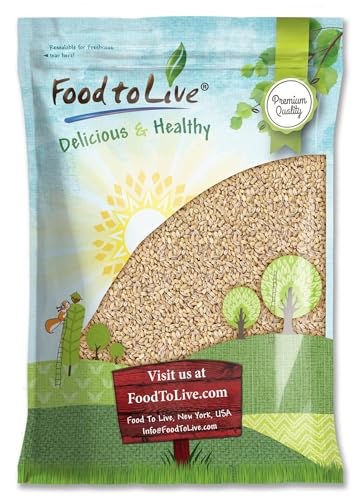
For feeders who process their own grain, this 10-pound bag of pearled barley offers an excellent bulk value at a moderate cost per pound. Pearled barley has been processed to remove the outer hull, which means it cooks faster and is easier to mill into flour for mixing into rations. The grain comes from Food to Live, a consistent supplier of bulk grains with a strong reputation for freshness and consistent kernel size.
Buyer reviews frequently note the clean appearance — free of hull fragments and chaff — and the pleasing, nutty aroma that indicates fresh stock. The resealable bag is a practical feature for keeping the grain dry and pest-free through weeks of use. Several customers specifically bought this for grinding into barley flour to make homemade cattle feed cakes and supplements.
Because the hull is removed, this is a more rapidly fermenting grain than whole barley. It is best suited for cattle that are already well-adapted to grain feeding, or for use as a small portion of a mixed ration. The manganese and selenium content are excellent for overall metabolic health.
Why it’s great
- Bulk 10-pound bag offers strong value for processing
- Pearled grains cook and mill quickly
- Fresh, clean grain with consistent kernel size
Good to know
- May be processed and fermented faster than whole barley
- Earlier shipments had packaging issues (holes)
4. Mulberry Lane Farms Hulled Barley

This USDA certified organic hulled barley from Mulberry Lane Farms offers a versatile option for the livestock keeper who also wants to test a grain before ordering in larger bulk. The 5-pound bag is an ideal trial size — enough to introduce to a small group of animals and observe their tolerance and preference. The grain is grown in the USA and certified by the Global Organic Alliance, ensuring no synthetic pesticides or GMOs.
Customer reports confirm that the barley arrives fresh and clean, with no musty odors or insect activity. The outer coarse husk has been removed, but the bran layer remains intact, preserving the beta-glucan fiber that supports digestive health and steady energy release. One user noted that an overnight soak followed by a pressure cooker produced excellent results for personal consumption, demonstrating the grain’s versatility.
This hulled barley is a middle ground: it has slightly more processing than whole barley but far less than pearled barley. For cattle, it offers a digestibility boost while retaining enough fiber to prevent rapid starch release. The minimalist packaging keeps costs down, and the grain has a good shelf life if stored in a cool, dry place.
Why it’s great
- Certified organic and non-GMO from a domestic farm
- Small 5-pound bag is perfect for testing rations
- Retains bran layer for balanced fiber content
Good to know
- Requires overnight soak and longer cooking time if used for feed processing
- Not sold in a resealable bag — storage container needed
5. 1000 Springs Mill Purple Barley
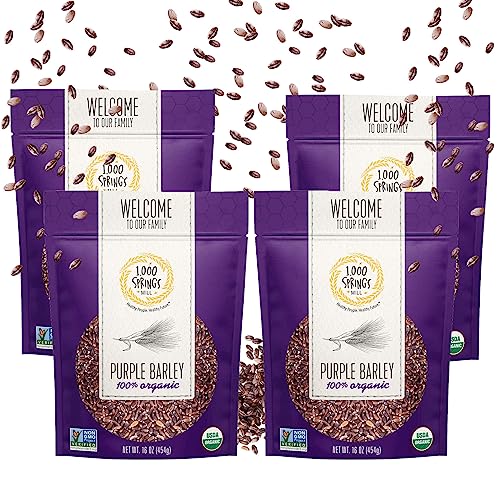
This purple barley from 1000 Springs Mill is an intriguing option for specialty feeders looking to add variety to a ration or to use as a treat grain. It is cultivated using regenerative farming practices from third-generation family farms in Idaho, and is certified organic. The deep purple color comes from anthocyanins — the same antioxidants found in blueberries — and the grain offers 15% protein along with significant iron, calcium, and potassium.
Customer reviews highlight that the grain sprouts beautifully, making it suitable for producing barley grass for winter supplementation. The 4-pack of 16-ounce resealable bags means each package can be opened as needed, preserving the freshness of the remaining stock. The smoky, chewy texture is appreciated by handlers who occasionally taste the grain themselves.
Because it comes in individual 1-pound packets, this is best suited for small-scale operations or for mixing into a custom ration as a nutritional booster. It is not economical as a primary feed grain, but the high protein and antioxidant content make it a valuable supplement for animals during periods of stress or illness.
Why it’s great
- High protein content (15%) and antioxidant-rich
- Excellent sprouting capability for winter greens
- Individually sealed packets maintain freshness
Good to know
- Small 1-pound per bag — not for bulk feeding
- Premium cost makes it best as a supplement, not a staple
FAQ
Can I feed whole barley directly to cattle without rolling it?
What is the difference between hulled barley and pearled barley for livestock?
How should I store bulk grain for cattle to keep it fresh?
Final Thoughts: The Verdict
For most operations, the grain for cattle that balances cost, safety, and nutrition is the Ernst Grain & Livestock Whole Barley because its feed-grade, hull-intact form supports healthy weight gain with minimal risk of rumen upset. If you need a high-fiber grain for transitioning animals onto grain, grab the Mulberry Lane Farms Oat Groats. And for the bulk buyer processing their own feed, nothing beats the value of the Food to Live Pearl Barley for its consistent quality and larger volume.