
Feeding a miniature horse isn’t about scaling down what you give a full-sized horse — their metabolism, digestion, and caloric needs are fundamentally different. One wrong scoop of high-sugar grain can trigger laminitis, colic, or rapid weight gain that stresses tiny joints. The challenge is finding a ration that delivers essential fiber and protein without spiking starch levels.
I’m Mohammad Maruf — the founder and writer behind Drink4Good. I’ve spent countless hours analyzing feed formulations, veterinary guidelines on equine metabolic syndrome, and the precise nutritional profiles that keep miniature horses thriving, not just surviving.
This guide breaks down the safest, most effective options for keeping your miniature horse in peak condition — the best grain for miniature horses depends on controlled sugar and starch, high-quality fiber, and the right caloric density for their unique size.
How To Choose The Best Grain For Miniature Horses
Miniature horses have the digestive tract of a full-sized horse but a much smaller stomach capacity. That means you need a highly digestible, nutrient-dense feed that won’t overload them with nonstructural carbohydrates (NSC). Start your decision by checking the guaranteed analysis on the bag — specifically the NSC (sugar plus starch) percentage, which should stay below 12–15% for most minis. The protein level needs to support muscle and hoof growth without pushing weight gain, so aim for 12–16% crude protein unless your mini is a hard keeper. Fat content can help underweight minis or those needing coat condition, but is unnecessary for easy keepers getting sufficient hay.
Fiber and Forage First
The base diet for any healthy miniature horse should be high-quality grass hay, not grain. Grain is a supplement to fill nutritional gaps. The best options include added beet pulp or other fermentable fiber sources that provide slow-release energy without starch spikes. If your mini maintains weight on hay alone, you may only need a low-intake ration balancer rather than a full bag of grain. For hard keepers or seniors, a high-fat supplement or complete feed with controlled starch becomes essential.
Sugar and Starch Management
Miniature horses are prone to equine metabolic syndrome and insulin resistance. Any grain you choose must list the maximum NSC or sugar and starch values. Grains with added molasses or high starch content can trigger acute laminitis. Look for feeds that specify “low sugar and starch” or “for easy keepers.” Whole barley and other intact grains can be safer than heavily processed sweet feeds because they release sugars more slowly during digestion. Always introduce new grain gradually over 7–10 days to avoid colic.
Quick Comparison
On smaller screens, swipe sideways to see the full table.
| Model | Category | Best For | Key Spec | Amazon |
|---|---|---|---|---|
| Purina Mini Horse & Pony Feed | Premium Pellet | Complete nutrition for all life stages | Controlled sugar & starch levels | Amazon |
| Manna Pro Cool Calories 100 | Fat Supplement | Adding weight & coat shine | 99% fat, cool energy calories | Amazon |
| Ernst Grain & Livestock Whole Barley | Whole Grain | Unprocessed base grain for mixing | Non-GMO, high fiber barley kernels | Amazon |
| Foldhill Mini Mixer | Soft Pellet Mix | Seniors with chewing difficulty | Soft texture, 15 kg tub | Amazon |
| Nutrena Country Feeds Mini Pig Feed | Pelleted Feed | Alternative protein source | 16% protein, all life stages | Amazon |
In‑Depth Reviews
1. Purina Mini Horse & Pony Feed
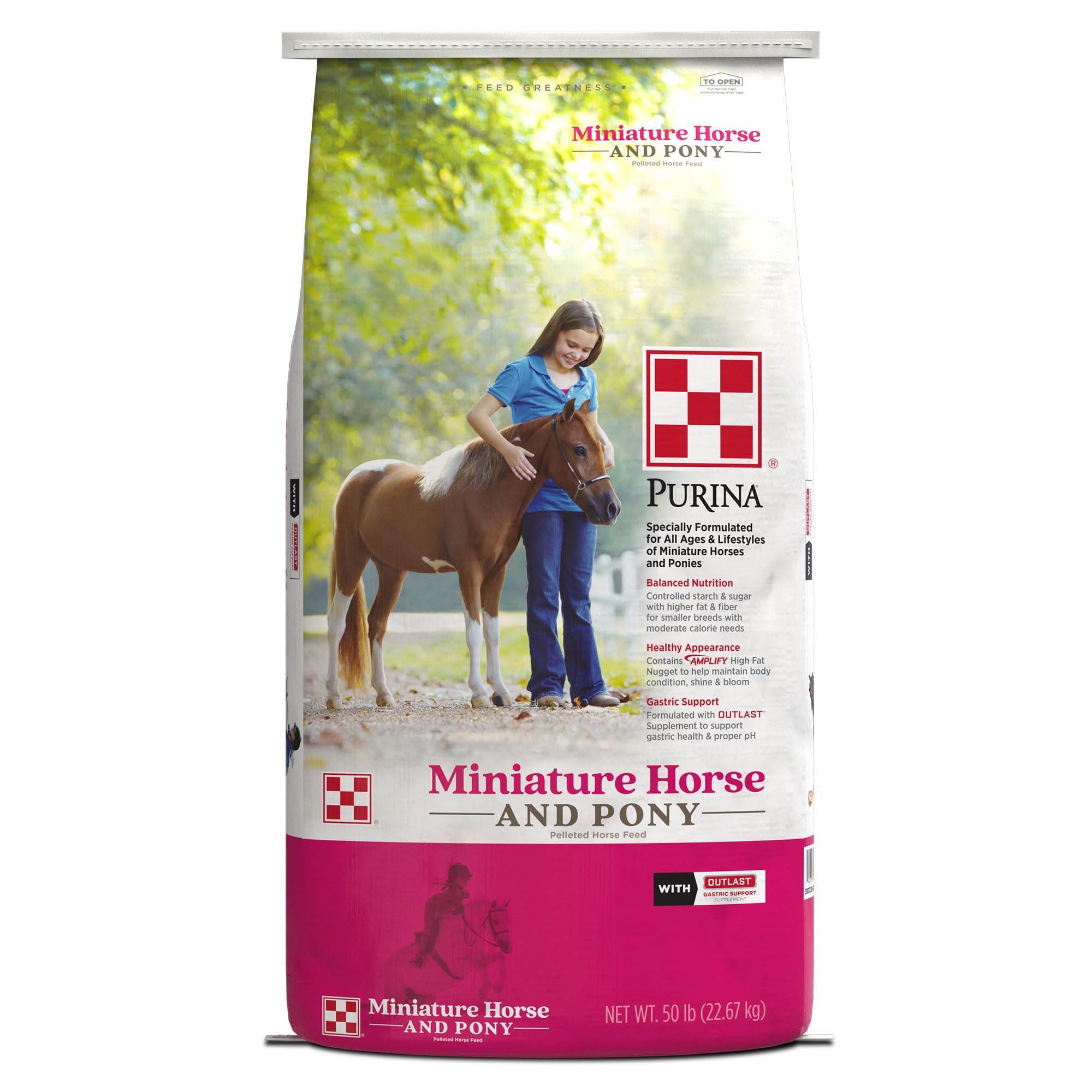
Purina designed this concentrated feed specifically for the metabolic needs of miniature horses and ponies. The formula includes Amplify High-Fat Nuggets with a proprietary blend of vegetable oils, flax seed, and rice bran to deliver an optimal fatty acid profile without triggering starch overload. The guaranteed analysis shows controlled sugar and starch levels that reduce laminitis risk, while the added beet pulp provides slow-release fermentable fiber for steady energy throughout the day. Owners of hard-keeping minis report noticeable improvements in weight maintenance and coat gloss within three weeks.
The pellet size is small enough to prevent choking, an important safety factor for minis with smaller mouths and dental issues. Purina uses highly digestible ingredients like soybean meal and ground corn, but the starch is bound within the pellet matrix to slow glucose release. The 50-pound bag is practical for multi-horse households, but single-mini owners should note it needs airtight storage to preserve freshness. Many buyers say their horses “go crazy” for the taste, making it effective for picky eaters or seniors losing appetite.
Some reviewers point out the price is higher than at local feed stores, but the convenience of Amazon delivery to rural addresses is a strong trade-off. The formula works as a complete feed or as a supplement to hay, with feeding rates as low as 1–2 pounds per day for smaller minis. If your mini is an easy keeper, reduce the portion to avoid weight gain since the calorie density is higher than basic hay alone.
Why it’s great
- Controlled sugar and starch for metabolic safety
- Amplify nuggets provide omega fatty acids for coat and immunity
- Added beet pulp for slow-release fiber energy
Good to know
- Premium tier — higher cost per bag than basic grains
- May be too calorie-dense for easy keepers on good hay
2. Manna Pro Cool Calories 100

Manna Pro Cool Calories 100 is the purest fat supplement on the market, delivering 99% fat in a dry, scoopable powder that adds dense calories without the sugar spike of traditional grain. Each pound provides more than two times the energy of carbohydrates, making it ideal for miniature horses that are hard keepers, senior minis losing condition, or ponies recovering from illness. The “cool energy” label means the calories come from fat, not starch, so you avoid the hot behavior often seen with high-grain diets.
The key spec here is the 99% fat content sourced from stabilized rice bran and vegetable oils — this gives you a high-calorie density in a very small volume. For a mini that needs to gain weight but can’t eat large volumes safely, you can add just 1–2 scoops per day to their hay or existing ration. The fatty acid profile supports a glossy coat and healthy hoof wall, with many owners reporting improvements in 30 days. Older horses that have trouble chewing can benefit because the powder mixes easily into a mash with warm water.
This supplement is not a complete grain — it must be fed alongside a balanced base diet. Some minis gain weight too quickly if the owner over-estimates portions, so start low and monitor body condition. The 8-pound bag lasts about a month for one mini, offering a budget-friendly entry point for weight support. Buyers note the flavor is naturally sweet without added sugar, which helps acceptance even with picky eaters.
Why it’s great
- Zero sugar calories — safe for metabolic issues
- Concentrated source — very small feeding volume for minis
- Improves coat shine and hoof quality with fatty acids
Good to know
- Not a standalone grain — must pair with hay or a base feed
- Easy keepers may overshoot weight if portions are not measured
3. Ernst Grain & Livestock Whole Barley
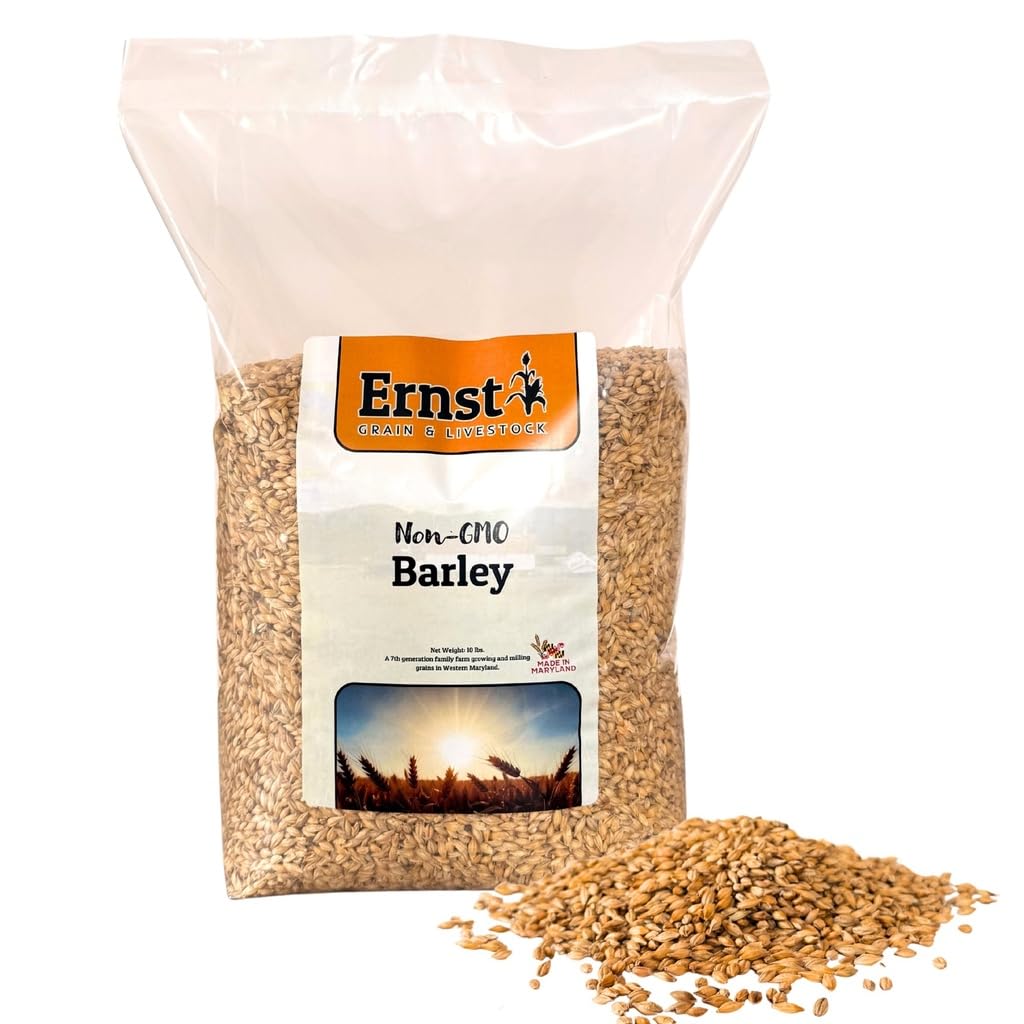
Whole barley is a time-tested grain for horses because the intact kernel releases starch more slowly than rolled or ground versions, reducing the glycemic spike. Ernst Grain & Livestock packs their barley as unprocessed, non-GMO kernels with no additives or preservatives, giving you a pure base grain that you can mix into your horse’s existing ration. The 10-pound resealable bag is convenient for testing whether your mini tolerates barley before committing to bulk, though 10 pounds will need supplementing with other nutrients since barley alone isn’t a complete diet.
The nutritional profile is what you want for minis: high fiber (around 5–6% crude fiber plus beta-glucans), moderate protein (around 10–12%), and low oil content. The fiber supports hindgut fermentation and steady energy release. Customer reviews highlight near 100% sprouting rates, confirming the grain is fresh and viable — a good sign for feed quality. You can also sprout the barley for nutrient-dense fodder, which minis love as a fresh treat with living enzymes.
The biggest catch is that whole barley must be fed with a proper mineral and protein supplement to be a complete diet. It works best when mixed 50/50 with a textured feed or balanced pellet. The 10-pound size is a minor drawback for multi-animal households, but the freshness guarantee offsets that. Barley is also lower in starch than corn or oats, making it a wiser choice for insulin-sensitive minis than many commercial sweet feeds.
Why it’s great
- Slow starch release — safer for insulin-resistant minis
- Non-GMO, all-natural with no preservatives
- Can be sprouted for fresh fodder
Good to know
- Not a complete feed — needs mineral and protein balancing
- 10-pound bag is small for multi-horse barns
4. Foldhill Mini Mixer

Foldhill Mini Mixer is a soft-textured pelleted blend designed primarily for smaller mouths and aging animals with dental challenges. The 15 kg (33 pound) tub provides a sealed, stackable container that keeps the feed fresh longer than paper bags — ideal for humid environments where feed spoilage is a concern. While marketed originally for dogs, the soft texture and balanced formulation work well for ponies and minis that struggle with hard pellets or whole grains. The pellets break apart easily when soaked, creating a mash that older horses can gum without risk of choking.
The guaranteed analysis from Foldhill indicates moderate protein and fat levels suitable for maintenance rather than heavy work or rapid weight gain. Owners of miniature horses that have lost molars or have periodontal disease report this is one of the few products their seniors will actually finish. The tub’s resealable lid also minimizes pest attraction compared to tied-off bags. The higher cost per pound reflects the specialized soft processing and the plastic tub packaging.
The main limitation is that this grain is not widely tested by miniature horse owners in the US, so anecdotal feedback is lighter than for Purina or Manna Pro. The protein content may be slightly below the 14–16% ideal for lactating or growing minis. You should view this as a supplement or temporary feed for dental recovery, not a lifelong complete diet. The 15 kg tub is a moderate investment upfront, but the freshness savings can outweigh the per-pound cost for a single mini.
Why it’s great
- Soft texture ideal for senior minis with missing teeth
- Resealable 15 kg tub for long-term freshness
- Pellets soak into a palatable mash quickly
Good to know
- Protein level may be low for growth or lactation
- Less mini horse specific — adapted from a dog feed formula
5. Nutrena Country Feeds Mini Pig Feed
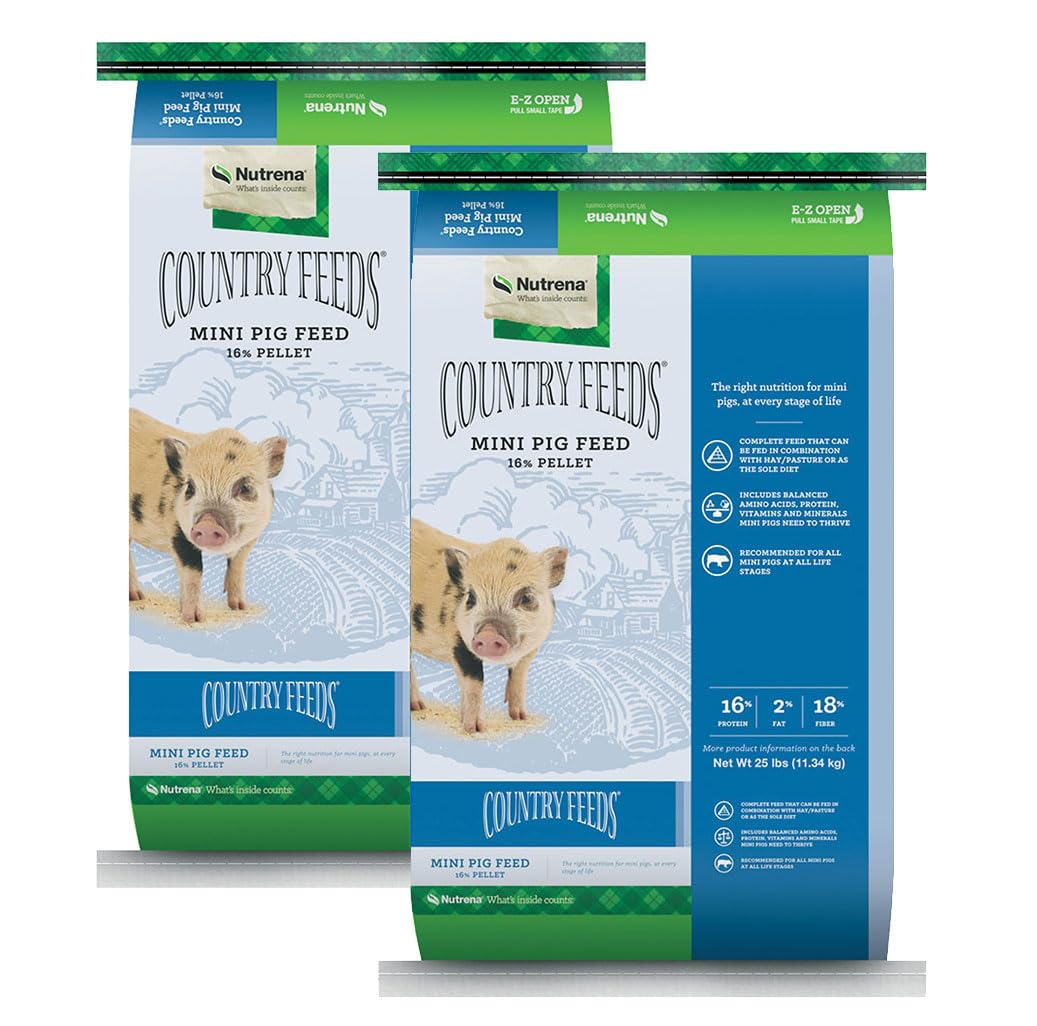
Nutrena formulated this 16% protein pelleted feed for mini pigs, but its nutritional profile — controlled starch levels, added vitamins and minerals, and balanced amino acids — also makes it a viable option for miniature horses in certain circumstances. The 16% protein content is right in the sweet spot for growing or lactating minis, and the pelleted form reduces the sorting behavior that picky horses often show with textured feeds. The formula includes no added antibiotics or hormones, aligning with the clean-feeding preferences of many mini owners focused on preventing metabolic overload.
The 50-pound bag offers a budget-friendly price per pound, and several mini pig owners report their animals switched from expensive brands without loose stool or upset stomach. For a miniature horse that needs extra protein for muscle development or hoof repair, this feed can be blended with a low-protein forage like grass hay. The mineral package is designed for pigs, so calcium-to-phosphorus ratio should be checked against your horse’s needs — pigs have different requirements that can unbalance a horse’s diet if fed as the sole ration.
Use this only as a supplemental protein source, not a complete diet for horses. The feed’s specific formulation for pigs means trace minerals like copper are higher than optimal for equines, so rotate with a horse-specific pellet or limit to 25% of the daily grain ration. Some customers note the bag size is smaller than expected for the weight, but the pellet hardness is manageable for minis with healthy teeth. This is a smart budget entry if your mini needs protein but you are price-sensitive, but never feed it as the sole concentrate.
Why it’s great
- 16% protein supports muscle and hoof growth
- Budget-friendly per pound compared to horse-specific feeds
- Highly palatable pellet reduces sorting
Good to know
- Not formulated for horses — mineral ratios differ from equine needs
- Best used as a supplement, not a complete equine diet
FAQ
Can I feed my miniature horse the same grain as a full-sized horse?
How much grain should a miniature horse eat per day?
Is whole barley safe for miniature horses with laminitis history?
Final Thoughts: The Verdict
For most owners, the best grain for miniature horses winner is the Purina Mini Horse & Pony Feed because it delivers controlled sugar and starch levels, high-quality protein, and the added Amplify fatty acids in a formula built specifically for mini metabolisms. If you need to add weight to a hard keeper without starches, grab the Manna Pro Cool Calories 100 — the 99% fat formula provides dense, cool energy in a tiny scoop. And for a clean, non-GMO base grain to mix into a customized diet, nothing beats the Ernst Grain & Livestock Whole Barley for freshness and slow starch release.