
A single spring feeding can mean the difference between a patchy, weed-choked yard and the dense, deep-green carpet that makes neighbors ask questions. The challenge is cutting through the marketing noise to find a formula that actually delivers nitrogen without burning your turf or washing away after the first rain. This guide focuses on the specific NPK ratios, release technologies, and iron content that matter most for cool and warm season grasses breaking dormancy.
I’m Mohammad Maruf — the founder and writer behind Drink4Good. I’ve spent hundreds of hours dissecting agronomic data, comparing slow-release coatings, and cross-referencing real-world user results for lawn fertilizers to separate effective spring feeding plans from expensive mistakes.
Whether you are overseeding a shady patch or feeding a full sunny acre, the right grass fertilizer for spring hinges on matching nitrogen sources, potassium levels, and iron content to your specific grass type and soil conditions.
How To Choose The Best Grass Fertilizer For Spring
Spring fertilization is about waking up the root system without forcing a growth surge that demands mowing every three days. The most common mistake is applying a high-nitrogen quick-release product before the soil has consistently warmed past 55°F, which can leach into the water table and create weak, floppy grass. Understanding the interplay between nitrogen release timing, iron for color, and potassium for stress tolerance is the path to a lawn that thrives through summer.
Nitrogen Source: Quick vs. Slow Release
Quick-release nitrogen (often labeled as ammonium nitrate or urea) gives a fast green-up within 48 hours but carries a high burn risk and typically fades within two to three weeks. Slow-release sources (sulfur-coated urea, polymer-coated, or natural organics) feed the grass steadily over 6 to 12 weeks, encouraging root mass over leaf height. For spring, a blend of 30% to 50% slow-release nitrogen is the sweet spot — enough rapid green to satisfy your eyes and enough duration to carry the lawn into the early summer heat without another application.
Iron for Deep Color Without Extra Growth
Iron is the cheat code for dense green turf without pushing excessive blade elongation. A product containing at least 2% to 3% iron (often listed as Fe) will darken the grass significantly within a few days, making the lawn look thick and healthy even when the nitrogen load is moderate. This is especially valuable for homeowners who want a showpiece lawn but prefer not to mow twice a week during the spring growth flush.
Potassium for Root and Stress Resistance
Potassium (the K in NPK) is frequently overlooked in spring formulas, yet it is the element that strengthens cell walls and helps the grass withstand the heat, drought, and foot traffic of summer. Look for a K value of at least 6 in your spring blend. A 24-0-6 or 16-0-8 ratio provides the phosphorus-free approach that many established soils actually need, avoiding runoff into local waterways while delivering balanced nutrition for the season ahead.
Quick Comparison
On smaller screens, swipe sideways to see the full table.
| Model | Category | Best For | Key Spec | Amazon |
|---|---|---|---|---|
| Yard Mastery 24-0-6 Flagship | Granular | Large, sunny lawns needing deep color | 24-0-6 NPK with 3% iron, 15,000 sq ft coverage | Amazon |
| The Andersons PGF 16-0-8 | Granular | Phosphorus-sensitive soils | 16-0-8 with Humic DG, 8-week feeding | Amazon |
| Petramax Liquid 28-0-0 | Liquid | Quick green-up for nitrogen-deficient lawns | 28-0-0 with 30% slow-release, 25,600 sq ft maintenance | Amazon |
| Espoma Organic 9-0-0 | Organic Granular | Pet-safe, environmentally conscious feeding | 9-0-0 with Bio-tone, non-burning organic formula | Amazon |
| GreenView Fairway 27-0-5 | Granular | Mid-sized lawns, 12-week feeding period | 63% slow-release nitrogen, covers 10,000 sq ft | Amazon |
| Safer Brand Lawn Restore 9-0-2 | Natural Granular | Reviving tired lawns without chemicals | 9-0-2 non-burning, greens in 3-5 days | Amazon |
| Scotts Turf Builder Sun & Shade | Seed + Fertilizer | Overseeding and patch repair | Combination seed, fertilizer, and soil improver | Amazon |
In‑Depth Reviews
1. Yard Mastery 24-0-6 Flagship Granular Lawn Fertilizer

The 24-0-6 NPK ratio makes this a powerhouse for spring feeding, with 24% slow-release nitrogen that feeds the lawn for months without the dangerous growth spike that forces twice-weekly mowing. The 3% iron content is what sets it apart — you get dark, dense color within days of application, even on thin fescue or struggling Bermuda lawns. The 45-pound bag covers up to 15,000 square feet, making it cost-effective for larger properties.
Bio-Nite technology in the formulation improves soil microbial activity over time, which means the second and third applications produce even better results as the root zone becomes more biologically active. The high potassium content (6%) provides the drought and heat stress protection that spring-fed lawns need heading into July and August. Users with Bermuda reported that one application thickened the turf enough to choke out existing weeds without needing a separate herbicide.
The only practical consideration is that the vigorous growth may require you to increase mowing frequency — some users reported cutting every five to six days during peak spring growth. For most homeowners, this is a positive sign that the product is working exactly as designed. The granular consistency spreads evenly through a broadcast spreader without clumping, even in humid conditions.
Why it’s great
- High 24% slow-release nitrogen provides steady feeding for up to 10 weeks
- 3% iron delivers deep green color without excessive leaf growth
- Large 15,000 sq ft bag is excellent value for bigger yards
Good to know
- High nitrogen content requires careful spreader calibration to avoid striping
- May push growth more than expected on already healthy lawns
2. The Andersons PGF 16-0-8 Fertilizer with Humic DG
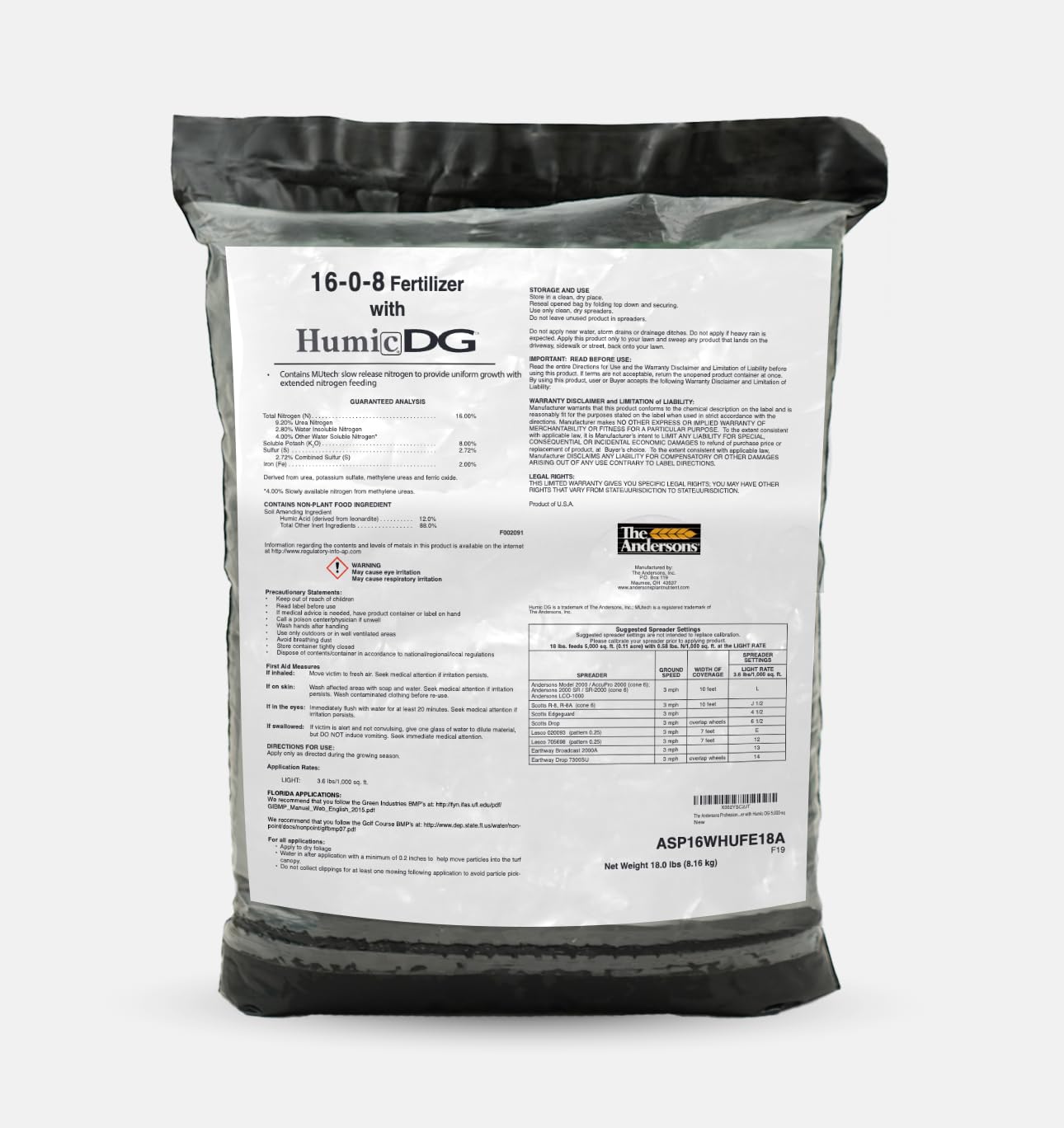
The Andersons brings professional-grade formulation to the consumer market with this 16-0-8 blend, specifically designed for lawns that already have sufficient phosphorus levels determined by a soil test. The phosphorus-free formula protects local waterways while still providing the nitrogen and potassium that spring grass craves. The Humic DG (dispersible granule) technology is the standout here — it breaks down quickly into the soil to improve nutrient uptake and root development.
The dual-nitrogen source combines quick- and slow-release forms for immediate color visible within three to four days followed by sustained feeding for up to eight weeks. The super-fine particle size delivers twice the number of granules per square foot compared to standard fertilizers, which means you avoid the striped look that often results from uneven distribution with cheaper blends. Users consistently report a uniform, deep green across the entire lawn within two weeks of application.
One key limitation is availability — this product is not shippable to California or Oregon due to regional regulations. The 18-pound bag covers a smaller area compared to some competitors, so owners of very large lawns (over 10,000 square feet) will need multiple bags for a full application. For small to medium properties, however, the level of refinement and micronutrient package makes this a premium choice that delivers measurable results.
Why it’s great
- Phosphorus-free formula ideal for high-P soils and environmentally sensitive areas
- Humic DG technology improves soil structure and nutrient efficiency
- Ultra-fine granules ensure even, streak-free coverage
Good to know
- Cannot ship to California or Oregon
- Smaller bag size may not be practical for lawns over 10,000 sq ft
3. Petramax Liquid Nitrogen Fertilizer 28-0-0

When a lawn shows clear signs of nitrogen deficiency — yellowing, slow growth, thin stands — a liquid concentrate delivers the fastest correction. This 28-0-0 formula from PetraTools packs one of the highest nitrogen concentrations available in a consumer-ready product, with 70% quick-release for immediate greening and 30% slow-release for residual feeding. A single gallon mixed at the maintenance rate covers up to 25,600 square feet, making it extremely economical for spot treatments or full-yard correction.
The application flexibility is a major advantage. You can dial in the concentration depending on whether you are doing a light maintenance feed (5 ounces per gallon) or a heavy nitrogen correction for deficient lawns (10 ounces per gallon). The liquid format also allows you to tank-mix with other water-soluble products like iron supplements or fungicides, giving you a customized spring cocktail. Users reported visible greening within 48 to 72 hours, with sustained color improvement for two to three weeks after application.
The main downsides are that liquid nitrogen does not build long-term soil structure the way granular slow-release products can, and the high 28-0-0 ratio means you risk burning the grass if you over-concentrate or apply during hot weather. A backpack or hose-end sprayer is required for even coverage — a battery-powered sprayer is recommended to avoid hand-pump fatigue on larger lawns. For a quick seasonal boost or a rescue treatment for a yellow lawn, this is the most effective option.
Why it’s great
- Ultra-high 28-0-0 ratio corrects nitrogen deficiency faster than granular options
- 30% slow-release component extends feeding beyond typical liquid fertilizers
- One gallon covers up to 25,600 sq ft for maintenance feeding
Good to know
- Requires a sprayer for application — not suitable for spreader use
- High burn potential if mixed too strong or applied in direct sun
4. Espoma Organic 9-0-0 All Season Lawn Food

Espoma has been in the organic lawn game since 1929, and this 9-0-0 formula reflects decades of refinement. The NPK ratio is deliberately conservative — no phosphorus or potassium, just nitrogen delivered through a blend of natural ingredients enhanced with their proprietary Bio-tone microbial consortium. The microorganisms in Bio-tone help break down thatch and release nutrients already trapped in the soil, so the 9-0-0 label actually understates the total nutrition the grass receives.
The slow-release nature of organic nitrogen means you will not see a dramatic green-up in three days. Instead, the color builds gradually over the first week to ten days and persists longer than synthetic alternatives — many users report a single spring application carrying color for six to eight weeks. The safety profile is exceptional: the formula will not burn the lawn even if you overlap passes with the spreader, and it is completely safe for children and pets to walk on immediately after watering in.
The trade-off is coverage and price. The 28-pound bag covers roughly 5,000 to 7,000 square feet depending on application rate, which works out to a higher per-square-foot cost than synthetic competitors. The 9-0-0 ratio also means that lawns with heavy potassium needs or phosphorus deficiencies will require a separate soil amendment. For homeowners committed to organic practices or those with young children and dogs who spend hours on the grass, this is the safest and most sustainable spring fertilizer available.
Why it’s great
- Certified organic with Bio-tone microbes for natural soil enhancement
- Completely non-burning — safe for pets and kids immediately after watering
- Sustained slow-release color that builds over 6 to 8 weeks
Good to know
- Higher price per square foot compared to synthetic fertilizers
- No phosphorus or potassium — may require supplementation for deficient soils
5. GreenView Fairway Formula 27-0-5 Lawn Fertilizer

The GreenView Fairway Formula is engineered around a simple premise: deliver high nitrogen volume without the surge-and-crash pattern that plagues cheaper fertilizers. With 63% of its nitrogen in slow-release form, this 27-0-5 blend provides consistent feeding for up to 12 full weeks from a single spring application. The 33-pound bag covers 10,000 square feet at the recommended rate, making it one of the most cost-effective options for mid-sized lawns.
The high nitrogen content (27%) means you get rapid visual greening — most users reported a visible color shift within four to five days — but the slow-release coating prevents the soft, succulent growth that makes grass vulnerable to disease. The formula is phosphorus-free (27-0-5), which aligns with current environmental best practices for established lawns. Users with Bermuda grass and centipede grass reported particularly strong results, with the product helping to create a dense canopy that naturally suppressed weed emergence.
The granular consistency is fine enough to pass through most broadcast spreaders without clogging, but it does create some dust during handling. A small number of users noted that the bag can be prone to clumping if stored in a humid garage before opening. For the combination of price, coverage, and feeding duration, this is the balanced choice for homeowners who want professional-level results without the professional-level price tag.
Why it’s great
- 63% slow-release nitrogen provides steady feeding for 12 weeks
- Excellent value with 10,000 sq ft coverage at a moderate price point
- Phosphorus-free formula protects local watersheds
Good to know
- High dust content during handling — wear a mask when pouring
- Bag can clump if not stored in a dry environment
6. Safer Brand Lawn Restore 9-0-2 Natural Fertilizer
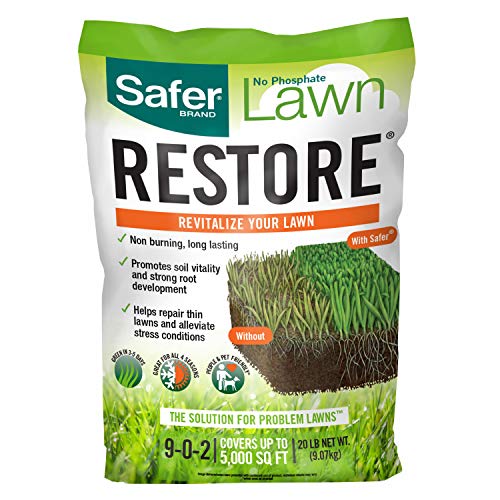
Safer Brand Lawn Restore targets the homeowner who wants to revitalize a tired lawn without switching to synthetic chemistry. The 9-0-2 NPK is relatively low in total nitrogen, but the natural proteins and feather meal sources provide a steady release that strengthens root systems over time rather than forcing top growth. Users who previously burned their lawns with high-nitrogen synthetics find this formula a forgiving and effective reset for the spring season.
The product contains corn gluten meal, which acts as a natural pre-emergent weed preventer — a clever dual function for spring application when crabgrass seeds are beginning to germinate. However, this same feature means you must not use it when seeding new grass, as the corn gluten will suppress your new grass seed germination just as effectively as it suppresses weeds. The manufacturer advises applying this 2 to 3 weeks before seeding or waiting until after the new grass is well established.
Users consistently report visible greening within 3 to 5 days, which is surprisingly fast for a natural formula. The color is a slightly lighter, more natural green compared to the dark blue-green produced by iron-heavy synthetics, but the overall turf health — thickness, wear recovery, and thatch reduction — improves noticeably with repeated applications. For pet owners, the peace of mind of a product that is safe for immediate foot traffic is a significant factor in choosing this over conventional options.
Why it’s great
- Natural formula with corn gluten suppresses weeds while feeding the lawn
- Non-burning and safe for pets and kids immediately after watering
- Surprisingly fast color response for an organic product
Good to know
- Corn gluten prevents grass seed germination — do not apply near new seed
- Lower nitrogen content requires more frequent application than synthetic blends
7. Scotts Turf Builder Grass Seed Sun and Shade Mix

This is less a pure fertilizer and more a complete lawn repair system, combining grass seed, a starter fertilizer, and a soil improver in one bag. The 5.6-pound bag covers 2,240 square feet for overseeding — ideal for homeowners addressing thin spots or patchy lawns in spring. The seed blend is designed for both full sun and moderate shade, making it a versatile choice for yards with variable light conditions.
The Root-Building Nutrition technology delivers phosphorus and potassium specifically to support newly germinated seedlings, while the turf-type fescue and perennial ryegrass mix germinates in 7 to 14 days under consistent moisture. Users report the thickest results when they prepare the soil with a thin layer of topsoil before broadcasting the seed. The blend shows medium drought resistance once established, which is reasonable for a mix that prioritizes shade tolerance over deep-rooted endurance.
The dual seed-plus-fertilizer format saves a trip to the store but limits your control over the NPK ratio — you are getting whatever starter formula Scotts has pre-mixed. A small number of users in 2024 reported higher weed content (crabgrass) in the mix compared to previous years, so it is worth buying a fresh bag for the current season rather than storing one from the previous fall. For a quick, reliable spring overseeding project, this is a convenient all-in-one solution.
Why it’s great
- All-in-one seed, fertilizer, and soil improver simplifies spring repair projects
- Works in both full sun and moderate shade environments
- Reliable 7-14 day germination with consistent watering
Good to know
- Fertilizer mix is fixed — no control over NPK ratio
- Some recent batches reported higher weed seed content than expected
FAQ
When exactly should I apply grass fertilizer in spring?
Can I use the same fertilizer for cool-season and warm-season grass?
How do I calculate how much fertilizer to use per square foot?
Should I water immediately after applying spring fertilizer?
Final Thoughts: The Verdict
For most homeowners, the best grass fertilizer for spring is the Yard Mastery 24-0-6 Flagship because its 24% slow-release nitrogen with 3% iron delivers the ideal balance of deep color, root strength, and extended feeding. If your soil test shows high phosphorus, grab the The Andersons PGF 16-0-8 for its phosphorus-free formula and Humic DG technology. And for a quick rescue of a nitrogen-starved lawn, nothing beats the Petramax Liquid 28-0-0 for fastest visible correction.