
When summer temperatures regularly push past 90°F and water restrictions tighten, the wrong grass seed turns your lawn into a brittle, brown carpet that crumbles at the first touch. Hot-climate lawns demand a species-level commitment to heat-trapping root structures and cellular drought resistance — not just a bag labeled “sun mix” with a generic blend of annuals that burn out by August.
I’m Mohammad Maruf — the founder and writer behind Drink4Good. I’ve spent the last three seasons cross-referencing germination trials, customer reports from USDA zones 8 through 11, and technical specs on seed coating weights to isolate which grass seed formulas actually survive a triple-digit summer without constant irrigation.
Below you’ll find five options that thrive where cooler-season blends fail, ranked by true heat tolerance and coverage value. This guide is built around the best grass seed for hot climates, and each recommendation is backed by real feedback from homeowners in Florida, Texas, and the transition zone.
How To Choose The Best Grass Seed For Hot Climates
Selecting a seed for scorching conditions is not about picking the fastest-sprouter. You need a species whose root system can pull moisture from deep soil on a 100°F afternoon and a blend that won’t enter dormancy the second the sprinkler skips a day.
Warm-Season vs. Cool-Season: The Species Decision
Warm-season grasses like Bermudagrass and Zoysia thrive when soil temps exceed 65°F and stay green with less water. Cool-season fescues can survive heat if they are bred as “turf-type” tall fescues with deep taproots, but they require more frequent irrigation. A pure Bermudagrass is your safest bet for a low-water, high-heat lawn; a tall fescue blend works better if your yard has partial shade and you don’t mind watering every other day.
Seed Coating and Filler Percentage
Many budget-friendly bags contain a significant percentage of coating — some customers report up to 50% filler by weight. A “7 lb” bag might hold only 3.5 lbs of actual seed. Premium products like Penkoted or 3-in-1 blends with clay and fertilizer can reduce the need for separate starters but inflate the per-pound seed cost. Check the “pure live seed” percentage on the label if available.
Dormancy and Temperature Triggers
Annual ryegrass germinates in 3–5 days but dies in sustained heat above 85°F. It is strictly a temporary overseeding solution for southern lawns to stay green through winter. For permanent summer coverage, choose perennial warm-season species or heat-tolerant tall fescue that will not fade in July.
Quick Comparison
On smaller screens, swipe sideways to see the full table.
| Model | Category | Best For | Key Spec | Amazon |
|---|---|---|---|---|
| Scotts Kentucky 31 Mix | Tall Fescue Blend | Thick lawns in full sun | 1,750 sq. ft. overseeding (7 lb) | Amazon |
| Scotts Turf Builder Sunny Mix | Seed + Fertilizer | Direct-sun new lawns | 1,080 sq. ft. overseeding (2.4 lb) | Amazon |
| Pennington Annual Ryegrass | Annual Cool-Season | Winter overseeding in South | 2,000 sq. ft. coverage (10 lb) | Amazon |
| O.M. Scott Tall Fescue Blend | Premium 3-in-1 | Weed-resistant transitional lawns | 2,000 sq. ft. overseeding (8 lb) | Amazon |
| Pennington Bermudagrass | Warm-Season Perennial | Extreme heat & drought tolerance | 5 lb bag, Penkoted coating | Amazon |
In‑Depth Reviews
1. Scotts Kentucky 31 Grass Seed Mix
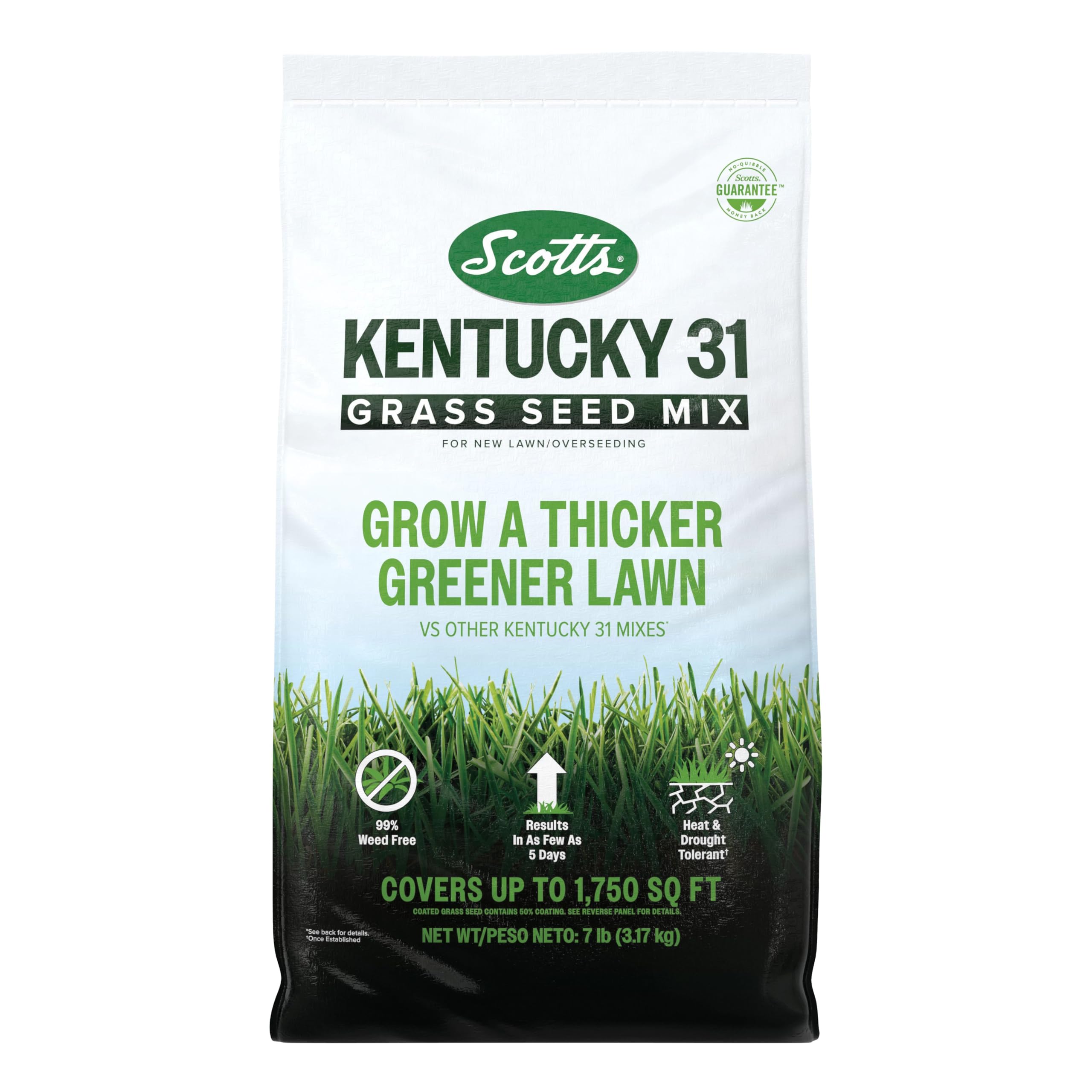
This mix combines premium tall fescue — a dense, dark-green grass bred for heat and drought tolerance — with annual ryegrass for quick cover and straight Kentucky 31 for durability. One verified buyer in North Florida turned a bare-earth yard into a lush, thick carpet within five weeks, reporting that the seed held strong through the region’s humid summer. The 99% weed-free guarantee means fewer surprises during the establishment window, and the blend is engineered for full sun with moderate shade tolerance, making it a versatile choice for transitional climates.
The germination window is fast — results in as few as five days when soil temps sit between 65°F and 85°F. That speed matters in hot climates where exposed soil bakes out quickly. The 7 lb bag covers 580 sq. ft. for a new lawn or 1,750 sq. ft. for overseeding, which is a strong coverage-to-weight ratio among mid-range blends. A Chicago-area buyer in zone 6a noted that with proper prep — aeration, compost overlay, and consistent midday watering — significant growth appeared by day ten.
The primary criticism from a small subset of users is the presence of a coating that reduces actual seed weight, with one report estimating a 20 lb bag contains roughly 10 lb of filler. While the 7 lb bag reviewed here did not generate the same complaint density, it is worth factoring in that coating may inflate the bag’s weight-to-seed ratio. For most hot-climate homeowners looking for a reliable, fast-establishing fescue blend, this remains the most balanced option.
Why it’s great
- Blend of three seed types for heat, speed, and durability
- Germination visible in 5–7 days with consistent moisture
- Proven performance in Florida and humid transition zones
Good to know
- Some bags contain non-seed coating that reduces actual seed weight
- Requires daily watering during first two weeks to avoid baking
2. Scotts Turf Builder Grass Seed Sunny Mix
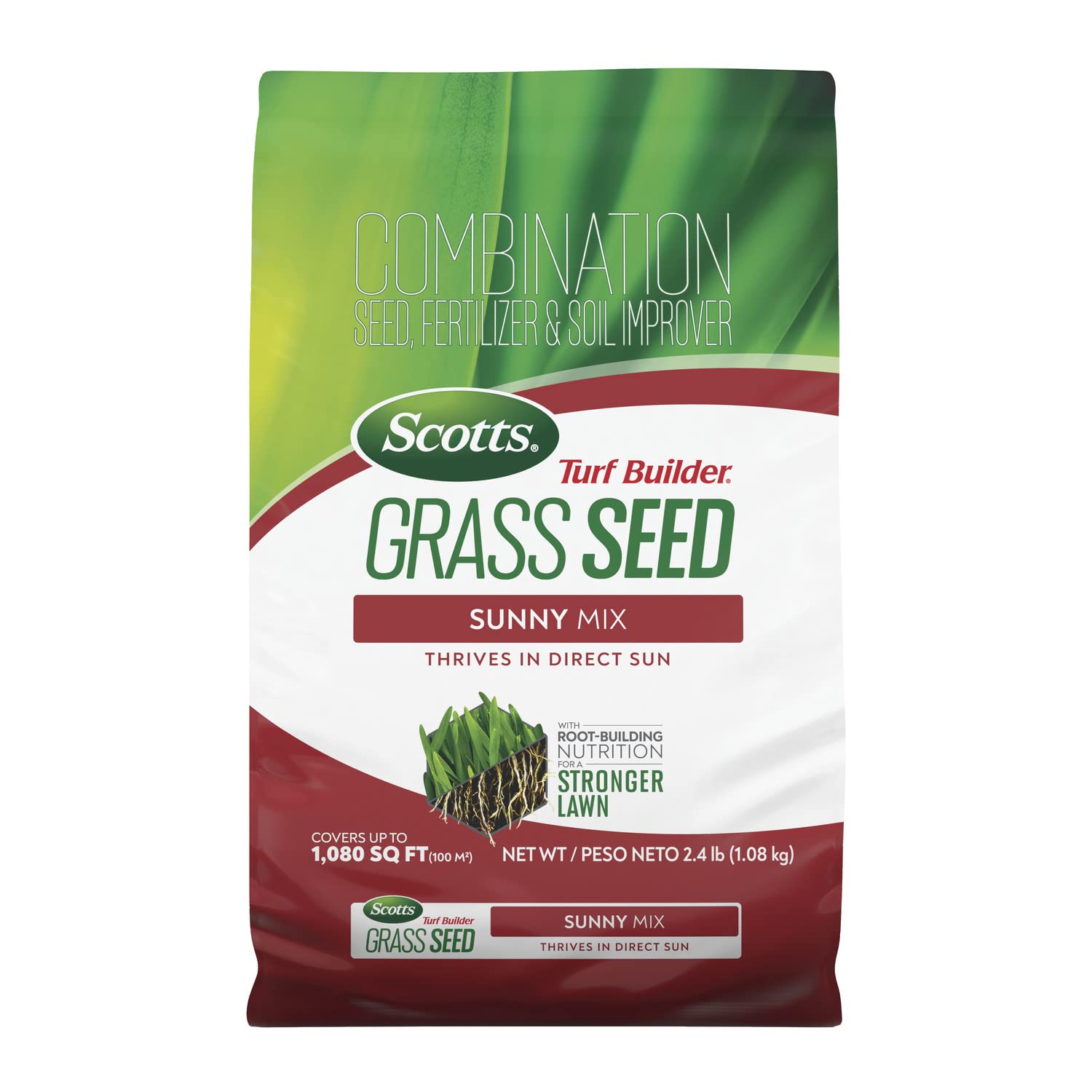
What sets this mix apart is the built-in Root-Building Nutrition — a combination of seed, starter fertilizer, and soil improver that eliminates the need for a separate lawn-starter product. For hot climates where baking soil strips nutrients, the integrated fertilizer helps seedlings push deep roots before surface moisture evaporates. The blend is designed for full sun and light shade, with medium to high drought resistance once established, making it a solid pick for southwestern yards where direct sun is relentless.
The coverage is modest for the bag size — 2.4 lb covers only 360 sq. ft. for a new lawn or 1,080 sq. ft. for overseeding. This is a smaller footprint than the Kentucky 31 mix, but the convenience of the all-in-one formula offsets the lower coverage for smaller patches or targeted repair. One reviewer whose yard was scraped to dirt by pavement work reported that the grass spread out well beyond the target area after three months, eventually covering a 60×25 ft space with just a single bag — though it took longer to show visible results.
A key caveat for hot climates: this mix includes no pure warm-season species — it is a cool-season-oriented blend with enhanced drought resistance. Some buyers in drought-stricken areas praised its ability to stay green during water restrictions, while others noted it took three months to fully express. For a small, sunny patch where you want fertilizer built into the seed, this is a strong value, but for full-acre coverage in triple-digit heat, you will want a warmer-species-specific product.
Why it’s great
- Integrated starter fertilizer and soil improver in one bag
- Strong drought resistance for a cool-season mix
- Great for small sunny patches or repair work
Good to know
- Slow to show full results — up to three months in some cases
- Relatively small bag size; not ideal for large lawns
3. Pennington Annual Ryegrass Grass Seed

This is a specialty product, not a permanent solution. Pennington’s Annual Ryegrass is designed for one specific hot-climate job: overseeding warm-season lawns like Bermuda or Zoysia to keep them green through winter when those species go dormant and turn brown. It germinates in 3 to 7 days and produces fast color and density — one reviewer saw full, thick coverage by day four with consistent moisture. The 10 lb bag covers up to 2,000 sq. ft., making it the most cost-effective temporary coverage in this list.
The real-world performance in southern states is strong. A buyer who prepped soil by loosening hard spots and watering twice daily reported grass visible in two days and fully established by day four. The ryegrass is disease-resistant and handles foot traffic well, which is critical for a lawn that stays in use through fall and winter. It requires 6 to 8 hours of full sun per day, a condition most hot-climate lawns already meet.
The major limitation is lifespan: it is an annual. One reviewer documented a perfect dark-green lawn from November through March, after which it slowly died. You must reseed every year if you want winter color. Do not plant this as a permanent summer lawn — it will burn out in sustained heat above 85°F. For homeowners in the deep South who want a green lawn year-round without installing a second irrigation system, this is the correct tool for the job.
Why it’s great
- Ultra-fast germination — visible green in 2–4 days
- Ideal for winter overseeding on dormant Bermuda or Zoysia
- Disease-resistant and holds up under foot traffic
Good to know
- Strictly annual; dies by late spring and requires reseeding
- Cannot survive summer temperatures above 85°F
4. O.M. Scott and Sons Tall Fescue Blend
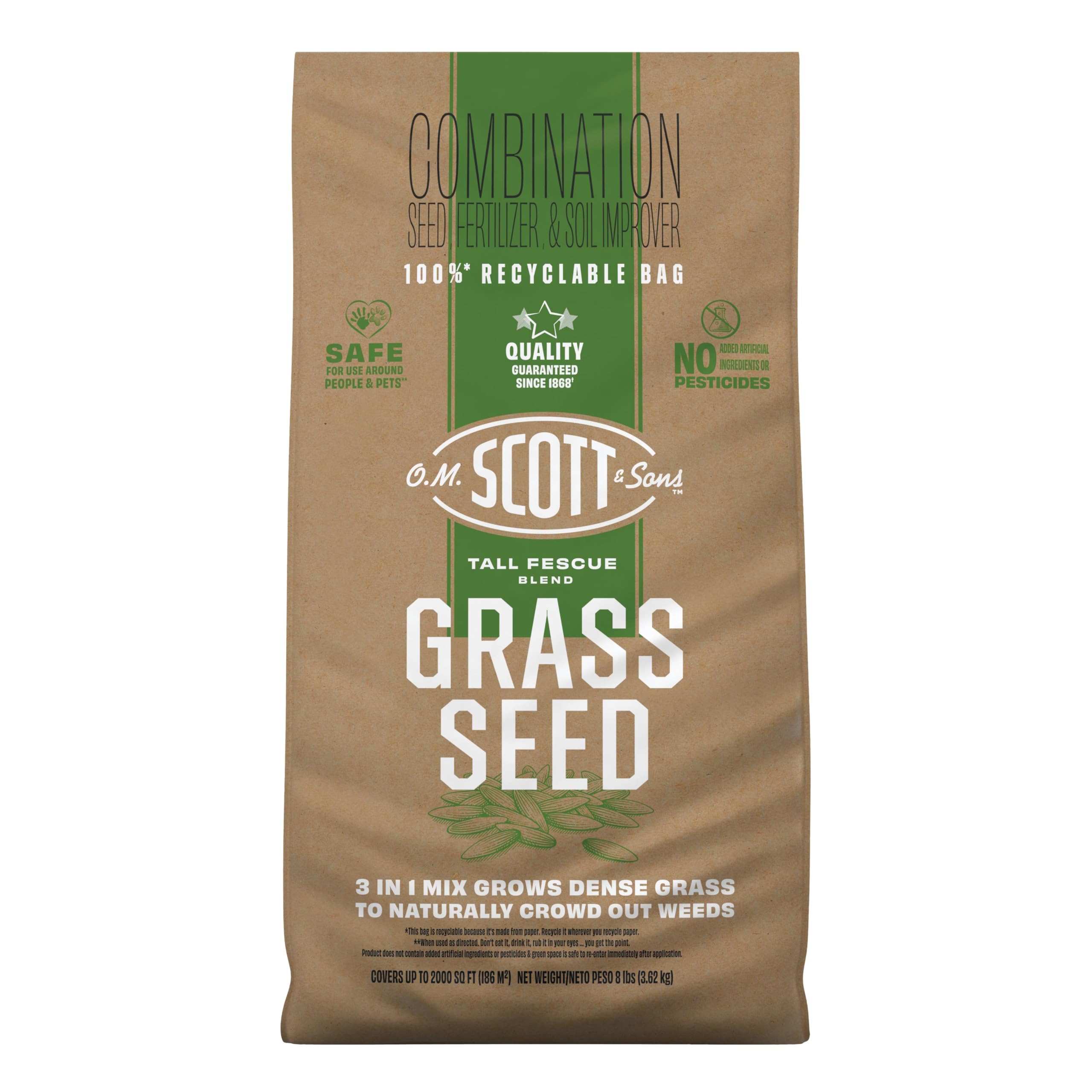
This premium blend from O.M. Scott & Sons prioritizes natural ingredients — no artificial additives or pesticides, and the bag is fully recyclable. It combines hand-selected Oregon-grown tall fescue with natural grass food and soil-improving clay to create a 3-in-1 seeding system. For homeowners in transition-zone climates who want a dense lawn that naturally crowds out weeds without chemical herbicides, this is the cleanest option. It is also explicitly labeled safe for kids and pets when used as directed.
Coverage is excellent: one 8 lb bag covers 2,000 sq. ft. for overseeding or 665 sq. ft. for a new lawn. The tall fescue varieties are selected for Northern and transition regions, meaning they handle moderate heat but are not designed for deep-south Gulf-level summers. A reviewer who mixed this fescue with Kentucky bluegrass reported a thick, plush texture with bright green color and germination in roughly 10 days. The inclusion of natural clay helps retain moisture near the seed, which is a real advantage in hot, drying soil.
The most consistent complaint centers on weight distribution: because the bag contains clay and fertilizer, only about half the weight is pure seed. One estimate put germination rates as low as 20%, though other users reported reliable coverage. If you are buying purely for seed mass, the per-pound cost of actual seed is higher than a straight seed bag. But if you value natural ingredients, recyclable packaging, and a built-in soil improver, this blend offers a cleaner path to a heat-tolerant lawn without separate amendments.
Why it’s great
- No artificial ingredients or pesticides — safe for kids and pets
- Includes natural clay for moisture retention in hot soil
- Recyclable paper bag packaging
Good to know
- Only about half the bag weight is actual seed; rest is clay and fertilizer
- Not designed for deep-south Gulf climates — best for transition zone
5. Pennington Bermudagrass Grass Seed

Bermudagrass is the default warm-season species for a reason: it produces a thick, aggressively self-spreading turf with a deep root system that is naturally more drought-tolerant than any cool-season grass. This Pennington blend adds cold-tolerant varieties to the mix, making it viable in transition zones that experience occasional frost, while its low-growing habit produces fewer clippings. The exclusive Penkoted seed treatment helps protect against soil-borne diseases and improves germination consistency in hot, dry soil.
Real-world performance in extreme heat is documented. A reviewer in San Antonio, Texas — a city that regularly hits 100°F — reported that the grass grew great with a simple three-times-daily watering schedule (morning, lunch, evening) and kept the ground moist. Another buyer in Florida used it to refurbish a weed-bed yard into a proper lawn. The seed is designed for summer planting when soil temps are warmest, which aligns perfectly with hot-climate lawns. The 5 lb bag is modest in size, but the aggressive spreading habit means a little goes further than with bunch-type grasses.
The main risk is inconsistent germination: one reviewer who followed instructions saw zero germination, even in a controlled indoor tray, suggesting a bad batch. Additionally, Bermudagrass goes dormant and turns brown in winter, so if you want year-round green, you will need to overseed with ryegrass in fall. For pure heat tolerance, low water requirements, and a durable turf that handles heavy foot traffic, this is the most climate-appropriate seed in the list — provided you get a batch with viable seed.
Why it’s great
- Top-tier drought tolerance and heat resistance
- Penkoted technology improves germination in hot soil
- Low-growing habit means less mowing and fewer clippings
Good to know
- Germination can be inconsistent; some batches may have low viability
- Goes dormant and browns in winter; requires ryegrass overseeding for year-round green
FAQ
Can I grow a green lawn in Phoenix with just one bag of seed?
Why does my grass seed say “annual” and “ryegrass” in the same sentence?
Final Thoughts: The Verdict
For most users, the best grass seed for hot climates winner is the Scotts Kentucky 31 Grass Seed Mix because it combines fast germination, proven heat tolerance in real Florida yards, and a versatile blend of tall fescue and ryegrass that works in full sun and partial shade. If you want the highest heat-specific performance and can handle winter dormancy, grab the Pennington Bermudagrass. And for winter green color over your existing warm-season lawn, nothing beats the Pennington Annual Ryegrass.