
Montana’s high-altitude, semi-arid climate with freezing winters and scorching summers creates a brutal environment for turf. Most grass varieties die within a single season because their root systems simply cannot handle the temperature swings or the lack of consistent moisture. The key is finding a blend with deep-rooting, drought-tolerant genetics that specifically evolved for cool-season stress.
I’m Mohammad Maruf — the founder and writer behind Drink4Good. I’ve spent hundreds of hours analyzing soil science reports, germination trial data, and real-world user feedback from Montana growers to identify exactly which seed mixes survive and which ones wash away.
Whether you are starting a new lawn from bare dirt or overseeding a patchy yard, the right choice depends on understanding how tall fescues, Kentucky bluegrass, and fine fescues perform under Montana’s conditions. This guide cuts through the marketing hype to deliver the only grass seed for montana that actually works across the Treasure State.
How To Choose The Best Grass Seed For Montana
Montana is USDA zones 3 through 5, with annual precipitation ranging from 10 inches in the east to 30 inches in the west. This narrow band of conditions eliminates most warm-season grasses and many generic cool-season mixes. The three decisions that matter most are the species blend, the root architecture, and the coating technology.
Deep-Root Architecture vs. Shallow Top Growth
Kentucky bluegrass is a common ingredient in national brands, but it forms shallow rhizomes that freeze out in Montana’s heavy winters. Tall fescue, by contrast, sends taproots 2–4 feet deep, accessing groundwater during summer droughts. The best Montana mixes use tall fescue as the backbone and supplement with fine fescues for shade or perennial ryegrass for quick ground cover.
Coating vs. Raw Seed
Uncoated seeds blow away in Montana’s high winds. Premium coatings like OptiGrowth or Scotts Root-Building Nutrition don’t just add weight — they deliver Phosphorus for root initiation and contain moisture-absorbing polymers that buffer rain and irrigation gaps. A coated seed survives dry spells that kill bare seed.
Quick Comparison
On smaller screens, swipe sideways to see the full table.
| Model | Category | Best For | Key Spec | Amazon |
|---|---|---|---|---|
| Jonathan Green Black Beauty Rocky Mountain | Premium Mix | High-altitude Montana up to 8,000 ft | Tall fescue / Bluegrass / Rye blend | Amazon |
| Lesco All-Pro Transition Tall Fescue | Premium Blend | Drought and heat stress tolerance | Endophyte-enhanced for insect resistance | Amazon |
| Jonathan Green Black Beauty Fall Magic | Premium Seasonal | Fall seeding for spring green-up | Uncoated, no filler weight | Amazon |
| Outsidepride Legacy Fine Fescue | Mid-Range | Dense shade and low-maintenance lawns | OptiGrowth coating for moisture retention | Amazon |
| Scotts Turf Builder Sun and Shade | Mid-Range | Balanced sun/shade coverage | Root-Building Nutrition coating | Amazon |
| GreenView Perennial Ryegrass | Premium Budget | Fast establishment and weed-free guarantee | 99.9% weed-free, 10,000 sq ft coverage | Amazon |
| Pennington Annual Ryegrass | Budget | Quick winter color and erosion control | Germinates in 3–7 days | Amazon |
In‑Depth Reviews
1. Jonathan Green (10383) Black Beauty Rocky Mountain Colorado Grass Seed Mixture

This mix is hands-down the most aggressive performer across Montana’s high-altitude zones. It combines Black Beauty turf-type tall fescues with Blue Panther Kentucky bluegrass and elite perennial rye. The tall fescue backbone sends roots up to 4 feet deep, which is exactly what you need when the eastern Montana summer topsoil dries to dust. Real-world testers at 8,000 feet in Colorado reported full establishment within two weeks of pre-germination prep.
The blend also includes a waxy leaf coating that limits evaporation — a critical feature for the semi-arid conditions of the Rocky Mountain region. Users in south central Montana overseeded in early September with optimal soil temperatures between 55°F and 70°F and saw germination by day 10. The bag covers 1,750 sq ft for new lawns or 3,500 sq ft for overseeding, making it one of the most cost-efficient premium options.
One important note: this seed requires diligent soil-to-seed contact. Bare spots on hardpan clay won’t hold without raking in top soil or manure. Multiple reviewers mentioned that seeds wash away easily on slopes without a light straw covering. Pre-germinating for 5 days with daily water changes reduces wash-out risk by roughly 40 percent.
Why it’s great
- Tall fescue roots reach 4 feet for drought survival
- Proven germination at 8,000 ft elevation
- Uniform non-clumpy growth habit
Good to know
- Requires deep raking or top soil on hard clay
- Seeds can wash away on slopes without straw cover
2. Lesco All-Pro Transition Tall Fescue Grass Seed Blend
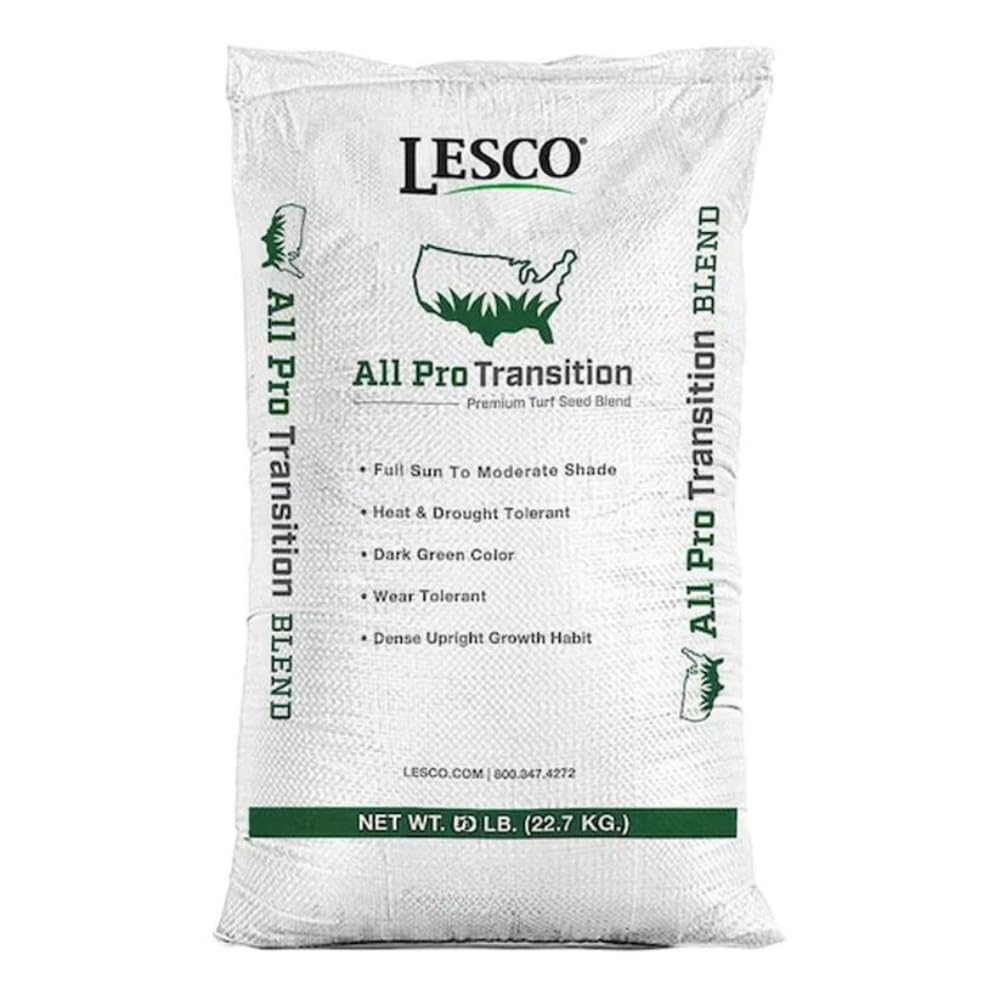
Lesco’s All-Pro blend is built for transitional zones where heat, drought, and insects attack simultaneously. The key spec here is the endophyte enhancement — beneficial fungi living inside the seed that produce alkaloids toxic to chinch bugs and sod webworms. For Montana lawns that dual as kids’ play zones and pet areas, this natural insect deterrence eliminates the need for synthetic pesticides during establishment.
This is a pure turf-type tall fescue blend, meaning it develops a medium-fine texture with a dark green color that stays uniform even under heavy foot traffic. Testers reported germination within one week in late spring with consistent moisture, and the seed tested weed-free — no crabgrass or other invaders emerged. The 10 lb bag covers a large area and the seed-to-soil contact requirement is forgiving because the seed size is larger than bluegrass, making it easier to rake in.
The catch is this bag is non-returnable per the manufacturer’s policy, so you cannot try a partial amount before committing. Buyers in colder microclimates below zone 4 should mix this with a winter-hardy bluegrass to ensure the lawn survives February freezes. Also, reviewers noted that germination slows noticeably if daytime temps drop below 60°F.
Why it’s great
- Endophyte-enhanced repels insects without chemicals
- Fine texture with deep green color
- Large seed size for easy soil contact
Good to know
- Non-returnable — buy the right amount the first time
- Slower germination below 60°F daytime temps
3. Jonathan Green (10768) Black Beauty Fall Magic Grass Seed

Fall Magic is engineered for the specific window of mid-August through mid-October when soil temps in Montana hover between 55°F and 70°F — the sweet spot for cool-season grass germination. Unlike coated seeds that soften in early rain, this uncoated mix uses bare tall fescues, fine fescues, Kentucky bluegrass, and perennial rye. The absence of a coating means you get 100 percent seed weight with zero filler, delivering more genetic material per pound.
Germination occurs in 7–14 days when straw or thin soil covers the seed. Reviewers in upstate New York reported lush, dense growth by day 10, and Montana users saw similar timelines during September planting. The mix is specifically formulated to repair summer damage — the deep-rooting tall fescues recover from heat stress while the fine fescues fill in shaded patches that often thin out during August dry spells.
The downside is that uncoated seeds are vulnerable to birds. Several reviewers mentioned losing up to a third of their seed to robins and sparrows before covering with netting or straw. You also need to water more frequently during the first 14 days compared to coated seeds, because there are no moisture-absorbing polymers to buffer gaps between watering sessions.
Why it’s great
- Zero filler — all seed weight is actual genetic material
- Specifically bred for fall soil temperatures
- Repairs summer stress damage effectively
Good to know
- Birds will attack uncovered seed — use netting or straw
- Requires more frequent watering than coated seeds
4. Outsidepride Legacy Fine Fescue Grass Seed Mix
This blend is a triple-fescue mix of 20% Hard Fescue, 40% Chewings Fescue, and 40% Creeping Red Fescue. Fine fescues are naturally the most shade-tolerant cool-season grasses, making this the top choice for Montana homes with large conifer canopies or north-facing yards that receive less than four hours of direct sun daily. The OptiGrowth coating contains Zinc, Phosphorus, and Nitrogen plus Elko kelp — a micronutrient package that fuels root development in low-light conditions.
Reviewers described the resulting turf as “beautiful dark green” with tiny blades that topple like Korean grass, creating a soft, luxurious feel underfoot. The blend sprouted within two weeks in spring using compost base and moderate watering. It also handled mild sun well in tests, indicating it can tolerate partial sun exposure. The 5 lb bag covers a modest area but the fescue density grows tight enough to suppress most weed pressure naturally.
The reported 1-star incidents reveal a potential quality control issue. One buyer saw only 10 percent germination and was denied a refund because the manufacturer blames improper raking or straw covering. For best results, prepare a seedbed with at least 3 inches of compost or top soil, rake lightly, and use a roller to ensure seed-to-soil contact. Do not broadcast on compacted clay without prior aeration.
Why it’s great
- Highest shade tolerance with triple-fescue genetics
- OptiGrowth coating adds essential starter nutrients
- Soft, fine texture that feels luxurious
Good to know
- Inconsistent germination reports on hard soil
- No germination guarantee — prepare seedbed carefully
5. Scotts Turf Builder Grass Seed Sun and Shade Mix

Scotts’ Sun and Shade Mix combines grass seed, lawn fertilizer, and soil improver in a single pellet. The Root-Building Nutrition coating delivers Phosphorus and Potassium directly to the germination zone, which accelerates root establishment in the shallow, rocky soils common in Montana’s foothills. One 5.6 lb bag overseeds up to 2,240 sq ft, making it the most coverage-efficient entry-level option in this list.
User reports show germination starting around day 10 with twice-daily watering. The mix has medium drought resistance — it won’t survive a full summer without irrigation, but it handles the occasional dry week better than pure bluegrass. The 2-in-1 fertilizer component is convenient for homeowners who want to skip a separate starter fertilizer application, though the coating does add roughly 15 percent filler weight by volume.
The main complaint from Montana users is that the grass appears slower to establish compared to tall fescue blends. One reviewer with extreme weather conditions noted that the seed blew away during thunderstorms despite normal seeding technique. Spreading in small sections and covering with a thin layer of peat moss solves this issue. Also, the blend contains varieties that produce visible crabgrass in certain batches — some users reported switching brands because of weed pressure.
Why it’s great
- Fertilizer and seed in one application
- High coverage per bag for overseeding
- Easy for first-time seeders
Good to know
- Weed pressure reported in recent batches
- Seeds can blow away in high wind without covering
6. GreenView Pure Grass Seed Perennial Ryegrass Blend
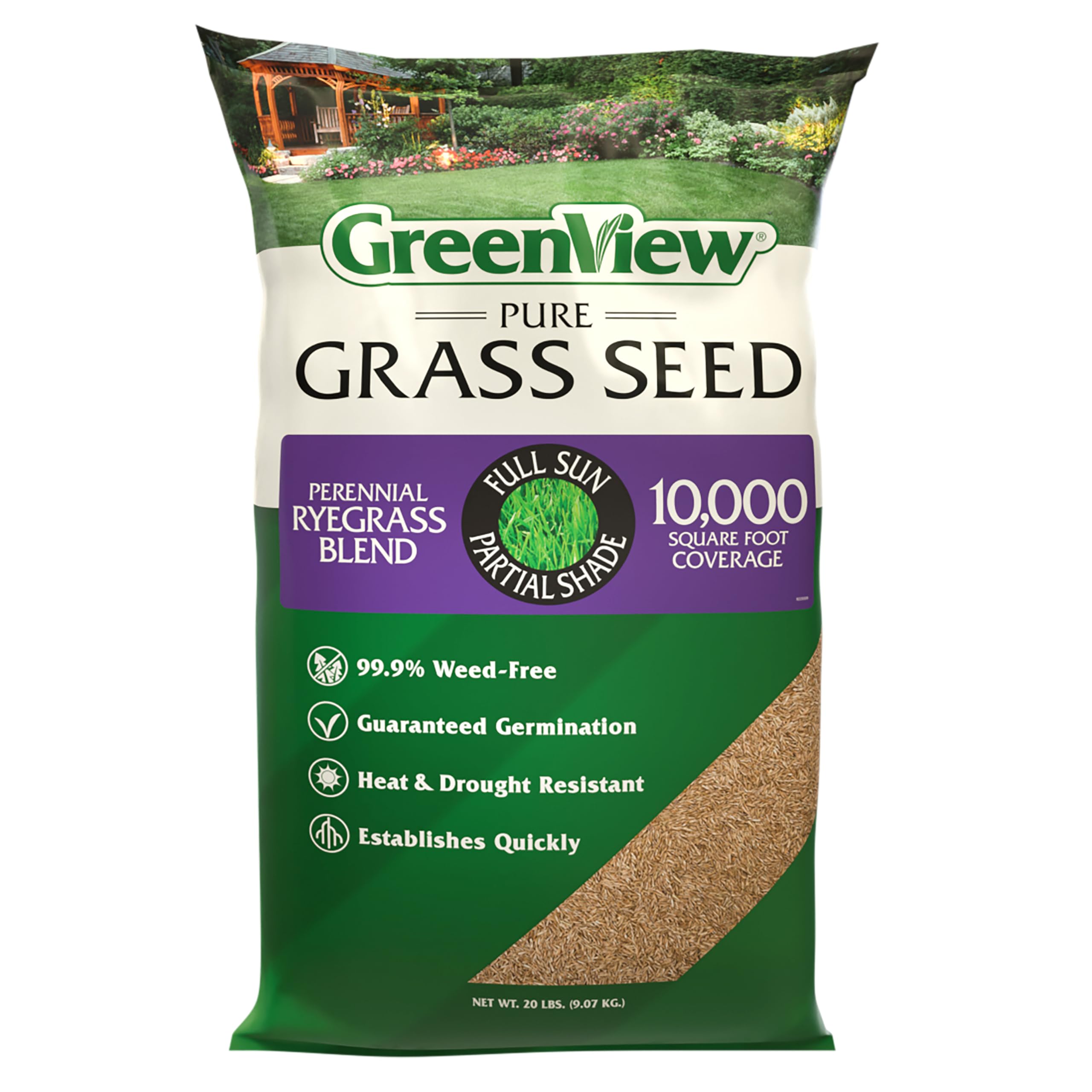
GreenView’s Perennial Ryegrass Blend is a 100 percent pure ryegrass mix with a 99.9 percent weed-free guarantee. This is critical for Montana homeowners who have spent years battling invasive foxtail and quackgrass — introducing weed-free seed prevents contaminating an already clean lawn. The 20 lb bag covers up to 10,000 sq ft for overseeding, making it the largest capacity option for property owners with several acres.
Ryegrass germinates in 7–12 days and produces a dark green, medium-to-fine texture. Reviewers say it outperformed Scotts in direct comparison, reaching 2 inches tall while the competitor’s seed remained dormant. The seed is uncoated, meaning no filler, and the manufacturer includes a satisfaction guarantee — if you are not happy, they refund with proof of purchase. This removes the risk that comes with other uncoated seeds.
Perennial ryegrass has a shorter lifespan than tall fescue — typically 3–5 years before thinning requires overseeding. It also demands constant watering during establishment; moisture needs are listed as “constant watering” in the specs. Users below zone 5 should note that ryegrass is less winter-hardy than fescues in exposed Montana plains, where wind chill can drop effective temperatures to -30°F. Consider this for irrigated lawns with winter protection.
Why it’s great
- 99.9% weed-free guarantee
- Massive 10,000 sq ft coverage per bag
- Satisfaction refund policy
Good to know
- Shorter lifespan than fescue — needs overseeding every 3–5 years
- Requires constant watering during establishment
7. Pennington Annual Ryegrass Retail Bag

Annual ryegrass is not a permanent lawn solution, but it serves two specific roles in Montana: winter overseeding of warm-season Bermuda grass lawns (common in the southern counties) and temporary erosion control on construction sites. This Pennington bag covers up to 5,000 sq ft and germinates in just 3–7 days — faster than any cool-season perennial in this guide.
The grass forms a dense green ground cover that feels soft underfoot and holds up well under foot traffic. Reviewers in zone 8 reported it held its color into mid-May when seeded in December, demonstrating respectable cold tolerance for an annual. For Montana, the real use case is seeding bare dirt areas in late summer to prevent soil erosion through fall rains — the annual will grow, frost-kill in winter, and decompose into organic matter.
The catch is that annual ryegrass dies completely after one season, so you are buying a temporary solution. It also has a coarser texture than tall fescue or bluegrass, so the visual quality is lower. For permanent lawns, mix this with a perennial blend only as a nurse crop — the annual fills in fast while the slower perennial varieties establish underneath. Do not rely on annual ryegrass alone for a multi-year lawn.
Why it’s great
- Fastest germination in the comparison (3–7 days)
- Good temporary erosion control
- Large 5,000 sq ft coverage
Good to know
- Annual — dies completely after one season
- Coarser texture than fescue or bluegrass
FAQ
Can I use warm-season grass seed in Montana?
When should I plant grass seed in Montana?
Does coated grass seed really work better in high winds?
Final Thoughts: The Verdict
For most users, the grass seed for montana winner is the Jonathan Green Black Beauty Rocky Mountain because its tall fescue/Kentucky bluegrass blend delivers deep roots for drought tolerance and proven performance up to 8,000 feet. If you need insect resistance without chemicals, grab the Lesco All-Pro Transition Tall Fescue. And for shade-heavy yards, nothing beats the Outsidepride Legacy Fine Fescue mix with its OptiGrowth coating for low-light establishment.