
Winters in New England strip lawns bare, and the humid summers that follow leave patches of thin, struggling grass that can’t keep up with the kids or the dogs. The soil here leans acidic, the freeze-thaw cycle is brutal on root systems, and the mix of full-sun fields with deep-shade wooded lots demands a seed that adapts, not just survives. Picking the wrong blend means reseeding twice a year, wasted weekends, and a yard that never quite feels like your own.
I’m Mohammad Maruf — the founder and writer behind Drink4Good. My approach to this guide was built on weeks of cross-referencing seed composition data, germination timelines, regional adaptability claims, and verified buyer results across the Northeast corridor to isolate what actually performs when the soil temperature hits that sweet spot in early September.
After filtering through dozens of regional mixes for cold tolerance, disease resistance, and shade adaptation, I refined my selections to deliver a clear verdict on the grass seed for new england that gives you the thickest, greenest lawn through the roughest seasons.
How To Choose The Best Grass Seed For New England
The New England climate is a gauntlet for turf: cold winters, wet springs, humid summers, and a mix of acidic, rocky soil that varies block to block. The right seed mix compensates for these extremes with deep roots, disease resistance, and a growth cycle that aligns with the region’s short growing windows. Here are the critical factors to evaluate before buying.
Choose Cool‑Season Species, Not Warm‑Season Blends
Warm‑season grasses like Bermudagrass or Zoysia go dormant and turn brown as soon as the first fall frost hits. New England demands cool‑season species: Kentucky bluegrass, tall fescue, fine fescue, and perennial ryegrass. These grasses grow actively when soil temperatures sit between 50°F and 75°F, giving them a long spring and fall growth window. A blend that mixes tall fescue for drought tolerance with fine fescue for shade coverage is the most versatile choice for the region.
Read the Weed and Filler Content
Not every bag of seed is pure. Many budget mixes include “other crop seed” or inert matter (filler like sand or coated seed hulls) that adds weight without establishing grass. For New England lawns, look for a bag that lists 99% or higher pure seed and less than 0.1% weed seed. The test date on the label also matters — older seed has lower germination rates. A recent test date (within the last 9–12 months) ensures the seed is viable.
Match the Blend to Your Sunlight and Soil
The Northeast has widely variable light conditions. A full‑sun lawn in an open field needs a mix heavy on Kentucky bluegrass or perennial ryegrass, both of which demand at least six hours of direct sun. For heavily shaded yards under mature maples and oaks, fine fescues (like creeping red or chewings fescue) are the only reliable performers. If your lawn is partial sun or dappled light, a blend that includes both tall fescue and fine fescue gives you the best adaptability without reseeding different zones separately.
Quick Comparison
On smaller screens, swipe sideways to see the full table.
| Model | Category | Best For | Key Spec | Amazon |
|---|---|---|---|---|
| Pennington Smart Seed Northeast Mix | Premium Mix | All‑purpose Northeast lawn | Covers 2,330 sq. ft. per 7 lb bag | Amazon |
| Jonathan Green Black Beauty Heat & Drought | Mid‑Range Mix | Full‑sun with heat stress | Deep root system: up to 4 feet | Amazon |
| GreenView Perennial Ryegrass Blend | Premium Blend | Fast‑germinating, weed‑free lawn | 99.9% weed‑free, 7‑12 day germination | Amazon |
| Jonathan Green Dense Shade Grass Seed | Mid‑Range Mix | Shaded, tree‑covered lots | Covers 1,800 sq. ft. per 3 lb bag | Amazon |
| Scotts Turf Builder THICK’R LAWN Tall Fescue Mix | Budget Mix | Filling gaps in existing thin lawn | 3‑in‑1 seed + fertilizer + soil improver | Amazon |
In‑Depth Reviews
1. Pennington Smart Seed Northeast Mix

This is the most thoughtfully formulated northeast‑specific mix on the market. Pennington blended Kentucky bluegrass for density, perennial ryegrass for quick establishment, and fine fescues for shade tolerance — a triple‑threat that matches the varied light conditions across New England yards. It covers 2,330 square feet per 7‑pound bag, which is generous for the price bracket, and the germination window of 8–14 days is consistent with the best cool‑season performers. The inclusion of a light fertilizer coating gives new seedlings a head start without requiring an extra trip to the spreader.
Buyers consistently report visible results within a week when watering twice daily, and the blend holds up well under the summer sun that often torches straight fescue. The texture is medium‑fine, which works for both formal lawns and high‑traffic play areas. It is a smart pick for New England homeowners who want one bag that covers the whole property — front, back, and side yards — without needing separate mixes for sun and shade zones.
One consideration: the bag recommends sowing in spring or fall, and late‑summer planting (mid‑August to September) produces the densest stand before winter dormancy. The plastic packaging is sturdy but resealing it properly is important to keep the remaining seed viable for overseeding in following seasons.
Why it’s great
- Region‑specific blend matches New England climate
- Covers 2,330 sq. ft. — strong value per bag
- Germinates fast with consistent watering
Good to know
- Bag resealing is tricky; store in a dry container
- Needs moderate watering for two weeks post‑sowing
2. Jonathan Green Black Beauty Heat & Drought Resistant Grass Seed

Jonathan Green’s Black Beauty line has a strong reputation across the Northeast, and this Heat & Drought mix is the standout for New England summers that spike into the mid‑90s. The key innovation here is the inclusion of Texas bluegrass — a relative of Kentucky bluegrass that retains the lush color but handles heat stress and limited rainfall much better. The tall fescue component in the blend develops a deep root system that can reach 4 feet, pulling moisture from lower soil layers when the surface dries out.
Coverage is 750 square feet for a new lawn per 3‑pound bag, or 1,500 for overseeding. Germination runs 14–21 days, which is on the longer end, but the resulting turf holds its dark green color through dry spells that would turn cheaper mixes brown. Buyers who aerated and top‑dressed before seeding saw the best results, with full establishment by day 14 in some cases. The waxy leaf coating mentioned in the product description is real — it reduces evaporation and gives the blades a slightly glossier look than standard fescue.
The primary drawback is the seeding rate: for larger New England lots (over 5,000 square feet) you will need multiple bags, which pushes the total cost up compared to bulk options. Some users reported slow germination in late‑summer heat, though this is partly weather‑dependent. Stick to the recommended mid‑August to mid‑October window for the highest success rate.
Why it’s great
- Exceptional heat and drought tolerance for summer peaks
- Deep root system up to 4 feet
- Waxy leaf coating reduces water loss
Good to know
- 14–21 day germination is slower than ryegrass blends
- Multiple bags needed for larger lawns
3. GreenView Pure Grass Seed Perennial Ryegrass Blend

GreenView’s 7‑pound bag is built for the homeowner who values a clean lawn above everything else. The 99.9% weed‑free guarantee is among the highest in this category, and the absence of fillers means every granule in the bag is viable seed. The blend is 100% perennial ryegrass — a cool‑season species that germinates faster than bluegrass or fescue, typically within 7 to 12 days. This speed is a major advantage for New England’s short fall window, when you need turf established before the first hard frost in late October.
Coverage is 1,750 square feet for a new lawn and 3,500 for overseeding, which makes it one of the most efficient bags for the price point. The texture is medium‑fine with a dark green color, and the blades are softer to the touch than tall fescue, making it a strong choice for yards where kids and pets play. It handles partial shade well but performs best in full sun — a good fit for open lots or renovated lawns where tree cover is minimal.
Buyers consistently note that the grass greened up weeks earlier in spring than neighboring fescue lawns, though the ryegrass can require more frequent mowing during rapid growth phases. It does not have the deep‑root drought tolerance of tall fescue, so watering is crucial during dry July stretches. For the Northeast homeowner who wants a fast, clean establishment, this is the purest option available.
Why it’s great
- 99.9% weed‑free — virtually no unwanted plants
- Fast 7–12 day germination for quick results
- Soft, dark green blades ideal for high‑traffic areas
Good to know
- Less drought‑tolerant than tall fescue blends
- Requires consistent watering during dry periods
4. Jonathan Green Dense Shade Grass Seed
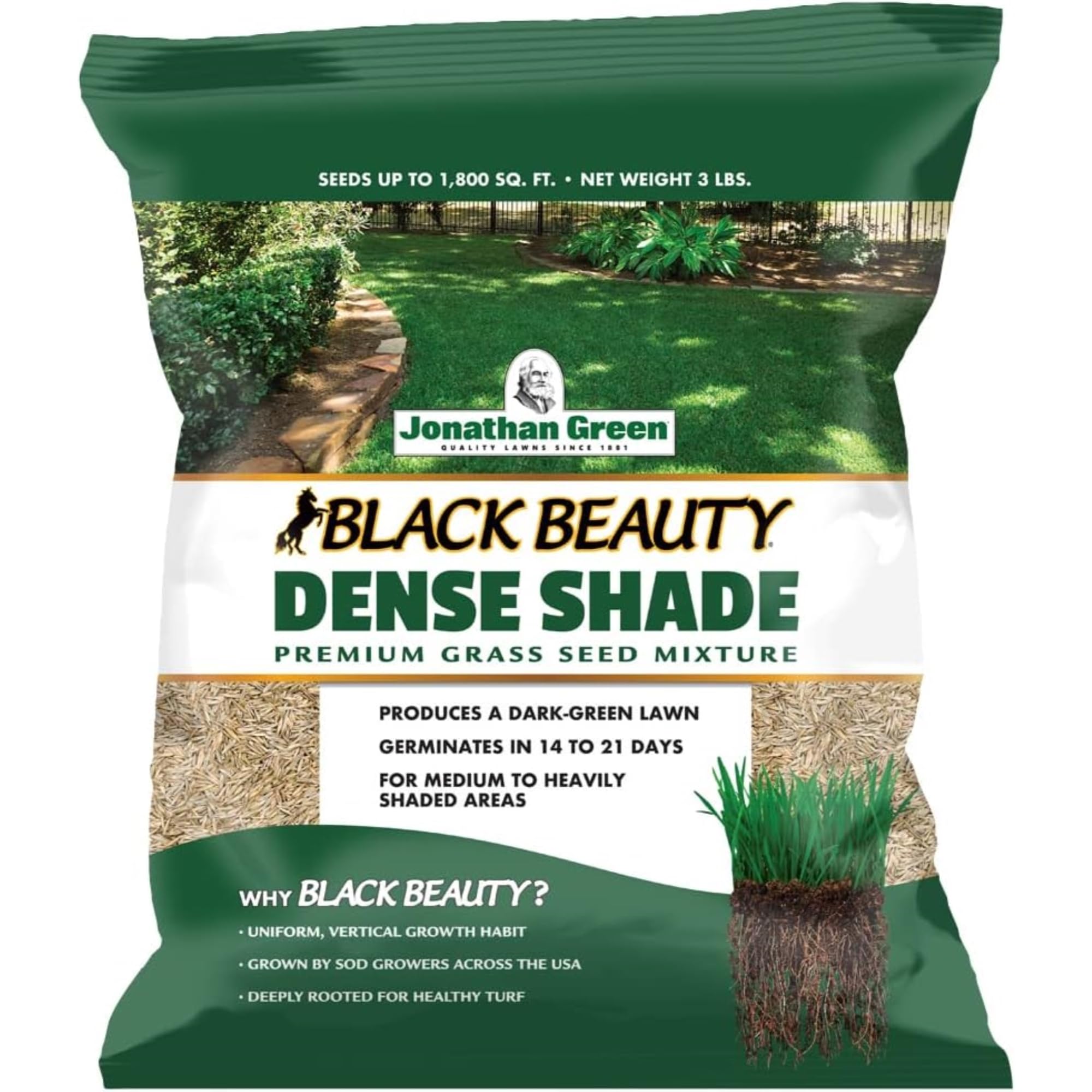
New England properties with mature trees face a unique challenge: the canopy blocks sunlight for most of the day, and standard sun‑loving blends fail under these conditions. Jonathan Green’s Dense Shade formula is designed specifically for this problem, using fine fescue varieties that can thrive on as little as three to four hours of dappled light. The 3‑pound bag covers 1,800 square feet when overseeding, which is highly efficient for the shade‑focused formulation.
Germination can be surprisingly fast — some buyers report sprouts in as little as three days under proper moisture conditions — and the grass reaches 4 to 5 inches in shaded areas under large trees. The color is a rich green that holds well in spring and early summer. It is not a full‑sun performer, so planting it in open areas will result in thinner coverage than a tall fescue or bluegrass mix would provide.
One common issue: the grass can deteriorate when temperatures climb into the 80s and 90s, especially in spots that receive afternoon sun. Prompt leaf raking is essential to prevent the seedlings from smothering under fallen autumn leaves. A few buyers reported disappointing germination rates, possibly linked to storage conditions or bag age, so checking the test date on the label before purchase is wise.
Why it’s great
- Exceptional performance in dense shade under trees
- Fast germination in ideal conditions (3 days reported)
- Fine fescue blend requires less sun than standard mixes
Good to know
- Can decline in high heat; not for full‑sun areas
- Needs prompt leaf raking to prevent smothering
5. Scotts Turf Builder THICK’R LAWN Tall Fescue Mix

Scotts THICK’R LAWN is not a pure grass seed — it is a 3‑in‑1 combination of seed, fertilizer, and soil improver designed to thicken up thin, worn areas in one application. The 12‑pound bag is a budget‑friendly entry point for homeowners who want a quick fix for bare patches left by dog traffic or winter kill. The tall fescue component provides good drought tolerance and a coarse‑medium texture that blends reasonably well with existing Northern lawns.
The formula works best when applied to an existing lawn that has bare or thinning spots, rather than for establishing an entirely new lawn from scratch. Buyers see germination within 7 to 14 days when watering consistently, and the fertilizer component gives the surrounding grass an immediate green boost. The soil improver (a mix of organic matter) helps with root penetration in compacted New England clay, which is a genuine benefit for yards that have never been aerated.
On the downside, the seed percentage in the bag is lower than pure seed products because of the added fertilizer and soil improver. This means you get less actual seed per pound, and the coverage estimate can be optimistic for thicker lawns. A few users reported that the seed portion barely sprouted while the fertilizer greened up existing grass, making it feel like a fertilizer product with seed as an afterthought. It is a convenience‑oriented option rather than a precision tool.
Why it’s great
- All‑in‑one seed, fertilizer, and soil improver saves time
- Quick visible greening of existing thin lawn
- Soil improver helps with compacted clay soil
Good to know
- Lower seed‑to‑bag ratio than pure seed products
- Not ideal for establishing a brand‑new lawn
FAQ
When is the best time to plant grass seed in New England?
Will Kentucky bluegrass survive New England winters?
Final Thoughts: The Verdict
For most New England homeowners, the best grass seed for new england is the Pennington Smart Seed Northeast Mix because it matches the region’s variable light conditions and delivers fast, dense coverage with one bag. If your yard bakes in full summer sun, grab the Jonathan Green Black Beauty Heat & Drought mix for its deep root system and heat‑defying Texas bluegrass. And for heavily shaded lots under old maples, nothing beats the Jonathan Green Dense Shade Grass Seed — just pair it with proper leaf management and keep an eye on it during July heat waves.