
Ohio’s wild temperature swings — from humid 90°F summers to freezing winters — create a brutal testing ground for lawns. Adding dogs to the mix means dealing with urine burn, heavy foot traffic, and patchy repair zones that ordinary seed blends simply can’t handle. You need grass that germinates fast, survives the state’s clay-heavy soil, and neutralizes the nitrogen load your pets leave behind.
I’m Mohammad Maruf — the founder and writer behind Drink4Good. I’ve spent hundreds of hours cross-referencing germination rates, root-depth claims, and pet-specific durability ratings to find the blends that actually work for Ohio’s unique growing conditions.
I’ve analyzed the specs, studied the real-world customer feedback, and ranked the top five options to deliver the definitive grass seed for ohio with dogs that balances fast green-up with long-term resilience against both climate and canine wear.
How To Choose The Best Grass Seed For Ohio With Dogs
Ohio sits in the transition zone, meaning neither warm-season nor cool-season grasses thrive effortlessly. Your blend must handle freeze-thaw cycles, humid summers, and the acidic clay soil common across the state. Adding dogs introduces concentrated nitrogen burns from urine and physical wear from running patterns. The right seed mix compensates for all these stressors simultaneously.
Focus on Tall Fescue Dominance for Root Depth
Tall fescue sends roots up to four feet deep, which is critical for Ohio’s summer droughts and winter waterlogging. Blends with at least 60% turf-type tall fescue recover faster from urine burns because the deep roots access moisture that surface-level ryegrass cannot. Avoid blends heavy on annual ryegrass, which dies after one season and leaves bare patches your dogs will turn into mud pits.
Verify Urine Resistance Claims Against Real Reviews
“Pet-proof” and “urine-resistant” are not regulated terms. The resistance comes from the grass’s ability to dilute nitrogen through rapid cell turnover — tall fescue and fine fescue perform best here. Check customer reviews specifically mentioning dogs and look for germination success stories during Ohio’s ideal seeding window (late August to mid-September). A product that works in California’s sandy soil may fail in Ohio’s heavy clay.
Match Shade Tolerance to Your Yard’s Canopy
Ohio neighborhoods often feature mature maples and oaks that block sunlight for half the day. If your yard gets fewer than six hours of direct sun, choose a blend containing creeping red fescue or chewings fescue. These fine fescues thrive in dappled light and tolerate the compacted soil near fence lines where dogs frequently patrol.
Quick Comparison
On smaller screens, swipe sideways to see the full table.
| Model | Category | Best For | Key Spec | Amazon |
|---|---|---|---|---|
| X-Seed Pet Proof Fescue | Pet-Specific Blend | Direct urine resistance | Rhizing Moon & Nightcrawler fescue mix | Amazon |
| Pennington Smart Seed Ohio Mix | State-Specific Mix | Ohio climate adaptation | 7 lb bag covers 6,660 sq ft | Amazon |
| Scotts Kentucky 31 Mix | Premium Tall Fescue | Large-area overseeding | 20 lb bag covers 5,000 sq ft | Amazon |
| Jonathan Green Black Beauty | Heat & Drought | Sunny, high-traffic zones | Roots up to 4 feet deep | Amazon |
| Outsidepride Legacy Fine Fescue | Shade Fine Fescue | Deep shade under trees | OptiGrowth nutrient coating | Amazon |
In‑Depth Reviews
1. X-Seed Pet Proof Fescue Grass Seed
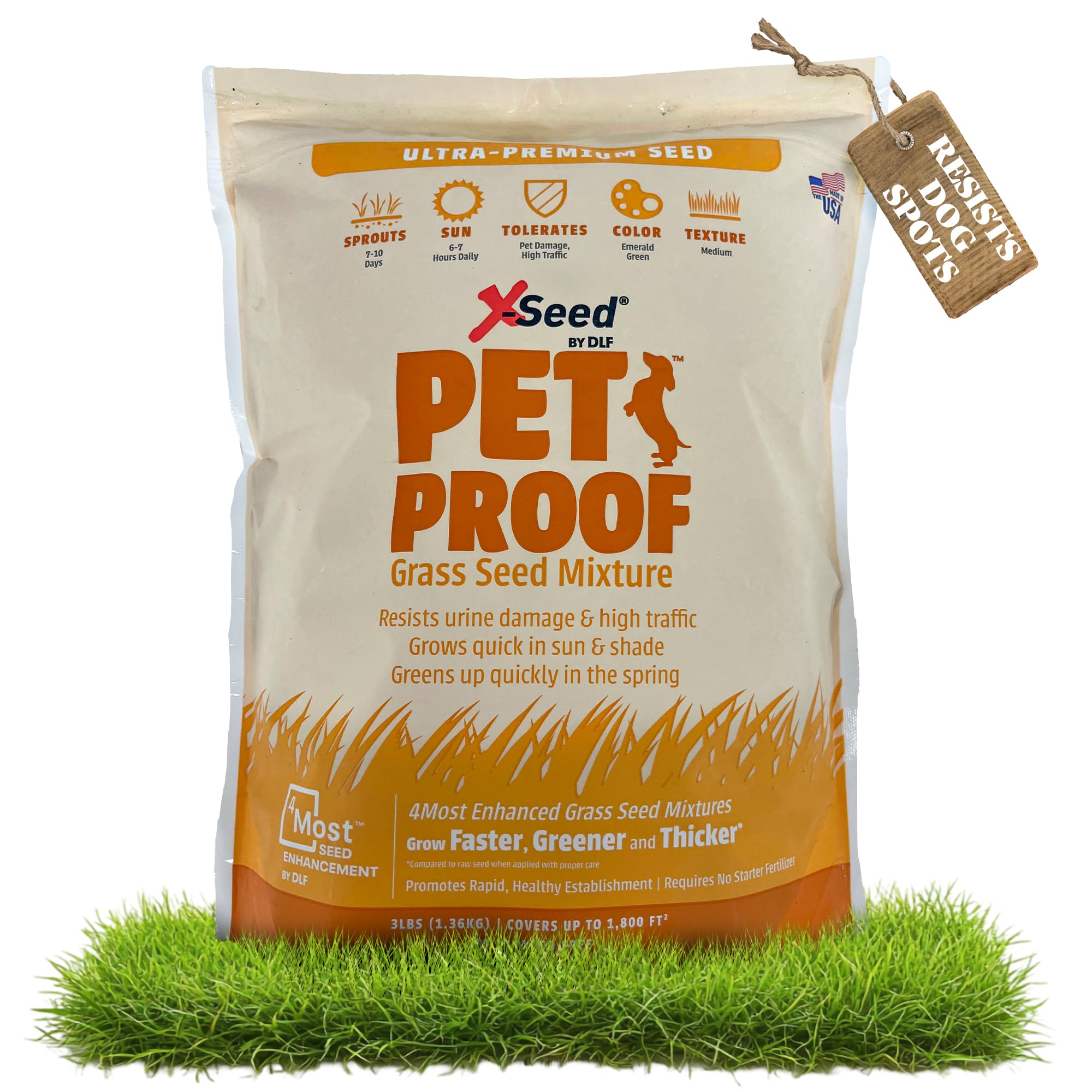
The X-Seed Pet Proof blend is purpose-built for the exact Ohio scenario: clay soil, partial shade from neighborhood trees, and two dogs doing laps. It combines Rhizing Moon Tall Fescue and Nightcrawler Tall Fescue with Tetradark Perennial Ryegrass, creating a dense canopy that handles urine nitrogen without browning at the edges. Multiple buyer reports confirm 7-to-10-day germination at 3-inch height when the seed is lightly covered with topsoil.
The 3-pound bag uses a 400-ounce unit count, which translates to high seed density per square foot — critical for overseeding the urine spots that form along fence lines where dogs pace. It grows well in sandy, loamy, or clay soils, meaning it adapts to Ohio’s notoriously variable subsoil without requiring extensive amendment. The GMO-free tag also appeals to organic-leaning homeowners worried about chemical runoff into pet water bowls.
One caveat: the “pet proof” claim assumes you prep the soil properly with aeration and starter fertilizer. Buyers who simply tossed seed on hard clay saw zero germination. The blend also takes two to three weeks to establish full root depth, so keep dogs off the area during that window. Once mature, the fescue base holds up to medium-sized dogs running patterns without thinning.
Why it’s great
- Formulated specifically for urine resistance with deep-root fescues
- Germinates in 7-10 days with proper soil prep
- Adapts to clay, loam, and sandy Ohio soil types
Good to know
- Requires soil layer over seed — broadcasting alone fails
- Pet-proof durability still needs off-limits period during establishment
2. Pennington Smart Seed Ohio State Mix
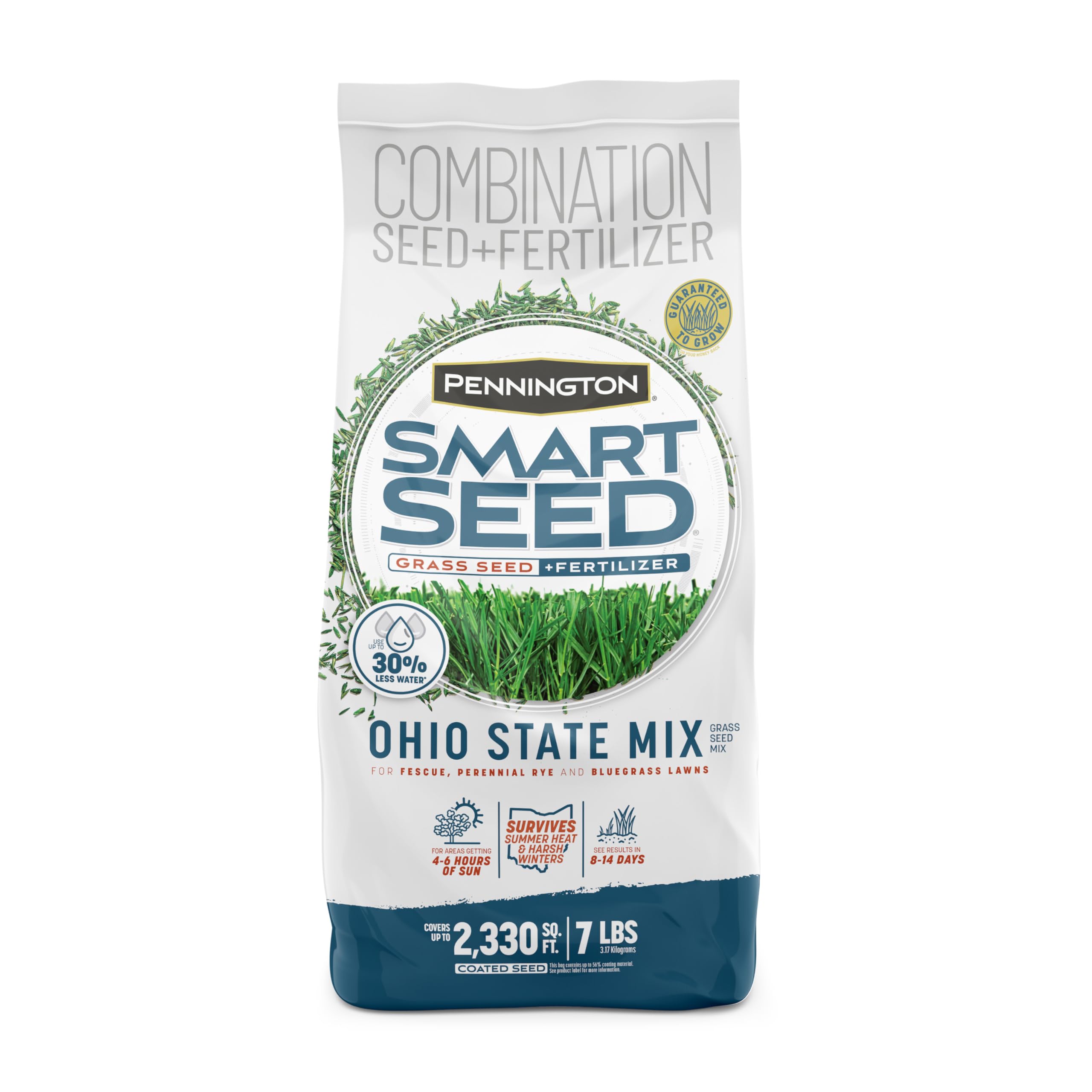
Pennington designed this mix specifically for Ohio’s transition-zone climate, blending Perennial Ryegrass, Kentucky Bluegrass, and Tall Fescue in proportions that handle both 90°F summer peaks and subzero winter lows. The 7-pound bag covers up to 6,660 square feet for overseeding — enough to treat an average Ohio quarter-acre lot with room to spare. Multiple Ohio buyers report visible results in 8 to 14 days, with the ryegrass component providing quick ground cover while the fescue and bluegrass establish deeper roots.
The Smart Seed technology reduces water usage by up to 30% compared to ordinary seed, which matters during Ohio’s late-summer dry spells. The blend tolerates 4 to 6 hours of sunlight, making it viable for yards with mature shade trees. The Kentucky Bluegrass component adds excellent disease resistance — a major advantage in Ohio’s humid summers where fungal issues like brown patch can destroy a lawn quickly.
Customer reviews consistently praise the fast growth and rich green color, though some note that germination is spotty if the soil temperature drops below 55°F. This is a fall-seeding product — late August through September is the sweet spot. The biggest complaint is about coverage density: the 7-pound bag is sufficient for overseeding but light for full lawn replacement if you’re starting from bare dirt after a dog’s digging spree.
Why it’s great
- Formulated for Ohio’s specific climate conditions
- Fast 8-to-14-day germination window
- Kentucky Bluegrass provides excellent disease resistance
Good to know
- Spotty germination if soil temps drop below 55°F
- Better suited for overseeding than full bare-dirt lawn replacement
3. Scotts Kentucky 31 Grass Seed Mix

The 20-pound bag of Scotts Kentucky 31 is the economical choice for large Ohio properties with multiple dogs. It blends Premium Tall Fescue with Annual Ryegrass and Kentucky 31 Tall Fescue, creating a 99% weed-free mix that tolerates heat up to 100°F and moderate shade. The overseeding coverage of 5,000 square feet per bag makes it ideal for treating the entire backyard without buying multiple bags. Buyers in similar climates report seeing results in as few as 5 days, with full lush coverage in 5 weeks.
The tall fescue base is the key advantage for dog owners — it withstands heavy foot traffic and recovers from urine burns faster than bluegrass-heavy mixes. A three-generation user review notes it “withstands kids and dogs” better than any other seed they’ve used. The inclusion of annual ryegrass provides quick ground cover to prevent mud, though the ryegrass will die off after one season, leaving the fescue to fill in permanently.
There is one recurring complaint: the coating on the seed makes up a significant portion of the bag weight. Some buyers estimate only half the bag is actual seed, which reduces coverage. The coating includes fertilizer and moisture-retaining compounds, so it’s not worthless, but you need to adjust your seeding rate accordingly. For Ohio’s clay-heavy soil, aeration before application is essential to get the coating into the root zone.
Why it’s great
- Massive 20-pound bag covers 5,000 sq ft for overseeding
- Tall fescue recovers quickly from dog urine and traffic
- Results visible in as few as 5 days
Good to know
- Coating reduces actual seed weight — adjust coverage expectations
- Annual ryegrass component dies after one season
4. Jonathan Green Black Beauty Heat & Drought

The Jonathan Green Black Beauty mix features tall fescue and Texas bluegrass — a combination that produces roots up to 4 feet deep. This is the most drought-tolerant option in the lineup, with a waxy leaf coating that limits evaporation. For Ohio summers when the soil turns rock-hard by late July, this seed maintains green color without constant irrigation. The 3-pound bag covers 750 square feet for new lawns or 1,500 square feet for overseeding, making it ideal for spot-treating the specific urine-burn patches dogs create.
One Ohio buyer who moved from the Carolinas reported it produced a Kentucky Bluegrass-like lawn that sprouted in 7 days and was beautiful by day 14. That fast germination is critical for dog owners — the sooner grass establishes, the sooner you can let pets back on it. The Texas bluegrass component adds summer heat tolerance that standard Kentucky bluegrass lacks, solving the common Ohio problem of cool-season lawns going dormant in August.
The biggest drawback is the small bag size. For a full backyard, you will need multiple bags, which pushes the total cost up compared to the Scotts Kentucky 31 option. Additionally, a few buyers reported zero germination when they didn’t properly prep the soil — this seed rewards those who aerate and add loam soil before spreading. The label also shows higher weed content than some competitors, so expect to do some hand-pulling after establishment.
Why it’s great
- Roots go 4 feet deep — superior drought tolerance for Ohio summers
- Germinates in 7 days with proper soil prep
- Texas bluegrass handles summer heat better than standard bluegrass
Good to know
- Small bag size requires multiple purchases for large yards
- Higher weed content noted in some batches
5. Outsidepride Legacy Fine Fescue Grass Seed Mix

The Outsidepride Legacy mix blends 20% Hard Fescue, 40% Chewings Fescue, and 40% Creeping Red Fescue — a combination optimized for deep shade conditions. The OptiGrowth coating infuses each seed with Zinc, Phosphorus, Nitrogen, and Elko kelp to support root development in poor soil. This is the best option for Ohio yards with mature oak or maple canopies where tall fescue and bluegrass struggle to compete. The 5-pound bag covers a solid area without the bulk of the Scotts option.
Fine fescues produce thin, luxurious blades that create a dense mat — ideal for dog paths that would otherwise turn to mud under compacted soil. Customers who used compost and topsoil reported beautiful dark green growth within 1.5 to 2 weeks. The shade tolerance is genuine: the fine blades thrive in dappled light conditions where other cool-season grasses become leggy and thin. The OptiGrowth coating also helps the seed adhere to slopes, reducing washout during Ohio’s spring rains.
There are two important limitations. First, fine fescues are less traffic-tolerant than tall fescue — if your dogs run full-speed across the same patch daily, this blend will wear faster. Second, approximately 10% germination was reported by disgruntled buyers who applied without soil prep and were denied refunds. This seed demands raking into the top 1/4 inch of soil and consistent moisture for the first 10 days. It works well for shaded corners and under trees, not for high-traffic play zones.
Why it’s great
- Superior shade tolerance for Ohio’s tree-canopy lawns
- OptiGrowth coating provides nutrients for poor soil
- Fine blades create a dense, luxurious turf texture
Good to know
- Less durable under heavy dog traffic compared to tall fescue
- Requires careful soil prep — broadcasting alone leads to poor germination
FAQ
Can I just spread grass seed over existing grass without tilling?
How do I protect new grass seed from my dogs digging it up?
Why does dog urine kill grass and how do these seeds help?
Should I use a starter fertilizer when seeding for dogs?
How often should I water new grass seed in Ohio’s summer?
Final Thoughts: The Verdict
For most users, the grass seed for ohio with dogs winner is the X-Seed Pet Proof Fescue because its Rhizing Moon and Nightcrawler fescue blend delivers genuine urine resistance with 7-to-10-day germination in Ohio’s variable clay soil. If you want state-specific adaptation with fast green-up, grab the Pennington Smart Seed Ohio Mix. And for coverage of a large property with multiple dogs on a budget, the Scotts Kentucky 31 Mix offers the best value per square foot while still handling heavy traffic and heat stress.