
The biggest headache with overseeding isn’t buying the seed — it’s waiting weeks for those bare patches to fill in, only to watch thin, patchy grass struggle through the summer. The difference between a lawn that looks like a patchwork quilt and one that looks like a velvet carpet comes down to picking the right seed blend for your specific conditions and timing. A high-quality mix with the right balance of fast germination and long-term durability transforms a lackluster yard without requiring professional help.
I’m Mohammad Maruf — the founder and writer behind Drink4Good. I’ve spent countless hours analyzing germination rates, blend compositions, and customer results to identify which grass seed formulations deliver real, repeatable outcomes for homeowners.
Whether you’re dealing with foot traffic from kids and pets, battling drought stress, or trying to establish a cool-season lawn in the transition zone, the right product makes all the difference. Let’s break down the top options to find the best grass seed for overseeding that matches your lawn’s needs and your schedule.
How To Choose The Best Grass Seed For Overseeding
Overseeding is different from planting a brand-new lawn — you’re working with existing soil, competing roots, and varying shade patterns. Choosing the right seed means matching the blend’s characteristics to your lawn’s specific weaknesses.
Grass Type and Climate Match
Cool-season grasses like Kentucky bluegrass and tall fescue thrive in northern and transition zones with spring and fall planting windows. Warm-season varieties like Bermuda or zoysia are better for southern climates. For overseeding, a blend often works best — combining fast-germinating ryegrass with a slower, denser base grass like bluegrass or fescue gives you quick green coverage while the longer-term grass establishes deep roots.
Coverage Area and Bag Weight
Bag weights can be deceptive because some products include a heavy coating of fertilizer or moisture-holding polymers. Always check the stated coverage in square feet for overseeding (not new lawn coverage). A 3-pound bag of pure Kentucky bluegrass may cover 4,800 square feet for overseeding, while a 7-pound coated mix covers only 1,750 square feet for the same task. Calculate your lawn area before buying to avoid over-ordering or running short.
Germination Speed and Timing
Some blends promise results in as few as 5 days (typically annual ryegrass), while pure Kentucky bluegrass can take 21 to 28 days. Fast germination helps hold soil in place and outcompetes weeds, but slower-germinating varieties often produce denser, more durable turf. A blend that includes both speeds gives you the best of both worlds — quick green cover now, thick lawn later.
Quick Comparison
On smaller screens, swipe sideways to see the full table.
| Model | Category | Best For | Key Spec | Amazon |
|---|---|---|---|---|
| Jonathan Green Blue Panther | Premium | Sod-quality KBG lawn | 100% Kentucky Bluegrass | Amazon |
| Scotts Turf Builder Sunny Mix | Mid-Range | Full sun with root nutrition | Fertilizer + soil improver included | Amazon |
| Pennington Smart Seed KBG Mix | Mid-Range | Water-saving lawn | Fertilizer + 4-6 hr sun tolerance | Amazon |
| Scotts Kentucky 31 Mix | Value | Bare spot fill-in, high traffic | Tall Fescue + Ryegrass blend | Amazon |
In‑Depth Reviews
1. Jonathan Green (11970) Blue Panther Kentucky Bluegrass Grass Seed

Jonathan Green’s Blue Panther is the closest thing to a sod-quality lawn from a bag of seed. This is 100% Kentucky bluegrass — no fillers, no annual ryegrass — so you get uniform leaf texture and that signature dark blue-green color that lawn enthusiasts chase. The 3-pound bag covers up to 4,800 square feet when overseeding, making it remarkably efficient per square foot compared to coated blends that weigh twice as much.
Germination takes 21 to 28 days, which requires patience, but the payoff is a dense, traffic-tolerant turf that repairs itself through rhizomes. Multiple customers report seeing fuller, darker green results compared to big-box store mixes, with noticeably fewer weeds. The tiny seed size demands careful spreader calibration — a rotary spreader with a small opening setting works best to avoid waste.
This seed shines when used in late summer or early fall (mid-August to mid-October) when soil is warm and nights are cool. Spring planting works too, but the slower germination means you’ll battle summer weeds more aggressively. For homeowners who want a pure KBG lawn that looks professionally installed, this is the choice.
Why it’s great
- 100% Kentucky bluegrass for uniform texture and color
- Exceptional overseeding coverage — 4,800 sq. ft. per bag
- Low maintenance and traffic tolerant once established
Good to know
- Slow germination — 3 to 4 weeks before full results
- Requires careful spreader calibration due to tiny seed
- Higher cost per pound than blended mixes
2. Scotts Turf Builder Grass Seed Sunny Mix with Fertilizer and Soil Improver
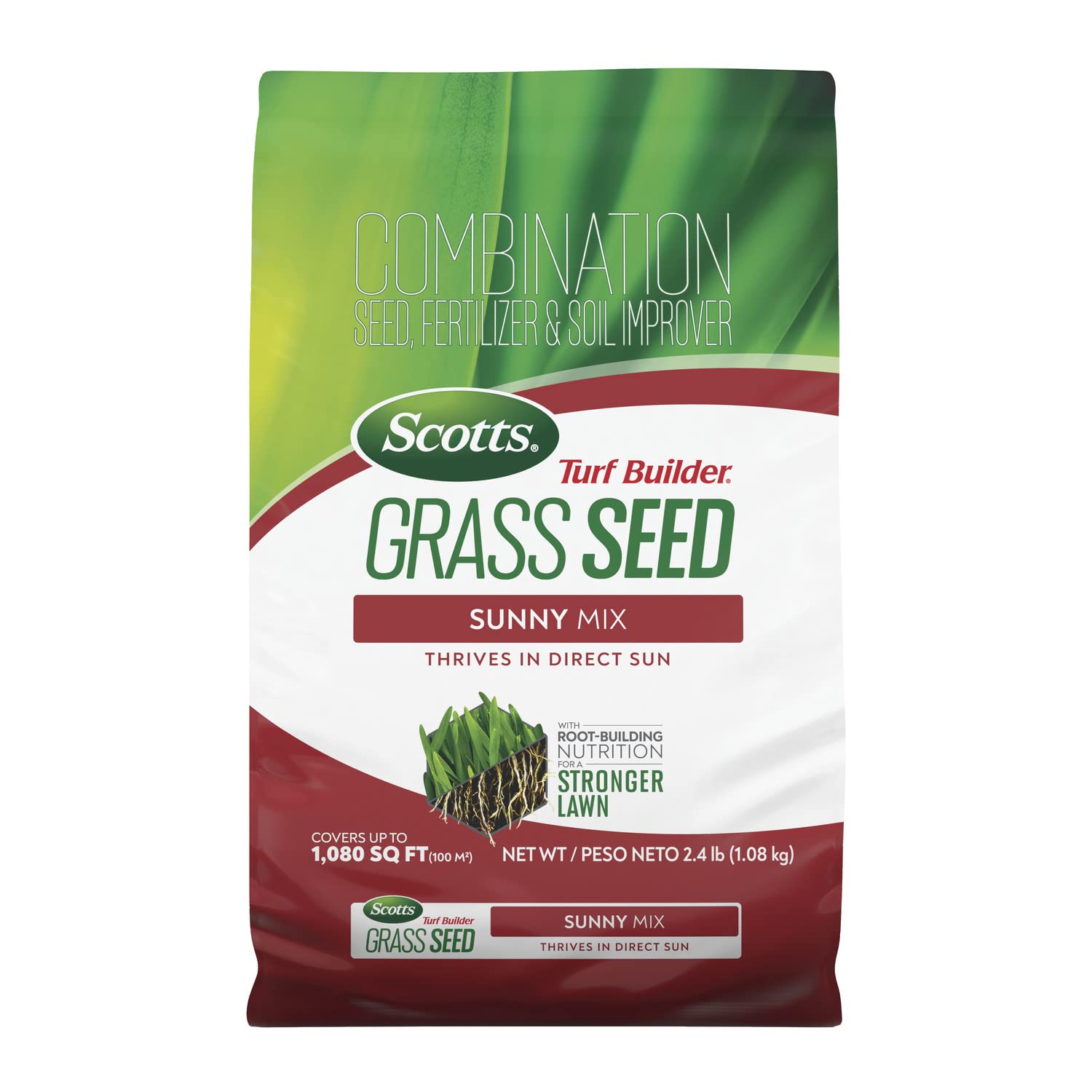
Scotts redesigned their Turf Builder Sunny Mix to combine seed, fertilizer, and soil improver in one bag — a three-in-one approach that simplifies the overseeding process. The root-building nutrition formula helps establish deep root systems, which translates to better drought resistance and durability through the growing season. It thrives in full sun and tolerates light shade, making it versatile for most open lawn areas.
One 2.4-pound bag covers 1,080 square feet for overseeding, which is efficient enough for small to medium lawns without needing multiple bags. Customers consistently report fast germination and strong growth, with some seeing visible results within two weeks. The fertilizer coating means you don’t need to buy a separate starter fertilizer, reducing upfront cost and labor.
Keep in mind that the coating adds bulk — the actual seed weight is lower than the bag weight suggests. For best results, apply during spring or fall when daytime temperatures stay between 60°F and 80°F. Water daily until seedlings reach mowing height. This is the most convenient option for homeowners who want a single-product solution with proven results.
Why it’s great
- Three-in-one formula (seed, fertilizer, soil improver) saves steps
- Fast germination with strong root development
- Good drought resistance once established
Good to know
- Bag weight includes coating — actual seed volume is smaller
- Designed for full sun; not ideal for heavy shade
- Small bag size requires multiple units for larger lawns
3. Pennington Smart Seed Kentucky Blue Grass Mix 3 lb

Pennington’s Smart Seed line is engineered around water conservation — this Kentucky bluegrass blend is designed to require up to 30% less water than ordinary grass seed once established. The included starter fertilizer gives seedlings a nutritional boost during the critical first weeks, reducing the need for separate amendments. It’s formulated for areas receiving 4 to 6 hours of sunlight, placing it in the partial shade category where many lawns struggle.
The 3-pound bag covers up to 2,000 square feet, and germination typically occurs within 15 to 30 days. Customer reports show thick, hearty growth in patches, though some users note that results depend heavily on soil temperature and consistent watering. The blend includes disease and traffic resistance, making it a solid choice for family yards with moderate activity.
One trade-off is that the included fertilizer means you’re paying for coating weight, not pure seed. In colder spring conditions (soil temps below 50°F), germination can stall. Wait until soil consistently stays above 55°F before spreading. For homeowners focused on reducing water bills while still getting a lush bluegrass lawn, this is a smart long-term investment.
Why it’s great
- Up to 30% less water needed once established
- Built-in starter fertilizer supports early growth
- Disease and traffic resistant
Good to know
- Germination slows significantly in cool soil
- Bag includes fertilizer weight — less seed per pound
- Requires 4+ hours of sun; not for deep shade
4. Scotts Kentucky 31 Grass Seed Mix for New Lawns or Overseeding
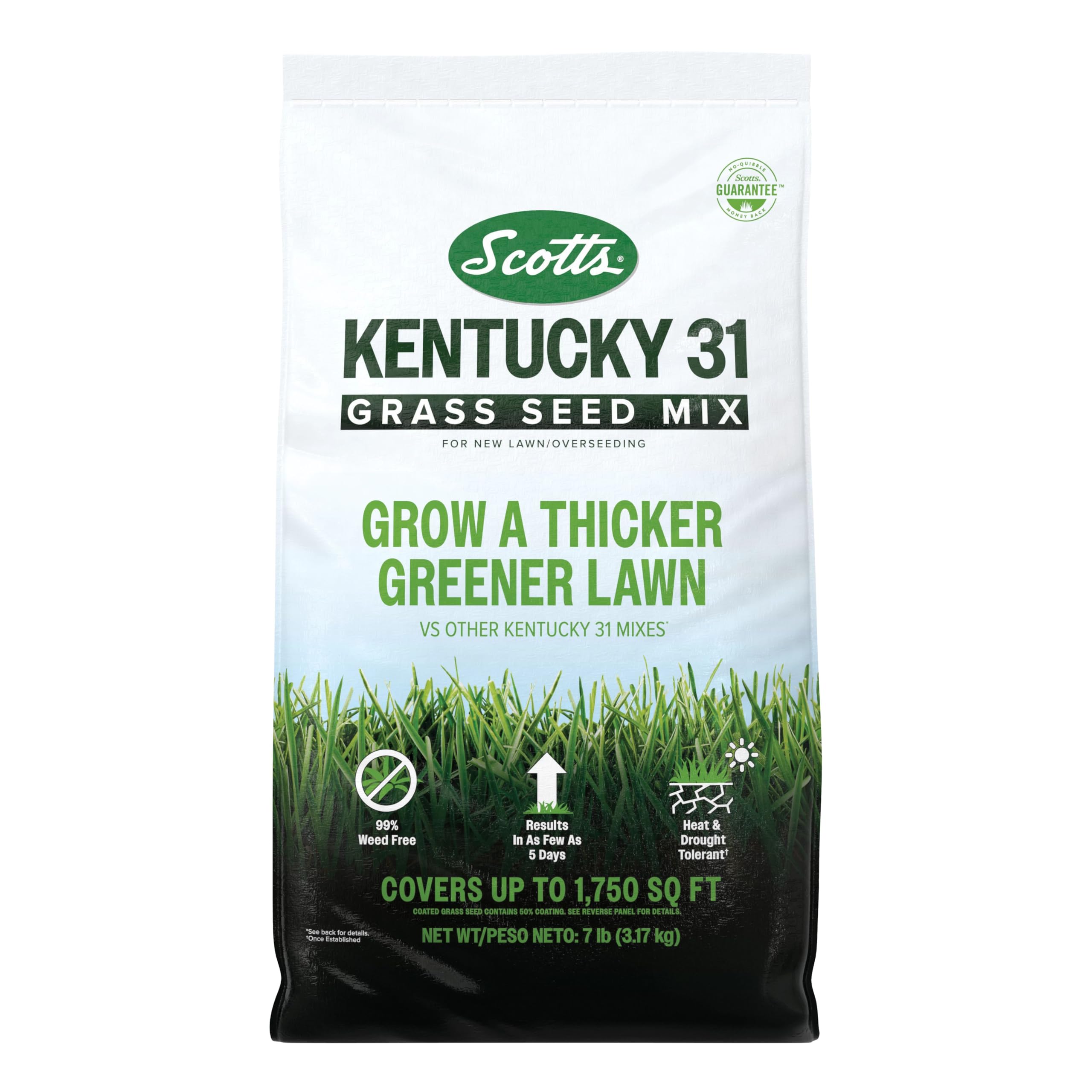
Scotts Kentucky 31 Mix is a workhorse blend built around the legendary Kentucky 31 tall fescue, combined with annual ryegrass for quick coverage and premium tall fescue for density. This combination gives you visible green in as few as 5 days from the ryegrass component, while the fescues build a deep root system that handles heat, drought, and foot traffic. It’s 99% weed-free, which is a meaningful quality standard for overseeding projects.
Coverage is generous — a 7-pound bag overseeds up to 1,750 square feet. Customers in zones 6a and beyond report success even when planting in cooler conditions (40s to 60°F), with grass emerging in 7 to 10 days with proper preparation. The blend tolerates full sun and moderate shade, giving flexibility across different lawn sections.
The most common complaint involves the coating weight — some users estimate that the actual seed content is roughly half the bag weight. This means you’re paying for more than just seed, but the coating includes moisture-holding and nutritional components that improve germination rates. For large-scale overseeding on a budget, this mix delivers the fastest visual results of any option here.
Why it’s great
- Very fast germination — visible green in 5 days
- Blend of three grass types for heat, drought, and traffic tolerance
- 99% weed-free with large coverage area per bag
Good to know
- Coating reduces actual seed weight significantly
- Annual ryegrass component may die back in summer heat
- Requires consistent watering and soil preparation for best results
FAQ
What month is best for overseeding with cool-season grass seed?
How long does grass seed take to germinate when overseeding?
Can I overseed with Kentucky bluegrass if my lawn already has tall fescue?
Final Thoughts: The Verdict
For most homeowners, the best grass seed for overseeding is the Scotts Turf Builder Sunny Mix because it combines seed, fertilizer, and soil improver in one application — reducing guesswork while delivering fast, reliable germination in full-sun lawns. If you want a pure, sod-quality Kentucky bluegrass lawn with unmatched color and density, go with the Jonathan Green Blue Panther. And for budget-conscious homeowners covering large bare areas quickly, the Scotts Kentucky 31 Mix provides the fastest visual results with triple-grass durability.