
The light that filters through your oak canopy doesn’t sustain a typical lawn — it creates a botanical stress test. Under those tree shadows, standard bluegrass thins to dirt, and the bare patches become weed nurseries. The right mix for these dim conditions relies on specialized, shade-adapted cultivars like fine fescues that photosynthesize efficiently at lower light intensities without turning into yellow, leggy strands.
I’m Mohammad Maruf — the founder and writer behind Drink4Good. I’ve spent hundreds of hours analyzing germination trials, pure seed percentages, and real-world reviews for cool-season shade blends to separate marketing claims from actual performance on the ground.
The deeper truth is that most lawn disasters under trees begin with a bag labeled “shade mix” that actually contains too much Kentucky bluegrass, which starves in 4 hours of filtered light. This guide focuses exclusively on the best grass seed for partial shade, ranking proven blends by fine fescue content, shade tolerance rating, and reliable germination data across compacted, low-light soil conditions.
How To Choose The Best Grass Seed For Partial Shade
Selecting a shade-tolerant grass seed is about matching the turf species to your specific light window. Here are the three criteria that separate a thriving shaded lawn from a patchy disappointment.
Fine Fescue Content — The Shade-Workhorse Blend
Creeping red fescue, chewings fescue, and hard fescue are the only cool-season species that genuinely thrive with 4–5 hours of daily sun. A partial-shade mix should list one or more of these as the first or second ingredient on the label. Avoid blends where tall fescue or perennial ryegrass dominate — these tolerate some shade but thin severely under dense tree canopies.
Seed Coating and Purity Percentage
An uncoated seed with 99% pure seed and 0% weed seed is the gold standard for shady spots where competition is already fierce. Coated seeds (like OptiGrowth) can improve soil contact and nutrient delivery in the critical first two weeks, but the coating should supplement high purity, not mask low-quality filler seed. Check the “pure seed” percentage on the tag — reject anything below 95%.
Real-World Germination Consistency Under Shade
Proven shade mixes germinate reliably within 10–21 days in soil temperatures between 50°F and 65°F, even under deciduous trees. Read recent reviews from users with similar conditions — dense maple or oak shade, compacted clay soil, or north-facing beds. A product that only germinates in full sun is not a partial shade seed, regardless of what the front label implies.
Quick Comparison
On smaller screens, swipe sideways to see the full table.
| Model | Category | Best For | Key Spec | Amazon |
|---|---|---|---|---|
| Outsidepride Legacy Fine Fescue Mix | Premium Blend | Deep shade, fine-textured turf | 100% Fine Fescue blend (creeping red, chewings, hard) | Amazon |
| Jonathan Green Black Beauty Sun & Shade | Premium Mix | Full sun to partial shade, rapid fill-in | 7–14 day germination; 4 cool-season grasses blend | Amazon |
| Jonathan Green Dense Shade Grass Seed | Specialty | Dense tree shade, north-facing lawns | Shade-resistant; 1800 sq. ft. coverage (3 lb) | Amazon |
| Creeping Red Fescue by Eretz | Pure Species | Slopes, erosion control, fine-blade shade | 99.6% pure seed; 0% weed seed; Oregon grown | Amazon |
| Jonathan Green Black Beauty Heat & Drought | Heat-Shade Hybrid | Partial sun with high heat tolerance | 100°F heat tolerance; roots to 4 ft deep | Amazon |
In‑Depth Reviews
1. Outsidepride Legacy Fine Fescue Grass Seed Mix
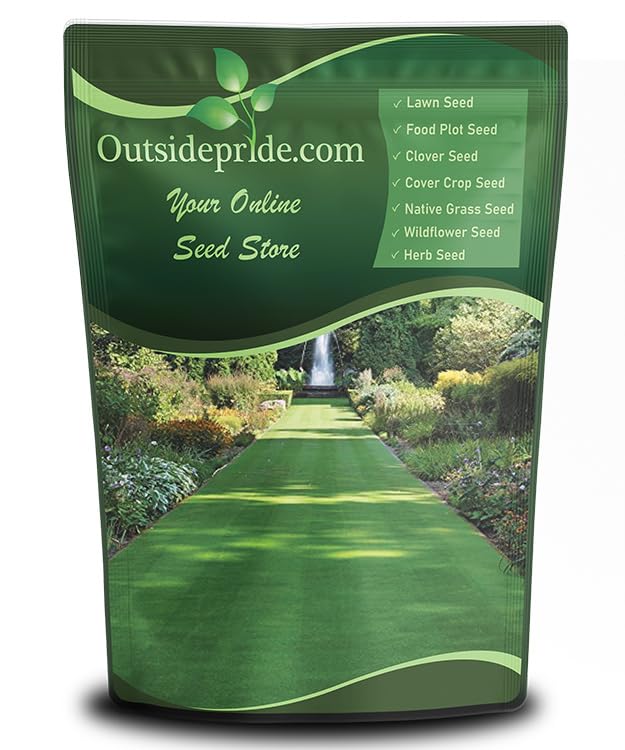
This mix is engineered specifically for the toughest shade scenarios — no tall fescue or bluegrass diluting its performance. The blend combines 20% hard fescue, 40% chewings fescue, and 40% creeping red fescue, creating a fine-textured turf that thrives in full sun down to dense shade. The OptiGrowth coating delivers zinc, phosphorus, nitrogen, and Elko kelp directly to the seed, which accelerates root establishment in cool, low-light soil where uncoated seed often rots.
Real-world reviews confirm strong results: users in shaded PNW lawns report noticeable growth within 21 days during cold spring seeding (36–39°F nights), while others in California describe a beautiful dark green turf that withstands low water and holds off between mowing. The fine blades do have a lighter density under heavy foot traffic, making this better suited for aesthetic shade areas than a backyard soccer field.
One critical limitation: the OptiGrowth coating means you need consistent moisture — twice-daily watering for the first two weeks is non-negotiable. A handful of customers saw only 10% germination; feedback suggests these failures correlate with dry spells after seeding rather than seed quality. At 5 lbs, this bag covers about 1,000 sq. ft. for new seeding.
Why it’s great
- Exclusively fine fescues — ideal for dense shade where other species fail
- Nutrient-coated seed supports faster, stronger germination in cold soil
- Drought-tolerant once established; requires less mowing than bluegrass blends
Good to know
- Coating demands careful watering; dry spells during germination reduce success rates
- Not as dense as a turf-type tall fescue lawn under direct foot traffic
2. Jonathan Green Black Beauty Sun & Shade Grass Seed

Jonathan Green’s Black Beauty series is a recognized performer in the cool-season market, and this Sun & Shade blend earns its premium status through a careful four-way mix of turf-type tall fescue, Kentucky bluegrass, perennial ryegrass, and fine fescues. The 7–14 day germination window is genuinely faster than Scott’s or Pennington equivalents according to side-by-side user reports, making this a strong choice for overseeding bare spots under mixed light conditions.
The 7 lb bag seeds up to 5,250 sq. ft. for overseeding, offering excellent value for medium-to-large shaded lawns. Customer feedback highlights thick, dark green growth that survives central Illinois drought conditions and heavy clay soil preparation. However, the blend’s 35% ryegrass component is a double-edged sword — while it germinates fast, it can produce lighter-colored, wider blades that stand out against darker fescue, especially in spring green-up.
Consistent watering during the first three weeks is essential; without it, germination drops sharply in dappled shade. The bag’s best application window is mid-August to mid-October (or mid-March to mid-May), which aligns with the cool soil temperatures fine fescues and bluegrass need to establish before summer stress.
Why it’s great
- Fast germination among the cool-season blends — visible results in 10 days
- Large bag (7 lb) provides extensive coverage for overseeding larger lawns
- Proven drought survival in central US hot summers
Good to know
- Contains perennial ryegrass that may produce blades lighter than the fescue component
- Needs consistent moisture; fails in dry shady spots without daily watering
3. Jonathan Green Dense Shade Grass Seed
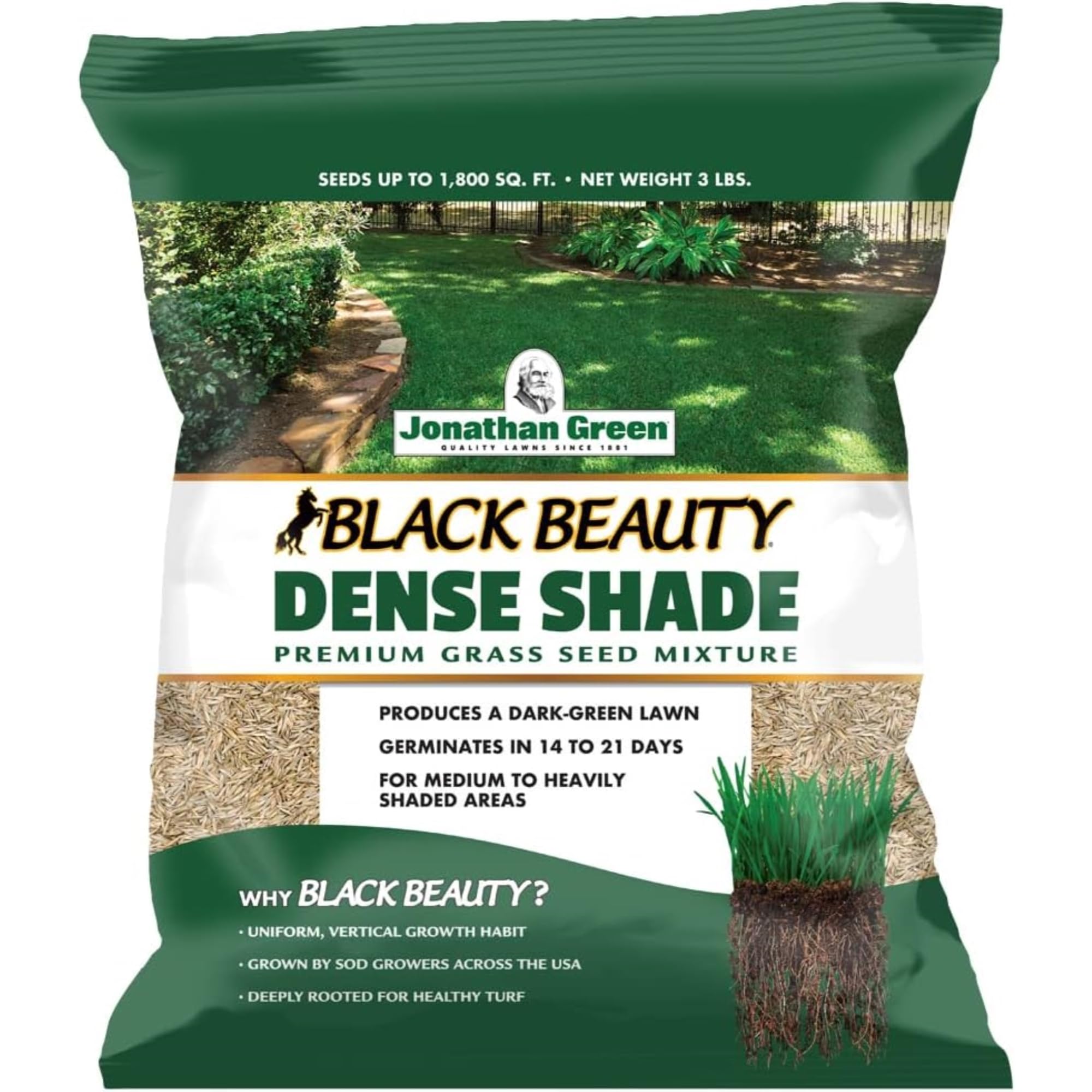
When you’re dealing with the dark zone under a mature maple or a north-facing foundation bed, this Dense Shade formula from Jonathan Green is designed for precisely that environment. Users report successful germination in three days under heavy shade where Bermuda and St. Augustine previously died — a strong indicator that the cultivar composition prioritizes low-light photosynthesis over sun-dependent growth.
The 3 lb bag covers 1,800 sq. ft., which is impressively economical for a specialty shade seed. However, the fine-print reality is that “dense shade” in marketing terms still requires some dappled light — total zero-light areas under solid decks or thick evergreen canopies will still fail. Customer reports are split: some see thick, dark green grass with minimal prep, while others experienced only 5–10% germination followed by die-off after one week, potentially due to inconsistent seed batches or soil conditions that lacked the 4–5 hours of indirect light this mix demands.
One practical limitation: the mix does not tolerate mid-80°F temperatures well. If your shade is from a deciduous tree that lets in full summer sun, consider a heat-tolerant blend instead. Best applied in spring or early fall when soil stays below 70°F.
Why it’s great
- Works in heavy tree shade where standard “sun/shade” mixes turn yellow
- Rapid germination under proper moisture — visible sprouts in 3–5 days
- High coverage per bag for the price point
Good to know
- Some users report germination failure; appears sensitive to soil temperature and moisture consistency
- Not heat-tolerant — deteriorates once temperatures exceed mid-80s°F
4. Creeping Red Fescue Seed by Eretz
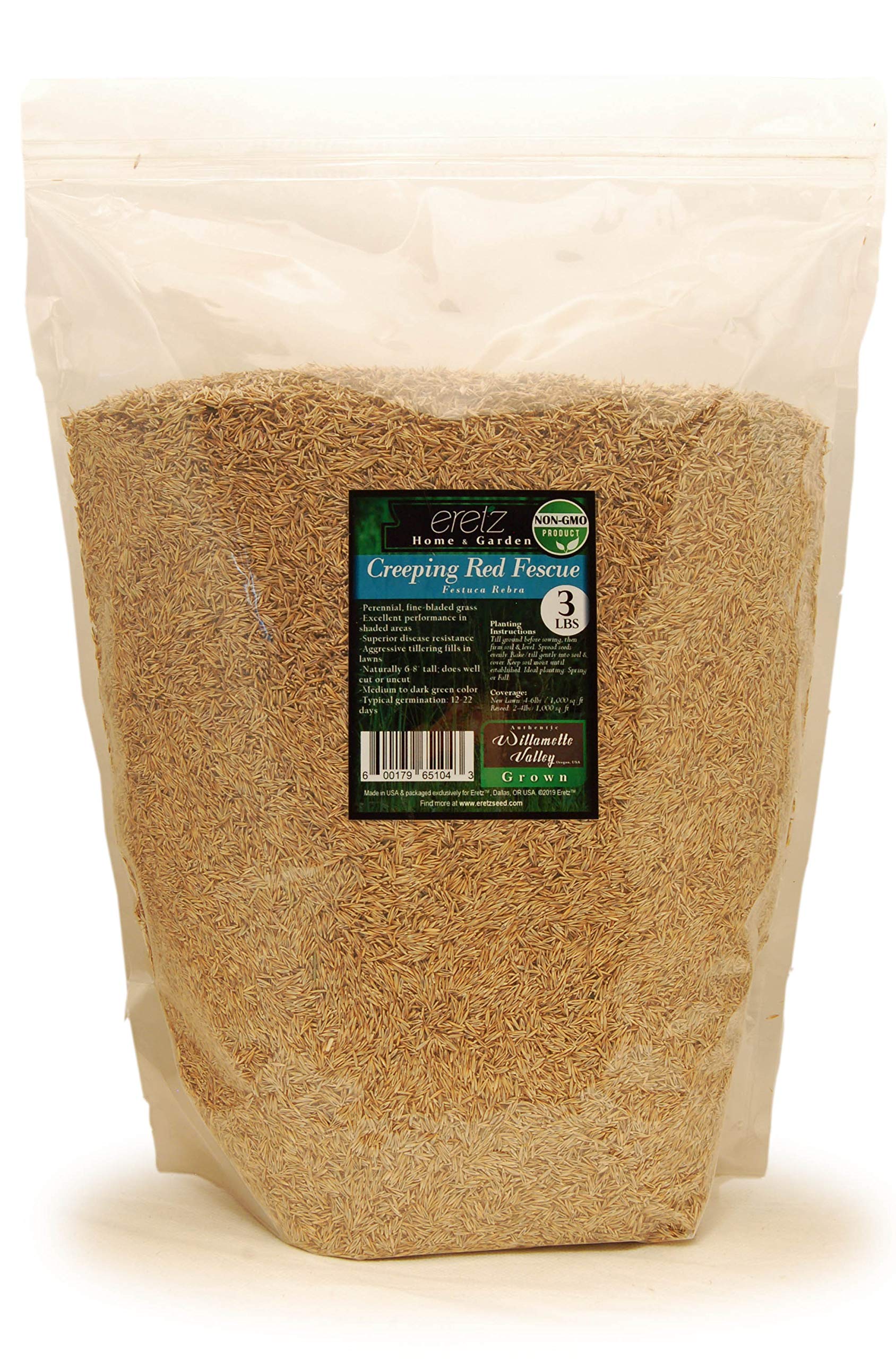
This is a single-species creeping red fescue — no fillers, no cereal rye, no bluegrass — grown in the Willamette Valley of Oregon. The seed purity is 99.6%, with only 0.4% inert matter and zero weed or other crop seeds. For a homeowner who wants a pure fescue monoculture without accidentally introducing a different grass type, this is the cleanest option available.
Creeping red fescue is a natural survivor in partial shade because it spreads by aggressive tillering (horizontal stems that fill bare patches). Users confirm it stays green through Vermont winters, germinates slowly but steadily (2–3 weeks), and produces a fine-bladed, medium-to-dark green turf that looks best unmowed on slopes where mowing is impractical. The natural height is 6–8 inches, making it suitable for erosion control on banks.
The downside is that single-species seed lacks the disease resilience of a multi-species blend. Some customers in Wisconsin reported more weeds than grass after a month of twice-daily watering, though the manufacturer’s 100% satisfaction guarantee is prominently advertised. The slow germination means you need patience — expect visible density by week 4, not week 2.
Why it’s great
- Highest purity in this list — zero weed seeds means less competition during establishment
- Natural low-maintenance growth habit; stays green in winter
- Ideal for sloped or erosion-prone areas where mowing access is limited
Good to know
- Very slow germination (14–21 days); requires patient watering schedule
- Single-species — less genetic diversity than blended mixes; more susceptible to disease
5. Jonathan Green Black Beauty Heat & Drought Resistant Grass Seed

This blend takes a different approach to partial shade: instead of fine fescues, it relies on tall fescue and Texas bluegrass — grasses that tolerate heat up to 100°F while performing “in full sun to lightly shaded conditions.” The waxy leaf coating mentioned in the spec (similar to an apple’s skin) reduces evaporation, making this a strong candidate for sunny edges of shade zones where afternoon heat stress is the real problem, not the light deficit.
The 3 lb bag covers 750 sq. ft. for new lawns or 1,500 sq. ft. for overseeding, with a germination period of 14–21 days. Customer feedback is mixed: five-star reviews highlight rapid fill-in (sprouting in 7 days) when using topsoil and consistent morning watering, while one-star reports describe zero germination even with careful watering. The failure cases seem to cluster around soil preparation issues — the seed requires good seed-to-soil contact and may struggle in hard, compacted shade soil without aeration.
One important caveat: this is not a deep-shade seed. The Texas bluegrass and tall fescue need at least 4–5 hours of direct or bright filtered light. Under a dense canopy, the fine fescues from the other products will outperform it significantly.
Why it’s great
- Unusual heat tolerance — handles 100°F days better than any other seed in this guide
- Deep root system (up to 4 ft) provides superior drought resistance once established
- Waxy leaf coating reduces water loss, making it more forgiving of missed watering days
Good to know
- Not suitable for heavy shade — needs full sun to lightly shaded conditions
- Germination inconsistent on hard, unamended soil; requires aeration or topsoil prep
FAQ
Will fine fescue survive in a north-facing lawn that gets 3 hours of direct sun?
Can I overseed my existing thin bluegrass lawn with a shade mix in late spring?
Final Thoughts: The Verdict
For most users, the best grass seed for partial shade winner is the Outsidepride Legacy Fine Fescue Mix because its 100% fine fescue composition directly matches the low-light conditions where standard blends fail. If you want faster green-up and have a mix of sun and shade in your yard, grab the Jonathan Green Black Beauty Sun & Shade. And for pure-species purity on a sloped shady bank where erosion control matters, nothing beats the Creeping Red Fescue by Eretz.