
Thin, weedy pastures that can’t support your herd through a full grazing season are a direct hit to your bottom line. The right forage mix eliminates costly replanting and keeps your livestock on nutrient-dense feed without constant oversight.
I’m Mohammad Maruf — the founder and writer behind Drink4Good. I’ve spent years analyzing hundreds of forage blends, breaking down their species composition, germination rates, and how they hold up under rotational grazing, hoof traffic, and drought stress.
After comparing germination data, endophyte safety, and real-world establishment results across five leading blends, this guide details the best grass seed for pasture and explains exactly why each mix earns its place.
How To Choose The Best Grass Seed For Pasture
Picking a pasture seed mix is not like choosing a lawn blend. You are selecting a long-term feed source that must survive hoof traffic, repeated grazing, and your specific regional climate. The wrong balance of cool-season grasses and legumes means bare patches, lower protein content for your animals, and wasted money on re-seeding.
Species Composition Is Everything
A turf blend built for a front lawn will not produce the forage mass your cattle, sheep, or horses need. Look for mixes that pair fast-establishing annual ryegrass with perennial workhorses like orchardgrass and tall fescue. Adding clover boosts protein and fixes nitrogen in the soil, reducing your fertilizer bill over time.
Endophyte Status Cannot Be Ignored
Endophyte-infected tall fescue contains alkaloids that cause fescue toxicosis — poor weight gain, rough hair coats, and reduced milk production. Any pasture seed you buy for grazing livestock must carry an endophyte-free label or use novel endophyte technology bred for animal safety.
Seed Coating And Germination Aids
Some premium mixes include a coating infused with nutrients, kelp, and mycorrhizae to accelerate root development and improve seedling survival in marginal soil. While these coatings add cost up front, they can mean the difference between a stand that establishes in three weeks versus one that fails after a dry spell.
Quick Comparison
On smaller screens, swipe sideways to see the full table.
| Model | Category | Best For | Key Spec | Amazon |
|---|---|---|---|---|
| X-Seed Pasture Dry-Land | Dry Area Blend | Hot, dry climates | 41% Paiute Orchardgrass | Amazon |
| X-Seed Pasture Over-Seeder | Versatile Mix | Restoring old pastures | Endophyte-free ryegrass | Amazon |
| Mountain View Seeds Pasture Overseeder | Balanced Forage | Cattle, sheep & goats | 25% Ryegrass, 20% Orchardgrass | Amazon |
| Outsidepride Legacy Fine Fescue | Fine Turf | Shade-tolerant gaps | OptiGrowth nutrient coating | Amazon |
| Grass Seed Premium RYE Gulf Annual | Annual Cover | Quick winter or spring cover | Covers up to 10,000 sq. ft. | Amazon |
In‑Depth Reviews
1. X-Seed Pasture Land Dry-Land Forage Seed Mixture

This blend is purpose-built for hot, dry regions and elevations up to 8,000 feet. Its backbone is 41% Paiute Orchardgrass and 25% forage tall fescue — two species known for deep root systems that pull moisture from lower soil profiles. The inclusion of slender wheatgrass adds drought tolerance without sacrificing palatability for cattle or horses.
The Micro-Boost coating supplies phosphorus and nitrogen directly around each seed, a critical advantage when planting into dry soil where natural nutrient cycling is slow. Real-world users in Texas Hill Country and the mountain desert reported visible growth within ten days to two weeks with consistent watering, and the endophyte-free tall fescue ensures your herd avoids toxin-related health issues even during peak summer grazing.
One bag covers a full acre in full sun, making it a cost-effective choice for larger operations. The fawn tall fescue component gives this mix excellent persistence under hoof traffic, though the bag coverage claims ran slightly optimistic for some users who needed more seed for smaller areas with heavy thatch.
Why it’s great
- Endophyte-free tall fescue ensures safe grazing year-round
- Micro-Boost coating improves germination in dry, stressful soil
- Designed for hot, arid climates up to 8,000 feet elevation
Good to know
- Coverage estimates may be slightly optimistic for thick or rocky ground
- Requires consistent watering for first two weeks in dry conditions
2. X-Seed Land Over-Seeder Pasture Forage Seed Mix
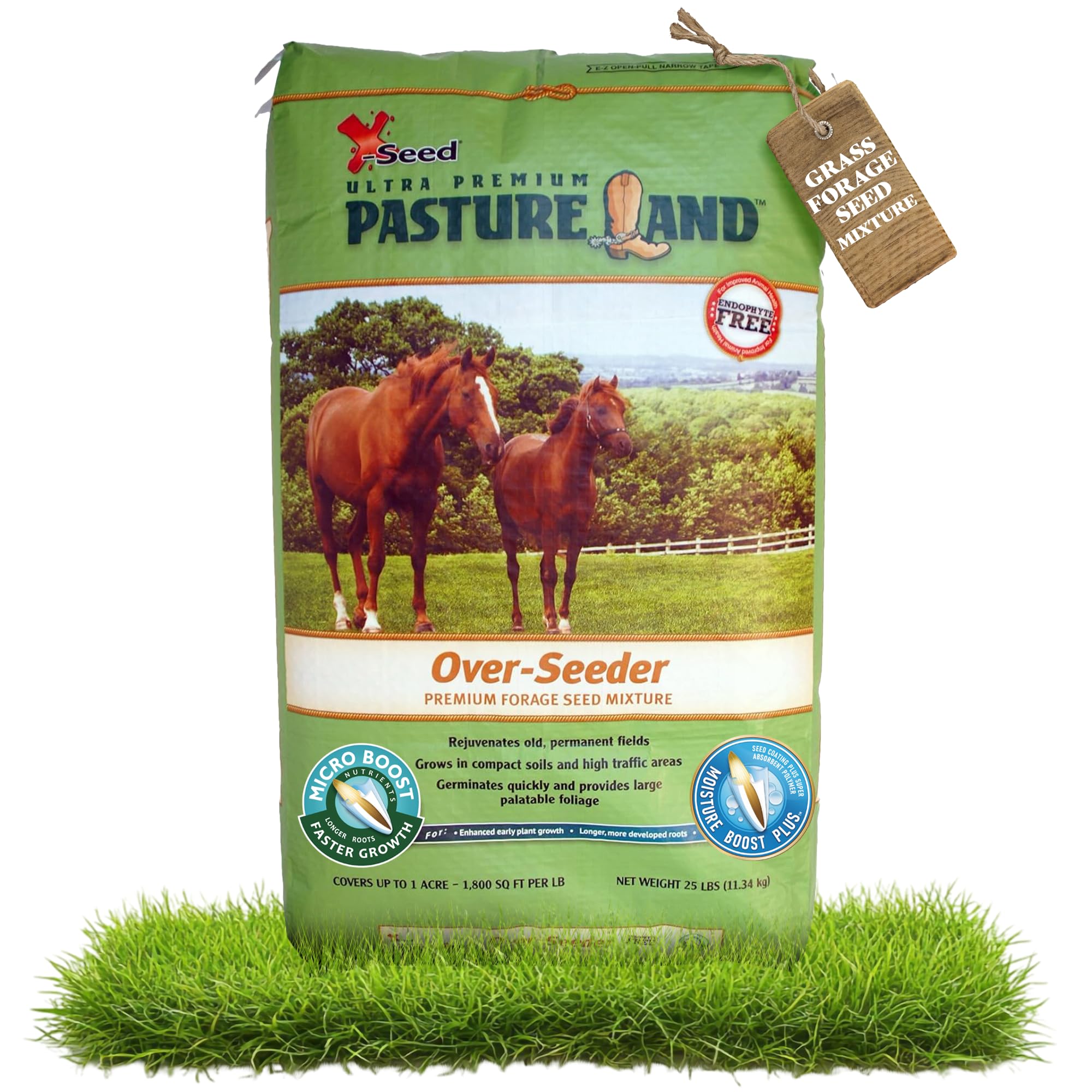
Designed specifically to rejuvenate old or permanent pastures, this mix combines 49% annual ryegrass, 20% orchardgrass, and 15% Maximo intermediate ryegrass with 3% clover. The heavy annual ryegrass component gives it rapid establishment that crowds out weeds before they can set seed, while the orchardgrass provides the perennial backbone for multi-year grazing.
The clover fraction adds natural nitrogen fixation and raises the protein content of the forage mix, reducing your supplemental feed costs. The Micro-Boost coating here is the same formulation used in the dry-land blend, delivering essential nutrients directly to the root zone for faster seedling vigor. Multiple verified buyers in Western Pennsylvania and Texas Hill Country reported dense, horse-safe pasture after just four weeks of rest from grazing.
Each 25-pound bag covers one acre, and the endophyte-free formula means this seed is safe for cattle, sheep, goats, and horses. The annual ryegrass will fade after a single growing season, but the orchardgrass and clover persist, allowing this mix to transition from a quick-fix overseeder into a permanent forage stand.
Why it’s great
- Fast-establishing annual ryegrass suppresses weeds quickly
- Clover component boosts forage protein and fixes soil nitrogen
- Endophyte-free for safe grazing by all livestock types
Good to know
- Annual ryegrass will die back after one season; perennial species take over
- Slow germination if broadcast on untilled, hard-packed ground without rain
3. Mountain View Seeds 100373 Pasture Overseeder
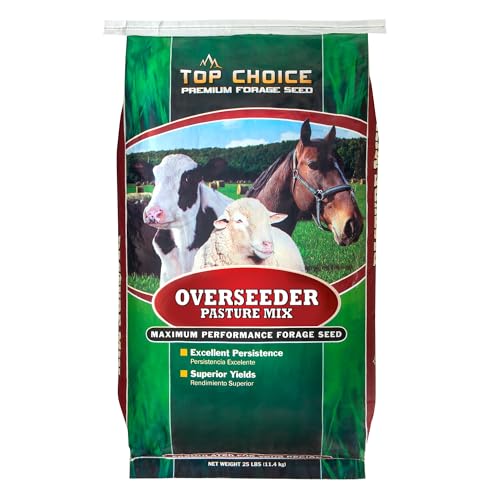
Mountain View Seeds delivers a 25-pound mix built around 50% Italian ryegrass, 25% ryegrass, 20% orchardgrass, 3% medium red clover, and 2% white clover. The dual-clover system (medium red for upright growth, white for low-spreading persistence) gives this blend a strong legume presence that holds up under continuous grazing rotation.
Italian ryegrass establishes noticeably faster than many perennial blends — users reported visible sprouts within two days and full coverage in a week, even on hard, compacted, shady dirt. The orchardgrass fraction adds the deep-rooted perennial structure that keeps this mix productive into its second and third years, making it a solid choice for both hay production and rotational grazing systems.
This mix has earned high marks from owners of 85-pound dogs running on new stands, proving its ability to handle heavy traffic without tearing out. The clover levels are moderate enough to avoid bloat risk in cattle while still providing meaningful nitrogen fixation. For operations grazing a mixed herd of cattle, sheep, and goats, this four-species balance hits a sweet spot of rapid establishment and long-term durability.
Why it’s great
- Italian ryegrass establishes in days on compact or shaded soil
- Dual clover blend provides nitrogen fixation and high-protein forage
- Excellent hoof traffic tolerance for mixed livestock and working dogs
Good to know
- Perennial content is modest; may require re-seeding in third season
- Mid-range price point sits above basic annual blends
4. Outsidepride Legacy Fine Fescue Grass Seed Mix
This 5-pound fine fescue blend (20% Hard Fescue, 40% Chewings Fescue, 40% Creeping Red Fescue) is not a full-scale pasture mix — it is a shade-tolerant, low-maintenance option for patching bare areas in paddocks, around barns, or in fence-line strips where full-sun pasture blends struggle. The OptiGrowth Coating infuses each seed with Zinc, Phosphorus, and Nitrogen plus Elko kelp for enhanced root anchoring.
Users consistently note the beautiful dark green color and fine, soft texture this fescue produces. Creeping red fescue spreads via rhizomes, so a single seeding can fill in gaps over successive seasons without re-broadcasting. It thrives in shaded, less-scraped areas where traditional ryegrass or orchardgrass would thin out, making it the right tool for shaded paddock edges or woodlot grazing zones.
The 5-pound bag limits its utility to smaller repair jobs rather than full-acre pasture restoration. Some buyers experienced slow germination in cold soil, waiting a full month before seeing growth — this blend performs best when soil temperatures are reliably above 50°F. Fine fescue also lacks the heavy biomass production of orchardgrass or ryegrass, so it works as a companion patch material rather than a primary forage source.
Why it’s great
- OptiGrowth coating provides essential nutrients for rapid root development
- Creeping red fescue spreads naturally to fill thin areas over time
- Superior shade tolerance for paddock edges and woodlot grazing
Good to know
- 5-pound bag is sized for spot repair, not full pasture planting
- Slow to germinate in soil below 50°F; wait for warm spring conditions
5. Grass Seed Premium RYE Gulf Annual Oregon Grown
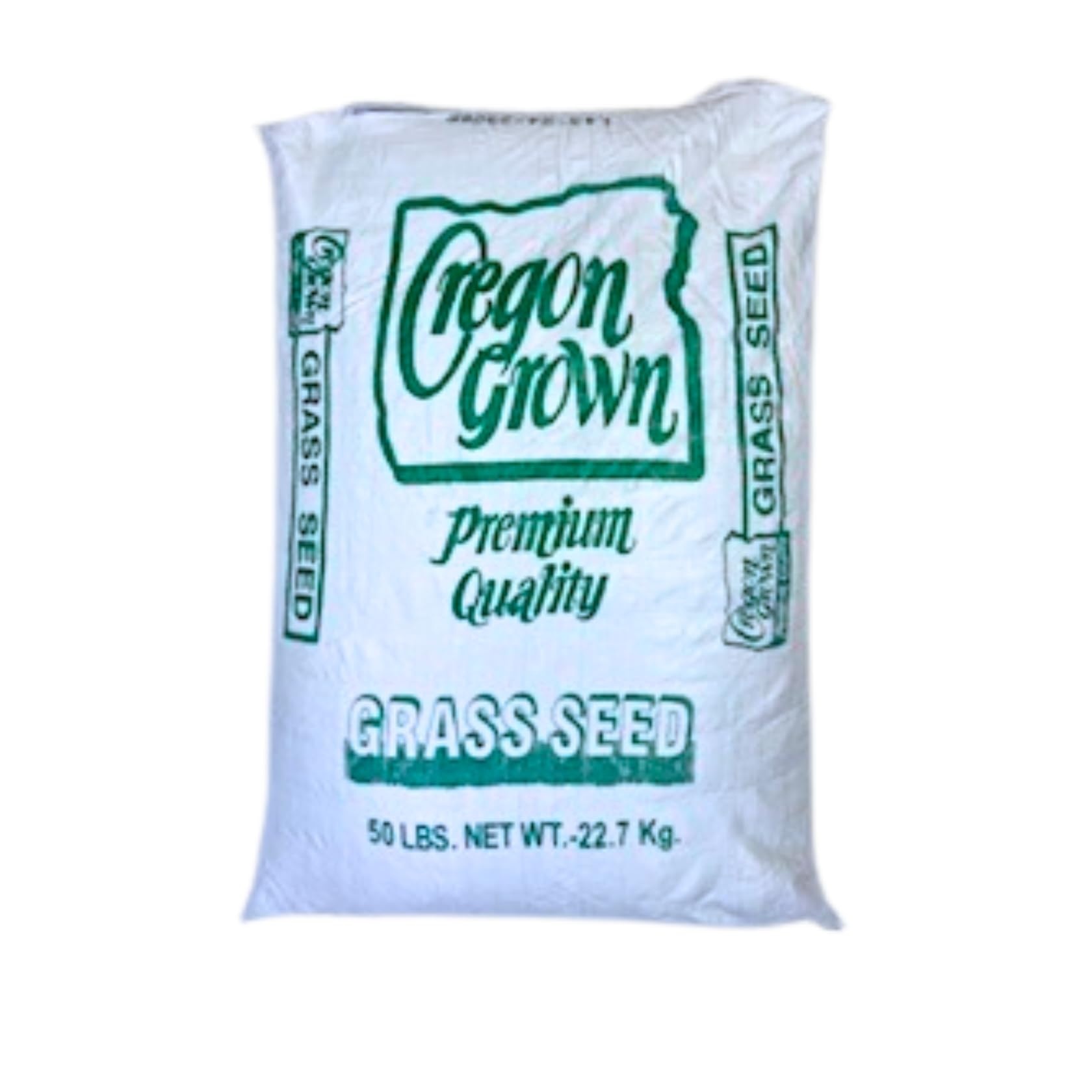
This 50-pound bag of Gulf Annual Ryegrass is a straight, single-species annual that covers up to 10,000 square feet. There are no legume additives, no coatings, and no perennial grasses — just pure Oregon-grown annual ryegrass designed for rapid, low-cost ground cover. For operations that need a fast nurse crop to hold soil over winter or a temporary grazing boost in early spring, this bag delivers immediate results.
Annual ryegrass is known for its aggressive germination, and verified buyers confirm visible growth within a few days when planted ahead of rain. The fine texture and bright lime-green color are hallmarks of this species, making it suitable for both forage and erosion control on bare ground. Several repeat buyers mention using this seed for overseeding weak spots in established pastures with good results, though its annual nature means it will not persist into the next growing season.
The major trade-offs are the lack of species diversity and the tendency for annual ryegrass to develop a thatchy stand that requires more frequent mowing. Some buyers also reported weed content in the mix, which is common in lower-cost annual ryegrass bulk bags. This is a tool for quick, low-stakes coverage rather than a long-term pasture renovation plan.
Why it’s great
- Large 50-pound bag covers up to 10,000 square feet economically
- Annual ryegrass germinates rapidly in cool, wet conditions
- Simple, single-species seed for erosion control or nurse crop use
Good to know
- Annual variety will die after one growing season; no perennial carryover
- Some users report weed seeds mixed in with the ryegrass
FAQ
What does endophyte-free mean for pasture grass seed?
How fast will a pasture seed mix establish for grazing?
Final Thoughts: The Verdict
For most users, the grass seed for pasture winner is the X-Seed Pasture Land Dry-Land Forage Seed Mixture because its endophyte-free tall fescue and Paiute orchardgrass blend delivers reliable perennial yield even in hot, dry climates. If you need to restore an old pasture with fast weed suppression and lasting forage, grab the X-Seed Land Over-Seeder Pasture Mix. And for budget-friendly short-term ground cover or a winter nurse crop, nothing beats the Grass Seed Premium RYE Gulf Annual Oregon Grown.