
A patchy lawn doesn’t just look unfinished — it invites weeds, erosion, and neighborly side-eye. The right grass seed blend turns those embarrassing bare spots into thick, resilient turf that blends seamlessly with the rest of your yard. But not all seed mixes handle the unique challenge of patch repair: you need quick germination, shade or sun adaptability, and a formula that holds its own against foot traffic and weather swings.
I’m Mohammad Maruf — the founder and writer behind Drink4Good. I’ve spent years analyzing how different seed coatings, fertilizer blends, and grass varieties perform when applied specifically to small repair zones rather than full-lawn renovation.
If you’re tired of scattering seed that never takes, this breakdown of the grass seed for patches market cuts through the marketing to give you the real germination data, coverage math, and seasonal tips that actually determine whether your bare spot turns green or stays dirt.
How To Choose The Best Grass Seed For Patches
Not every grass seed bag is built for spot repair. The best patch seed needs fast germination, moisture retention, and the ability to handle concentrated application without wastage. Here’s what separates a successful patch job from wasted money.
Match Grass Type to Sunlight
Kentucky bluegrass spreads via rhizomes and self-repairs, making it great for sunny patches that connect to existing lawn. Tall fescue clumps tighter and handles light shade but needs regular overseeding to stay thick. If your patch gets less than 4 hours of direct sun, look for a mix containing fine fescue or shade-tolerant bluegrass varieties.
Check for Built-in Mulch or Tackifier
Bare soil is prone to erosion and seed washout. Products with an integrated mulch layer or tackifier (a natural glue that holds seed in place) drastically improve germination on slopes, high-traffic edges, or areas that get afternoon rain. Without it, you’ll need a separate straw or peat moss covering.
Calculate Real Coverage for Patches
A 3-pound bag claiming 2,000 sq ft of new lawn coverage usually means it’s spread extremely thin. For patch repair, you want a heavier seed-to-soil contact — triple the per-square-foot rate the bag suggests. A bag that covers 1,500 sq ft for overseeding might only handle 500 sq ft of dense bare-spot repair.
Quick Comparison
On smaller screens, swipe sideways to see the full table.
| Model | Category | Best For | Key Spec | Amazon |
|---|---|---|---|---|
| GreenView Kentucky Bluegrass | Premium | Weed-free sun patches | 99.9% weed-free, 3 lb | Amazon |
| Jonathan Green Black Beauty | Premium | Heat/drought resistance | Waxy leaf coating, 3 lb | Amazon |
| Scotts Turf Builder Sunny Mix | Mid-Range | Full sun with fertilizer | Root-building nutrition, 2.4 lb | Amazon |
| Pennington Smart Patch Tall Fescue | Mid-Range | Slope/bare spot repair | Built-in mulch & tackifier, 5 lb | Amazon |
| Pennington Smart Seed KY Bluegrass | Budget | Thick coverage on a budget | Fertilizer included, 3 lb | Amazon |
In‑Depth Reviews
1. GreenView Pure Grass Seed Kentucky Bluegrass Blend

GreenView offers a pure Kentucky bluegrass blend with no filler — what you see is 99.9% weed-free seed that germinates in 14 to 28 days. The absence of annual ryegrass or coarse fescue fillers means every blade matches the fine texture and dark green color of a mature bluegrass lawn. With a coverage of 1,500 sq ft for new bare spots or 3,000 sq ft for overseeding, this 3-pound bag gives you serious reach for medium-scale patch work.
Drought and heat resistance build in once roots establish, and the blend tolerates light shade while thriving in full sun. Reviewers consistently report seeing grass within three weeks when they keep the seed moist with three to four daily waterings. A handful of users who saw no germination likely underwatered — bluegrass seed must stay damp through the entire germination window.
The soil adaptability is a hidden win: it grows in clay, loam, or sandy mixes without extra amendments. If you want a self-repairing lawn that thickens over time via rhizome spread, this is the most reliable pick for sunny to lightly shaded patches.
Why it’s great
- Virtually weed-free — no invasive grasses sprout in your patch
- Rhizome spread helps bare spots fill in naturally over time
- Adaptable to most soil types without extra prep
Good to know
- Requires consistent daily watering during the 14-28 day germination period
- Not ideal for deep shade — needs at least 4 hours of sun
2. Jonathan Green Black Beauty Heat & Drought Resistant Mix

The Black Beauty mix combines tall fescue and Texas bluegrass, giving it a waxy leaf coating that locks moisture in like an apple’s skin. This engineering makes it one of the few patch seeds that survives 100°F afternoons without going dormant. It develops roots up to 4 feet deep, which means patches in full-sun south-facing yards or along driveways have a fighting chance during July and August.
Germination lands between 14 and 21 days, and reviewers who prep the soil with a garden claw and topsoil see thick results in under three weeks. The 3-pound bag covers 750 sq ft for new lawns or 1,500 sq ft for overseeding — scale that down for patch repair and you’ll have plenty of seed for multiple bare spots. A few users reported slow germination in late-summer heat, which aligns with the recommended planting window of mid-August to mid-October.
The dark green color and low maintenance profile make it a strong choice if you want patches that blend into an established fescue lawn without looking like a different species. It’s not the fastest germinator in cool spring soil, but for hot-climate repair jobs it outperforms almost everything else.
Why it’s great
- Waxy leaf coating reduces water loss during heat waves
- Deep root system (up to 4 ft) handles drought better than standard mixes
- Produces dark green turf that matches established cool-season lawns
Good to know
- Slower to germinate if planted in spring — fall planting gives best results
- Some bags may have more weed seed content than premium bluegrass blends
3. Scotts Turf Builder Grass Seed Sunny Mix
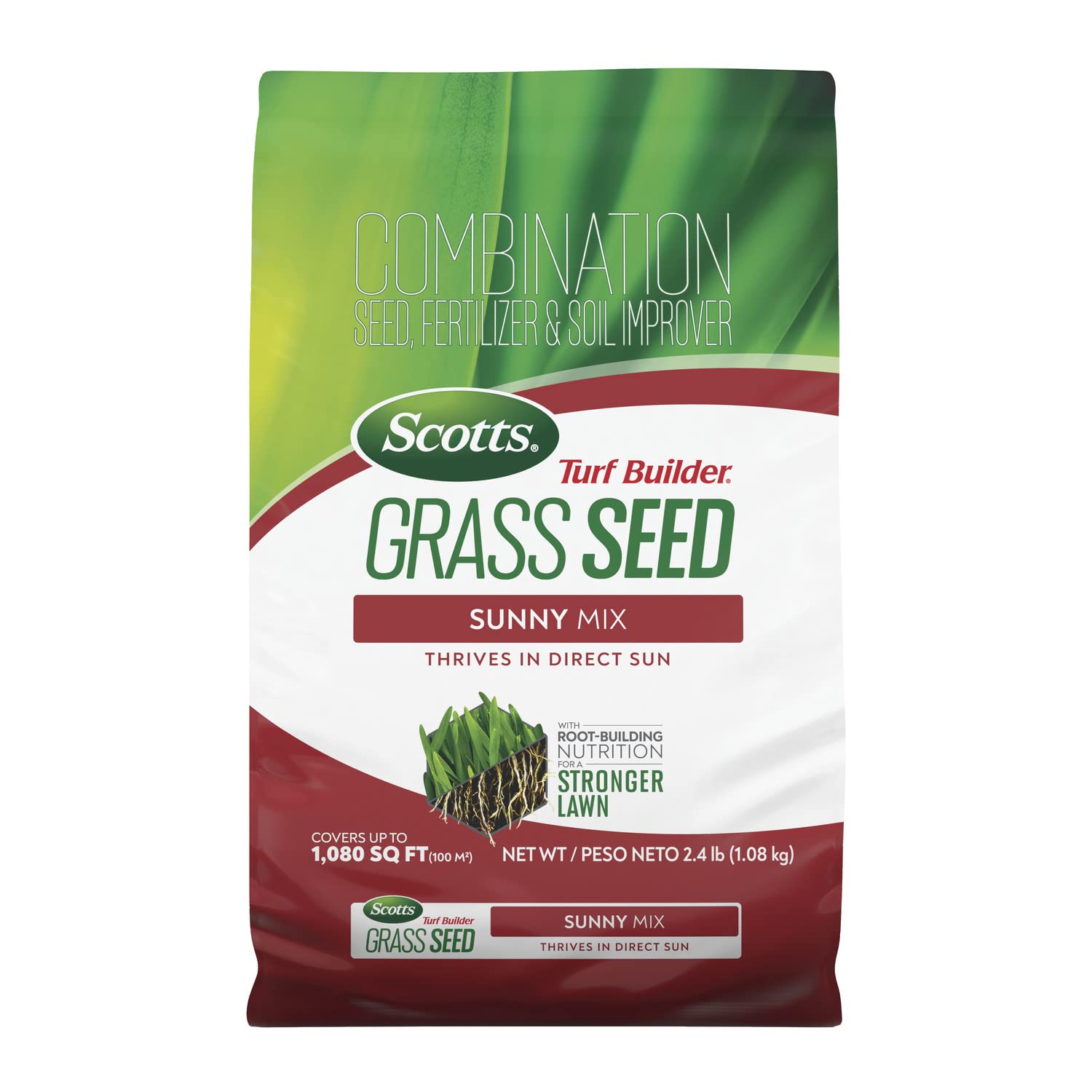
Scotts Sunny Mix packs seed, fertilizer, and a soil improver into one bag so you don’t need to buy starter fertilizer separately. The 2.4-pound bag covers 360 sq ft for new seeding or 1,080 sq ft for overseeding — a compact size suited to targeted patch work rather than whole-lawn jobs. The Root-Building Nutrition formula encourages deeper root establishment, which directly translates to thicker patches that resist drought and foot traffic.
Full sun is non-negotiable; this mix struggles in anything less than direct light. Reviewers who applied it in spring or early fall saw grass filling in within three to six weeks, with some noting the seed spread naturally beyond the target patch. The medium-to-high drought resistance rating means established patches hold up during dry spells, but you’ll still need regular watering during the germination phase — that’s roughly 14 to 21 days of keeping the soil surface damp.
One caveat: the bag is small relative to competitors. If you’re patching multiple large spots, you might need two bags. But for a single bare spot or a thin lawn section, this all-in-one approach saves trips to the garden center.
Why it’s great
- Seed, fertilizer, and soil improver in one bag simplifies application
- Root-Building Nutrition helps patches resist summer drought
- Quick results in full sun — many users report growth within 3 weeks
Good to know
- Not intended for shade — requires direct sun for most of the day
- Bag size is smaller than average; large patch jobs may need two bags
4. Pennington Smart Patch Tall Fescue

This is the only product in the lineup specifically engineered for bare-spot repair rather than general lawn seeding. The 5-pound jug contains seed, fertilizer, and a tackifier-coated mulch layer that acts like a blanket — holding the seed in place on slopes, hills, and areas prone to rain washout. The mulch also changes color from dark to light when it dries, giving you a visual cue that it’s time to water again.
Tall fescue is naturally clump-forming, so this mix works best for isolated patches that need a dense, durable cover. The included microbials help prevent disease while promoting root health, which is critical on disturbed soil that lacks established biology. Coverage is listed at 100 sq ft per jug — but several reviewers found that spreading it thin to meet that claim hurt germination density. For patch repair, use the full jug on a smaller area for best results.
The tackifier is the key differentiator. If you’ve ever watched seed wash into the gutter after a light rain, this product solves that problem. It’s also the heaviest option at 5 pounds, so you’re getting more physical material (mulch + seed) per purchase than a pure seed bag.
Why it’s great
- Tackifier prevents seed washout on slopes and during rain
- Mulch layer changes color to indicate when watering is needed
- Includes microbials that suppress disease in disturbed soil
Good to know
- Coverage claim of 100 sq ft is optimistic for dense patch repair
- Tall fescue clumps rather than spreading — may need annual overseeding
5. Pennington Smart Seed Kentucky Blue Grass Mix

Pennington’s Smart Seed Kentucky Bluegrass Mix comes with fertilizer already blended in, so you skip the separate starter food step. The 3-pound bag covers up to 2,000 sq ft, which makes it the highest raw coverage number in this lineup — ideal if you have multiple scattered patches across a large lawn. It’s designed for areas with 4 to 6 hours of daily sun and shows visible results in 15 to 30 days.
The mix includes a Kentucky bluegrass blend plus a balanced fertilizer charge. Users who raked the soil down about two inches, applied seed heavily, and watered twice a day saw thick lawns within weeks. However, germination inconsistency appears in the reviews: a few buyers saw no growth after a month despite proper soil temps and watering. This suggests the seed-to-soil contact and consistent moisture are more critical here than with premium blends that include tackifiers or coating.
For the price per square foot of coverage, this is the most economical option for patching large areas or doing a full bare-spot renovation. Just be prepared to water meticulously and consider covering the seed with a thin layer of peat moss if you’re dealing with compacted or clay-heavy soil.
Why it’s great
- Highest coverage per dollar — 2,000 sq ft from a 3 lb bag
- Fertilizer included reduces the need for separate lawn food
- Kentucky bluegrass spreads via rhizomes for natural patch repair
Good to know
- Germination reliability varies more than premium blends
- No tackifier or mulch — bare seed needs careful watering and soil contact
FAQ
Should I use a slit seeder or just scatter seed on bare patches?
How often should I water newly seeded patches?
Final Thoughts: The Verdict
For most users, the winning grass seed for patches is the GreenView Kentucky Bluegrass Blend because it delivers near-weed-free coverage, rhizome spread, and reliable germination in sunny conditions. If you’re patching hot, sun-baked spots, grab the Jonathan Green Black Beauty. And for erosion-prone slopes where seed keeps washing away, nothing beats the Pennington Smart Patch Tall Fescue with its built-in tackifier.