
Getting a thick, dark-green lawn in Rhode Island isn’t about luck — it’s about choosing grass seed that thrives in the Ocean State’s cool, damp springs and its increasingly hot, humid summers. The wrong mix leaves you with bare patches every August, no matter how much you water.
I’m Mohammad Maruf — the founder and writer behind Drink4Good. I’ve spent years analyzing regional turfgrass trials and reading thousands of customer reports to find which cool-season blends actually hold up against the Northeast’s unpredictable weather patterns.
This guide breaks down five carefully selected options so you can finally stop reseeding every fall and start building a lawn that survives Rhode Island’s hardest months. Pick the right grass seed for rhode island and you will see the difference in the very first growing season.
How To Choose The Best Grass Seed For Rhode Island
Rhode Island sits firmly in the cool-season grass zone, which means tall fescue, Kentucky bluegrass, and perennial ryegrass are your primary tools. The trick is matching the blend to your yard’s specific sun exposure, soil type, and traffic level.
Focus On Pure Seed Weight
Many budget bags contain coated seeds — the coating adds weight without adding grass. A 3-pound bag of pure seed covers significantly more area than a 3-pound bag of coated seed. Look for tags that list “pure seed” percentage above 95 percent for real coverage.
Check For Heat And Drought Tolerance
Rhode Island summers have been trending hotter. A mix that includes Texas bluegrass or turf-type tall fescue with deep root systems handles August heat far better than traditional Kentucky bluegrass alone. Waxy leaf coatings, which reduce water loss, are a strong indicator of drought resistance.
Match The Planting Window
Late August through mid-October is the prime window for Rhode Island. Seed that promises fast germination (7 to 14 days) gives you a head start before the first frost. Spring seeding works too, but you will fight summer weeds and heat stress.
Quick Comparison
On smaller screens, swipe sideways to see the full table.
| Model | Category | Best For | Key Spec | Amazon |
|---|---|---|---|---|
| Jonathan Green Black Beauty Heat & Drought | Tall Fescue Mix | Sunny, heat-prone lawns | Roots up to 4 ft deep | Amazon |
| Jonathan Green Black Beauty Fall Magic | Cool-Season Blend | Fall renovation projects | Germinates in 10–14 days | Amazon |
| GreenView Pure Seed Kentucky Bluegrass Blend | Kentucky Bluegrass | Dark-green, fine-textured lawns | 99.9% weed-free | Amazon |
| Pennington Annual Ryegrass | Annual Ryegrass | Quick winter overseeding | Coverage up to 2,000 sq ft | Amazon |
| GreenView Pure Seed Perennial Ryegrass Blend | Perennial Ryegrass | Fast repair and high traffic areas | Germination in 7–12 days | Amazon |
In‑Depth Reviews
1. Jonathan Green Black Beauty Heat & Drought Resistant

This blend uses tall fescue and Texas bluegrass, two varieties bred specifically for hot, dry conditions. The waxy leaf coating on the grass blades acts like an apple skin, holding moisture even when the sun is relentless. For Rhode Island lawns that bake in full sun from June through August, this is the first line of defense against browning.
The root system is the real story here — the Black Beauty genetics push roots up to four feet deep. That depth taps into subsurface moisture that shallow-rooted grasses never reach. Seeding at 3 pounds per 750 square feet for a new lawn gives you a solid stand, and overseeding doubles that coverage area.
Germination typically lands between 14 and 21 days, though several Rhode Island customers report seeing sprouts at the 7-day mark with consistent watering and proper soil prep. The low-maintenance nature of this mix means less babysitting through the growing season.
Why it’s great
- Exceptional heat and drought tolerance for full-sun lawns
- Deep root system reaches 4 feet for moisture access
- Waxy leaf coating reduces evaporation naturally
Good to know
- Slower germination compared to ryegrass blends
- Some users report sparse results without proper aeration and topsoil
2. Jonathan Green Black Beauty Fall Magic
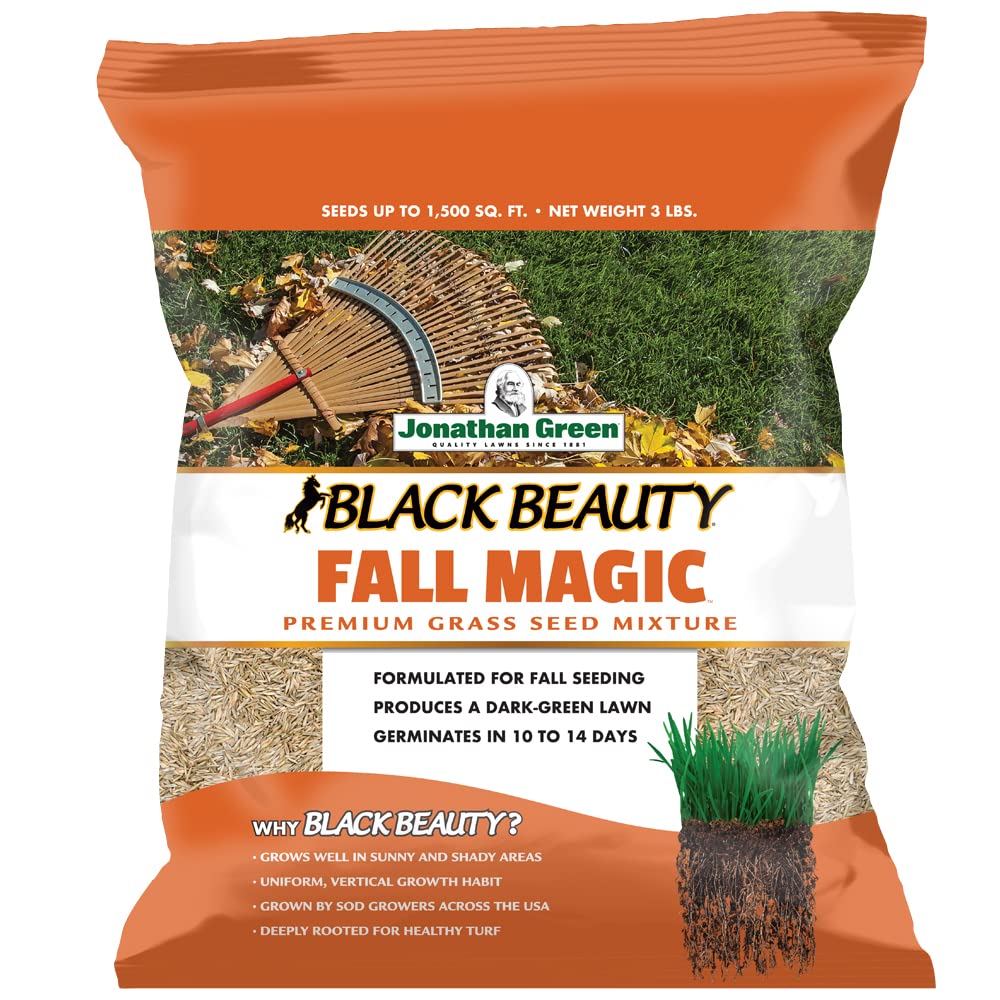
Fall Magic is built around the specific needs of autumn seeding — a time when cool soil temperatures and regular rainfall create ideal conditions for cool-season grasses. The mix includes tall fescue, fine fescue, Kentucky bluegrass, and perennial ryegrass, covering sun and partial shade equally well.
Repairing summer damage is the primary mission here. After a hot Rhode Island summer, thin or bare spots are common. This blend germinates in 10 to 14 days, giving your lawn enough time to establish before the first hard freeze. The perennial ryegrass component provides quick green cover while the bluegrass and fescues fill in with density.
Customers consistently report lush, dark-green results with germination as fast as 7 days under ideal conditions. The lack of coating means every pound is actual seed, not filler. Birds and rabbits may dig at fresh seed, so a light straw cover or seed netting can help in active yards.
Why it’s great
- Fast 10–14 day germination ideal for tight fall windows
- Four-grass blend handles sun and partial shade
- Pure seed with no coating means accurate coverage
Good to know
- Birds may disturb seed beds without protective covering
- Formulated specifically for fall — less ideal for spring planting
3. GreenView Pure Seed Kentucky Bluegrass Blend

Kentucky bluegrass is the gold standard for lawn appearance in the Northeast — it produces that dark-green, fine-bladed carpet look that defines a high-end lawn. GreenView’s blend uses multiple elite bluegrass varieties to create a disease-resistant stand with excellent density.
The 99.9 percent weed-free claim holds up in customer testing. Several users report zero weed intrusion even when overseeding into neglected lawns. The blend adapts to most common soil types, which is useful in Rhode Island where soil composition shifts from sandy coastal areas to heavier inland clay.
Germination runs from 14 to 28 days, so patience is required. Heavy watering in the first few weeks is critical — multiple light waterings per day until seedlings reach two inches tall. Once established, the deep roots provide natural resistance to heat, drought, and brown patch disease. The 3-pound bag covers up to 3,000 square feet for overseeding, making it one of the most efficient coverage options in this guide.
Why it’s great
- Virtually weed-free seed for a pristine lawn
- Fine texture and rich dark-green color
- Excellent drought and disease resistance once established
Good to know
- Slower germination requires consistent watering discipline
- Kentucky bluegrass needs more nitrogen than fescue blends
4. Pennington Annual Ryegrass

Annual ryegrass serves a very different purpose from the other products here — it is a temporary grass. You plant it in late summer or early fall to provide green winter color when warm-season grasses like Bermuda go dormant. In Rhode Island, it also works as a quick erosion fix for bare patches during construction or heavy rain seasons.
Germination is astonishingly fast — visible sprouts in 3 to 7 days with consistent moisture. The 10-pound bag covers up to 2,000 square feet, providing dense cover that holds up under foot traffic well. This is the same grass used on athletic fields and golf courses for winter overseeding.
The trade-off is that annual ryegrass dies off by late spring of the following year. It does not create permanent turf. For Rhode Island homeowners who want quick green cover without the long-term commitment, this fills the gap perfectly. It is also a great nurse grass — plant it alongside slower-germinating Kentucky bluegrass to hold soil while the bluegrass catches up.
Why it’s great
- Ultra-fast germination for emergency or winter cover
- Large 10-pound bag with strong coverage
- High foot traffic tolerance
Good to know
- Annual grass dies off in late spring
- Not as visually refined as Kentucky bluegrass or fescue
5. GreenView Pure Seed Perennial Ryegrass Blend

Perennial ryegrass is the go-to choice for Rhode Island homeowners who need fast greening without the annual die-off. Unlike annual ryegrass, this comes back year after year. GreenView’s blend is 99.9 percent weed-free and uses elite perennial ryegrass varieties selected for disease resistance and fine texture.
Germination hits in 7 to 12 days, making it the fastest permanent grass option in this guide. The 7-pound bag covers up to 3,500 square feet for overseeding — an excellent value for larger lawns. Customers frequently report seeing growth within 24 hours of the first watering under warm soil conditions.
The medium-to-fine texture produces a dark-green lawn that competes well with weeds and fills in thin spots aggressively. It thrives in both full sun and partial shade, making it versatile for Rhode Island properties with mixed exposure. The blend also handles heat and drought once established, though consistent watering during establishment is non-negotiable.
Why it’s great
- Fast 7–12 day germination for permanent grass
- High weed-free purity with no filler seed
- Large coverage from a single 7-pound bag
Good to know
- Requires constant watering during the first two weeks
- Fine blades can look delicate before full maturity
FAQ
Should I use annual or perennial ryegrass for Rhode Island lawns?
Can I mix Kentucky bluegrass and tall fescue in the same lawn?
Final Thoughts: The Verdict
For most Rhode Island homeowners, the grass seed for rhode island winner is the Jonathan Green Black Beauty Heat & Drought because it handles full sun and summer heat waves better than any other mix here. If you want the fastest green carpet and have a large property to cover, grab the GreenView Pure Seed Perennial Ryegrass Blend. And for fall renovation work that sets you up for a spectacular spring, nothing beats the Jonathan Green Black Beauty Fall Magic.