
The dirt under a dense tree canopy is often lifeless, compacted, and starved of sunlight — a combination that kills most standard turf mixes within a single season. Growing a thick, green lawn in these conditions requires a grass seed blend engineered for low-light photosynthesis and soil that drains poorly or lacks organic matter.
I’m Mohammad Maruf — the founder and writer behind Drink4Good. I’ve spent years analyzing seed genetics, coating technologies, and soil adaptability data to separate true shade-and-poor-soil performers from bags that simply claim tolerance on the label.
After comparing germination rates, root depth scores, and real-world customer results across seven products, I assembled this guide to the best grass seed for shade and poor soil so you can stop guessing and start growing.
How To Choose The Best Grass Seed For Shade And Poor Soil
Standard sun-loving seed mixes fail under shade canopies and in soil that lacks nutrients or drains poorly. Selecting a blend made for these exact conditions — with the right grass species, purity level, and coating technology — determines whether your lawn fills in thick or stays patchy and thin.
Grass Species: Fine Fescues vs. Tall Fescues
Fine fescues — creeping red, Chewings, and hard fescue — are the most shade- and low-fertility-tolerant cool-season grasses available. They thrive with as little as four hours of dappled sunlight and require less nitrogen than tall fescue or bluegrass. Tall fescue, especially turf-type varieties, handles moderate shade and compacted clay better than bluegrass but still needs more light than fine fescues. For deep shade under trees or north-facing zones, a blend heavy on fine fescue is your best chance for thick coverage.
Seed Purity and Weed-Free Certification
Shade blends often sit longer on retailer shelves, raising the risk of weed seed contamination. Products labeled 99.9% weed-free or tested for no other crop seeds ensure you are not introducing crabgrass or oxalis into an already stressed area. Pure seed content above 98% with less than 1% inert filler gives you more growing seed per pound — critical when covering problematic bare patches.
Coating Technology for Germination on Poor Soil
Seeds coated with moisture-absorbing polymers, nutrients, or mycorrhizae — like Scotts’ WaterSmart coating or Outsidepride’s OptiGrowth — improve seed-to-soil contact and retain water around the seed in dry, sandy, or compacted ground. This can mean the difference between 30% and 80% germination on low-quality dirt, especially when watering is inconsistent.
Quick Comparison
On smaller screens, swipe sideways to see the full table.
| Model | Category | Best For | Key Spec | Amazon |
|---|---|---|---|---|
| Outsidepride Legacy Fine Fescue | Premium Fine Fescue | Deep shade and low-nutrient soil | OptiGrowth nutrient coating; 5 lbs | Amazon |
| Jonathan Green Black Beauty Sun & Shade | Four-Grass Blend | Overseeding moderate-shade lawns | Four cool-season grasses; 7 lbs | Amazon |
| X-Seed Ultra Premium Shady Lawn | Heavy Shade Blend | Clay soil under dense oak trees | Improved Chewings & Creeping Red; 7 lbs | Amazon |
| GreenView Pure Turf Type Tall Fescue | Tall Fescue Blend | Partial shade with drought resistance | 99.9% weed-free; 7 lbs | Amazon |
| Eretz Creeping Red Fine Fescue | Single-Species Pure Seed | Steep banks and naturalized shade areas | 99.6% pure seed; 5 lbs | Amazon |
| Scotts Turf Builder Sun and Shade Mix | All-in-One Mix | Small patches with soil improvement | Fertilizer + soil improver; 5.6 lbs | Amazon |
| Scotts Turf Builder Quality All-Purpose Mix | Large-Area All-Purpose | Budget overseeding of big, sunny-to-moderate areas | WaterSmart coating; 20 lbs | Amazon |
In‑Depth Reviews
1. Outsidepride Legacy Fine Fescue Grass Seed Mix
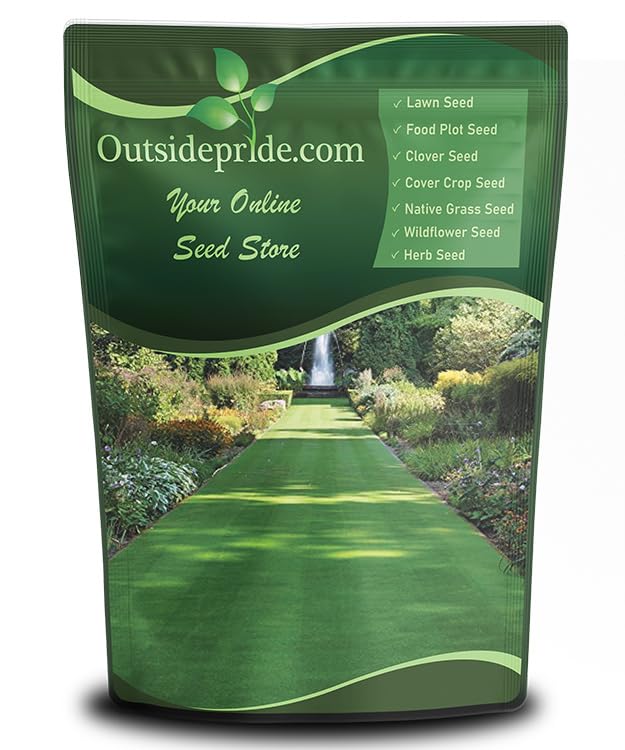
Outsidepride’s Legacy Fine Fescue combines 40% Chewings fescue, 40% creeping red fescue, and 20% hard fescue — a genetic lineup built specifically for dense shade and nutrient-poor ground. The OptiGrowth coating delivers zinc, phosphorus, nitrogen, and kelp directly around each seed, improving germination speed on clay or sandy dirt where uncoated seed would dry out or stall.
Users report visible sprouts within 10 to 14 days when kept consistently moist, with the finest blade texture of any blend tested. The fine fescue dominance means this mix requires less nitrogen fertilizer than tall fescue or bluegrass-based blends — an advantage when soil fertility is low. Coverage reaches roughly 1,000 sq. ft. for new lawns and up to 2,000 sq. ft. for overseeding.
The premium price per pound reflects the three-fescue composition and the coating process, making it the most specialized option for true deep-shade environments. Some users noted slower initial growth in cold soil, but the second flush filled in evenly after soil temperatures rose above 55°F.
Why it’s great
- Triple fine fescue composition is biologically optimized for low light and low fertility
- OptiGrowth coating provides nutrients that boost establishment on poor soil without extra fertilizer
- Fine, dark-green blade texture creates a dense, lush appearance
Good to know
- Germination can take 2–3 weeks in cooler spring or fall conditions
- Lower drought tolerance than tall fescue once established
2. Jonathan Green Black Beauty Sun & Shade Grass Seed

The Jonathan Green Black Beauty Sun & Shade mix includes all four cool-season grass families — turf-type tall fescue, Kentucky bluegrass, perennial ryegrass, and fine fescues — giving it the widest adaptability spectrum on this list. It handles moderate shade (4–6 hours of indirect light) and performs well on average to slightly poor soil without requiring heavy amendments.
Germination typically begins within 7 to 10 days under consistent moisture, faster than pure fine fescue mixes. The tall fescue and ryegrass components contribute rapid establishment and wear tolerance, making this a strong choice for family lawns where kids or pets traverse shaded areas. A 7 lb. bag covers up to 2,625 sq. ft. for new lawns or 5,250 sq. ft. for overseeding — the highest coverage of any mid-sized bag reviewed.
Some users reported a higher percentage of fast-growing ryegrass in their batch, which can create a slightly uneven blade texture until the slower bluegrass and fescue fill in. It is less specialized for deep, all-day shade than pure fine fescue blends, so it works best where the sun and soil problems are moderate rather than extreme.
Why it’s great
- Four-grass family blend covers sun, moderate shade, and various soil types
- Fast germination (7–14 days) with good early density
- High coverage per bag reduces cost per square foot
Good to know
- Ryegrass component can create uneven texture until slower grasses mature
- Not ideal for deep, all-day shade — fine fescue blends perform better there
3. X-Seed Ultra Premium Shady Lawn Grass Seed Blend
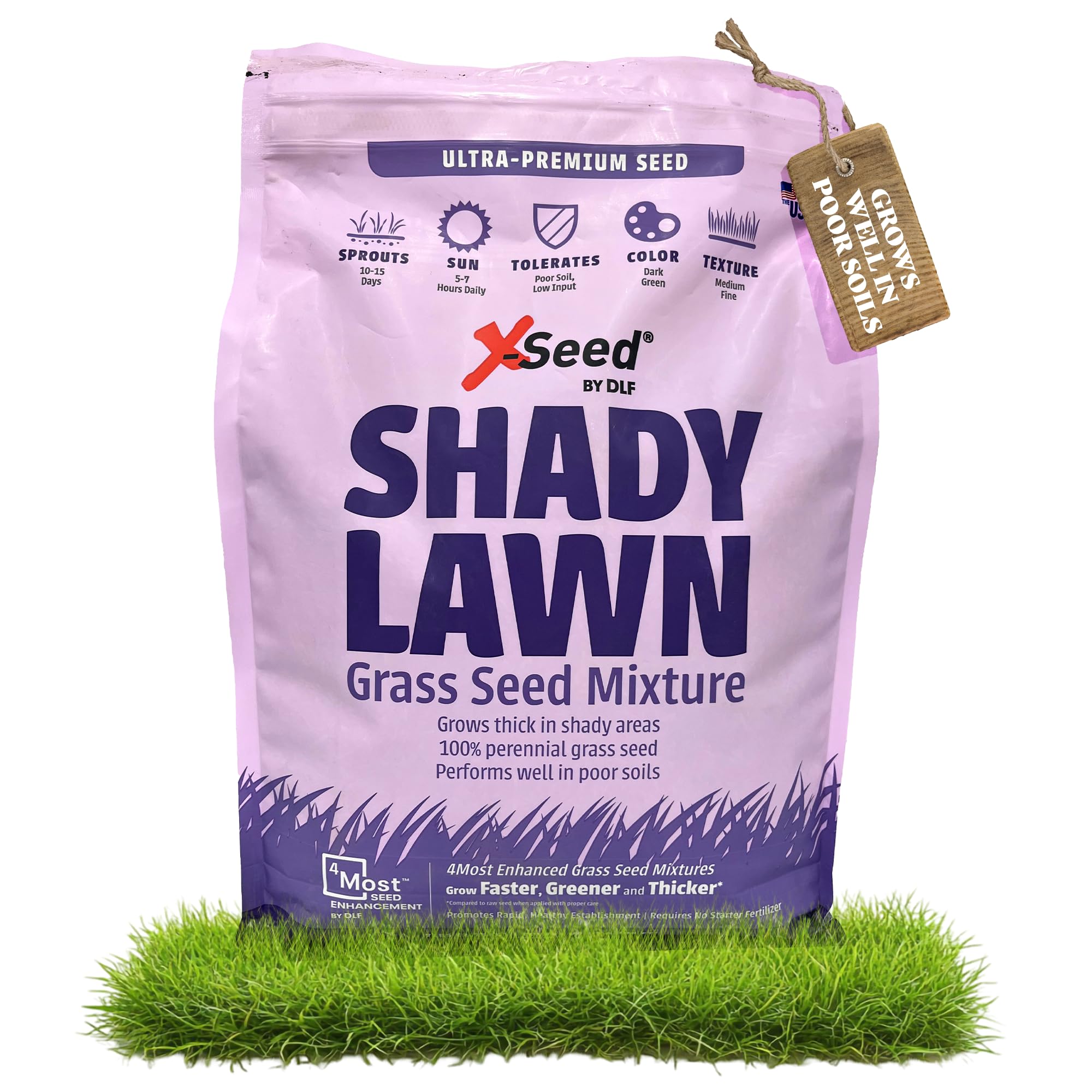
X-Seed’s Shady Lawn blend was formulated with 20% Maxima creeping red fescue, 14% improved Chewings fescue, 17% improved perennial ryegrass, and 7% Kentucky bluegrass — a ratio heavily tilted toward fine fescues that excel under heavy tree cover. The bag explicitly targets 4–7 hours of filtered sunlight, matching the conditions under oaks, maples, and north-facing eaves.
Real-world results from users with poor clay soil and rain runoff under large oak trees show that this mix germinated and filled in where standard seed had repeatedly failed. The fescue-heavy composition requires less fertilizer and water than sun-oriented blends, reducing maintenance in soils that lack organic matter. Coverage for the 7 lb. bag is comparable to the Jonathan Green offering, though the seed-to-soil contact requirement is higher due to the fine fescue’s smaller seed size.
A small number of customers reported zero germination, which may indicate batch inconsistency or insufficient soil preparation. The premium cost per pound ranks among the higher options, making it a targeted investment for problem shade areas rather than a budget lawn-wide seed.
Why it’s great
- Formulated for heavy shade conditions where standard mixes fail
- Reduces water and fertilizer requirements in low-soil-quality zones
- Proven results under oak trees with clay soil and runoff
Good to know
- Cost per pound is higher than most blends on this list
- Germination results vary; soil prep and consistent moisture are critical
4. GreenView Pure Turf Type Tall Fescue Sun & Shade Blend

GreenView’s turf-type tall fescue blend is one of the few products here tested and certified 99.9% weed-free — a concrete spec that matters when you are seeding bare soil and do not want to introduce crabgrass or broadleaf weeds. The pure seed content (no filler) means every pound from the 7 lb. bag goes into growing grass, covering up to 1,750 sq. ft. for overseeding.
Tall fescue’s deep root system provides better drought and heat resistance than fine fescues once established, making this a smart choice for partial-shade lawns that also experience full-sun afternoon exposure. Users in zone 8b reported 90% germination within 10 days when covered with peat moss or compost. The medium-to-coarse blade texture is slightly thicker than fine fescue, but the dark green color and wear tolerance make it a durable lawn grass.
Some buyers noted that the 7 lb. bag size is modest for large lawns, and a 20 lb. option would improve value for bigger projects. A few reviews mentioned oxalis weed contamination in older batches, so checking the inspection date on the bag is recommended.
Why it’s great
- 99.9% weed-free certification means no invasive species introduced
- Deep-rooted tall fescue provides superior drought tolerance once established
- Pure seed with no filler maximizes growing material per pound
Good to know
- Coarse blade texture is less fine than fine fescue mixes
- Bag size is small for large lawns; a 20 lb. option would be more cost-effective
5. Eretz Creeping Red Fine Fescue Seed

Eretz offers a single-species creeping red fine fescue seed, grown in Oregon’s Willamette Valley and tested for 99.6% pure seed with 0% weed or other crop seeds. This purity level is unusually high for a non-blend product, making it ideal for homeowners who want to control exactly what species goes into their soil without mystery filler grasses.
Creeping red fescue spreads via aggressive tillering (underground stems), naturally filling in bare spots without needing to overseed annually. The fine blades create a soft, manicured appearance that stays green through winter in temperate zones. Users with steep banks or naturalized areas reported that this seed maintained coverage with minimal mowing and watering, thriving in partial shade where coarser grasses thinned out.
The main trade-off is germination speed — creeping red fescue takes 2 to 3 weeks to sprout in cool soil and grows slowly compared to ryegrass or tall fescue. The 5 lb. bag covers roughly 500–750 sq. ft. for new lawns, so larger projects require multiple bags at a premium per-pound cost.
Why it’s great
- Single-species purity allows precise control over your lawn composition
- Aggressive tillering naturally fills bare spots over time
- Exceptionally fine blade texture and winter color retention
Good to know
- Slow germination (2–3 weeks) and slower early growth than blends
- Small bag size and premium price make large-area seeding expensive
6. Scotts Turf Builder Grass Seed Sun and Shade Mix

This Scotts Turf Builder Sun and Shade Mix combines grass seed, lawn fertilizer, and a soil improver into a single product — a convenience feature for homeowners who want to address nutrient deficiencies without buying separate amendments. The Root-Building Nutrition formula is designed to help seedlings develop deep root systems in compacted or low-fertility soil.
The mix performs best in areas with full sun to moderate shade, with medium drought resistance and medium-to-high wear tolerance. Users reported visible germination after a single rain event, suggesting the coating absorbs water efficiently. The 5.6 lb. bag covers only 745 sq. ft. for new lawns, which is modest compared to other products on this list.
Several long-time users noted increased weed content in recent batches — particularly crabgrass — suggesting a change in seed purity. The inclusion of fertilizer and soil improver adds weight without increasing seed volume, so the effective seed-to-cost ratio is lower than pure seed options like GreenView or Eretz.
Why it’s great
- All-in-one seed, fertilizer, and soil improver simplifies application
- Root-Building Nutrition supports deep root establishment in poor soil
- Quick germination reported after rainfall
Good to know
- New lawn coverage is low (745 sq. ft. per bag)
- Recent batches reported higher weed seed contamination
7. Scotts Turf Builder Quality All-Purpose Mix

Scotts Turf Builder Quality All-Purpose Mix is the highest-volume product on this list at 20 lbs., covering up to 8,000 sq. ft. for overseeding — making it the most cost-effective option for covering a large lawn with moderate sun-and-shade conditions. The WaterSmart coating absorbs twice as much water as uncoated seed, improving germination on dry or sandy soil without requiring constant watering.
The mix is 99.9% weed-free, although some users reported crabgrass emergence after application, which may stem from existing soil seed banks rather than the product itself. The seed is a general-purpose blend of cool-season grasses — not heavy on fine fescue — so it performs best in areas with at least 5–6 hours of sunlight. Deep shade areas under dense tree canopies may still struggle with this mix.
The primary drawback is the lack of shade specialization. This is a volume play: you get a lot of seed for a reasonable outlay, but it is not formulated for the specific stress of deep shade and poor soil. For large open lawns with a few shaded zones, it works well as a base overseed; for truly dark corners, a dedicated shade blend is still the better call.
Why it’s great
- Massive 20 lb. bag at a very low cost per square foot
- WaterSmart coating improves germination on dry or sandy soil
- 99.9% weed-free label ensures clean establishment
Good to know
- Not a specialized shade blend — deep shade areas may not fill in
- Crabgrass reports may indicate soil seed bank issues rather than product contamination
FAQ
Can I grow grass under a large oak tree with this seed?
What is the difference between fine fescue and tall fescue for shade?
How do I prepare poor soil before seeding?
Should I use a coated or uncoated seed for poor soil?
Final Thoughts: The Verdict
For most users, the best grass seed for shade and poor soil winner is the Outsidepride Legacy Fine Fescue because its triple fine fescue composition and OptiGrowth coating are scientifically matched to low light and low fertility. If you want a fast-germinating blend that handles both sun and moderate shade across larger areas, grab the Jonathan Green Black Beauty Sun & Shade. And for a budget-friendly large-area overseed of a mostly sunny lawn with some shaded patches, nothing beats the Scotts Turf Builder Quality All-Purpose Mix.