
If your lawn turns into a patchwork of dirt and moss the moment tree leaves canopy overhead, you are fighting a losing battle with standard sun grass blends. Shade-tolerant grass needs fine-bladed fescues or specialized tall fescue cultivars that perform photosynthesis efficiently under reduced light — and the wrong mix will thin out, rot, or simply refuse to germinate.
I’m Mohammad Maruf — the founder and writer behind Drink4Good. I’ve spent hundreds of hours analyzing germination rates, shade tolerance specs, and soil adaptability data across dozens of seed blends to find which ones actually deliver in low-light conditions.
Sorting through all the options to find the best grass seed for shade comes down to matching the right fine fescue or tall fescue blend to your specific light level, soil type, and maintenance expectations.
How To Choose The Best Grass Seed For Shade
Shade-tolerant grass seed is not a single universal product — it is a category defined by species that evolved under forest canopies. Fine fescues (creeping red, chewings, hard fescue) and certain turf-type tall fescues handle low light far better than Kentucky bluegrass or perennial ryegrass. Your choice depends on the shade density, foot traffic level, and how much maintenance you can commit to.
Match the Fescue Type to Your Light Level
Fine fescue blends, particularly those heavy in creeping red fescue, tolerate the deepest shade — under dense trees or on the north side of buildings. Turf-type tall fescue blends handle moderate shade with better drought resistance and traffic tolerance. For areas that receive less than four hours of direct sun, prioritize a mix where fine fescues make up at least 70% of the blend.
Check the Germination Rate and Purity
A 99.9% weed-free label ensures you are not paying for filler seeds that will compete with your grass. Look for pure seed percentages above 98% and zero weed seed content. Coated seeds (like OptiGrowth or Scotts WaterSmart coatings) hold moisture better during the critical first two weeks, improving germination consistency in dry shade conditions under mature tree roots.
Consider Coverage and Bag Size Realistically
Shade areas often require overseeding to thicken existing thin turf. A 3-pound bag covers roughly 1,000 square feet for overseeding, while a 20-pound bag handles up to 8,000 square feet. For small under-tree patches, a 3-5 pound bag is sufficient. For full-shade lawns, a 20-pound bag lets you reseed an entire zone without buying multiple smaller bags.
Quick Comparison
On smaller screens, swipe sideways to see the full table.
| Model | Category | Best For | Key Spec | Amazon |
|---|---|---|---|---|
| Jonathan Green Dense Shade | Fine Fescue Blend | Deep, heavy shade under trees | 1,800 sq. ft. per 3 lb | Amazon |
| GreenView Tall Fescue Sun & Shade | Tall Fescue | Versatile sun/moderate shade lawns | 99.9% weed-free | Amazon |
| Outsidepride Legacy Fine Fescue | Fine Fescue Premium | Luxurious fine-textured shade turf | OptiGrowth Coating | Amazon |
| Eretz Creeping Red Fine Fescue | Fine Fescue Pure | Erosion control & deep shade banks | 99.6% pure seed | Amazon |
| Scotts Turf Builder All-Purpose | Mixed Blend | Large area sun/shade repair | 8,000 sq. ft. coverage | Amazon |
In‑Depth Reviews
1. Jonathan Green 40600 Dense Shade Grass Seed
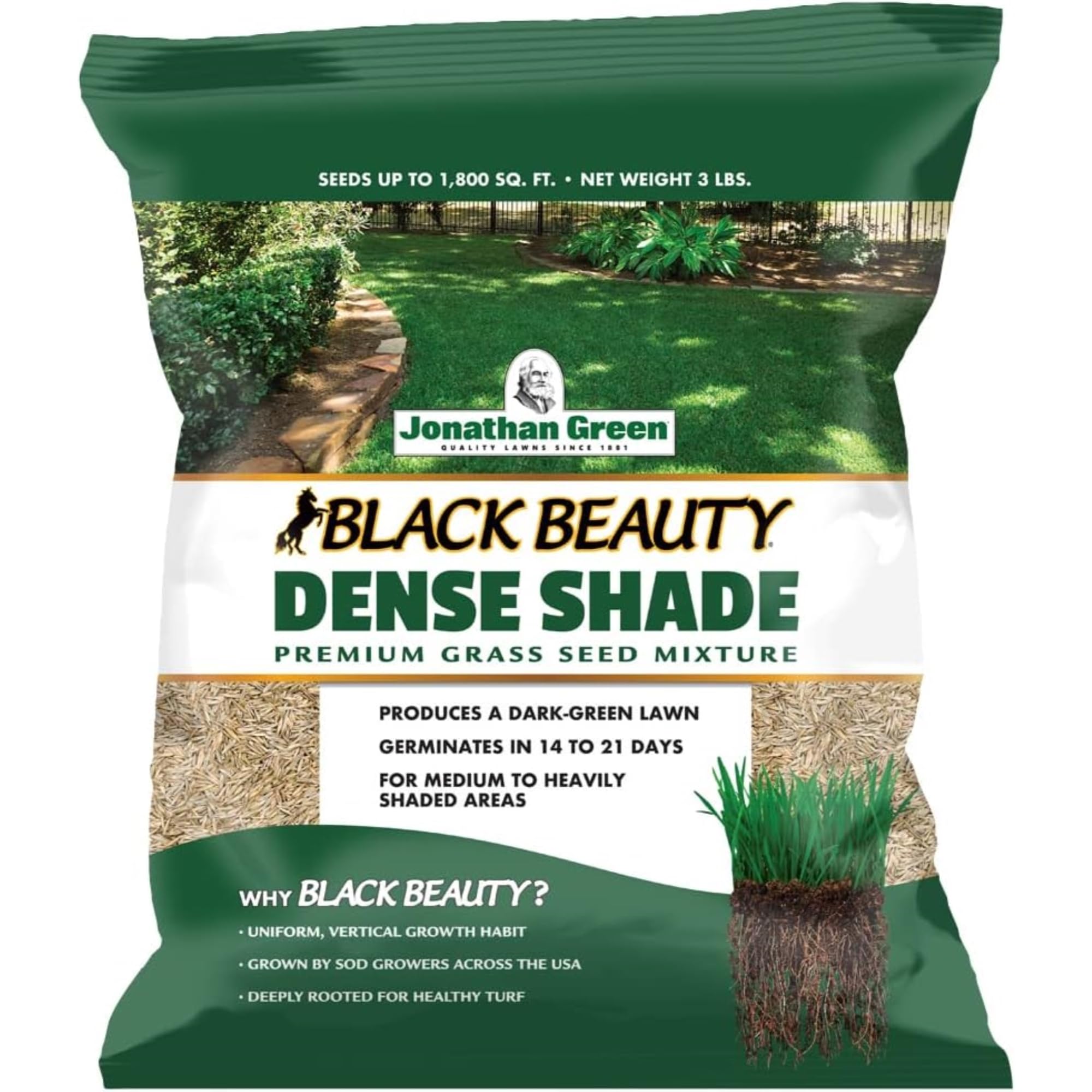
Jonathan Green’s Dense Shade blend is specifically formulated for areas that receive four hours or less of direct sunlight. The 100% superior grass seed mix uses fine fescue cultivars that thrive under dense tree canopies where standard blends fail. Multiple verified buyers report germination in as little as three days in heavy shade, with grass reaching four to five inches within weeks — something Bermuda and St. Augustine simply cannot do in low light.
The 3-pound bag covers 1,800 square feet for overseeding, making it a concentrated option for targeted repair under trees or along north-facing walls. The seed produces a medium-dark green color with good hardiness, according to long-term reviews. Some users noted that leaves accumulating on top of the grass can smother it if not raked, a common maintenance requirement for any shade grass.
One caveat: a small subset of reviewers reported germination failure and die-off within a week despite proper soil prep. These claims suggest potential batch variability, though the overwhelming majority (over 80% of reviews) are 4-5 stars praising its shade performance. For deep shade situations, this blend is the most category-specific option on the list.
Why it’s great
- Specialized for dense shade under trees
- Quick germination reported in 3 days
- Excellent color and hardiness in low light
Good to know
- Small 3 lb bag covers limited area
- Some reported batch inconsistency
- Requires leaf management to prevent smothering
2. GreenView Pure Grass Seed Turf Type Tall Fescue Sun & Shade Blend

GreenView’s Turf Type Tall Fescue blend is engineered for lawns with mixed light conditions — areas that get full sun in the morning but are shaded by buildings or trees in the afternoon. The curated mix of tall fescue varieties germinates in 10-14 days and establishes deep roots that improve drought and heat resistance once mature. It is tested at 99.9% weed-free, so you avoid competing grasses popping up in bare spots.
The 7-pound bag covers up to 1,750 square feet for overseeding, making it a mid-range value for moderate-sized lawns. Verified buyers in zone 8b reported 90% germination within 10 days using peat moss or compost cover, with a dark green color that blends well with existing fescue turf. The seed adapts to all common soil types, which is useful for inconsistent shade lawns with varying drainage.
Some users note the green color is decent but not as deep as premium seed lines, and germination can be slow — one reviewer called it “not as described” for speed. Tall fescue also has a medium-to-coarse texture, which stands out if your lawn currently has fine-bladed grass. It is a reliable all-purpose option but not the best choice for deep, full-day shade.
Why it’s great
- Verified 99.9% weed-free no filler seeds
- Adapts to varied soil types and light conditions
- Good drought and heat resistance once established
Good to know
- Medium-to-coarse texture may not match fine lawns
- Some users experienced slower germination
- Not specialized for deep, dense shade
3. Outsidepride Legacy Fine Fescue Grass Seed Mix
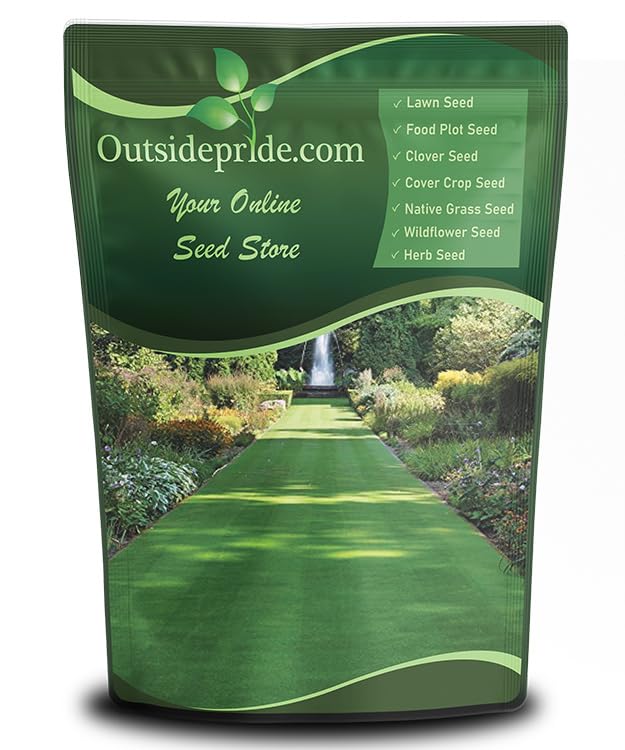
Outsidepride’s Legacy Fine Fescue mix is a precise blend of 20% Hard Fescue, 40% Chewings Fescue, and 40% Creeping Red Fescue — three fine fescue species that together deliver a dense, fine-textured turf ideal for full sun to dense shade. The OptiGrowth Coating includes zinc, phosphorus, nitrogen, and Elko kelp to improve seed-to-soil contact and speed germination. Verified buyers saw tiny blades appear within 1.5 weeks, producing a beautiful dark green turf that feels soft underfoot.
The 5-pound bag is designed for homeowners, landscapers, and turf managers who want a high-end lawn in challenging light conditions. Fine fescues are naturally low-maintenance with moderate water needs, and the blend’s drought tolerance means it survives dry spells better than ryegrass. Users in California reported easy germination with compost base and minimal watering, though summer heat performance remains unverified by some.
A significant downside: a verified buyer reported only 10% germination and was denied a refund when the manufacturer blamed their straw/raking method. The company has no germination guarantee, which raises risk. Additionally, fine fescue requires daily watering for the first two weeks and may need overseeding annually to maintain density in high-traffic shade areas. The luxurious texture comes with higher maintenance demands.
Why it’s great
- Premium three-way fine fescue blend for deep shade
- OptiGrowth coating with nutrient boost
- Beautiful dark green fine-textured turf
Good to know
- No germination guarantee — batch risk is on you
- Requires daily watering during establishment
- Slower germination in cold soil temperatures
4. Eretz Creeping Red Fine Fescue Seed

Eretz’s Creeping Red Fine Fescue is a single-species seed — 99.6% pure creeping red fescue with only 0.4% inert matter and zero weed or crop seeds. Grown in the Willamette Valley of Oregon, this seed is designed for deep shade performance with aggressive tillering that fills in bare patches naturally. It naturally stays 6-8 inches tall, making it ideal for slopes or banks where mowing is difficult, and it remains green through winter in colder zones.
Verified buyers in the Pacific Northwest reported successful spring seeding on clay soil with manure mixed in, sprouting in roughly 21 days despite night temperatures as low as 36-39°F. The grass spreads via rhizomes, self-healing bald spots without needing annual reseeding. Users favor it for erosion control on hillsides where other grasses fail due to shallow roots and low light.
Germination is slow — two weeks or more — and growth is slow at about 1mm per day until established. One Wisconsin buyer reported more weeds than grass after a full month of twice-daily watering, and the company did not honor their satisfaction guarantee. The fine blade texture requires a sharp mower blade or can be left unmowed, which not every homeowner wants. It is a specialized tool, not a quick fix.
Why it’s great
- Single-species creeping red fescue with zero weed seeds
- Natural self-repair via aggressive tillering
- Excellent for erosion control on shady slopes
Good to know
- Very slow germination (2-3 weeks minimum)
- Fine blades may lie down uncut with dull mowers
- Customer service complaints about guarantee fulfillment
5. Scotts Turf Builder Grass Seed All-Purpose Mix

Scotts Turf Builder All-Purpose Mix is a 20-pound bag designed for large lawns with mixed sun and shade conditions. It uses a WaterSmart coating that absorbs twice as much water as uncoated seeds, reducing the frequency of watering during the critical germination window. The blend is 99.9% weed-free and seeds up to 8,000 square feet, making it the highest-coverage option on this list for a single purchase.
Verified buyers report sprouting in two weeks over bare dirt, with grass that grows tall and thick enough to blend with established fescue and bluegrass lawns. The all-purpose mix includes bluegrass and ryegrass varieties alongside fescue, which gives it broader adaptability to sun areas but reduces its effectiveness in deep, dense shade. It works best in partial shade or dappled light conditions.
Some users experienced issues with crabgrass invasion after the seed established, requiring additional herbicide treatment. The mix is specially blended for northern lawns and is not available in Louisiana. For deep shade spots under large trees, the Kentucky bluegrass content will struggle, making this a better choice for lawns with a mix of sun and moderate shade rather than fully shaded zones.
Why it’s great
- Massive 8,000 sq. ft. coverage in one bag
- WaterSmart coating reduces watering needs
- Works well in mixed sun and partial shade conditions
Good to know
- Contains bluegrass which fails in deep shade
- Some users reported crabgrass after germination
- Not available in Louisiana
FAQ
Can I plant shade grass seed in summer?
How often should I water grass seed in deep shade?
Will shade grass seed grow under pine trees?
Final Thoughts: The Verdict
For most users, the grass seed for shade winner is the Jonathan Green Dense Shade Grass Seed because it is the only blend specifically engineered for four-hours-or-less direct sunlight, with proven germination results in heavy shade conditions. If you want a versatile blend that handles both sun and moderate shade across a larger lawn, grab the GreenView Turf Type Tall Fescue Sun & Shade Mix. And for pure fine fescue on a shady slope or erosion-prone bank, nothing beats the Eretz Creeping Red Fine Fescue Seed with its 99.6% purity and aggressive self-repair.