
For homeowners across the southern United States, establishing a dense, weed-resistant St. Augustine lawn comes down to one frustrating fact: you can’t buy it from a bag of seed. Unlike fescue or ryegrass, St. Augustine is a sterile hybrid propagated only by sod, sprigs, or live plugs. That means every patch of bare dirt or thinning section in your yard requires a physical piece of living grass—a plug—to fill back in. The challenge lies in choosing the right cultivar, getting viable roots to establish before summer heat sets in, and covering enough ground without spending a month planting individual squares.
I’m Mohammad Maruf — the founder and writer behind Drink4Good. I’ve analyzed hundreds of hours of customer feedback, cultivar trials, and regional soil compatibility data to separate the turf that truly spreads from the trays that disappoint.
This guide ranks the most reliable live grass plugs for repairing or establishing a grass seed for st augustine lawn, focusing on shade tolerance, root vigor upon arrival, and proven success in warm-season zones.
How To Choose The Best Grass Seed For St Augustine
Since St. Augustine is not grown from seed, your selection criteria shift entirely to plug density, cultivar traits, and planting density. The following factors will determine how quickly your plugs knit together into a full turf.
Cultivar Selection: Palmetto, CitraBlue, Seville, or Floratam
Each St. Augustine cultivar has a specific genetic profile that dictates shade tolerance, blade texture, cold hardiness, and disease resistance. Palmetto is the most versatile for patchy lawns with mixed sun and shade. CitraBlue offers deeper color and better wear tolerance for high-traffic areas. Seville is a semi-dwarf that stays dense without becoming thatchy. Floratam, though common in the Gulf states, has coarser blades and lower shade tolerance, making it less ideal for smaller yards with tree cover.
Plug Size and Count: Square Inches vs. Spread Rate
Standard plugs are 3 x 3 inches, giving roughly 9 square inches of living turf per plug. A tray of 18 plugs at 18-inch spacing covers about 36 square feet. To repair a 200-square-foot area, you need roughly five trays of 18 plugs, or one tray of 72 plugs if planted at 12-inch spacing. Larger plug counts reduce initial bare space and speed up full coverage by several weeks, but require more upfront handling.
Root Condition Upon Arrival and Transplant Loss
Live grass plugs ship with soil and roots intact, but shipping stress can cause yellowing, drying, or root damage. Expect a realistic transplant loss of 10–20% from handling and heat. Products packed with a cardboard separator between trays consistently arrive with less crush damage. If plugs arrive brown but the crown is firm and white, they often rebound after 5–7 days of watering.
Regional Climate and Cold Tolerance
St. Augustine thrives in USDA zones 7b–11. Palmetto holds green longer into late fall and handles light frost better than Floratam. CitraBlue has strong heat tolerance but may struggle in zone 7b without winter protection. Buyers in transitional zones near the northern edge of St. Augustine’s range (parts of North Carolina, Tennessee, Arkansas) should prioritize cold-hardy cultivars like Raleigh or Palmetto.
Quick Comparison
On smaller screens, swipe sideways to see the full table.
| Model | Category | Best For | Key Spec | Amazon |
|---|---|---|---|---|
| Palmetto St. Augustine 72-Count | Plug Tray | Large lawn coverage | 72 plugs per box | Amazon |
| SodPods CitraBlue 32-Count | Plug Tray | Deep color + wear tolerance | Blue-green blade, 32 pods | Amazon |
| Bethel Farms 36-Pack | Plug Tray | Mid-size lawn repair | 36 natural plugs | Amazon |
| Seed Ranch Seville 2 Trays | Plug Tray | Dense thatch-free lawn | Seville semi-dwarf cultivar | Amazon |
| Florida Foliage Palmetto 18-Count | Plug Tray | Shade & drought tolerance | 3-inch plugs, 18 per tray | Amazon |
| SmartMe Palmetto 18-Count | Plug Tray | Easy installation | Freshly cut 3-inch plugs | Amazon |
| Florida Foliage Zoysia 18-Count | Plug Tray | Alternative to St. Augustine | Drought + salt + shade tolerant | Amazon |
In‑Depth Reviews
1. Palmetto St. Augustine Grass Plugs – Box of 72

This box holds 72 Palmetto plugs, enough to cover roughly 162 square feet at 18-inch spacing or 72 square feet at 12-inch spacing. Palmetto is widely regarded as among the most shade- and cold-tolerant cultivars, staying green longer into the fall and surviving lighter frosts better than Floratam. Buyers in South Louisiana and Charlotte report plugs quadrupling in size within the first season and surviving full winters in zone 7b.
The plugs arrive in 3-inch trays that require careful separation; some users note a 20–30% loss rate due to root damage during cutting. The tray does not have individual cardboard dividers, so expect some root tangling. A plug tool and soaking the soil before planting are strongly recommended to minimize shock.
Customer service from Circle C Farms has been responsive, with replacements provided for batches that fail to establish despite identical planting conditions. For larger lawns needing full coverage in one go, the 72-count is the most efficient per-plug option at this price tier.
Why it’s great
- 72 high-quality Palmetto plugs cover a large area in a single purchase
- Excellent cold and shade tolerance for transitional zones
- Seller stands behind product with replacement support
Good to know
- Plugs need to be cut apart, which can damage roots and lead to 20–30% loss
- Some batches have shown inconsistent survival rates
2. SodPods® St. Augustine CitraBlue Grass Plugs – 32-Count
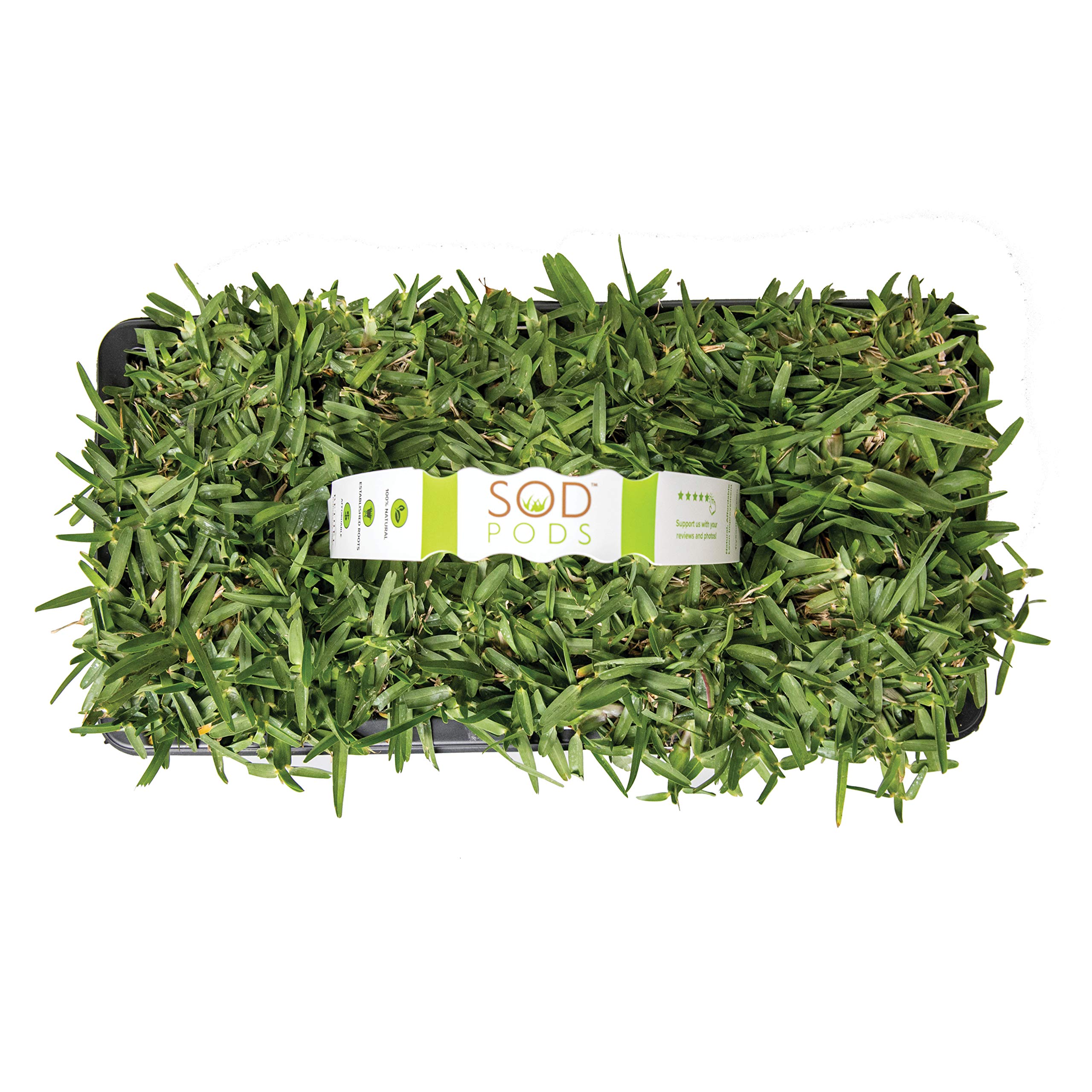
CitraBlue is a newer St. Augustine cultivar bred for deeper blue-green color, broader blades, and superior wear tolerance. These 32 individual pods come in four trays of eight, each pre-cut at 3 x 3 inches, eliminating the need to separate tangled roots. The individual packaging significantly reduces transplant shock and root damage, which is why multiple buyers report zero loss after planting even in tough clay soil conditions.
The 32-count covers about 72 square feet when spaced 18 inches apart. In Central Florida and Alabama, users have seen each pod grow into a roughly 30-inch-wide square within one year—far faster than standard 18-count trays. The dense growth pattern is especially effective at suppressing weeds and Bermuda grass encroachment.
A handful of buyers noted an occasional bad batch with brown, dead plugs, but the company quickly sent full replacements with no pushback. For anyone prioritizing a lush, dark-green lawn with high kid-and-pet traffic, these CitraBlue pods are the most reliable option.
Why it’s great
- Pre-packed individual pods cause almost no transplant loss
- CitraBlue offers the deepest color and best wear tolerance of any St. Augustine cultivar
- Extremely fast spread rate with good soil contact
Good to know
- Cannot ship to California or Arizona
- Higher cost per plug than bulk trays
3. Bethel Farms St. Augustine 3in Natural Grass Plugs – 36-Pack
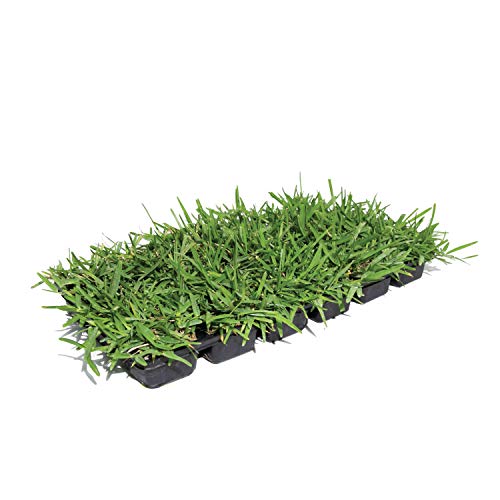
Bethel Farms provides a straightforward 36-count tray of natural St. Augustine plugs with no specific cultivar name attached. These are a general-purpose St. Augustine variety, making them suitable for northern Florida, the Gulf Coast, and other regions where generic St. Augustine performs well. In zone 7 transitional areas, users in South Jersey reported these plugs surviving winter after going brown and then greening up in spring.
The coverage math is clear: 36 plugs at 18-inch spacing cover roughly 80 square feet. Customer reports indicate plugs filled in bare spots within two months when given consistent daily watering and a starter fertilizer. One buyer noted the pack arrived with 30 plugs instead of 36, so double-checking the count upon arrival is wise. A second tray could push you into the pricing territory of the 72-count Palmetto box, so think about the final square footage you actually need.
Some plugs have arrived dry or in poor condition, resulting in total loss for a few buyers. This seems tied to shipping delays rather than a systemic quality issue, but it is a real risk with live goods. If you prefer a known cultivar over a generic mix, one of the branded options above may be a safer bet.
Why it’s great
- Decent per-plug cost for a 36-count tray
- Proven to survive in transitional zone 7 with proper care
- Fast establishment when watered daily with fertilizer
Good to know
- Unspecified cultivar means less predictable shade and disease tolerance
- Some packs arrive with fewer plugs than advertised
4. Seed Ranch St Augustine Seville Grass Plugs – 2 Trays

Seville is a semi-dwarf St. Augustine cultivar that produces a denser, plusher lawn than Palmetto or Floratam. It is less prone to becoming thatchy in full sun, making it an excellent choice for homeowners who want a low-mow, manicured appearance. These two trays from Seed Ranch contain enough plugs to cover roughly 72–80 square feet at standard spacing.
Packaging is generally excellent: multiple repeat buyers note that the protective cardboard separator kept plugs intact during shipping. Some customers reported that a second order arrived without the separator, causing the bottom tray to get smushed. When contacted, the company resolved the issue. The plugs themselves arrive with good color and strong roots that resist separating too easily—you may need to cut them apart with shears.
One key caution: some customers have worried about the risk of large patch disease (TARR) when receiving St. Augustine plugs from certain distributors. Seed Ranch appears to handle this well, but the concern is worth knowing before ordering. If you want a thatch-resistant semi-dwarf variety for a lawn that gets full sun, the Seville is one of the cleanest options available.
Why it’s great
- Semi-dwarf Seville stays dense without becoming thatchy
- Excellent packaging for most orders
- Good customer service and fast shipping
Good to know
- Packaging inconsistency can lead to crushed lower trays
- Some buyers experienced concerns over potential disease introduction
5. St. Augustine Palmetto – 18 Live Extra Large Grass Plugs – Florida Foliage

Florida Foliage’s Palmetto plugs come as 18 extra-large 3-inch squares with substantial root mass. Palmetto is a native selection known for better color and finer texture than ordinary Floratam, along with superior shade tolerance. Buyers in Houston, Texas, report that even with clay soil, the plugs spread aggressively after rain and develop stolons up to 6 inches within a month.
The plugs arrive green and healthy, often with slight yellowing at the tips that resolves after planting. A few customers noted that the grass blades are softer to the touch than Floratam, which is a genuine benefit for families with kids who spend time on the lawn. One buyer found the plugs too coarse and broad for their finer Northeast lawn, underscoring that Palmetto is best suited for traditional southern climates.
Compared to buying bulk sod or trays from regional farms like Hancock Seed, the per-plug cost here is higher. If you only need a small repair patch, that tradeoff is acceptable for the convenience of Amazon shipping and easy returns. For larger installations, the 72-count box above offers better value.
Why it’s great
- Palmetto handles shade better than Floratam
- Extra-large plug size provides a robust starting root system
- Soft blade texture children and pets
Good to know
- Higher per-plug cost compared to direct-from-farm alternatives
- Not a good match for finer-textured lawns in cooler regions
6. 18 St. Augustine ‘Palmetto’ 3 Inch Sod Plugs – SmartMe

SmartMe offers a similar 18-count Palmetto plug tray with a focus on quick shipping and easy installation. The 3-inch plugs are freshly cut and have been well received by buyers in Texas and the Carolinas. One customer noted that saturating the soil before planting made insertion nearly effortless when using a plug tool, and the plugs looked vibrant green even after shipping from Florida to Texas.
The shade tolerance of Palmetto is on full display here: several reviews mention successful growth in areas with moderate shade (30–50% canopy). That said, a few shipments have arrived dry and yellowed, packed in a wad of brown paper rather than a structured tray. The inconsistency seems tied to packaging method rather than the cultivar itself.
For the price, the value is comparable to Florida Foliage’s offering. Some buyers found cost-per-plug high enough to consider buying whole sod and cutting squares themselves. If you want a straightforward Palmetto tray with the potential for good results, SmartMe delivers—just be prepared for some variability in package condition.
Why it’s great
- Strong shade tolerance, ideal for lawns with tree cover
- Fast shipping with well-priced plugs arriving green
- Easy to plant when soil is moistened beforehand
Good to know
- Some trays arrive dry and poorly packaged
- Cost per plug is higher than bulk options
7. Zoysia Sod Plugs – Large 3″ x 3″ Plugs – 18 Count Tray – Florida Foliage

This is not a St. Augustine plug—it is a Zoysia plug, included here as a benchmark alternative for buyers whose soil conditions or sun exposure make St. Augustine difficult. Zoysia is drought, salt, and shade tolerant, with a finer blade texture that some homeowners prefer for its softer feel. The 18-count tray covers approximately 36 square feet at 18-inch spacing.
Buyers in Houston found that these Zoysia plugs spread aggressively within 10 days, especially when planted in shallow holes (2.5 inches deep) in clay soil. The root system is more vigorous than St. Augustine in dry conditions, and the plugs resist chinch bugs better. However, Zoysia is slower to green up in spring and can be problematic to remove if you later switch back to St. Augustine, as it will compete aggressively.
One buyer noted that the plugs had long grass with dead material, causing unsightly “bubbles” when planted. This seems to be an occasional quality issue rather than the norm. For lawns with extreme drought stress or salt exposure, Zoysia is a reliable fallback. But if you want a true St. Augustine lawn, stick with the Palmetto or CitraBlue options above.
Why it’s great
- Exceptional drought and salt tolerance for coastal and dry areas
- Fast growth and aggressive spread with proper watering
- Softer blade texture than St. Augustine
Good to know
- Not a St. Augustine plug; competes with and can overtake St. Augustine lawns
- Quality inconsistency in packaging can result in bubbles
FAQ
Can I use actual grass seed for St. Augustine lawns?
What is the best cultivar for a lawn with heavy shade (60–70% canopy)?
How long does it take for St. Augustine plugs to fill in completely?
Can I plant St. Augustine plugs in the fall?
How do I prepare the soil before planting plugs?
Final Thoughts: The Verdict
For most users, the grass seed for st augustine winner is the Palmetto St. Augustine Grass Plugs 72-Count because it delivers the best per-plug value for large-area coverage with reliable cold and shade tolerance. If you want deeper blue-green color and high wear tolerance, grab the SodPods CitraBlue 32-Count. And for a thatch-resistant, semi-dwarf lawn that stays dense without heavy maintenance, nothing beats the Seed Ranch Seville 2 Trays.