
Planting a lawn in Utah’s high desert climate means choosing seed that survives on a fraction of the water most turf demands. The right blend establishes deep roots before summer heat arrives and stays green without hourly sprinkler cycles. This guide breaks down the five best options for Utah’s alkaline soil, freeze-thaw cycles, and water restrictions.
I’m Mohammad Maruf — the founder and writer behind Drink4Good. I’ve spent years analyzing seed purity percentages, drought-tolerance ratings, and root-depth genetics to separate marketing claims from genuine performance for arid-region lawns.
After evaluating germination rates, weed content, and customer results in dry climates, these picks represent the top choices for anyone seeking a grass seed for utah drought tolerant conditions that actually delivers a thick lawn without wasting water.
How To Choose The Best Grass Seed For Utah Drought Tolerant
The key to a low-water lawn in Utah is selecting grass species that evolved in dry climates rather than varieties bred for the humid Northeast or Pacific Northwest. Tall fescue and fine fescue blends, for instance, possess root systems that reach depths of three to four feet, tapping moisture reserves that shallow-rooted grasses cannot access.
Root Depth Is Everything
A grass plant’s ability to survive two weeks without irrigation depends almost entirely on how deep its roots grow. Turf-type tall fescue can send roots three to four feet down, whereas traditional Kentucky bluegrass tops out around 18 inches. In Utah’s arid summers, the difference means green grass versus brown, crispy turf by July.
Seed Purity and Weed Content
Bag labels list “other crop seed” and “weed seed” percentages. For drought-tolerant mixes, you want weed seed as close to zero as possible — ideally under 0.1 percent. Weeds compete for the limited water your grass needs, and invasive species like oxalis or crabgrass will outcompete fescue in dry soil.
Sunlight Tolerance in Utah’s Intense Sun
Utah’s high altitude means intense UV radiation. Seed labeled “sun and shade” often contains perennial ryegrass or fine fescue that tolerates partial shade but struggles in full, unrelenting sun. Look for blends specifically rated for full sun with high heat tolerance — those typically contain more tall fescue, which handles direct UV exposure better than fine-bladed varieties.
Quick Comparison
On smaller screens, swipe sideways to see the full table.
| Model | Category | Best For | Key Spec | Amazon |
|---|---|---|---|---|
| Jonathan Green Black Beauty | Tall Fescue Blend | Full sun, extreme heat | Deep roots up to 4 ft | Amazon |
| Outsidepride Legacy Fine Fescue | Fine Fescue Mix | Shade and low-maintenance | OptiGrowth coating | Amazon |
| GreenView Turf Type Tall Fescue | Tall Fescue Blend | Versatile sun/shade | 99.9% weed-free | Amazon |
| Scotts Sun and Shade Mix | Multi-Species Mix | Quick establishment | Fertilizer + seed combo | Amazon |
| Eretz Creeping Red Fescue | Slopes and low-mow areas | 99.6% pure seed | Amazon |
In‑Depth Reviews
1. Jonathan Green Black Beauty Heat & Drought Resistant Grass Seed

This blend combines Black Beauty turf-type tall fescue with Texas bluegrass, a genetic combination engineered specifically for climates where summer heat exceeds 90°F. The tall fescue component drives roots down to four feet, while the Texas bluegrass adds a finer blade texture that mimics traditional Kentucky bluegrass without the irrigation demands. Customers in transition zones — Ohio to the Carolinas — reported visible turf in seven days, with full establishment by day fourteen under proper watering.
The waxy leaf coating on the tall fescue reduces evapotranspiration, meaning the grass loses less moisture through its leaves on scorching afternoons. This is the same physiological trait that allows native prairie grasses to survive weeks without rain. In Utah’s high-elevation sun, this coating prevents the leaf desiccation that causes browning in standard fescue mixes by late July.
One negative review cited zero germination after a month, which likely resulted from incorrect watering depth or soil temperature below 50°F at planting. This seed requires soil temps consistently above 55°F and consistent moisture in the top inch of soil — sprinkling the surface once daily will not activate the seed coating. The bag covers 1,750 square feet for new lawns, making it cost-effective for small-to-medium Utah lots.
Why it’s great
- Deep root system reaches 4 feet for drought survival
- Waxy leaf coating reduces water loss in direct sun
- Fast germination in 7-14 days with proper prep
Good to know
- Requires consistent watering first 14 days for establishment
- Performance may suffer in dense shade under trees
2. Outsidepride Legacy Fine Fescue Grass Seed Mix
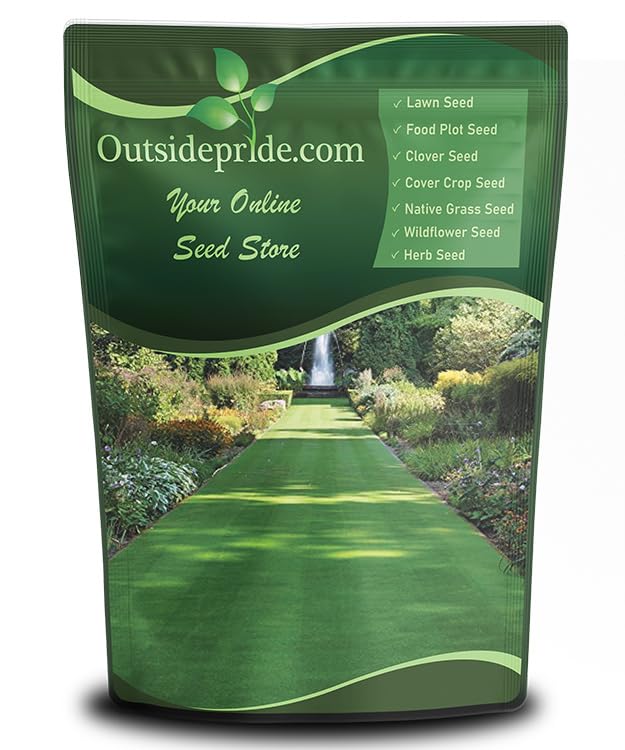
This three-way blend of hard fescue, Chewings fescue, and creeping red fescue is formulated for low-maintenance, low-water lawns that stay green even under tree canopies. The OptiGrowth coating embeds zinc, phosphorus, nitrogen, and kelp directly onto the seed hull, which bypasses the need for starter fertilizer and improves seed-to-soil contact on Utah’s rocky, alkaline ground. Customers in northern climates reported germination in 10 to 14 days during spring seeding, with the fine-bladed fescue creating a dense, carpet-like texture that feels soft underfoot.
The hard fescue component in this mix is naturally deep-rooted and thrives in poor, dry soil conditions — exactly what you find in Utah’s bench areas where topsoil is thin and gravelly. The creeping red fescue spreads via tillers (underground stems), filling in bare spots without reseeding. This makes it a strong candidate for slopes where erosion control matters and mowing is difficult, since fine fescue naturally stays short and may only need cutting every two to three weeks during slow growth periods.
One reviewer noted the grass has thin blades that topple over like Korean grass, giving a slightly untidy appearance if not mowed frequently. This is inherent to fine fescue — it lacks the upright growth habit of tall fescue. The 5-pound bag is lighter than competitor 7-pound bags, but the coated seed covers more ground per pound because the coating helps each seed establish without overcrowding.
Why it’s great
- Deep-rooted hard fescue handles poor, dry soil
- OptiGrowth coating eliminates need for starter fertilizer
- Creeping red fescue fills bare spots naturally
Good to know
- Thin blades can topple, creating a less formal look
- 5 lb bag is physically smaller than comparable mixes
3. GreenView Pure Grass Seed Turf Type Tall Fescue Sun & Shade Blend

The GreenView Turf Type Tall Fescue blend is a workhorse mix for Utah homeowners who need a drought-tolerant lawn without paying for boutique seed brands. Its 99.9% weed-free guarantee means you are not paying for filler — every seed in the bag is a viable tall fescue that can establish deep roots in Utah’s clay-heavy soils. The blend germinates in 10 to 14 days, and customers in zone 8b reported 90% germination within that window after covering seed with peat moss to retain moisture.
Turf-type tall fescue has a medium-to-coarse blade texture and a rich dark green color that hides the fact it is a drought-adapted grass. Unlike fine fescue, tall fescue stands upright, giving a manicured appearance even when watered only once every five to seven days after establishment. The 7-pound bag covers up to 1,750 square feet for overseeding, which aligns well with the average Utah suburban lot size of 5,000 to 8,000 square feet — you will need two to three bags for a full lawn.
One negative review reported heavy oxalis weed infestation, suggesting the buyer received a bag with compromised purity. This appears to be a batch-quality issue rather than a systemic problem, as the brand tests for weed content before shipment. The germination speed is slower than premium competitors — some customers saw only 5% germination after two weeks in fall seeding, indicating this blend prefers the warmer soil of late spring for best results in Utah’s short growing season.
Why it’s great
- 99.9% weed-free minimizes competition for water
- Deep green color and upright growth mimics high-maintenance turf
- Excellent value for large-lot overseeding
Good to know
- Slower germination in cool fall soil under 55°F
- Occasional batch weed contamination reported
4. Scotts Turf Builder Grass Seed Sun and Shade Mix

Scotts Turf Builder Sun and Shade Mix combines grass seed with slow-release fertilizer and soil improver in a single bag, simplifying the seeding process for homeowners who want a one-step solution. The fertilizer component provides root-building nutrition during the first four weeks of growth, which helps seedlings establish before Utah’s summer heat peaks. Customers reported seeing sprouts after a single rain, with full coverage in around three weeks when applied to bare soil with regular irrigation.
The mix contains a blend of perennial ryegrass, tall fescue, and fine fescue, giving it moderate drought resistance — better than plain Kentucky bluegrass but not as deep-rooted as a pure tall fescue blend. In Utah’s climate, this means the lawn will stay green with weekly deep watering but will show stress during extended heat waves if irrigation is skipped for two weeks. The 5.6-pound bag covers up to 2,240 square feet for overseeding, which is the highest coverage per pound among the products reviewed, thanks to the lightweight fertilizer filler.
One long-term customer noted that recent bags produced more crabgrass and weeds than previous versions, which may indicate a recipe change at Scotts’ manufacturing facility. The mix is not explicitly labeled “drought tolerant” — the packaging says “medium drought resistance” — meaning it is better suited for Utah’s higher-elevation, cooler microclimates like Park City or Heber Valley rather than St. George or Moab where summer temperatures regularly exceed 95°F.
Why it’s great
- All-in-one seed, fertilizer, and soil improver
- Visible germination in 7-10 days with rain
- Highest overseeding coverage per bag
Good to know
- Only medium drought resistance — not for extreme arid zones
- Recent batches may contain more weed seeds
5. Eretz Creeping Red Fescue Seed
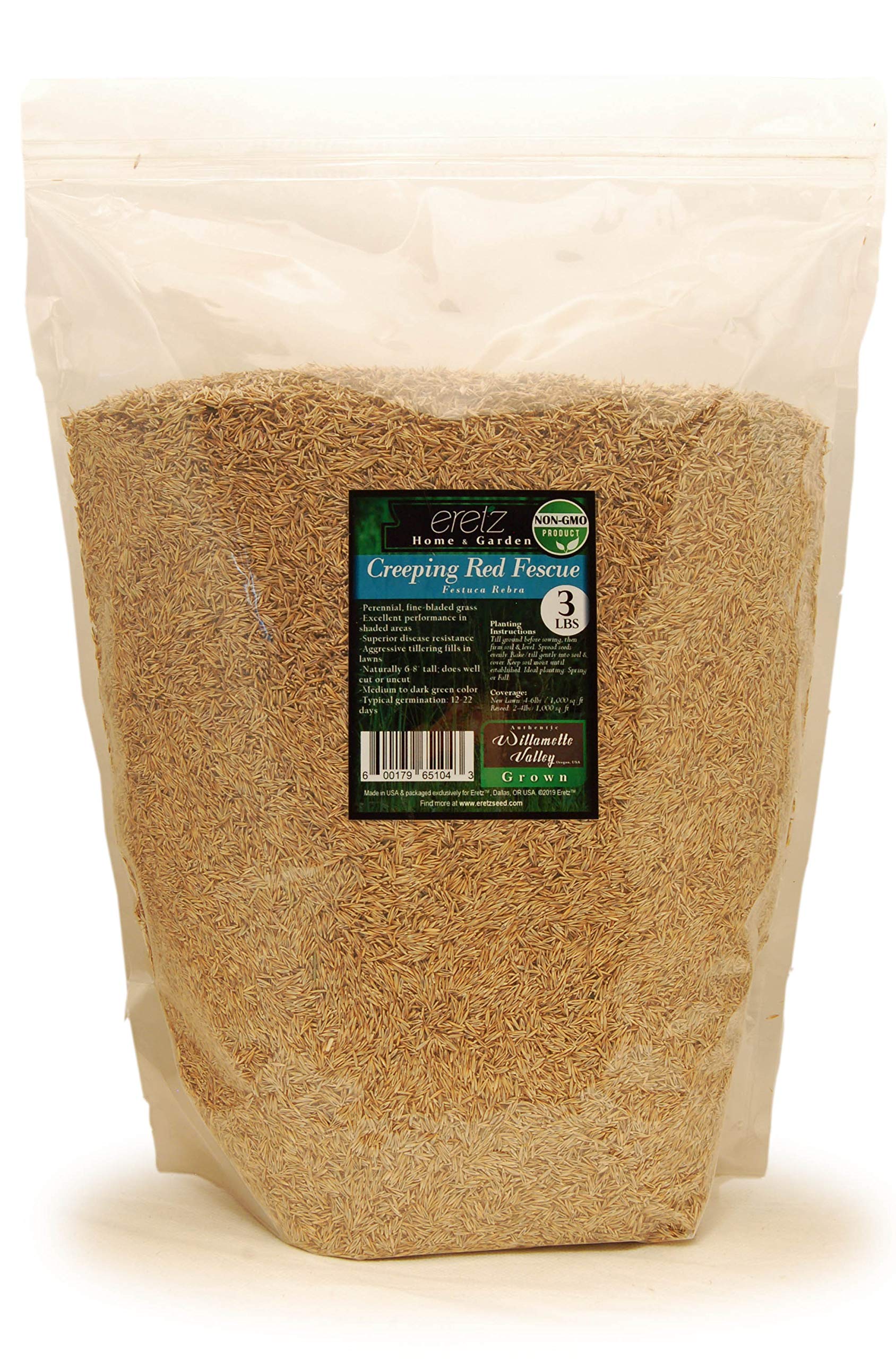
Eretz’s Creeping Red Fescue is a pure species seed — 99.6% pure with only 0.4% inert matter and zero weed or crop seeds. This is a specialist product for homeowners who want a single species lawn rather than a commercial blend. Creeping red fescue has aggressive tillering, meaning it spreads laterally to fill bare spots, making it ideal for slopes, banks, and erosion-prone areas where traditional seed washes away before it can root. Customers in Vermont reported it stays green through winter and holds soil on steep grades where other grasses failed.
The fine-bladed texture and medium-to-dark green color give it a natural, meadow-like appearance that requires less mowing than tall fescue — it naturally stays around six to eight inches tall and looks acceptable even when uncut. One Utah customer spotted in summer during a drought and saw about 50% germination, with the survivors dark green and actively spreading. The failures were likely caused by insufficient watering during the initial establishment phase, which is critical for fine fescue given its slower germination window of two to three weeks.
Germination is measurably slower than tall fescue — around 14 to 21 days even in ideal conditions — and the growth rate is approximately one millimeter per day during the first month. This means it is not the right choice if you need a lawn established before a family event or home sale. But for a low-maintenance, ultra-drought-tolerant ground cover that will outlast more demanding grass species, this seed delivers. The 3-pound bag is small, but creeping red fescue requires significantly less seed per square foot than tall fescue due to its spreading growth habit.
Why it’s great
- 99.6% pure seed with zero weed content
- Aggressive tillering fills bare spots and controls erosion
- Requires less mowing — grows naturally to 6-8 inches
Good to know
- Slow germination — 14 to 21 days minimum
- Fine blades need a sharp mower to avoid fraying
FAQ
Should I plant in spring or fall for Utah drought-tolerant grass?
How deep should I water drought-tolerant grass seed in Utah?
Can I mix tall fescue and fine fescue in the same lawn?
Final Thoughts: The Verdict
For most users, the grass seed for utah drought tolerant winner is the Jonathan Green Black Beauty because its Texas bluegrass and tall fescue blend combines deep root genetics with a waxy leaf coating that survives Utah’s high-altitude sun. If you need a shade-tolerant lawn under mature trees, grab the Outsidepride Legacy Fine Fescue. And for covering a steep slope or erosion-prone area with minimal maintenance, nothing beats the Eretz Creeping Red Fescue.