
West Virginia’s varied topography—from the steep slopes of the Alleghenies to the valley river bottoms—creates a patchwork of sun, partial shade, and deep woodland shadows that can punish a one-size-fits-all grass seed. A blend that thrives in a sunny Morgantown front yard may fail completely under the dense canopy of an oak-and-maple lot in Charleston.
I’m Mohammad Maruf — the founder and writer behind Drink4Good. My research focuses on regional seed compatibility, germination rates across different soils, and the specific grass varieties that homeowners in the Mountain State rely on for a durable, green lawn.
Choosing the right grass seed for west virginia means understanding how fine fescues, tall fescues, and ryegrasses handle the state’s clay-heavy soils, humid summers, and cold winters while resisting common lawn diseases.
How To Choose The Best Grass Seed For West Virginia
The right seed for a West Virginia lawn depends on three factors: the amount of daily sunlight your yard receives, the soil composition (often clay-heavy and acidic), and whether you need quick ground cover or long-term turf density. Cool-season grasses—tall fescue, fine fescue, and perennial ryegrass—are the most reliable performers for the state’s USDA zones 5b to 7a.
Match Grass Type to Light Conditions
Tall fescue handles sun and partial shade well, making it a versatile choice for many properties. For deep shade under mature trees, a fine fescue mix—containing hard, chewing, and creeping red varieties—will outperform almost anything else. Perennial ryegrass germinates quickly but struggles in full shade, so reserve it for sunny patches where you need fast results.
Check for Seed Purity and Coating
Look for products labeled 99.9% weed-free or pure seed with no filler. Coated seeds, such as those with OptiGrowth, improve soil-to-seed contact on West Virginia’s rocky or compacted clay soils and often include nutrients that give seedlings a stronger start in cooler spring or fall temperatures.
Quick Comparison
On smaller screens, swipe sideways to see the full table.
| Model | Category | Best For | Key Spec | Amazon |
|---|---|---|---|---|
| Jonathan Green Black Beauty Ultra | Premium Tall Fescue | Sun to partial shade, drought tolerance | 2,800 sq. ft. coverage per 7 lb bag | Amazon |
| Outsidepride Legacy Fine Fescue | Premium Fine Fescue Mix | Dense shade, poor soil, low traffic | OptiGrowth coating for better germination | Amazon |
| GreenView Tall Fescue Sun & Shade | Mid-Range Tall Fescue | Versatile sun and shade lawns | 1,750 sq. ft. coverage per 7 lb bag | Amazon |
| GreenView Perennial Ryegrass Blend | Mid-Range Ryegrass | Quick germination in sunny spots | 3,500 sq. ft. coverage per 7 lb bag | Amazon |
| Jonathan Green Dense Shade | Budget Fine Fescue | Small heavily shaded areas | 1,800 sq. ft. coverage per 3 lb bag | Amazon |
In‑Depth Reviews
1. Jonathan Green Black Beauty Ultra Grass Seed

The Black Beauty Ultra from Jonathan Green leverages a proprietary waxy coating on each seed that helps ward off disease and retain moisture—exactly what a lawn in West Virginia’s humid summers and drought-prone Augusts needs. This tall fescue blend covers up to 2,800 square feet per 7-pound bag, making it a strong choice for medium to larger properties with a mix of sun and partial shade.
Germination typically occurs between 7 and 15 days, though some users saw the Kentucky bluegrass component take closer to 29 days. The deep root system that follows provides superior heat and drought resistance once established. Many reviewers reported thick, dark green growth that filled in dead spots beautifully, though proper soil preparation—tilling, aeration, and starter fertilizer—is critical for success on compacted clay.
The seed is labeled pet-friendly, an important consideration for families with dogs that spend time on the lawn. The main tradeoff is patience: the grass grows slower than ryegrass but produces a denser, more durable turf over the season.
Why it’s great
- Waxy coating for superior drought and disease resistance
- Large 2,800 sq. ft. coverage per bag
- Pet-friendly and safe for active families
Good to know
- Slow to establish compared to ryegrass
- Requires diligent soil prep for best results
2. Outsidepride Legacy Fine Fescue Grass Seed Mix
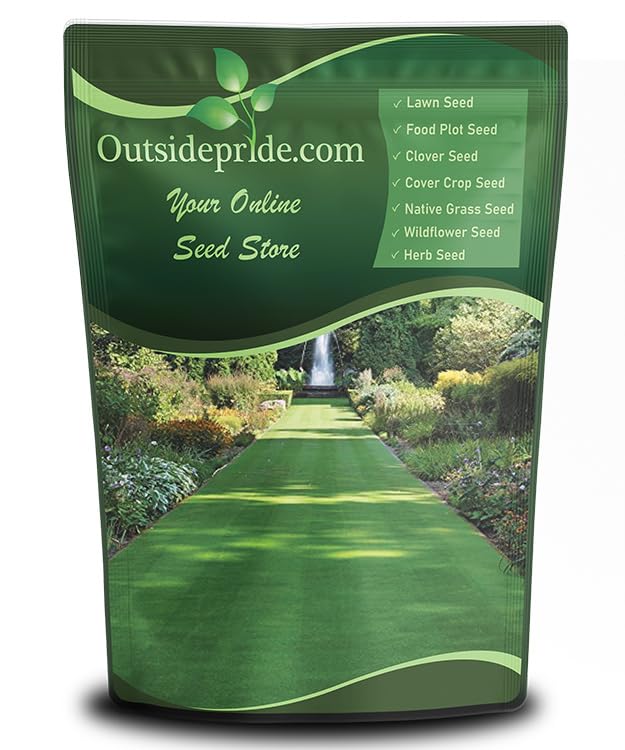
For West Virginia’s heavily shaded yards—think under mature oaks, maples, or along the forested edges of a property—this fine fescue mix from Outsidepride is a premium solution. It combines 20% hard fescue, 40% chewing fescue, and 40% creeping red fescue, creating a fine-textured turf that thrives where tall fescue and ryegrass would thin out.
The OptiGrowth coating is the standout feature here. It delivers zinc, phosphorus, and nitrogen directly to the seed, improving germination on poor or acidic clay soils common across the state. Reviewers in shaded areas reported germination within two weeks and dense, dark green growth that required minimal mowing. The fine blades create a softer, more ornamental lawn than coarser turf types.
This blend also handles moderate foot traffic and drought once established, though regular watering (especially during the first few weeks) is essential. Some users noted slower germination in colder spring temps, so early fall seeding is recommended for best results.
Why it’s great
- Elite fine fescue blend for deep shade
- OptiGrowth coating with nutrients for better establishment
- Low maintenance and fine-textured lawn
Good to know
- Smaller 5 lb bag covers less area
- Can be slow in cold conditions
3. GreenView Pure Grass Seed Turf Type Tall Fescue Sun & Shade Blend

GreenView’s turf-type tall fescue blend is the most versatile mid-range option for West Virginia lawns that see both sun and shade throughout the day. With a 7-pound bag covering 1,750 square feet for overseeding, it strikes a solid balance between performance and coverage area.
The seed is tested to be 99.9% weed-free, a major advantage for homeowners who don’t want to spend the season pulling crabgrass and clover from their reseeded patches. It germinates in 10 to 14 days, which is slightly slower than ryegrass but still reasonable. Once established, the deep-rooted tall fescue exhibits strong resistance to heat, drought, insects, and disease—key attributes for the summer humidity of the Ohio River Valley.
Reviewers consistently noted that it filled in bare spots completely and produced a rich dark green color, though a few found germination speed underwhelming in cooler spring conditions. It adapts to all common soil types, making it a reliable choice whether you’re dealing with clay near Huntington or loam in the Eastern Panhandle.
Why it’s great
- Virtually weed-free seed mix
- Excellent drought and disease resistance
- Versatile sun and shade performance
Good to know
- Germination can be slow in cooler weather
- Medium-coarse texture may not suit all preferences
4. GreenView Pure Grass Seed Perennial Ryegrass Blend

When you need instant visual results—covering bare patches before a family gathering or stabilizing a slope in a sunny yard—this perennial ryegrass blend from GreenView is your best bet. It germinates in just 7 to 12 days, and many reviewers reported seeing growth within the first week. The 7-pound bag covers up to 3,500 square feet for overseeding, the largest coverage of any product on this list.
This ryegrass blend has a medium-to-fine texture and a vibrant dark green color that looks polished from the start. It’s tested 99.9% weed-free and adapts to all common soil types. However, it is not ideal for heavy shade—fine fescue or tall fescue would perform better under a dense canopy. It also requires consistent watering during establishment to reach its potential.
Ryegrass is less drought-tolerant than tall fescue, so plan to overseed with a fescue blend if you want a permanent lawn solution. For quick repair of sunny spots or as a nursery crop for slower grasses, this is the top pick.
Why it’s great
- Ultra-fast germination in under two weeks
- Largest coverage area at 3,500 sq. ft.
- Rich dark green color with fine texture
Good to know
- Not suited for dense shade
- Lower drought tolerance than tall fescue
5. Jonathan Green 40600 Dense Shade Grass Seed
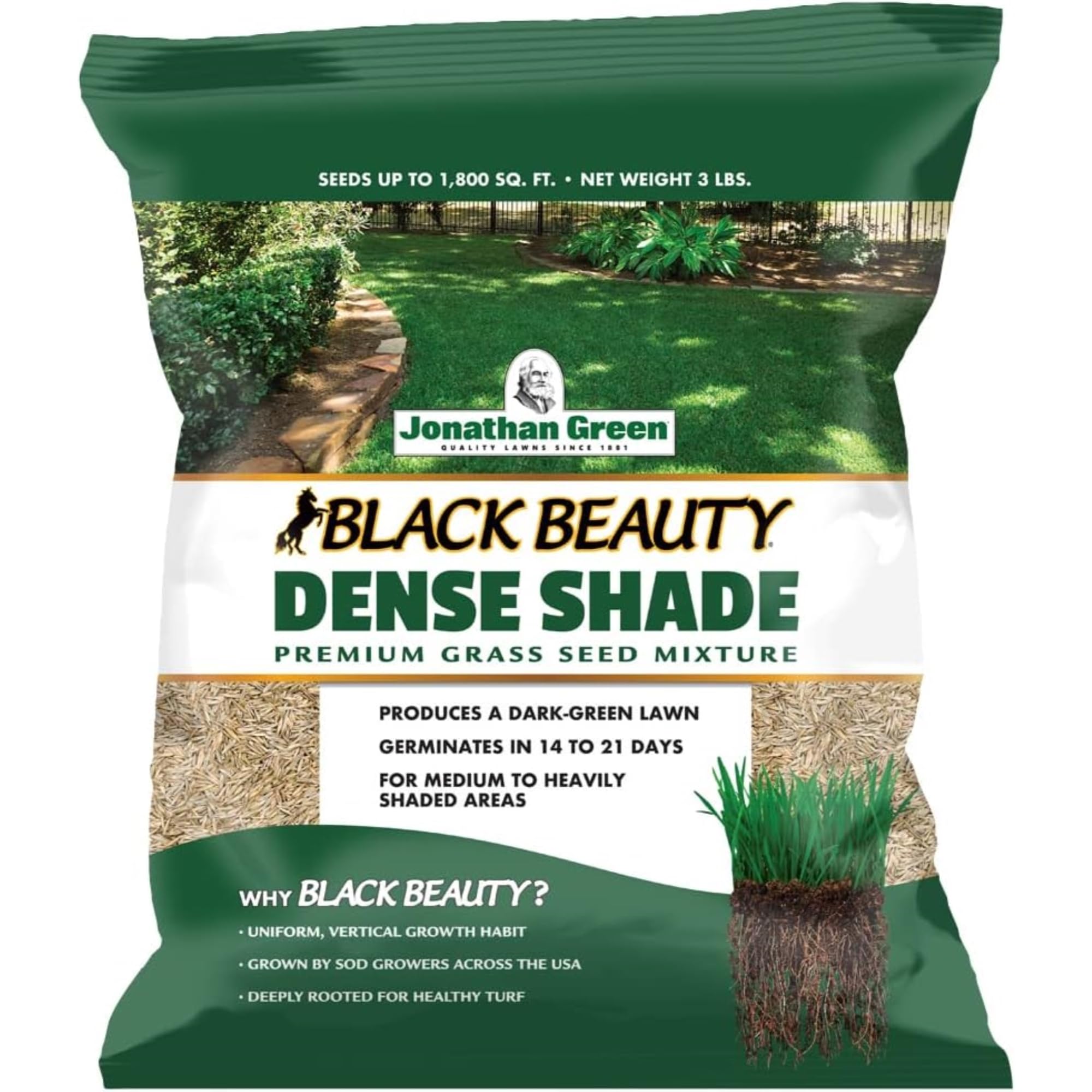
For the homeowner with a small, deeply shaded area—perhaps under a deck or between a house and a stand of trees—Jonathan Green’s Dense Shade mix offers a targeted solution. The 3-pound bag covers 1,800 square feet, which is efficient for patch repair but less economical for full-lawn overseeding.
This seed is 100% superior grass seed with no fillers, and it’s specifically bred for areas receiving less than four hours of direct sunlight. Several reviewers with dense shade and clay soil reported visible sprouts within three days and healthy growth to 4-5 inches. The tall, thin dark green leaves are characteristic of fine fescue and create a soft, natural look.
However, results vary significantly by site conditions. Some users experienced very low germination rates (5-10%) despite proper watering and soil prep. This inconsistency makes it a more suitable pick for small, forgiving spots where you can experiment without wasting a large investment.
Why it’s great
- Excellent germination in deep shade conditions
- Quick sprouting in 3-5 days
- Pure seed with no filler
Good to know
- Smaller bag size limits large-area use
- Germination can be inconsistent on some soils
FAQ
What grass type grows best in West Virginia’s clay soil?
Should I seed in spring or fall in West Virginia?
How do I prepare my soil before seeding in the Mountain State?
Final Thoughts: The Verdict
For most users, the grass seed for west virginia winner is the Jonathan Green Black Beauty Ultra because its waxy coating and tall fescue genetics deliver drought tolerance and disease resistance across the state’s variable conditions. If you need a shade specialist, grab the Outsidepride Legacy Fine Fescue. And for quick results on a sunny patch, nothing beats the GreenView Perennial Ryegrass Blend.