
Getting a dense, green lawn in Western Washington isn’t easy. The region’s cool, wet winters and dry summer months create a narrow window for establishment, while heavy shade from mature evergreens and the constant threat of fungal pressure can undo weeks of careful work. Without a seed blend matched to these specific conditions, you’re almost certain to end up with patchy, thin turf that struggles to survive.
I’m Mohammad Maruf — the founder and writer behind Drink4Good. I’ve spent years researching regional grass seed formulations, analyzing germination rates, and comparing how different blends handle the coastal Pacific Northwest climate and soil profile.
This guide breaks down the seed types — perennial ryegrass for quick cover, fine fescues for deep shade, and premium mixes that resist disease — so you can find the best grass seed for western washington and get that dense, resilient lawn you want.
How To Choose The Best Grass Seed For Western Washington
The Pacific Northwest climate is a blessing for cool-season grasses, but it demands careful selection. You need seed that thrives in low soil pH, handles prolonged cloud cover, and resists the fungal diseases — like red thread and snow mold — that plague the region. Here are the factors that matter most.
Start With Shade Tolerance — The Non‑Negotiable
Western Washington’s iconic evergreens cast dense, dry shade that starves most standard turf blends. Fine fescues (creeping red, chewings, hard fescue) are your primary tool here — they need as little as four hours of filtered light per day. Avoid Kentucky bluegrass in any area with tree cover; it demands full sun and will thin out fast.
Look for Weed-Free Purity Ratings
The seed tag tells you everything. You want “weed seed” listed at 0.00% and “other crop seed” also at zero. Many budget bags contain annual bluegrass (Poa annua) or bentgrass that will outcompete your desired species. Premium blends like those from Eretz and Jonathan Green routinely test at 99.5% pure seed or higher.
Match Your Sunlight Exposure to the Right Species
For open sunny lawns that get 6+ hours of direct light, a perennial ryegrass blend offers fast establishment (7–12 days) and excellent wear tolerance. For partially shaded yards (3–6 hours), a mix of fine fescue and tall fescue creates a deeper root system that handles both damp winter and dry summer. Full-shade areas under dense canopy need a straight fine fescue blend — creeping red fescue is the most reliable choice here.
Don’t Ignore Disease Resistance and Drought Tolerance
During Western Washington’s summer dry spell, lawns that aren’t drought-tolerant will go dormant and potentially die back. Look for seed with an invisible waxy coating on the leaf blade (like Jonathan Green’s Black Beauty line) — this natural cuticle layers help the plant retain moisture without extra watering. Also check for resistance ratings against red thread and dollar spot, two common PNW lawn diseases.
Quick Comparison
On smaller screens, swipe sideways to see the full table.
| Model | Category | Best For | Key Spec | Amazon |
|---|---|---|---|---|
| Jonathan Green 40600 Dense Shade | Fine Fescue Mix | Heavy tree shade & damp soil | 1,800 sq. ft. coverage | Amazon |
| Eretz Creeping Red Fine Fescue 5lb | Premium Fine Fescue | Deep shade & slopes | 99.6% pure seed | Amazon |
| Jonathan Green 40322 Black Beauty Ultra 7lb | Premium Tall Fescue | Drought resistance & high-traffic lawns | Waxy leaf coating for moisture | Amazon |
| GreenView Pure Perennial Ryegrass Blend 7lb | Perennial Ryegrass | Quick overseeding & sunny patches | Germination in 7–12 days | Amazon |
| ProTurf Perennial Ryegrass Fine Lawn Seed 5lb | Fine Blend Ryegrass | Year‑round green & pet spot repair | 99+% premium ryegrass | Amazon |
| Eretz Annual RyeGrass Seed 5lb | Annual Ryegrass | Erosion control & quick cover crop | Fast germination for stabilization | Amazon |
| Scotts Turf Builder All‑Purpose Mix 20lb | All‑Purpose Mix | Large sunny lawns & repairs | 8,000 sq. ft. coverage | Amazon |
In‑Depth Reviews
1. Jonathan Green 40600 Dense Shade Grass Seed
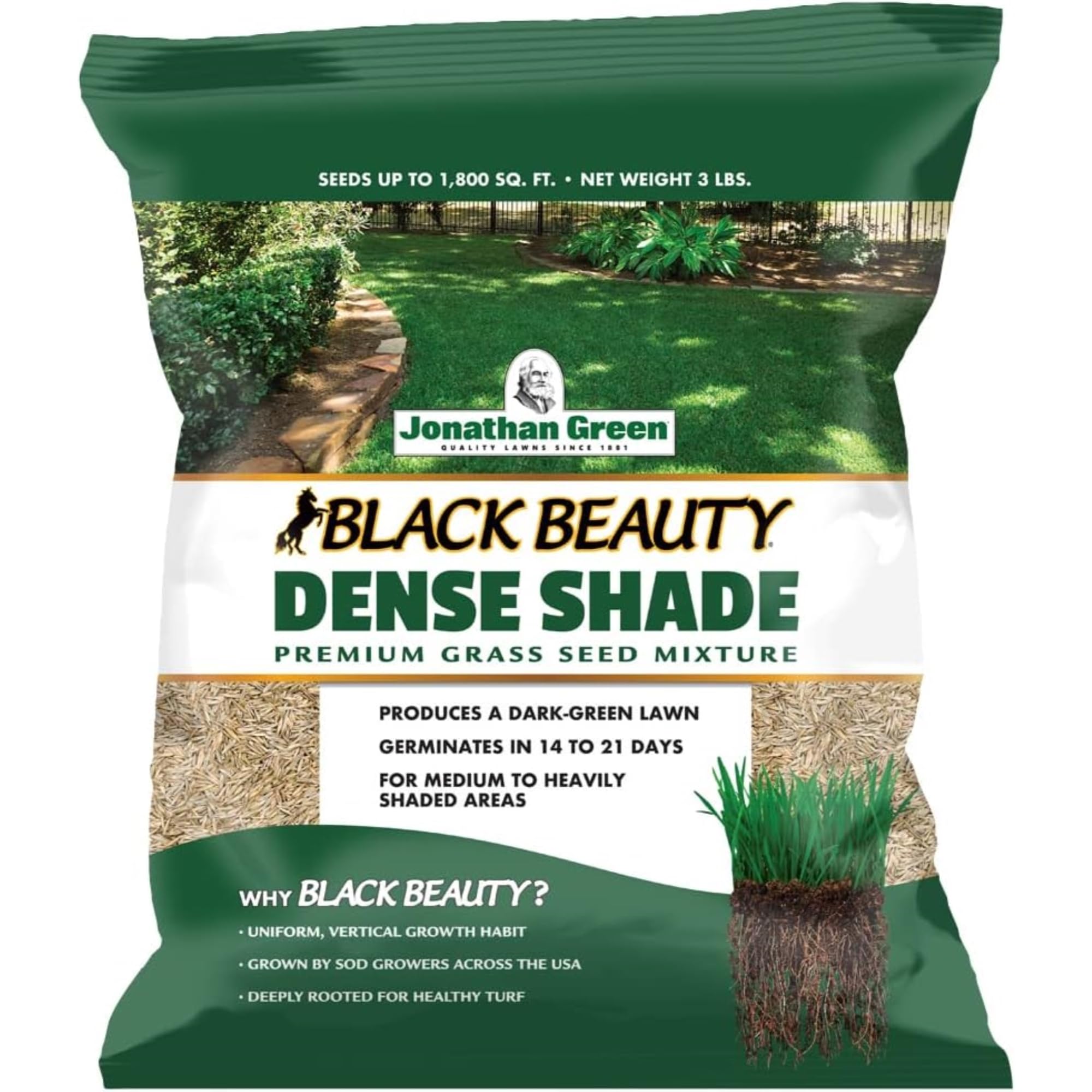
This seed is specifically engineered for the hardest part of a Western Washington lawn: the deep, dry shade under Douglas firs and cedars. The blend relies on fine fescues that require minimal light — as little as four hours of indirect sun — and maintains a dark green color even during the region’s overcast winters. Multiple verified buyers in the PNW report germination within three days and strong growth in areas where Bermuda and St. Augustine completely failed. The 3-pound bag covers up to 1,800 square feet, which is practical for spot-seeding or treating a smaller shaded zone.
The seed composition is 100% superior grass seed with no fillers, so every granule you spread has the potential to establish. The blade texture is fine and thin, which blends well with existing fescue lawns without looking coarse or clumpy. In the cooler spring and fall months that dominate the PNW calendar, this seed performs at its peak — germinating reliably when soil temperatures hover between 50°F and 65°F.
A few users experienced poor results with certain batches — around 5–10% germination in one case — which may point to inconsistent moisture management or hot weather stress when temperatures hit the mid-80s. In Western Washington’s typical summer (rarely above 80°F), this is less of a concern, but the manufacturer’s responsiveness has been criticized. Still, for established shade areas, the success rate among PNW users is exceptionally high.
Why it’s great
- Germinates in as little as 3 days in cool, damp PNW soil
- 100% pure seed with zero filler or weed seed
- Excellent color and density in heavy tree shade
Good to know
- Batch inconsistency reported in ideal conditions
- May struggle if summer temperatures spike above 85°F
- 3 lb bag covers less area than economy options
2. Eretz Creeping Red Fine Fescue Seed 5lb

This is the purest fine fescue option in the roundup — 99.6% pure seed with only 0.4% inert matter and zero weed seed. For Western Washington’s notorious low-shade lawns, creeping red fescue is the gold standard. Buyers in the PNW specifically confirmed a 21-day germination window when seeded in February and March with overnight lows of 36–39°F, outperforming traditional shade mixes from neighbors with identical retaining-wall conditions. The aggressive tillering habit naturally fills in bare spots without needing to over-seed every season.
The blade is exceptionally fine — noticeably thinner than any ryegrass blend — which gives a soft, billowy texture ideal for slopes or areas you’d rather not mow. The plant stays green through Western Washington’s mild winters, even under snow cover, because it is a true cool-season grass. The recommended mowing height is 2–3 inches, but it can be left unmowed up to 6–8 inches for a naturalized look. It also holds soil on slopes, making it a dual-purpose choice for erosion control on banks.
The trade-off for this specialized performance is slower initial establishment compared to ryegrasses — about 14–21 days to see strong germination. Some users in drought conditions reported roughly 50% germination in summer spot-plugs, but those failures were directly linked to insufficient watering during a heatwave, not the seed itself. The price per pound is higher than general-purpose mixes, so reserve this for areas where other grasses have consistently failed.
Why it’s great
- Extremely high purity at 99.6% — virtually no weed seed
- Self-repairs via aggressive tillering, reducing need for re-seeding
- Proven germination in PNW February/March cold soil
Good to know
- Slow to establish — allows 2–3 weeks for first mow
- Requires consistent moisture during germination
- Premium price per pound compared to ryegrass blends
3. Jonathan Green 40322 Black Beauty Ultra Grass Seed 7lb

The Black Beauty line is built around tall fescue cultivars that carry an invisible waxy coating on each blade — similar to the natural cuticle on an apple. This coating wards off fungal infections (common in Western Washington’s damp spring) and slows moisture evaporation during the region’s July through September dry spell. Users in California’s Central Valley survived extreme summer heat with this seed, so for the milder PNW summer, it’s overbuilt in the best way. The 7-pound bag covers 2,800 square feet, making it a practical size for whole-lawn renovations.
Germination takes 7–15 days on average, though some Kentucky bluegrass varieties in the blend can stretch to 29 days in cool soil — something to note if you’re seeding in early spring. The leaf texture is medium-coarse, which creates a dense, carpet-like feel that stands up to kids and pets. Multiple reviewers noted that the grass came up thick and full, outperforming every other brand they had tried for filling dead spots. The product is also labeled as pet-friendly, with no harmful coatings.
To achieve full results, thorough soil preparation is essential: tilling, aeration, lime or gypsum to adjust the acidic PNW pH, and a thin layer of peat moss on top. Without that prep work, germination can be inconsistent. The seed also demands consistent watering during establishment — daily sprinkling until seedlings reach 2 inches tall. And at this price point, it’s firmly a premium option best reserved for lawns where you’re willing to invest time in the prep.
Why it’s great
- Waxy leaf coating repels disease and retains moisture
- Covers 2,800 sq. ft. — good value for whole-lawn use
- Proven survival through extreme summer heat
Good to know
- Requires extensive soil prep for best results
- Some KBG varieties inside may take 29 days to germinate
- Premium price — best for dedicated lawn care
4. GreenView Pure Perennial Ryegrass Blend 7lb

This is a straight perennial ryegrass blend — no filler, no bluegrass — with a 99.9% weed-free guarantee. For Western Washington homeowners who need fast establishment in open, sunny patches, this seed germinates in 7–12 days, which is head and shoulders above most fescue mixes. One verified buyer saw growth in a single day after top-dressing with peat moss and watering 3–4 times daily. The blade is medium-fine with a dark green tone that blends well with fescue lawns, making it a strong candidate for overseeding thin areas before winter sets in.
The blend includes multiple ryegrass varieties selected for heat and drought resistance once established. This is useful for the PNW’s mid-summer dry period — the deeper root system of hybrid ryegrasses can pull moisture from lower soil profiles compared to fine fescues. The coverage is generous: 3,500 square feet for overseeding and 1,750 square feet for new lawns from the 7-pound bag. It also has good soil adaptability, performing in clay, sandy loam, and the acidic topsoil common west of the Cascades.
The main consideration is sunlight — perennial ryegrass needs at least 5–6 hours of direct light daily. In areas with partial shade from deciduous trees (the kind that leaf out in May), it will still perform reasonably well, but in full-evergreen shade it will thin out by the second season. Some buyers in cooler springs reported germination taking longer than 12 days, which is typically weather-related rather than a seed quality issue. It also requires consistent watering during establishment to hit that fast germination window.
Why it’s great
- Very fast germination — can see growth in 1 day with proper care
- 99.9% weed-free, no filler
- Good heat and drought tolerance once established
Good to know
- Needs 5–6 hours of direct sun — not for deep shade
- Requires frequent watering during germination
- Thins out in dense evergreen shade after one season
5. ProTurf Perennial Ryegrass Fine Lawn Seed 5lb

ProTurf offers a 99+% pure perennial ryegrass that’s grown and tested in Oregon’s Willamette Valley — the same climate zone that Western Washington stretches into. The fine-blade texture creates a dark green, dense lawn that looks formal and well-manicured. Users report seedlings emerging in 3–4 days under ideal conditions, with grass reaching 2–3 inches tall within a week. This is a serious advantage for anyone repairing pet-damaged spots or overseeding before the fall rains begin in October.
The seed mixes well with other lawn species, so you can blend it with existing fescue or use it straight. It’s also perfectly suited for the Pacific Northwest’s cool season — staying lush and green through Western Washington’s mild winters without entering full dormancy. One reviewer in Sacramento saw it survive both a cold winter and a hot summer, suggesting good adaptability. For pure overseeding of a sunny PNW lawn, this is one of the most reliable straight ryegrass options.
The downside: perennial ryegrass, even fine-blade varieties, lacks the deep shade tolerance of fine fescue. It also tends to go dormant in severe heat, though that’s rarely an issue west of the Cascades. The 5-pound bag covers roughly 2,000 square feet for overseeding, which may mean buying multiple bags for larger projects. And the price per pound sits at the higher end of the ryegrass category, reflecting the Oregon-grown purity certification.
Why it’s great
- Germination in 3–4 days — among the fastest in this list
- Willamette Valley grown, same climate as Western Washington
- Fine-blade texture for a formal lawn look
Good to know
- Not suitable for dense shade
- Requires consistent watering during hot dry spells
- Premium price for the 5 lb size
6. Eretz Annual RyeGrass Seed 5lb

Annual ryegrass is not a permanent lawn solution — it completes its life cycle in one growing season and dies off — but it serves a critical purpose in Western Washington: quick erosion control on slopes, cover cropping to improve soil organic matter, and emergency repair of large bare spots during the March–May planting window. This Eretz bag is grown in Oregon’s Willamette Valley and contains zero fillers or weed seeds. It germinates vigorously — often within 5–7 days — and creates a dense green cover that holds soil in place while you plan a permanent perennial lawn.
It’s also ideal for overseeding into an existing lawn that needs a quick cosmetic boost for a summer event or property showing. The dark green color is comparable to perennial ryegrass, and the texture is slightly coarser but still pleasant underfoot. Buyers report that even in poor soil with minimal watering, the annual ryegrass sprouted “in no time” and held up through drought followed by snow. For mixing with clovers or other cover crops, it’s an excellent companion species.
The critical limitation is short lifespan — annual ryegrass will die off after one season, typically in late summer when temperatures rise. If you want a permanent lawn, this is strictly a temporary fix. It also has a higher nitrogen demand than fescues, so you’ll need to amend soil with organic fertilizer if you plan to plant perennial seed in the same spot the following year. The 5-pound bag is useful for targeted patches but too small for large-scale erosion projects.
Why it’s great
- Fast germination — great for emergency cover or erosion control
- Willamette Valley grown, no fillers
- Excellent for mixing with clovers or cover crops
Good to know
- Annual — dies after one season, not a permanent lawn
- Higher nitrogen demand than perennial blends
- 5 lb bag is small for large erosion projects
7. Scotts Turf Builder Grass Seed All‑Purpose Mix 20lb

Scotts Turf Builder All‑Purpose Mix is the highest‑volume option on this list at 20 pounds, covering up to 8,000 square feet. For a sunny Western Washington lawn with no heavy tree cover, this is a practical choice — it’s a blend of perennial ryegrass and tall fescue that offers good heat tolerance and a 2‑week germination window. The seed is coated with a moisture‑absorbing polymer that holds up to 2x more water than uncoated seed, giving you a buffer during the PNW’s unpredictable summer dry spells. Multiple verified buyers call it “the best grass seed” for value and overall results.
The mix is 99.9% weed-free, so you’re not paying for filler. It works in both sun and partial shade, though performance drops off in dense shade — that’s where the fine fescues lead. The medium‑coarse texture is standard for a tall fescue/ryegrass blend and matches well with existing lawns of similar types. One reviewer noted it blends in perfectly with their established Bluegrass/Ryegrass/Tall Fescue lawn and holds up in high heat without going dormant.
The primary caution: some early‑generation Scotts mixes included annual bluegrass (Poa annua) as a filler — though this bag is labeled 99.9% weed-free, a few reviewers reported crabgrass or unknown broadleaf weeds emerging after germination. It’s unclear whether this was from the seed or existing soil seed bank. The bag also requires careful watering — daily until seedlings reach 2 inches tall. And because the coating absorbs water, the seed can rot if the ground stays saturated, which is a real risk during Western Washington’s spring rains.
Why it’s great
- 20 lb bag covers 8,000 sq. ft. — best value for large lawns
- Coated seeds absorb 2x more water for drought protection
- 99.9% weed-free, no filler
Good to know
- Not for deep shade — fescues will thin out
- Coated seed may rot in consistently wet PNW spring soil
- Some reports of weed emergence (possibly soil seed bank)
FAQ
Should I use straight fine fescue or a mix with perennial ryegrass in Western Washington?
What is the best time of year to seed a lawn in Western Washington?
How do I prevent fungal diseases like red thread on my PNW lawn?
Final Thoughts: The Verdict
For most users in the Pacific Northwest, the best grass seed for western washington winner is the Jonathan Green 40600 Dense Shade because it nails the region’s most persistent problem: getting thick grass to grow under evergreen and broadleaf shade. If you want a premium drought-tolerant lawn with superior disease resistance, grab the Jonathan Green Black Beauty Ultra. And for a fast, weed-free cover in sunny patches, the GreenView Pure Perennial Ryegrass Blend is the smart choice. Choose based on your light conditions, prep your soil, and seed at the right time — you’ll have a PNW lawn that stays green.