
Water-logged soil, persistent puddles, and poor drainage turn a dream lawn into a muddy mess. Most standard grass varieties simply drown in these conditions, leaving you with bare patches and erosion. The solution is not better drainage — it is choosing a grass seed variety bred to thrive with saturated roots and limited oxygen in the soil.
I’m Mohammad Maruf — the founder and writer behind Drink4Good. I have spent countless hours analyzing germination rates, root structure data, and moisture tolerance levels across dozens of seed blends to find the varieties that actually survive and flourish in consistently damp ground.
Whether you are dealing with a low-lying yard, a shady spot that never dries, or a runoff zone near a downspout, the right choice comes down to seed genetics and coating technology. This guide breaks down the best options for a thick, lush lawn in wet conditions — you will find the top-rated grass seed for wet areas that holds up through rainy seasons and soggy springs.
How To Choose The Best Grass Seed For Wet Areas
Selecting a seed for wet ground is different from picking a standard sun-and-shade blend. The main challenge is root asphyxiation — when soil pores fill with water, roots cannot access oxygen, and most grass types die off within weeks. Look for seed varieties with deep, fibrous root systems that can tolerate low oxygen levels and resist fungal diseases that thrive in damp conditions.
Tall Fescue — The Heavy Lifter for Wet Ground
Tall fescue has a deep root system that can reach three to four feet into the soil. This depth allows it to access pockets of oxygen even when the surface is saturated. It also has a high tolerance for soil-borne fungi like brown patch and red thread, which are common in wet lawns. For any consistently moist area, a tall fescue blend or a tall-fescue-dominant mix is the safest bet. It also handles foot traffic better than finer-bladed grasses.
Fine Fescue Blends — For Shady, Damp Spots
Chewings fescue, creeping red fescue, and hard fescue are fine-bladed grasses that excel in areas with both shade and moisture. They require less nitrogen than Kentucky bluegrass and can survive in acidic, poorly drained soil. If your wet area is also under trees or a north-facing wall, a mix heavy on fine fescues is a strong choice. The trade-off is lower wear tolerance, so keep these blends away from high-traffic pathways.
Coated Seed Technology — Faster Germination in Wet Soil
Some premium seed brands apply a water-absorbing polymer coating that holds moisture around the seed while also improving seed-to-soil contact. In wet areas, this sounds counterintuitive, but the real benefit is that the coating prevents the seed from washing away during heavy rain and reduces the risk of seed rot by holding the ideal amount of water — not too much, not too little. Look for products labeled with a water-absorbing or moisture-managing coating for best results in consistently damp ground.
Quick Comparison
On smaller screens, swipe sideways to see the full table.
| Model | Category | Best For | Key Spec | Amazon |
|---|---|---|---|---|
| Scotts Turf Builder Tall Fescue Mix | 3-in-1 Mix | Thickening a wet thin lawn | 12 lb bag covers up to 4,000 sq ft | Amazon |
| Scotts All-Purpose Mix | Pure Seed | Large wet areas with sun/shade mix | 20 lb bag covers up to 8,000 sq ft | Amazon |
| Jonathan Green Dense Shade | Shade Blend | Wet, densely shaded lawns | 3 lb bag covers 1,800 sq ft | Amazon |
| Eretz Annual Ryegrass | Erosion Control | Quick stabilization in wet ditches | 3 lb bag, Oregon Grown | Amazon |
| Mountain View Natures Own | Sun & Shade Blend | Versatile wet areas with varied light | 3 lb bag, WaterGard coating | Amazon |
In‑Depth Reviews
1. Scotts Turf Builder THICK’R LAWN Tall Fescue Mix

This 3-in-1 system combines tall fescue seed, a slow-release fertilizer, and a soil improver in one bag. For wet areas, the tall fescue component is the key advantage — its deep root system stays alive even when topsoil is saturated for days. The fertilizer helps establish roots quickly in compacted, moisture-heavy soil that typically lacks airflow.
Users consistently report visible germination within 7 days with twice-daily watering, which in a naturally wet yard means you can rely on rainfall alone after the first week. The soil improver component also helps loosen heavy clay, which is a common cause of drainage issues. The mix covers up to 4,000 square feet, making it cost-effective for mid-sized lawns with persistent damp patches.
One drawback is that the tall fescue has a coarser blade texture than fine fescues or bluegrass, so the lawn will feel less soft underfoot. A small number of users reported low germination rates if the seed was applied to very hard, compacted soil without any surface tilling. Still, for a wet, thin lawn that needs thickening fast, this is the most complete solution.
Why it’s great
- All-in-one seed, fertilizer, and soil improver
- Tall fescue root system tolerates saturated soil well
- Works on existing lawns without full reseeding
Good to know
- Coarser leaf texture compared to fine fescues
- Requires surface prep or tilling for best results
2. Scotts Turf Builder Quality All-Purpose Mix

At 20 pounds covering up to 8,000 square feet, this is the value champion for large wet lawns. The seed is coated to absorb more water than uncoated seed, which in wet areas provides an unexpected benefit: the coating reduces the risk of seeds washing out during heavy rain by providing better soil adhesion. The blend includes tall fescue and ryegrass, giving you both deep root tolerance and quick establishment.
User reports confirm germination in as little as two weeks even on bare dirt, with the resulting grass showing strong heat and humidity resistance — essential for wet areas that also get hot. The 99.9% weed-free guarantee means you are not introducing crabgrass or other invasive species into your damp lawn, which is a common problem with cheap filler seeds. The deep green color matches well with established fescue lawns.
The main limitation is that the bag is large and heavy (20 pounds), which can be awkward to handle. Also, because it is a pure seed without added fertilizer or soil improver, you will need to apply a separate starter fertilizer for best results. Some users reported crabgrass appearing in the first growing season, though this may be from existing soil seed banks rather than the product itself.
Why it’s great
- Best value per square foot for large wet lawns
- Seed coating improves soil contact in rain
- 99.9% weed-free guarantee
Good to know
- Bulky 20 lb bag is heavy to carry
- Starter fertilizer must be purchased separately
3. Jonathan Green Dense Shade Grass Seed
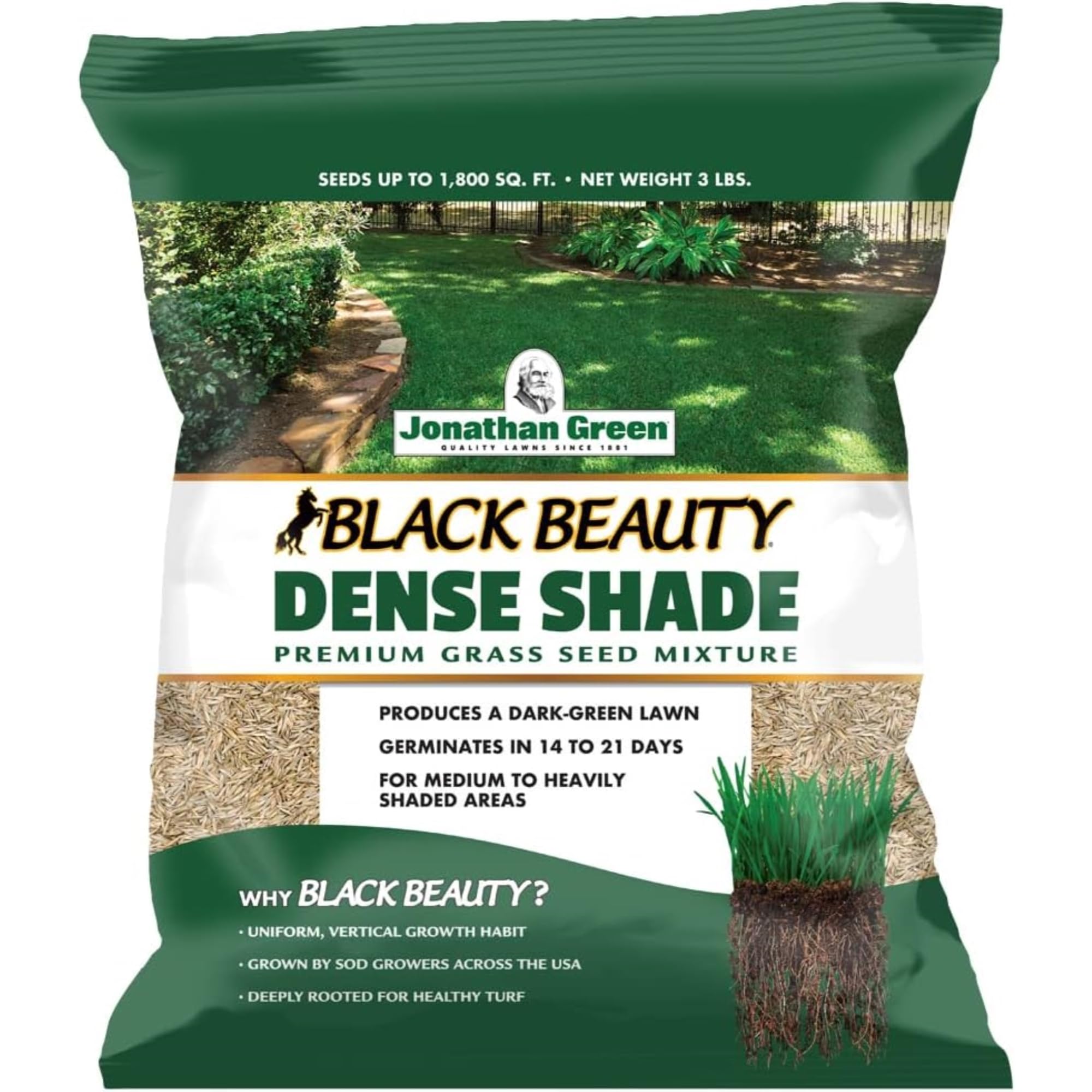
Wet areas under dense tree canopy are the hardest spots to grow grass — the combination of shade and moisture creates ideal conditions for moss and fungal diseases. Jonathan Green’s Dense Shade blend uses a mix of fine fescues that are naturally tolerant of both low light and damp soil. The 3-pound bag covers 1,800 square feet, so it is specifically sized for smaller problem areas rather than whole lawns.
Users in deeply shaded front yards with poor drainage report that this is the only seed that produced visible results where Bermuda and St. Augustine failed. Germination can occur as fast as 3 days in ideal conditions, with a fine-bladed, dark green leaf that stays upright without excessive thatch buildup. The shade resistance is built into the genetic blend, not just marketing — the fine fescues in this mix have evolved to photosynthesize efficiently in low light while tolerating the high humidity of damp soil.
The major concern is batch variability — a small number of users reported very low germination rates (5-10%) that could not be explained by care practices, suggesting occasional quality control issues. Additionally, the fine fescues in this blend are less durable under foot traffic than tall fescue. If children or pets regularly walk through the wet shaded area, this may thin out over time. Reserve this blend for purely ornamental, low-traffic damp zones.
Why it’s great
- Excellent for wet spots under trees or north-facing walls
- Fine-bladed texture blends with premium lawns
- Germinates in as little as 3 days
Good to know
- Batch quality can be inconsistent
- Not suitable for high-traffic areas
4. Eretz Annual Ryegrass Seed
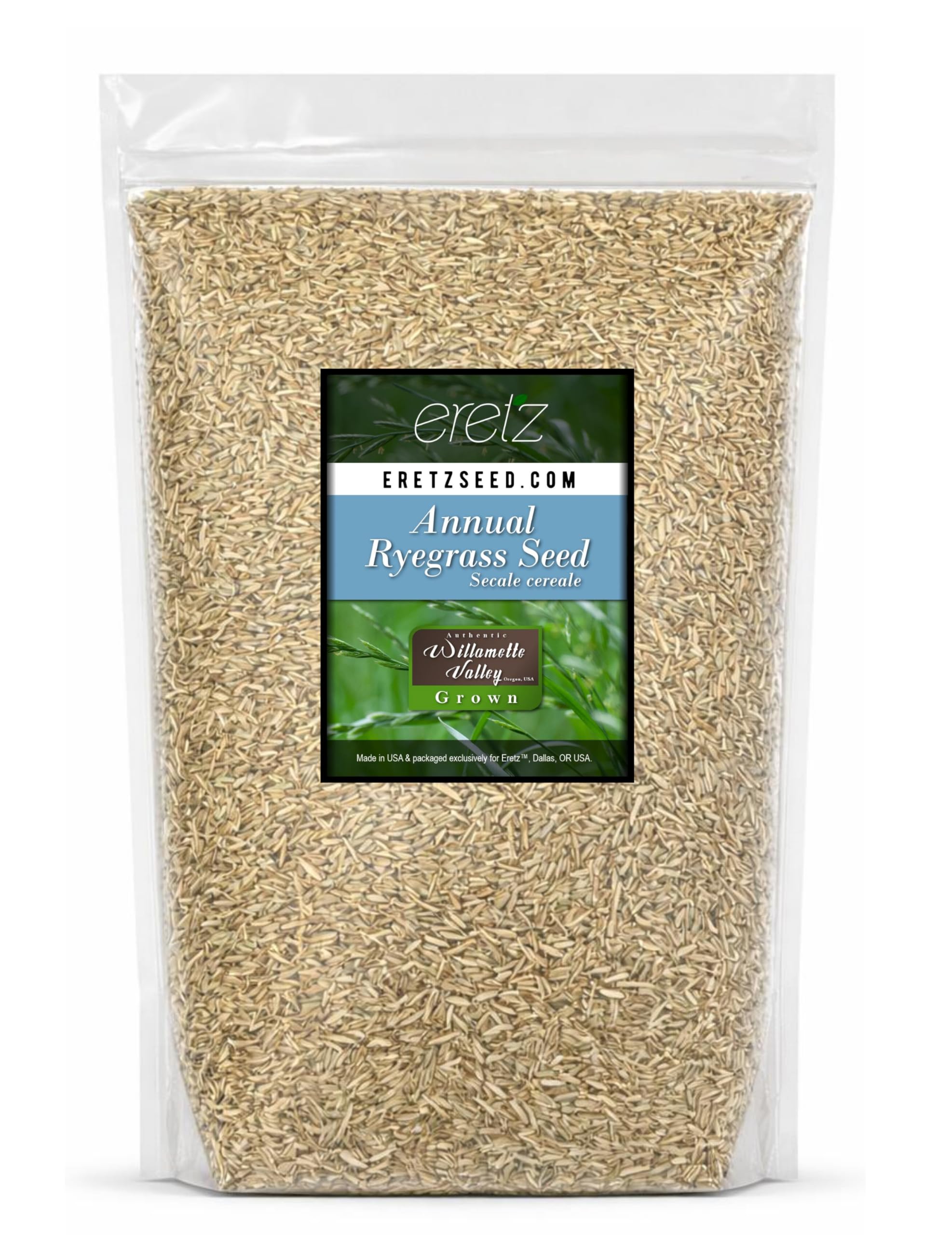
Annual ryegrass is not a permanent solution for wet areas — it lives for one season and dies — but it is one of the fastest ways to stabilize muddy soil and prevent erosion while you prepare for a permanent grass. This Oregon-grown seed from Eretz contains no fillers or weed seeds, which is critical in wet ground where contaminants can quickly spread. The seeds germinate aggressively in moist soil, often showing green shoots within 5 to 7 days.
Users note that this seed works even in poor, compacted soil with minimal watering, making it ideal for wet ditches, runoff zones, or areas where construction has left bare dirt that stays muddy. It also mixes well with clovers and other cover crops if you are managing a larger damp field rather than a lawn. The dense root network binds the topsoil, dramatically reducing the amount of soil washed away during rain.
The biggest limitation is that annual ryegrass dies after one growing season, especially under heat stress. If you want a permanent lawn in a wet area, use this only as a temporary erosion blanket while you establish tall fescue or a perennial blend. Additionally, the 3-pound bag is small — for anything beyond a modest patch, you will need multiple bags.
Why it’s great
- Extremely fast germination for erosion control
- Thrives in poor, compacted, wet soil
- No fillers or weed seeds
Good to know
- Annual — dies after one growing season
- Small bag size requires multiple purchases
5. Mountain View Seeds Natures Own Sun & Shade Mix

Mountain View’s Natures Own Sun & Shade blend uses a mix of perennial ryegrass, fine fescue, and Kentucky bluegrass with a proprietary WaterGardQS coating. For wet areas, the coating is the standout feature: it holds just enough moisture to speed germination while reducing seed washout during rain. The blend is designed to adapt to varying light conditions, which is crucial for wet yards that may have both sunny open spots and shaded damp corners.
Users report that the seed germinates reliably in 7 to 10 days even in cooler temperatures around 45°F, and it grows thick enough to choke out weeds in the second season. The fine fescue component provides the shade and moisture tolerance, while the perennial ryegrass ensures quick establishment. Several customers noted that the seed grows quickly after the first mowing, requiring regular cutting to maintain a neat appearance, which is a sign of vigorous root and blade development.
The main complaint revolves around packaging — the bags are not always sealed well, and some customers received bags with slits or tears that caused seed spillage. Also, the 3-pound bag is relatively small for the price compared to the Scotts bulk options. If you need a small, carefully formulated blend for a wet area that gets both sun and shade, this is a strong option, but check the bag condition upon delivery.
Why it’s great
- WaterGard coating reduces seed washout in rain
- Blend handles both sunny and shaded wet spots
- Reliable germination in cooler weather
Good to know
- Packaging can arrive damaged or torn
- Small bag size for the price
FAQ
Can I just use regular grass seed on wet soil?
How long does tall fescue take to establish in wet ground?
Should I aerate wet soil before seeding?
Will annual ryegrass survive through winter in wet soil?
Final Thoughts: The Verdict
For most users, the grass seed for wet areas winner is the Scotts Turf Builder THICK’R LAWN Tall Fescue Mix because it combines deep-rooted tall fescue with a fertilizer and soil improver that addresses the underlying drainage and compaction issues. If you need to cover a very large wet lawn on a tight budget, grab the Scotts Turf Builder All-Purpose Mix for the best coverage per dollar. And for that stubborn wet patch under a dense tree canopy where nothing else grows, nothing beats the Jonathan Green Dense Shade Grass Seed.